- Category
- Bread and dough
- State
- Fresh
- Usual unit
- Variable
What it is
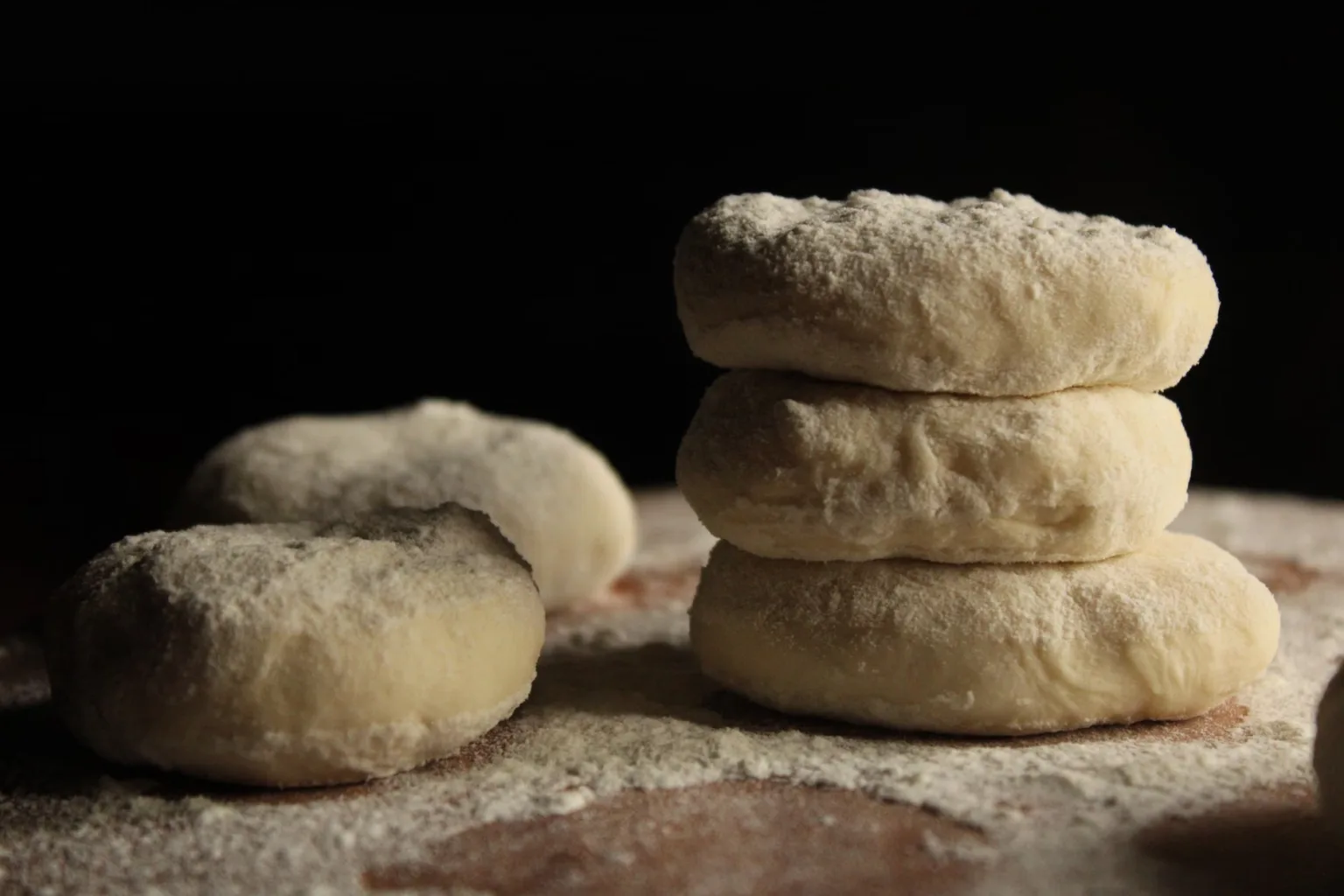
Wheat-flour dough is a preparation made mainly from flour milled from wheat grains and a liquid to hydrate it. Depending on the recipe, it may also contain ingredients such as yeast, salt, fat, sugar or egg; the exact composition cannot be determined from the name alone. Wheat proteins contribute to elasticity when hydrated and worked, and can help dough retain gases produced during fermentation. Flour matters: its strength, protein content and degree of refinement can affect how much liquid it absorbs and how it behaves when kneaded or shaped. A bread dough therefore does not necessarily have the same texture or handling properties as pastry or pasta dough. Wheat dough contains gluten cereals. If you buy it ready-made, check the ingredient list and allergen information to find out what that particular product contains.
When to use it
Use it when a recipe calls for wheat dough to bake, shape or cook, for example bread, pizza, focaccia, enriched baking, pastry or fresh pasta. Choose flour suited to the intended result: a dough that needs more structure or elasticity calls for an appropriate flour, while some delicate preparations use a weaker flour. Wholemeal and more refined flours can also produce different doughs. If the recipe specifies a flour type, begin by following that guidance rather than changing it without adjusting the method. Wheat dough is not suitable for a gluten-free recipe; alternative flours may need to be combined or used with additional ingredients and do not automatically behave like wheat flour.
How to use it
First check what kind of dough the recipe calls for and which flour it recommends. Flour strength and refinement can affect liquid absorption, elasticity and structure, so do not assume all wheat flours behave alike. Mix and knead according to the specific preparation, then shape the dough and leave it to rest or ferment only if the recipe instructs you to do so. For bread, pizza and similar doughs, the dough’s ability to develop structure helps support the result; pastry and pasta each have their own method. If you use wholemeal flour, bear in mind that it can require more liquid and produce a denser dough than refined flour. When changing flour type, consider the result and method rather than treating the swap as automatic. For ready-made dough, check the package for ingredients and directions.
Flavour and texture
Flavor and texture depend on the flour and the other ingredients. Refined flour generally has a more neutral profile, while wholemeal flour gives a more pronounced flavor. Flour strength affects dough elasticity and structure; a more wholemeal dough can be denser and feel less light.
How to choose it
Choose dough for the preparation you have in mind and check the label if you buy it ready-made: commercial recipes may contain ingredients other than flour and water. If buying flour to make dough, check its recommended use, refinement and, where provided, strength or protein content. Do not assume one wheat flour works equally well for bread, pastry and pasta.
Storage
Storage depends on whether the dough is fresh, frozen or packaged, and on its ingredients. For a commercial product, follow the storage and use directions on its package. For homemade dough, use the recipe’s directions; do not infer a storage period from the ingredient name alone.
Substitutions
Changing one wheat flour for another can affect absorption, elasticity and texture. To replace wheat flour with gluten-free flour, use a recipe designed for that blend: some preparations need a combination of flours or additional ingredients to provide structure. Do not expect an automatic equivalent or identical dough behavior.
Common mistakes
A common mistake is treating all wheat flours as interchangeable. Refinement and strength affect how dough hydrates and handles. Replacing wheat flour with a gluten-free alternative without adapting the recipe can also change the result.
Safety and allergens
Wheat-flour dough contains gluten cereals. If you need to avoid gluten or wheat, check the product’s ingredients and allergen label; a ready-made dough may contain other ingredients too.
Culinary uses
- Base for bread, pizza, focaccia and other baked doughs
- Starting point for pastry, fresh pasta and other shaped preparations
Recommended techniques
- Kneading and shaping, adjusted to the flour's strength and intended result
- Choosing flour by refinement and strength for the desired dough texture
Pairs well with
- Water or other recipe-specified liquids to hydrate the flour
- Yeast or other recipe-specified leavening ingredients
Frequently asked questions
Does every wheat-flour dough behave the same way?
No. Flour strength and refinement can change liquid absorption, elasticity and texture. Choose the flour for the preparation.
Can I replace wheat flour with gluten-free flour?
Not as an automatic swap. Alternative flours may need blends or additional ingredients, and the result may have a different texture and structure.
Does wheat-flour dough contain gluten?
Yes. Wheat is a gluten cereal. Also check the label of ready-made dough for any other allergenic ingredients.
Ingredient allergens
Allergen listDocumented presence
-
Cereals containing gluten
Wheat-flour dough
Estimated nutrition
- Fat
- 0.98 g
- Saturates
- 0.16 g
- Carbohydrate
- 76.3 g
- Sugars
- 0.27 g
- Fibre
- 2.7 g
- Protein
- 10.3 g
- Salt
- 0 g
Sources and review
Automatically researched, cross-checked and validated content. Sources consulted:
- Alérgenos alimentarios | EFSA www.efsa.europa.eu/es/safe2eat/food-allergens
- Harina - Wikipedia, la enciclopedia libre es.wikipedia.org/wiki/Harina
- Tipos de harina de trigo, un alimento básico en la cocina: guía para usarlas www.directoalpaladar.com/ingredientes-y-alimentos/guia-para-distinguir-diferentes-tipos-hari…
- Tipos de harina y su uso en la cocina profesional - EN LA COCINA Magazine enlacocina.telemesa.es/cocina/tipos-de-harina-y-su-uso-en-la-cocina-profesional/
- Evaluación de harina de amaranto como ingrediente antioxidante para la preparación de matrices alimentarias funcionales doi.org/10.35537/10915/162211
- Harina de trigo: Qué necesitas saber: qué es, tipos, características y cómo usarla - Di Marco www.dimarco.it/es/noticias/harina-de-trigo/
- Harina: tipos y clases de harina para usar en la cocina bonviveur.com/es/noticias/harina
- Desarrollo de recetas de pastelería aplicando siete harinas alternativas | OpenAlex openalex.org/W2184517806
- Allergies - Food Safety - European Commission food.ec.europa.eu/food-safety/campaign-2026/allergies_en
- Food Allergies | FDA www.fda.gov/food/nutrition-food-labeling-and-critical-foods/food-allergies
- Allergen guidance for food businesses - GOV.UK www.gov.uk/government/publications/allergen-guidance-for-food-businesses/allergen-guidance-f…
- Harina de trigo Reconocer los distintos tipos de las ... unlp.edu.ar/wp-content/uploads/65/27865/aa3fae54e5d91ec92fb6bd172acaa4ee.pdf
- - YouTube www.youtube.com/watch?v=cD6MCY34le0