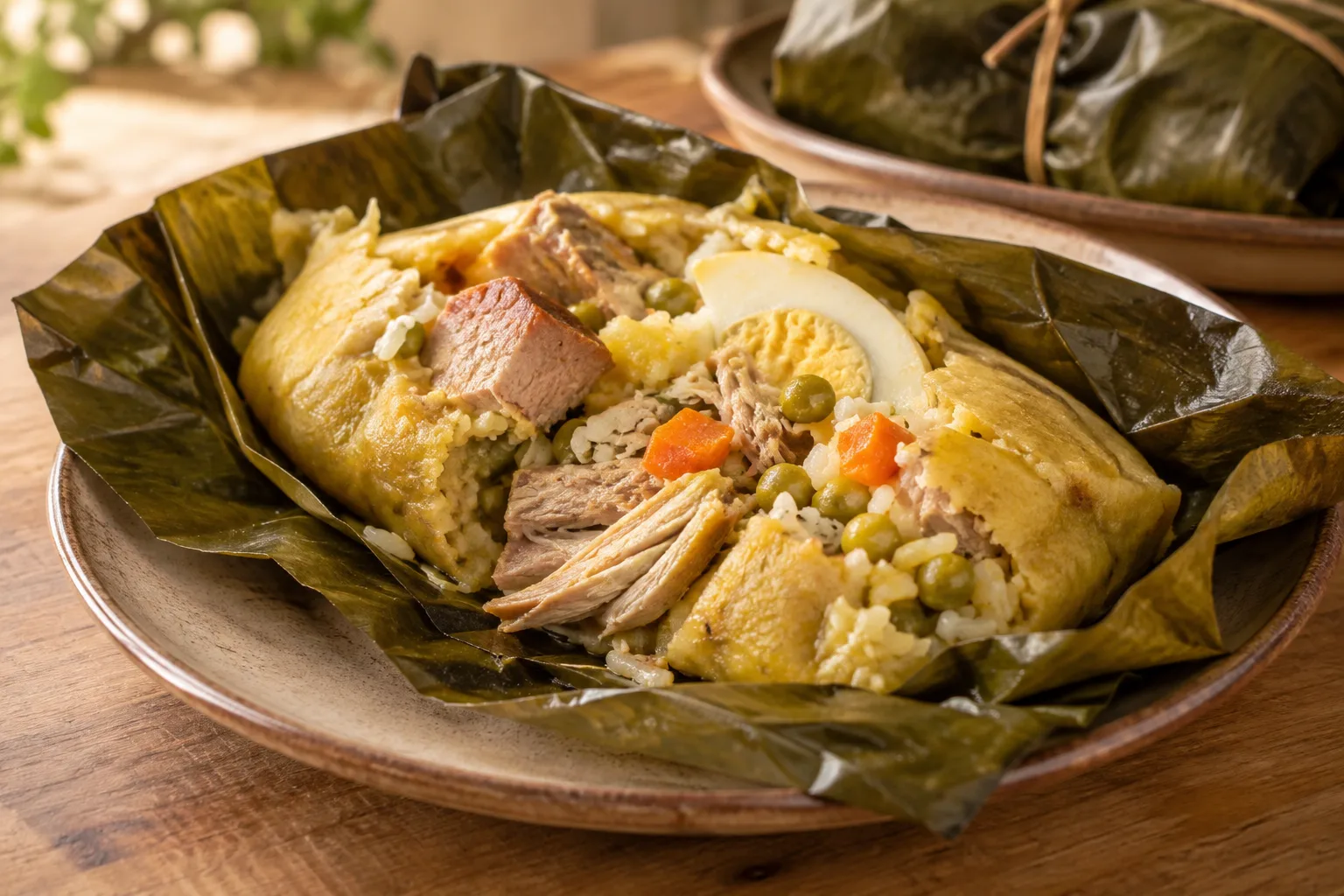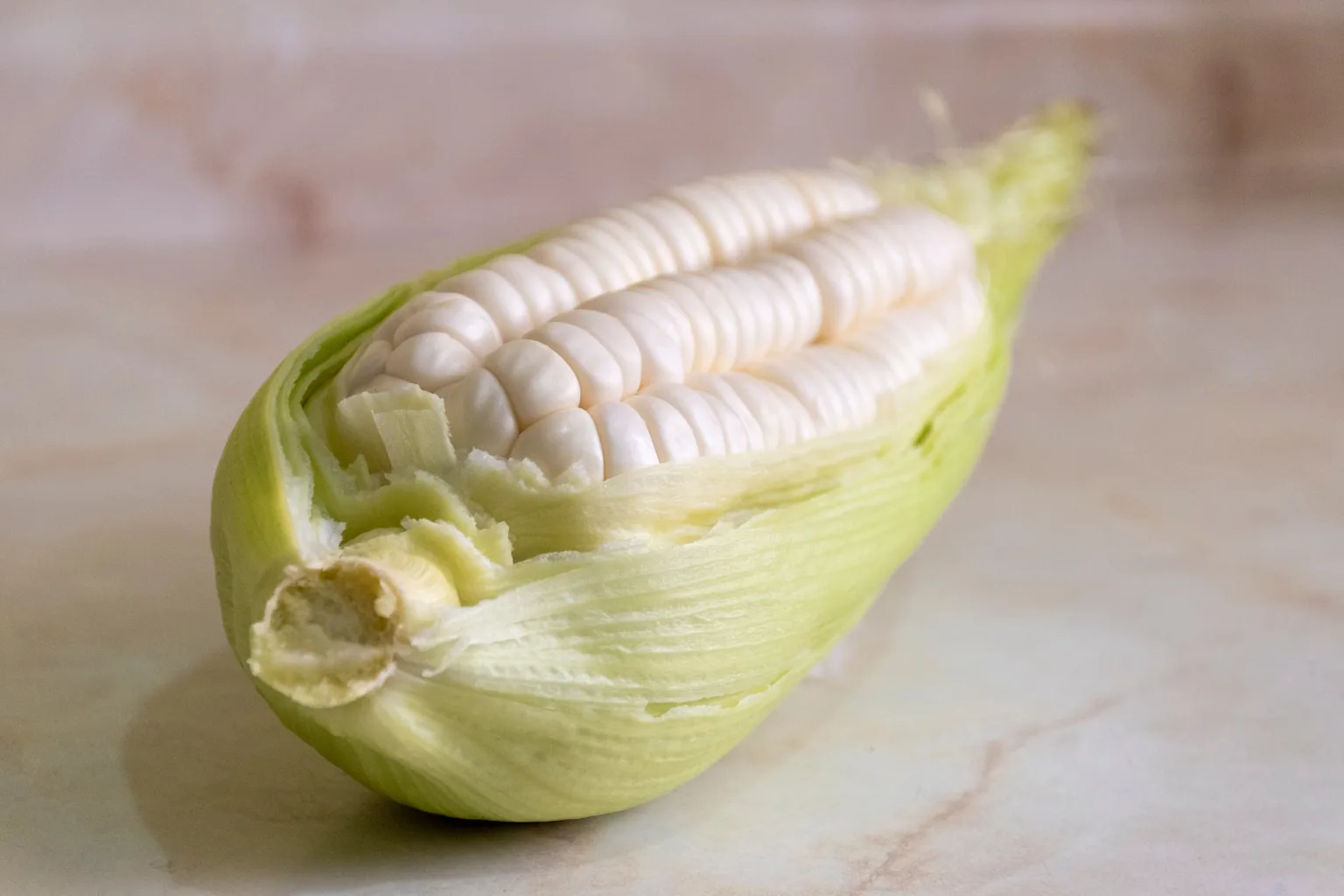
- Category
- Grains, flour and pasta
- State
- Dry
- Usual unit
- g
What it is
White cracked corn is white maize broken into pieces or coarsely ground. Its particle size distinguishes it from fine corn flour: dry maize ground coarsely is described as meal or grits, while a finer grind is flour. White identifies the kernel type, but does not by itself tell you how the product was processed. The word “cracked” may be used differently across places and products, so check the package to see whether it contains broken kernels, coarse meal, or maize that has received another treatment. Do not assume that it is precooked or behaves like an instant product. It is a cereal ingredient whose practical use depends on its grind and the manufacturer's directions.
When to use it
Use it when you want a more substantial maize texture than fine flour can provide, such as a coarse cooked cereal or polenta-style preparation. Dry, coarsely ground maize can be used for grits and polenta, but cooking time and liquid amounts cannot be established from the name alone; they depend on particle size and whether the product is precooked. For tortillas, tamales, or other doughs, check that the package specifies a suitable grind and treatment. Precooked or nixtamalized corn flours are not automatically interchangeable with cracked corn. If a recipe calls for a smooth texture, a coarse grind may leave noticeable particles.
How to use it
Read the package before cooking to find out whether the product is raw or precooked, how coarse it is, and what preparation is recommended. For a grits- or polenta-style dish, cook the maize in liquid according to the product directions, stirring as needed to help it hydrate evenly. Coarse and fine grinds do not produce the same result: do not apply the liquid amount or cooking time for flour or instant polenta as a general rule for this product. If you plan to use it in tortilla or tamale dough, confirm that the package identifies it as suitable; white maize alone does not mean it has been nixtamalized. Adjust the recipe to the texture you observe and follow the product's cooking directions before serving.
Flavour and texture
White maize is described as less sweet than some other kinds of corn and as having a mild flavor. Mouthfeel depends especially on the grind: coarse pieces or particles create a more pronounced texture than fine flour. Cooked maize can form a thick cereal preparation, but the exact result varies with the product and its processing. White color alone does not determine the precise flavor or finished texture.
How to choose it
Look for a label that states whether the maize is raw or precooked, whether it is cracked kernels or coarse meal, and what preparations it is intended for. Match the grind to your recipe: coarse corn, fine flour, and nixtamalized corn flour behave differently. White refers to the kernel type and does not guarantee a particular processing method. If the package does not specify a use, do not assume that the product is instant or suitable as tortilla flour.
Storage
Store the product according to the directions printed on its package, which apply to that specific form. Keep the package closed when not in use and check its condition before cooking. There is not enough evidence here to set one universal storage period for all grinds and product forms. After opening, follow the manufacturer's directions and retain the label information if you transfer the contents to another container.
Substitutions
Corn grits or polenta and white corn flour are alternatives made from the same cereal, but they are not necessarily equivalent. Polenta may have a different particle size, while fine flour changes the texture and liquid absorption of a preparation. Check that the processing, such as precooking or nixtamalization, matches the recipe. There is no supported universal substitution ratio for this product.
Common mistakes
Do not confuse coarse cracked corn with fine flour, instant polenta, or nixtamalized corn flour: their particle size and processing affect how they are used. Also, do not assume every product called cracked corn is ready to cook in the same way. Check the label before deciding on liquid, cooking method, or recipe use.
Safety and allergens
Follow the package directions for preparation and storage. When cooking for someone with an allergy, check the label and allergen information for the specific product; do not infer its composition or the absence of cross-contact from the ingredient name alone.
Culinary uses
- Base de cereal para preparar una preparación cocida tipo sémola o polenta
- Ingrediente de maíz blanco para moler y adaptar a una molienda más fina
Recommended techniques
- Cocción en líquido hasta obtener una preparación de tipo polenta; ajustar el proceso a las instrucciones del envase
- Molienda más fina para obtener una textura distinta, teniendo en cuenta que el resultado deja de ser maíz triturado grueso
Pairs well with
- Preparaciones de maíz como tortillas y tamales, si se usa una molienda apropiada para esas recetas
- Sopas y preparaciones de cereal cocido, comprobando que el tamaño de grano y la textura final sean adecuados
Frequently asked questions
Is white cracked corn the same as corn flour?
Not necessarily. “Cracked” generally describes a broken or coarse form, while flour is finely ground. Check the package description and texture.
Can I cook it like polenta?
Coarsely ground dry maize is used to make grits and polenta. Follow the product directions, since the cooking and result depend on its grind and processing.
Can I use it to make tortillas?
That cannot be determined from the white color alone. For tortillas, check that the product has the grind and treatment specified for that preparation.
Ingredient allergens
Allergen listThere are no verified associations for these ingredients yet.
Estimated nutrition
- Fat
- 5.18 g
- Saturates
- 0.83 g
- Carbohydrate
- 75.2 g
- Sugars
- 6.47 g
- Fibre
- 16.6 g
- Protein
- 9.72 g
- Salt
- 0.01 g
Sources and review
Automatically researched, cross-checked and validated content. Sources consulted:
- Alérgenos alimentarios | EFSA www.efsa.europa.eu/es/safe2eat/food-allergens
- Client Challenge doi.org/10.2307/jj.27939689.16
- Harinas de maíz ¿Cuántos tipos hay y para qué sirven? - Formacion en Gastronomia www.formacionengastronomia.com/cocina-latina/harinas-de-maiz-cuantos-tipos-hay-y-para-que-si…
- Maíz: qué es, tipos y beneficios bonviveur.com/es/noticias/maiz
- Para la ciudadanía www.aesan.gob.es/para-la-ciudadania
- Zea mays - Wikipedia, la enciclopedia libre es.wikipedia.org/wiki/Zea_mays
- El maíz nativo: un tesoro ancestral en la gastronomía - UNAM Global unamglobal.unam.mx/global_revista/el-maiz-nativo-un-tesoro-ancestral-en-la-gastronomia/
- Allergies - Food Safety - European Commission food.ec.europa.eu/food-safety/campaign-2026/allergies_en
- Food Allergies | FDA www.fda.gov/food/nutrition-food-labeling-and-critical-foods/food-allergies
- Food Allergy Labeling Laws: International Guidelines for Residents and Travelers - PMC pmc.ncbi.nlm.nih.gov/articles/PMC10169132/
- Food allergen portal | Food Standards Australia New Zealand www.foodstandards.gov.au/consumer/foodallergies/food-allergen-portal
- Allergen guidance for food businesses - GOV.UK www.gov.uk/government/publications/allergen-guidance-for-food-businesses/allergen-guidance-f…
- - YouTube www.youtube.com/watch?v=p9huOSs2S10
- Alimento muy mexicano | Comisión Nacional de Áreas Naturales Protegidas | Gobierno | gob.mx www.gob.mx/conanp/articulos/alimento-muy-mexicano
- Información Técnica de: Maiz Blanco www.cosmos.com.mx/wiki/maiz-blanco-4173.html