- Category
- Grains, flour and pasta
- State
- Dry
- Usual unit
- Variable
What it is
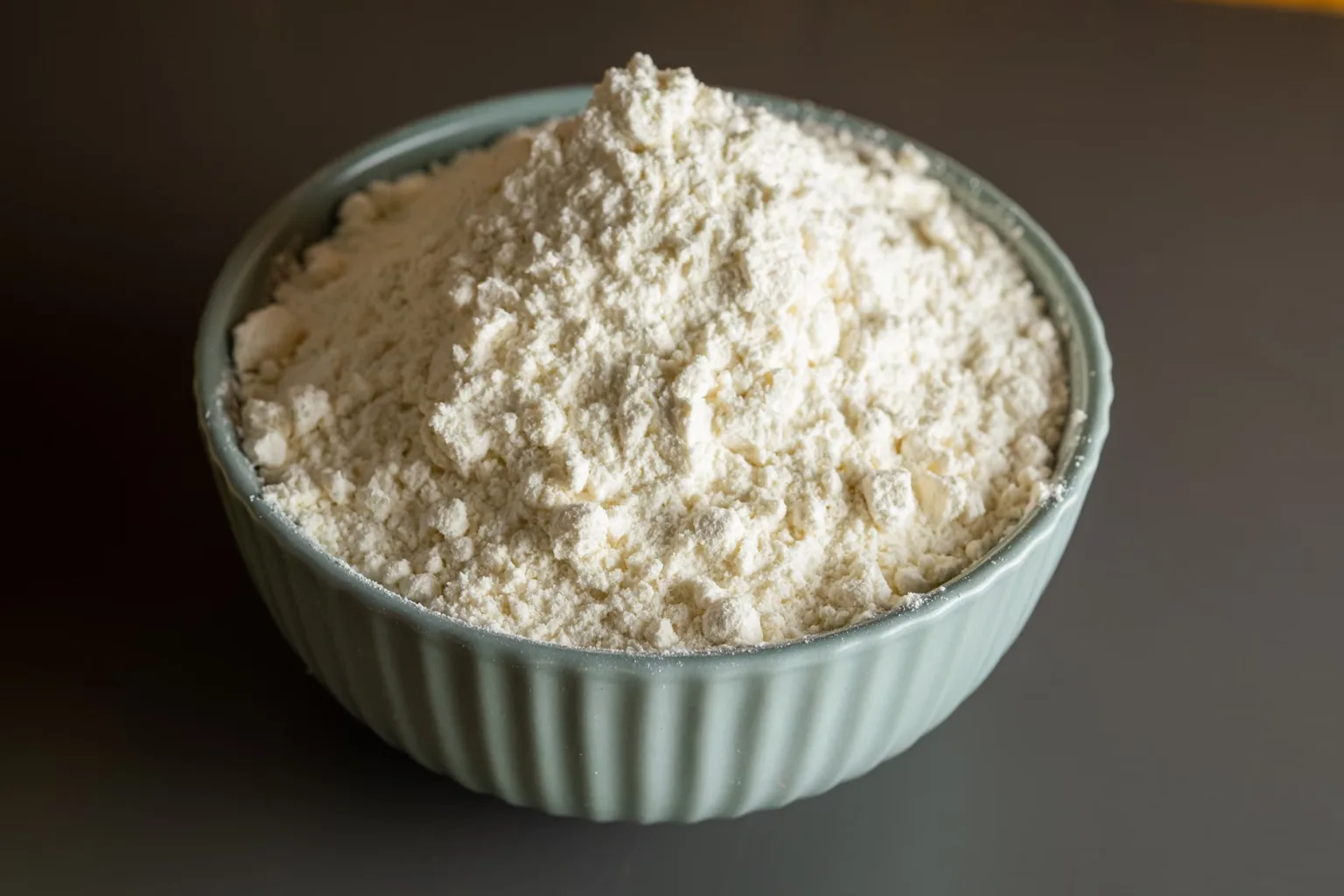
White flour is a powder made by milling wheat and separating parts of the grain so that mainly the endosperm remains. The name can cover products with different protein levels and strengths, so white flours do not all behave alike. Some make more elastic doughs suited to bread and pizza, while others are used for softer cakes, biscuits and pastry. Flour can also thicken preparations or coat food before cooking. Check the package and the type specified: “white” describes its appearance and degree of refinement, not one fixed strength or a universal formula.
When to use it
Choose white flour when a recipe calls for a wheat base for bread, enriched dough, pizza, biscuits, cakes or savoury dough. For kneaded and fermented doughs, look for flour intended for bread-making; for delicate bakes, pastry flour may give a softer result. It can also be used to thicken sauces and coat foods, although the outcome depends on the product and recipe. If a recipe specifies a particular type or strength, do not assume every white flour is interchangeable: check the label and follow the recipe’s guidance.
How to use it
Measure flour as directed and avoid packing it into a cup, since a volume measure can vary with how it is filled. For dough, add liquid gradually and mix until the preparation reaches the consistency described in the recipe; kneading develops the structure of wheat dough. To thicken a sauce, combine the flour carefully with the liquid or fat specified and avoid adding it all at once to help prevent lumps. For coating, cover the food evenly and shake off excess before cooking. White flour can also be used in batters and baking; choose the type recommended for the texture you want.
Flavour and texture
White flour generally has a mild flavor and a fine, dry texture. Its behavior varies with the wheat and flour type: some flours support firmer, more elastic doughs, while others are used for tender, delicate bakes. When mixed with liquid, it can form dough, batter or a thickened mixture, depending on the method and proportions. Its white color alone does not indicate its strength or the final result.
How to choose it
Read the product name and suggested use on the package: white flour does not necessarily mean bread flour or pastry flour. For bread, pizza and fermented doughs, look for a type intended for those uses; for cakes or biscuits, compare products labelled for baking. Also check the ingredient list and allergen information, especially when someone in the household has an allergy or intolerance.
Storage
Use the package as the reference for storage directions and the date of the specific product. Follow those directions and close the package again after use. Do not infer one universal storage period from the name “white flour”: different flour types and packages may have different instructions. Check the information printed on the package before cooking.
Substitutions
Rye flour can give bread a different flavor, but it often produces a denser crumb and does not behave like wheat flour. Rice flour may work in some preparations, including certain coatings, baked goods or sauces, but it changes texture and structure. Do not assume a direct swap; use guidance suited to the specific preparation.
Common mistakes
A common mistake is treating all white flours as identical. Strength and protein content vary, so flour intended for bread may not give the same texture as pastry flour. Measuring by volume, packing flour into a cup or substituting without adapting the recipe can also change the result.
Safety and allergens
Wheat flour belongs to the cereals containing gluten. Check the product label and information for prepared foods, especially if you have a wheat allergy or need to avoid gluten. Do not rely on white appearance or a generic name alone to determine whether a product is suitable.
Culinary uses
- Base for bread and other baked goods
- Thickener for sauces and soups
- Coating for breading
Recommended techniques
- Mixing into doughs and batters
- Whisking into a liquid to thicken
- Coating food before frying or baking
Pairs well with
- Water and yeast in bread dough
- Butter, sugar, or eggs in sweet baked goods
- Broths and sauces when used as a thickener
Frequently asked questions
Is white flour always wheat flour?
The name can vary by region and product. Check the ingredient list; this profile refers to white wheat flour.
Can I use bread flour for a cake?
Flours differ in strength and intended use. Choose the type specified in the recipe, since a stronger flour may give a different texture.
Is white flour suitable for a gluten-free diet?
Do not judge suitability by color or appearance. Check the ingredients and allergen information, and follow the product’s specific labeling.
Ingredient allergens
Allergen listDocumented presence
-
Cereals containing gluten
White flour
Estimated nutrition
- Fat
- 0.98 g
- Saturates
- 0.16 g
- Carbohydrate
- 76.3 g
- Sugars
- 0.27 g
- Fibre
- 2.7 g
- Protein
- 10.3 g
- Salt
- 0 g
Sources and review
Automatically researched, cross-checked and validated content. Sources consulted:
- Alérgenos alimentarios | EFSA www.efsa.europa.eu/es/safe2eat/food-allergens
- Client Challenge doi.org/10.2307/jj.27939689.16
- Harina - Wikipedia, la enciclopedia libre es.wikipedia.org/wiki/Harina
- Más allá del trigo: 15 harinas perfectas para cocinar www.abc.es/recetasderechupete/tipos-de-harina-clasificacion/25251/
- Tipos de harina y su uso en la cocina profesional - EN LA COCINA Magazine enlacocina.telemesa.es/cocina/tipos-de-harina-y-su-uso-en-la-cocina-profesional/
- Etiquetado de sustancias que causan alergias e intolerancias alimentarias www.aesan.gob.es/seguridad-alimentaria/informacion-alimentaria/etiquetado-sustancias
- ¿Sabes cuál es el origen de la harina? - Pastas Gallo : Pastas Gallo www.pastasgallo.es/sabes-cual-es-el-origen-de-la-harina/
- Harina: tipos y clases de harina para usar en la cocina bonviveur.com/es/noticias/harina
- ¿Qué es la harina? | ¡¡TE LO CONTAMOS TODO!! - Nutrición Duque restauranteduque.es/que-es-la-harina/
- Food Allergies | FDA www.fda.gov/food/nutrition-food-labeling-and-critical-foods/food-allergies
- Food allergens | Food Safety and Quality | FAO www.fao.org/food-safety/scientific-advice/food-allergens/en
- Food Production and Processing Considerations of Allergenic Food Ingredients: A Review - PMC pmc.ncbi.nlm.nih.gov/articles/PMC3236470/
- Allergen guidance for food businesses - GOV.UK www.gov.uk/government/publications/allergen-guidance-for-food-businesses/allergen-guidance-f…
- ▷ Tipos de harina y usos culinarios ✓ Espiga Real www.harinasespigareal.com/tipos-de-harina-y-usos-culinarios/