- Category
- Herbs and spices
- State
- Dry
- Usual unit
- teaspoon
What it is
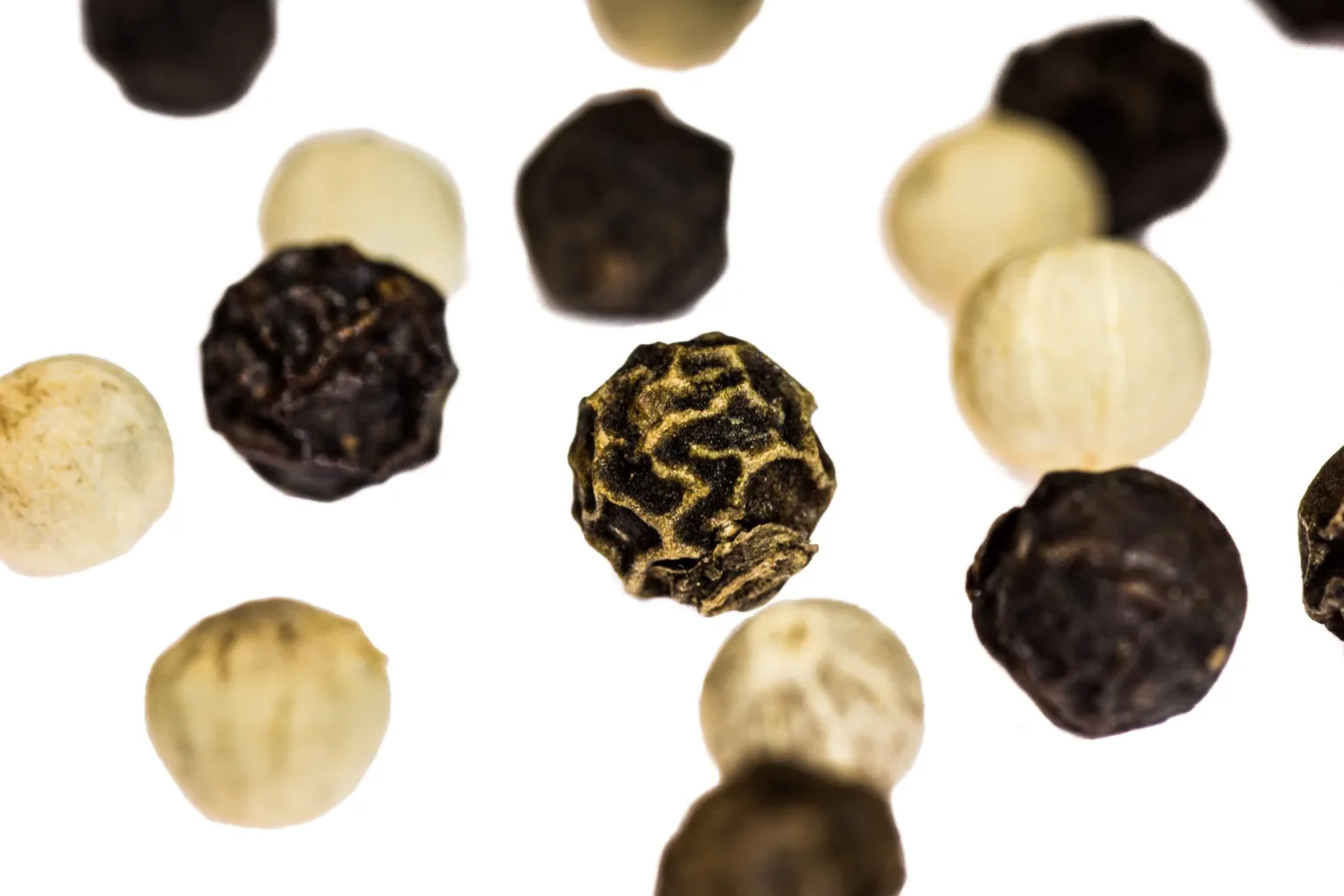
White peppercorns are a whole spice made from ripe Piper nigrum berries that are processed to remove their outer skin and then dried. The resulting pale, hard peppercorns can be ground or crushed for cooking. Their flavour is not identical to black pepper: it can be earthy and warm, with a distinctive character that varies with processing. In the kitchen, white pepper is especially useful when you want a peppery seasoning in a pale sauce, soup or mash without visible dark specks. Use the peppercorns whole in preparations that will be strained, or grind them to season a dish directly.
When to use it
Choose white pepper when you want an earthy, peppery lift in a light-coloured dish such as a cream sauce, soup, mashed potatoes or seafood. It also works in marinades, meat dishes and stir-fries; its use is not limited to European or Asian cooking. Because its aroma and intensity differ from black pepper, do not swap the two without tasting and adjusting. If appearance is not a concern, ground black pepper can provide an alternative pepper seasoning, but it leaves dark flecks and gives the dish a different flavour profile.
How to use it
Grind or crush the peppercorns shortly before use to release their aroma, then add a little at a time. Taste before adding more: white pepper can dominate when used heavily. In a pale sauce, soup or mash, stir it in gradually so you can adjust the heat and avoid unexpected concentrated pockets. Whole peppercorns can also be added to a broth or pickling liquid if they will later be removed or strained out. In marinades, meat dishes and stir-fries, white pepper adds seasoning but changes the character compared with black pepper. If a recipe calls for black pepper, consider whether dark flecks and a different flavour are acceptable before substituting.
Flavour and texture
The dried peppercorns are hard and are ground or crushed before use. White pepper can bring an earthy, warm flavour with noticeable heat; its profile varies with processing. Once ground, it seasons food without the dark flecks of black pepper.
How to choose it
Look for a product clearly labelled whole white peppercorns, in packaging that is closed and free of visible moisture. Whole peppercorns let you grind only what you need and help retain aroma better than keeping ground spice for a long time. When buying in bulk, choose a shop with protected containers and check the product's appearance.
Storage
Keep the peppercorns in an airtight container in a dry place away from heat and direct sunlight. Avoid using a damp utensil and reseal the container after each use. Grind only what you need: whole peppercorns retain aroma better than ground spice stored for a long time, which gradually loses intensity.
Substitutions
Ground black pepper can provide a similar peppery seasoning, but its aroma and appearance differ, and it leaves dark specks. Add it gradually and taste before serving. For broths or pickling liquids that call for whole peppercorns, crushed black peppercorns can also season the liquid, though they will change its colour and flavour profile.
Common mistakes
Using too much white pepper can make its earthy, hot flavour dominate the dish. Start with a small amount and adjust after tasting. Another mistake is assuming white and black pepper taste the same or can be swapped in identical amounts; both aroma and appearance may change.
Safety and allergens
Use the peppercorns as a seasoning and keep them in a dry, closed container. If buying spices in bulk or managing a food allergy, check the product information and ingredient list before use.
Culinary uses
- Seasoning for soups, broths and sauces
- Peppery warmth in light-coloured dishes, marinades and meat dishes
Recommended techniques
- Grind or crush just before use
- Add gradually and taste as you season
Pairs well with
- Cream sauces, soups and potatoes
- Seafood, meat, garlic and ginger
Frequently asked questions
Can I use white pepper instead of black pepper?
It can work in some dishes, but the flavour differs and it will not leave the same dark specks. Add it gradually and taste before adjusting.
Should I buy whole or ground white pepper?
Whole peppercorns let you grind only what you need and generally retain aroma better than ground spice stored for a long time.
What dishes work well with white pepper?
It suits pale sauces, soups, mashed potatoes and seafood, and can also season marinades, meat dishes and stir-fries.
Ingredient allergens
Allergen listThere are no verified associations for these ingredients yet.
Sources and review
Automatically researched, cross-checked and validated content. Sources consulted:
- Romanica Olomucensia : «¿Qué pinga es esto?». Usos disfemísticos en el español de Cuba doi.org/10.5507/ro.2021.007
- Pimentón - Wikipedia, la enciclopedia libre es.wikipedia.org/wiki/Piment%C3%B3n
- Informe de resultados del estudio prospectivo para la ... www.aesan.gob.es/dam/jcr:ee696fed-8f9b-4c08-9978-5bf8a82a5d0f/Frutos_secos_pimentones_especi…
- Gastronomía de Yucatán - Wikipedia, la enciclopedia libre es.wikipedia.org/wiki/Gastronom%C3%ADa_de_Yucat%C3%A1n
- Codex | Home www.fao.org/fao-who-codexalimentarius/sh-proxy/zh/?lnk=1&url=https%253A%252F%252Fworkspace.f…
- Assessment of heavy metals and fungi contamination of spices available in Saudi Arabian food cuisines agris.fao.org/search/en/providers/122436/records/675ac14c0ce2cede71d04c29
- Cooking with White Pepper » Annie's Kitchen annieskitchenblog.com/2019/03/18/cooking-with-white-pepper/
- About White Pepper Uses, Pairings and Recipes www.mccormick.com/blogs/how-to/about-white-pepper-uses-pairings-and-recipes
- What Are White Peppercorns? A Complete Guide to Flavor, Uses, and Bene thespiceway.com/blogs/articles/what-are-white-peppercorns-a-complete-guide-to-flavor-uses-an…
- ESPECIAS Y QUÍMICA www.aesan.gob.es/dam/jcr:9ed5c41c-5373-4e8b-8779-eab4653b559e/Presentacion_3_Andres_Gavilan_…
- Codex | Home www.fao.org/fao-who-codexalimentarius/sh-proxy/es/?lnk=1&url=https%253A%252F%252Fworkspace.f…
- SciELO Books | ¿Qué es la teoría? Enfoques, usos y debates en torno al pensamiento teórico doi.org/10.7476/9789978105788