Africa · Sub-Saharan Africa

Burkina Faso

Burkina Faso’s cooking brings together millet, sorghum, maize, rice and fonio with vegetables, beans, peanuts, fish and meat. Firm tô with sauce, the leafy rice dish babenda and one-pot riz gras show how grains become the centre of different meals. Fermented soumbala, grilled chicken and drinks such as dolo and zoom koom add distinctive flavours and social meanings, while local preparations vary across communities and places.

Food and eating habits

How people eat in Burkina Faso

50 indicators exploring everyday meals, ingredients and food culture. Information is completed progressively from documented evidence.

0 of 50 indicators with documented information

Not all data are comparable: food supply, purchases and intake are different measures. Check the period, population and method for each finding. Qualitative descriptions do not establish percentages or amounts.

Timing and company

0/8
Timing and company — Burkina Faso
IndicatorFindings and context
Meal times Awaiting research
Meals per day Awaiting research
Meal duration Awaiting research
Daily energy distribution Awaiting research
Weekdays and weekends Awaiting research
Eating at home and away Awaiting research
Cooking frequency Awaiting research
Eating together Awaiting research

Pantry and recipes

0/2
Pantry and recipes — Burkina Faso
IndicatorFindings and context
Most consumed ingredients Insufficient data in the sources consulted
Ingredient prevalence in recipes Insufficient data in the sources consulted

Cereals and plant foods

0/6
Cereals and plant foods — Burkina Faso
IndicatorFindings and context
Cereals and cereal products Awaiting research
Bread Awaiting research
Pulses Awaiting research
Vegetables Awaiting research
Fruit Awaiting research
Potatoes, roots and tubers Awaiting research

Protein foods

0/5
Protein foods — Burkina Faso
IndicatorFindings and context
Meat Awaiting research
Fish and seafood Awaiting research
Eggs Awaiting research
Milk and dairy products Awaiting research
Protein sources Awaiting research

Fats, flavours and condiments

0/3
Fats, flavours and condiments — Burkina Faso
IndicatorFindings and context
Cooking fats Awaiting research
Herbs and spices Awaiting research
Sauces and condiments Awaiting research

Meal composition

0/6
Meal composition — Burkina Faso
IndicatorFindings and context
Breakfast composition Awaiting research
Main meal composition Awaiting research
Dinner composition Awaiting research
Appetisers and snacks Awaiting research
Desserts and sweets Awaiting research
Portion sizes Awaiting research

Techniques and equipment

0/5
Techniques and equipment — Burkina Faso
IndicatorFindings and context
Cooking techniques Awaiting research
Vegetable preparation Awaiting research
Food preservation Awaiting research
Fermented foods Awaiting research
Kitchen equipment Awaiting research

Drinks

0/3
Drinks — Burkina Faso
IndicatorFindings and context
Everyday drinks Awaiting research
Coffee and tea preparation Awaiting research
Drinks with meals Awaiting research

Nutrition and dietary patterns

0/3
Nutrition and dietary patterns — Burkina Faso
IndicatorFindings and context
Energy and nutrients Awaiting research
Salt and sugars Awaiting research
Dietary patterns Awaiting research

Shopping, prices and waste

0/7
Shopping, prices and waste — Burkina Faso
IndicatorFindings and context
Food expenditure Awaiting research
Cost of a common basket Awaiting research
Cost of specific meals Awaiting research
Grocery shopping locations Awaiting research
Shopping frequency Awaiting research
Prepared food and delivery Awaiting research
Household food waste Awaiting research

Seasons and celebrations

0/2
Seasons and celebrations — Burkina Faso
IndicatorFindings and context
Seasonal produce Awaiting research
Celebration food Awaiting research
Explore its cuisines

Burkina Faso: Grain Staples, Sauces and Shared Foodways

Documentary synthesis prepared with AI assistance. It does not replace specialist review or certify kitchen testing. · Updated 1 November 2026

A landlocked country with varied foodways

Burkina Faso is a landlocked country in West Africa, bordered by Mali, Niger, Benin, Côte d’Ivoire, Ghana and Togo. Its location places it among neighbours with related food traditions, but shared ingredients and preparations do not make the region’s cuisines identical. Local crops, sauces and household preferences shape how familiar dishes are made and served.

Cereals are central to many meals. Millet, sorghum and maize can be cooked into a firm tô, eaten with a sauce, while rice appears in both everyday cooking and dishes such as riz gras. Fonio is another grain in the documented pantry. Vegetables, legumes and, where available, meat or fish add variety to these foundations. The country’s culinary life cannot be reduced to a single national menu: more than sixty ethnic groups are documented, with distinct languages and traditions. A useful way to understand the food is through the relationship between staple grains, accompanying sauces, seasonal produce and the occasions for which particular dishes are prepared.

Names, history and regional exchange

The country was known as Upper Volta during French colonial rule, became independent in 1960 and adopted the name Burkina Faso in 1984. The name draws on words from Mooré and Dyula, languages associated with communities in the country. This linguistic combination offers a reminder of the cultural plurality within which food is prepared and named.

Culinary exchange is also part of the wider West African setting. Tô is eaten in Burkina Faso and neighbouring countries, while riz gras is found in several Francophone West African cuisines. These connections describe a shared culinary landscape, not a single origin or a standard recipe. The ingredients and seasonings can shift from one place or household to another. The French name riz gras, meaning “fat rice,” reflects one linguistic layer of a dish whose method and ingredients belong to a wider regional food culture. Rather than treating every related rice preparation as identical, it is more accurate to recognise a family resemblance shaped by local produce, cooking choices and tastes.

Grains, greens and fermented seasoning

The grain cupboard includes millet, sorghum, maize, rice and fonio. Millet, sorghum or maize flour can become tô, a firm cooked paste; rice can be cooked together with a seasoned tomato base in riz gras. Beans and peanuts broaden the pantry beyond cereals, while yams, cassava, sweet potatoes and potatoes are among the documented tubers.

Tomatoes and onions help form the base of sauces and rice dishes. Okra and leafy vegetables, including sorrel, baobab leaves and amaranth, appear in sauces and stews. Which leaves are used can depend on availability and the particular preparation. Fish may be dried or smoked before it is added to a dish; chicken, goat, sheep and other meats may be grilled or simmered. Meat is not essential to every preparation, and versions without it are also documented.

A distinctive seasoning is soumbala, also written sumbala. It is made by fermenting seeds of the néré tree and is used in soups and stews. Its pungent aroma gives a deeper, savoury character to dishes such as babenda. These ingredients work in different combinations rather than forming a fixed national recipe.

Mild grain, vivid sauce and varied textures

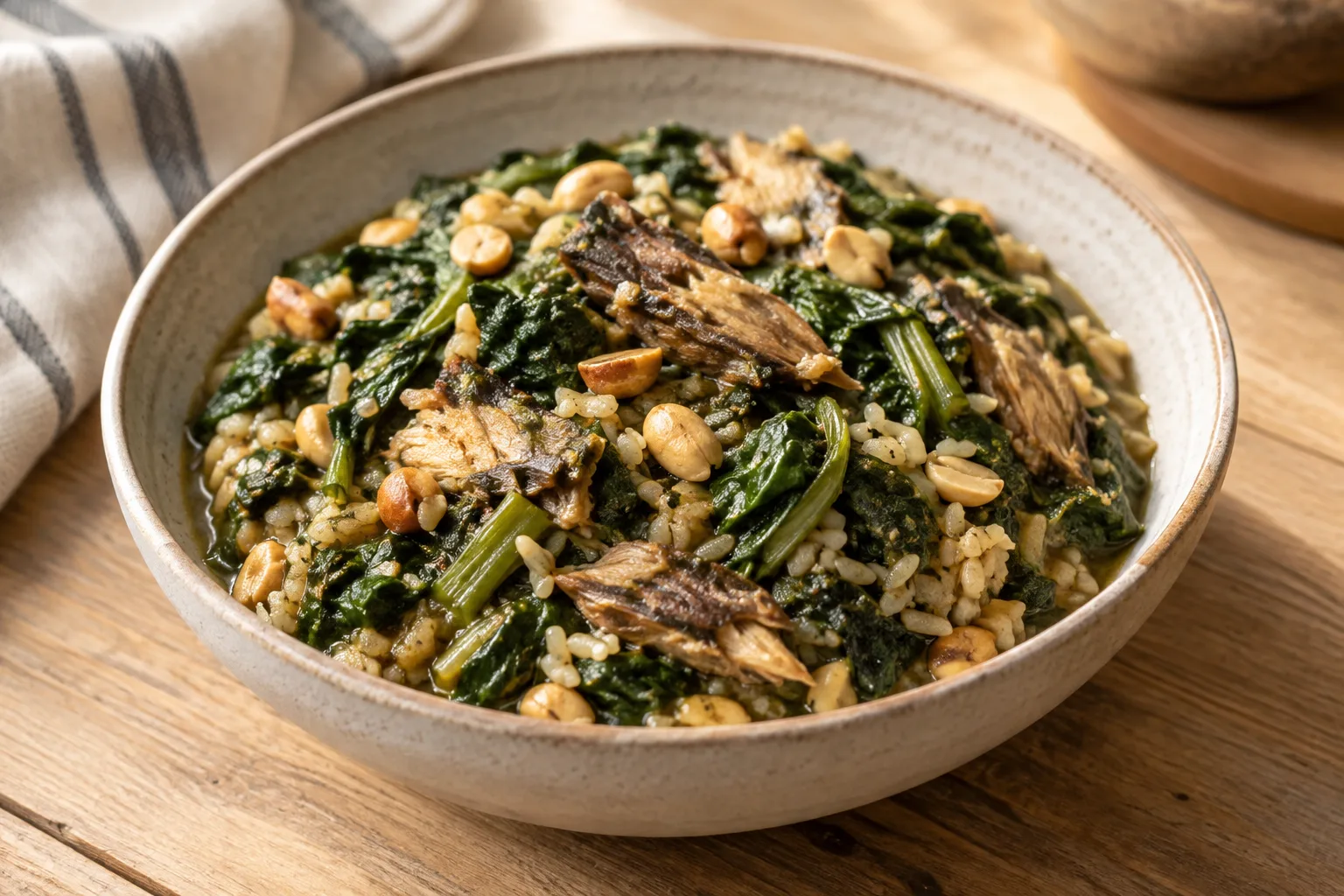
Many meals set a relatively plain grain or cereal paste alongside a more strongly seasoned sauce. The firm, cohesive texture of tô makes it a vehicle for okra, vegetable or peanut sauces. Okra can thicken a sauce; leafy greens cooked with rice produce a different, more integrated texture in babenda. The latter is described with bitter leaves, rice and fermented soumbala, and may include dried or smoked fish. The contrast between the grain and the pungent seasoning is part of its character.

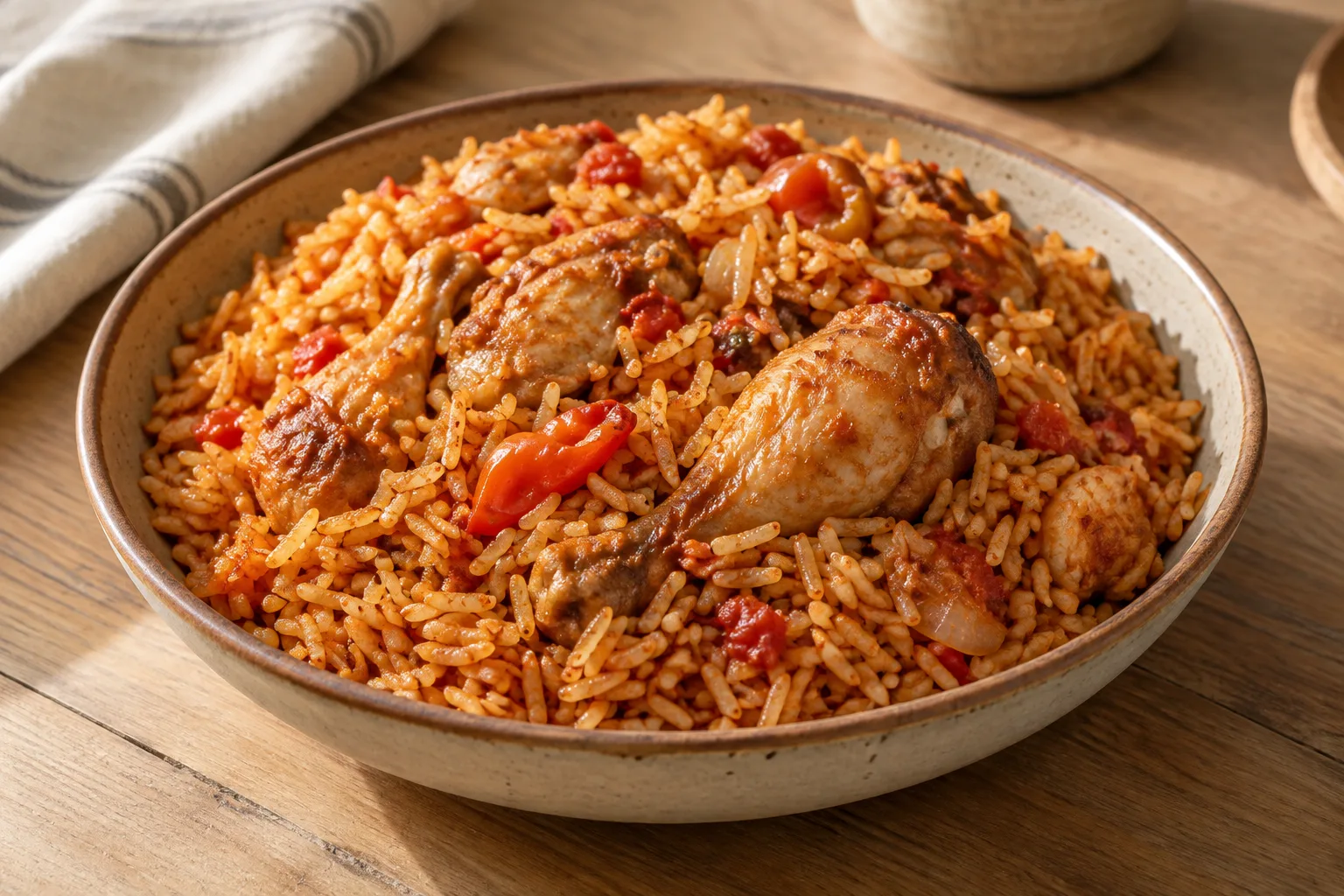
Riz gras offers another arrangement: rice cooks in a tomato-based broth with vegetables and, depending on the version, meat or fish. The grains take on the liquid and its seasoning. The finished dish can be softer or more separate, according to the way it is cooked. Garlic, ginger, chilli and other seasonings occur in documented preparations, but their strength is not uniform across households.

Drinks provide further contrasts. Zoom koom combines millet flour with ginger and tamarind in a drink associated with welcome and special occasions. Bissap, made with hibiscus, and tamarind or ginger drinks are also part of the beverage range. Together these examples show how flavour comes from both ingredients and the way they are combined.

Everyday staples and occasions for sharing

The daily place of tô is one of the clearest patterns in the documented foodways: it is a staple served with sauce, and a meal can be organised around this pairing. Making it involves practical knowledge of how the flour thickens and when the paste has become firm. This knowledge is carried through repeated cooking and shared eating, rather than being limited to a single celebratory setting.

Some foods and drinks are associated with particular gatherings. Dolo, a traditional beer made from millet or sorghum, is linked with market days, weddings and ceremonies. Zoom koom is described as a welcoming drink and as a preparation for occasions such as weddings. These examples point to hospitality and conviviality, but they should not be taken to mean that all communities observe the same customs or serve the same refreshments at every event.

Food also reflects local specialities. Babenda is associated with Mossi cooking in the evidence available, while a separate account identifies oven-roasted pork as a speciality of Réo in the Gourounsi region. Such references locate particular preparations without making them exclusive to a community or representative of every meal across the country. Food traditions are shared, adapted and practised in varied local settings.

Stirring, fermenting, simmering and grilling

Making tô depends on gradual incorporation and sustained stirring. Flour is added to hot water as the mixture thickens, then worked into a smooth, cohesive paste. Millet, sorghum and maize are documented choices. The goal is a firm form that can be served with sauce, rather than a pourable porridge. The technique calls for attention as the mixture thickens, with vigorous movement of the spoon or paddle helping it come together.

For riz gras, rice and the seasoned base cook in the same pot. Tomato, onion and other ingredients flavour the cooking liquid, which the rice absorbs. Babenda uses a different route to a dense dish: greens, rice and seasoning are simmered until they are well integrated. Soumbala involves a transformation before it reaches the pot: néré seeds are cooked and fermented to make the pungent condiment.

Grilling is another documented method, especially for meat and chicken. Poulet bicyclette is a well-known grilled chicken preparation. In Réo, the local account describes pork roasted in small ovens for sale. These techniques show a varied repertoire of pot cooking, constant stirring, fermentation and cooking over fire, rather than one defining utensil or method.

Serving the staple, sauce and shared pot

A meal built around tô brings a firm cereal base together with a sauce. In one documented serving style, the paste is placed on a shared plate and eaten by hand: a small portion is taken and used to collect sauce. The sauce may be based on vegetables, okra or peanuts, among other ingredients. This arrangement makes the mild staple and the more concentrated flavours of the accompaniment part of one bite. It is a documented way of serving, not a rule for every household or occasion.

One-pot rice dishes organise the meal differently. In riz gras, rice cooks with the tomato base and other ingredients, so the pot itself contains the main combination of grain, seasoning and, when included, protein. It may be served as an everyday meal or at a gathering. Grilled meat and skewers, vegetables and tubers provide other combinations, with ingredients influenced by availability and preference.

Drinks can accompany meals or have a particular role in welcoming guests. Dolo is linked to markets and ceremonies, while zoom koom is described as a welcome drink and is also prepared for special occasions. Bissap and ginger drinks are further examples. These practices suggest several ways to share food and drink, rather than a fixed national menu or table ritual.

A glossary of dishes and ingredients

These terms name particular preparations and ingredients documented in Burkina Faso. Spellings and recipes can vary, and the names should be understood in the context of the dish rather than as a claim that every household makes it in the same way.

  • Tô (saghbo): A firm paste made by cooking millet, sorghum or maize flour with water. It is served with a sauce, which may include vegetables, okra or peanuts.
  • Riz gras: Literally “fat rice” in French, a one-pot rice dish cooked with a seasoned base that commonly includes tomato and onion. Meat, fish or vegetables may be included.
  • Babenda: A dense dish of leafy greens and rice with fermented soumbala; dried or smoked fish may also be used. It is associated with Mossi cooking in some accounts.
  • Soumbala (sumbala): A pungent fermented seasoning made from seeds of the néré tree and used in soups and stews.
  • Zoom koom: A millet-flour drink with ginger and tamarind, described as a welcoming drink and prepared for special occasions.
  • Dolo: A traditional beer made from millet or sorghum and associated with markets, weddings and ceremonies.
  • Poulet bicyclette: A well-known grilled chicken preparation in Burkina Faso.

One country, many cuisines

Mossi communities and babenda

Babenda is associated with Mossi cooking and is described as a dense preparation combining leafy greens, rice and fermented soumbala, sometimes with dried or smoked fish. This identifies a documented culinary association, not an exclusive origin or a uniform practice among all Mossi families. Ingredients and household versions may differ.

Réo and the Gourounsi region

Réo is identified with an oven-roasted pork speciality. The local account describes small ovens set up to sell the pork and notes its popularity among workers as a convivial occasion. This is a place-specific food reference; it should not be generalised to all Gourounsi communities or to Burkina Faso as a whole.

Cook
Read as an article ↗
Places and communities

One country, many cuisines

An initial selection of regions to explore. Culinary boundaries may differ from administrative divisions.

Burkina Faso

Mossi communities and babenda

Babenda is associated with Mossi cooking and is described as a dense preparation combining leafy greens, rice and fermented soumbala, sometimes with dried or smoked fish. This identifies a documented culinary association, not an exclusive origin or a uniform practice among all Mossi families. Ingredients and household versions may differ.

Burkina Faso

Réo and the Gourounsi region

Réo is identified with an oven-roasted pork speciality. The local account describes small ovens set up to sell the pork and notes its popularity among workers as a convivial occasion. This is a place-specific food reference; it should not be generalised to all Gourounsi communities or to Burkina Faso as a whole.

Cook
Recipes connected with Burkina Faso

Each recipe documents one version. Geographic associations do not imply an exclusive origin.

Burkinabe Riz Gras
Image generated by the Kitchenpause team
70 minIntermediate

Burkinabe Riz Gras

Rice cooked in one pot with chicken, tomato, onion, garlic, and chili. The oil and cooking broth infuse the rice with flavor.

View recipe

Sources consulted

Read the sources and each document’s scope. A heritage inscription concerns a particular practice, not all of a country’s cuisine.

  1. Customs & Cuisine of Burkina Faso - Together Women Rise togetherwomenrise.org/customsandcuisine/customs-cuisine-of-burkina-faso/ togetherwomenrise.org Consulted: October 27, 2026
  2. Food And Beverage In Burkina Faso | Discover Burkina-Faso discover-burkinafaso.com/food-beverage/ discover-burkinafaso.com Consulted: October 27, 2026
  3. Burkina Faso food – discover its typical dishes travelinspires.org/burkina-faso-food-discover-its-typical-dishes/ travelinspires.org Consulted: October 27, 2026
  4. Soninké - Wikipedia, la enciclopedia libre es.wikipedia.org/wiki/Sonink%C3%A9 es.wikipedia.org Consulted: November 2, 2026
  5. Cooking in Burkina Faso: Traditional Fuels Versus... : Epidemiology doi.org/10.1097/01.ede.0000391728.40779.19 doi.org Consulted: November 2, 2026
  6. International Cooking: Food from Burkina Faso - The Flavor Vortex www.theflavorvortex.com/international-cooking-food-from-burkina-faso/ theflavorvortex.com Consulted: November 2, 2026
  7. RIZ GRAS (FAT RICE) from BURKINA FASO – Around the World in One Kitchen – Eat This NY eatthisny.com/2022/02/02/web-series/riz-gras-fat-rice-from-burkina-faso-around-the-world-in-… eatthisny.com Consulted: October 27, 2026
  8. How to Make Traditional Burkina Faso Soumbala - FunTimes Magazine funtimesmagazine.com/recipes/burkina-faso-soumbala/ funtimesmagazine.com Consulted: October 27, 2026
  9. Food of Burkina Faso: 4 Traditional Dishes www.menuella.com/food-wiki/burkina-faso menuella.com Consulted: November 2, 2026
  10. Zoom Koom - Receta Tradicional de Burkina Faso | 196 flavors www.196flavors.com/es/burkina-faso-zoom-koom/?srsltid=AYCX9vIfdzDWsQqTQX1NNhWeTwUMRW3IllrNzU… 196flavors.com Consulted: October 27, 2026
  11. Recetas de África Occidental: 6 platos exóticos para viajar con el paladar | Gastronosfera www.gastronosfera.com/top-lists/recetas-de-africa-occidental-6-platos-exoticos-para-viajar-c… gastronosfera.com Consulted: October 28, 2026
  12. Gastronomía de Burkina Faso - Wikipedia, la enciclopedia libre es.wikipedia.org/wiki/Gastronom%C3%ADa_de_Burkina_Faso es.wikipedia.org Consulted: October 27, 2026
  13. 5 recetas africanas que te harán viajar – AUARA empresa social auara.org/blogs/news/5-recetas-africanas-que-te-haran-viajar?srsltid=AYCX9vID8tp2zm_0obyTJg_… auara.org Consulted: October 27, 2026
  14. Tô - Viaja en mi Cocina viaja-en-mi-cocina.blogspot.com/2015/08/to_4.html viaja-en-mi-cocina.blogspot.com Consulted: October 27, 2026
  15. Micronutrient Adequacy of Women’s Diet in Urban Burkina Faso Is Low | OpenAlex openalex.org/W20881079 openalex.org Consulted: October 27, 2026
  16. Zoom Koom - Receta Tradicional de Burkina Faso | 196 flavors www.196flavors.com/es/burkina-faso-zoom-koom/?srsltid=AYCX9vLW73IiB4aBkH_g0RkrqOwMCGiYqsKDjK… 196flavors.com Consulted: October 27, 2026
  17. 5 recetas africanas que te harán viajar – AUARA empresa social auara.org/blogs/news/5-recetas-africanas-que-te-haran-viajar?srsltid=AYCX9vI8iI-elnlM8d5FL7h… auara.org Consulted: October 27, 2026
  18. Burkina Faso’s National Dish: Simple Ingredients, Deep Tradition | Remitly www.remitly.com/blog/en-au/food/national-dish-of-burkina-faso/ remitly.com Consulted: October 27, 2026
  19. Zoom Koom - Receta Tradicional de Burkina Faso | 196 flavors www.196flavors.com/es/burkina-faso-zoom-koom/?srsltid=AYCX9vJS8otv9mwTypjlc4fC_dHN2U6c9vWV-p… 196flavors.com Consulted: October 27, 2026
  20. 5 recetas africanas que te harán viajar – AUARA empresa social auara.org/blogs/news/5-recetas-africanas-que-te-haran-viajar?srsltid=AYCX9vKJ0RXdBjeBQ-kVjS8… auara.org Consulted: October 27, 2026
  21. Zoom Koom - Receta Tradicional de Burkina Faso | 196 flavors www.196flavors.com/es/burkina-faso-zoom-koom/?srsltid=AYCX9vJ46yVqtArgsEFAvLtV8ZZimq7tHoz7Il… 196flavors.com Consulted: October 27, 2026
  22. 5 recetas africanas que te harán viajar – AUARA empresa social auara.org/blogs/news/5-recetas-africanas-que-te-haran-viajar?srsltid=AYCX9vJD3kyaaMgt5zs4XFd… auara.org Consulted: October 27, 2026
  23. Food and Drink | Burkina Faso | Saiga Tours www.saigatours.com/details/africa/burkina-faso/food-and-drink/ saigatours.com Consulted: October 27, 2026
  24. Burkinabé Food: Top 4 Dishes - TasteAtlas www.tasteatlas.com/best-rated-dishes-in-burkina-faso tasteatlas.com Consulted: October 27, 2026
  25. Zoom Koom - Receta Tradicional de Burkina Faso | 196 flavors www.196flavors.com/es/burkina-faso-zoom-koom/?srsltid=AYCX9vKrwjqhvsd5Qny632HBu-d1OZjzWMoYJW… 196flavors.com Consulted: October 27, 2026
  26. 5 recetas africanas que te harán viajar – AUARA empresa social auara.org/blogs/news/5-recetas-africanas-que-te-haran-viajar?srsltid=AYCX9vKYyxOgWb2QWo_qFG3… auara.org Consulted: October 27, 2026
  27. Zoom Koom - Receta Tradicional de Burkina Faso | 196 flavors www.196flavors.com/es/burkina-faso-zoom-koom/?srsltid=AYCX9vK4RkQoub5gwydUcAoPyxLRPducExgOle… 196flavors.com Consulted: October 27, 2026
  28. 5 recetas africanas que te harán viajar – AUARA empresa social auara.org/blogs/news/5-recetas-africanas-que-te-haran-viajar?srsltid=AYCX9vJIHFa0NmPmteW99yv… auara.org Consulted: October 27, 2026
  29. Zoom Koom - Receta Tradicional de Burkina Faso | 196 flavors www.196flavors.com/es/burkina-faso-zoom-koom/?srsltid=AYCX9vJhumiHvZiml-DOipHNmidsI9EiprrGLJ… 196flavors.com Consulted: October 27, 2026
  30. 5 recetas africanas que te harán viajar – AUARA empresa social auara.org/blogs/news/5-recetas-africanas-que-te-haran-viajar?srsltid=AYCX9vINNgottgDyqsxw1eK… auara.org Consulted: October 27, 2026
  31. Zoom Koom - Receta Tradicional de Burkina Faso | 196 flavors www.196flavors.com/es/burkina-faso-zoom-koom/?srsltid=AYCX9vIYnItKd94UoMbNechSpYbnnSowe4bqcF… 196flavors.com Consulted: October 27, 2026
  32. 5 recetas africanas que te harán viajar – AUARA empresa social auara.org/blogs/news/5-recetas-africanas-que-te-haran-viajar?srsltid=AYCX9vJPcqbOQDRKPmxerKM… auara.org Consulted: October 27, 2026
  33. Make Burkinabé Tô — Compassion Recipes www.compassion.com/blog/burkinabe-to-recipe/ compassion.com Consulted: October 27, 2026
  34. Tô - Travelling Kitchen viaja-en-mi-cocina-english.blogspot.com/2015/08/to.html viaja-en-mi-cocina-english.blogspot.com Consulted: October 27, 2026
  35. How to Make Traditional Burkina Faso Tô - FunTimes Magazine funtimesmagazine.com/recipes/burkina-faso-t/ funtimesmagazine.com Consulted: October 27, 2026
  36. Tô de Burkina Faso: origen, ingredientes y alérgenos www.menuella.com/es/food-wiki/to menuella.com Consulted: October 27, 2026
  37. El arroz especiado de las celebraciones | La Rioja www.larioja.com/degusta/la-receta/arroz-especiado-celebraciones-20260328124622-nt.html larioja.com Consulted: November 2, 2026
  38. Uterine Fibroids Management by a Popular Traditional Practitioner in Bobo-Dioulasso, Burkina Faso doi.org/10.26420/austinjwomenshealth.2021.1057 doi.org Consulted: November 2, 2026
  39. Producción de karité y mantequilla en Burkina Faso - Wikipedia, la enciclopedia libre es.wikipedia.org/wiki/Producci%C3%B3n_de_karit%C3%A9_y_mantequilla_en_Burkina_Faso es.wikipedia.org Consulted: November 2, 2026
  40. Babenda - Together Women Rise togetherwomenrise.org/recipes/babenda/ togetherwomenrise.org Consulted: November 2, 2026
  41. Babenda: origen, ingredientes y alérgenos www.menuella.com/es/food-wiki/babenda menuella.com Consulted: November 2, 2026
  42. 5 recetas africanas que te harán viajar – AUARA empresa social auara.org/blogs/news/5-recetas-africanas-que-te-haran-viajar?srsltid=AYCX9vKjAzf7t1KM4ubQHXY… auara.org Consulted: November 2, 2026
  43. Cuisses de Poulet a la Puree de Patates Douces (Chicken Thighs with Mashed Sweet Potatoes) - International Cuisine www.internationalcuisine.com/burkina-faso-main/ internationalcuisine.com Consulted: November 2, 2026

We use session and security technologies to provide our features. Only with your permission do we load Google Analytics to measure visits and Google Maps on Contact. Choose separately, reject or accept both.

Withdraw either permission here. Withdrawing analytics reloads the page to unload the running tag.

Cookie policy