Documentary synthesis prepared with AI assistance. It does not replace specialist review or certify kitchen testing. · Updated 12 November 2026
Four landscapes, connected foodways
Ecuador’s geography spans the Pacific coast, the Andean highlands known as the Sierra, the Amazonian Oriente and the Galápagos Islands. The country’s foods reflect these varied environments: coastal cooking features fish and shellfish; Andean dishes often center on potatoes, maize, mote and pork; and Amazonian preparations draw on river fish, yuca, plantains and locally gathered or cultivated ingredients. Galápagos menus combine seafood and island-grown produce with preparations familiar from the mainland.
These are distinct but connected traditions, not sealed-off cuisines. Rice, soups and plantains are found in more than one region, while ingredients and dishes travel with people and markets. The same broad ingredient can take different forms: maize becomes a humita or cooked mote, while green plantain may be mashed into a bolón or prepared in other savory dishes. A meal might be a market breakfast, a daily lunch or a dish associated with a particular season. Regional examples illuminate local practices, but none alone represents every community in Ecuador. The country’s culinary variety is best understood through these overlapping landscapes and the people who cook within them. [Remove this text?]
Histories, exchanges and living knowledge
Ecuador’s food culture has taken shape through long-standing local traditions, changing contacts and the country’s varied environments. The territory was home to Indigenous peoples before Spanish colonization began in the sixteenth century; some communities were incorporated into the Inca Empire during the fifteenth century. Ecuador became a sovereign state in 1830. These broad historical milestones provide context, but they do not establish a single origin for today’s dishes or assign every ingredient to one period.
Cacao offers a specific example of continuity and transformation. Archaeological evidence from the upper Amazon places cacao use there more than five thousand years ago. Today, cacao cultivation and chocolate-making connect agricultural knowledge with contemporary producers and makers across several parts of Ecuador. Coffee likewise links cultivation and regional identity, including high-altitude coffee traditions in Loja. Such examples show how food can carry local knowledge while also entering present-day routes and markets. Recipes and techniques continue to be taught within families and communities, and change as ingredients and circumstances change. It is more accurate to describe these as layered histories and ongoing exchanges than to claim that any one dish is the product of a single influence. [Remove this text?]
Ingredients and their transformations
A useful picture of Ecuador’s pantry begins with ingredients that recur in different regions: rice, maize, potatoes, yuca, green and ripe plantains, beans, seasonal fruits, fish and meats. Their prominence and combinations vary with place. Coastal cooking brings seafood together with plantain, peanuts or coconut; Andean markets feature potatoes, maize and mote alongside pork, cheese and other grains; Amazonian examples use river fish, yuca and local products. Galápagos cooking draws on seafood and produce grown on the islands as well as mainland ingredients.
Names often indicate how an ingredient is prepared. Choclo is tender maize, used in dishes such as humitas. Mote is cooked maize, served as a side or mixed with egg and cheese in mote pillo. Yuca, also called cassava, may accompany fish or be cooked in soup. Green plantain can be mashed for bolones or made into other savory preparations; ripe plantain brings a sweeter note. Fruits including naranjilla, maracuyá and guanábana are used in drinks and other preparations. Cacao and coffee connect the pantry to cultivation and processing, with distinct regional stories. These ingredients do not form one fixed national recipe: cooks combine them according to local practice and availability. [Remove this text?]
Brothy, starchy, crisp and fresh
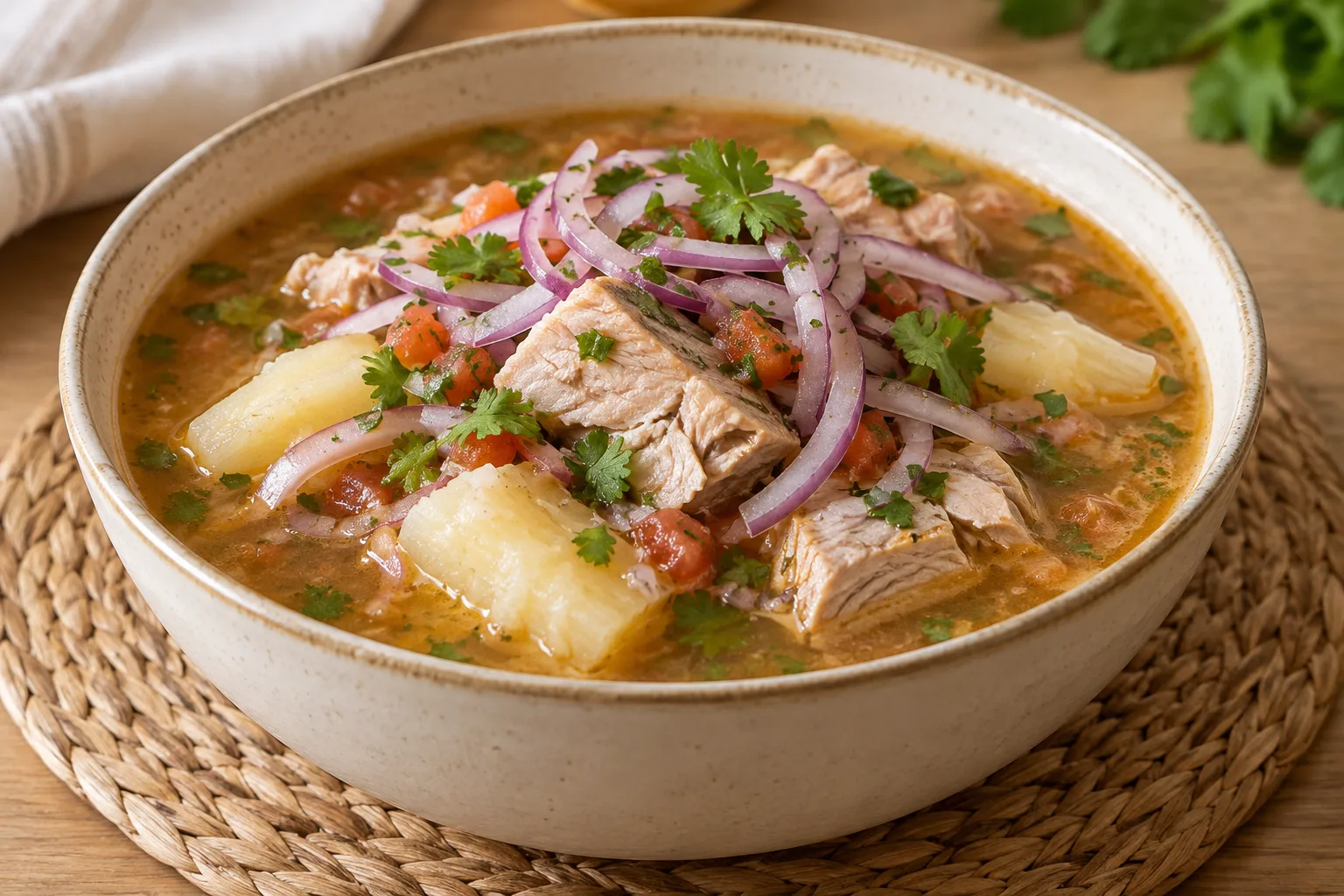
Many Ecuadorian preparations balance a soft or substantial base with something bright, savory or crisp. Encebollado brings fish and yuca together in a seasoned broth, with onion as a defining feature. It may be accompanied by chifles, bread or popcorn. Ecuadorian ceviche is often served with plenty of liquid; versions vary by seafood and locality, and some use cooked shrimp or other cooked seafood before mixing it with citrus, tomato, onion and herbs. Crunchy accompaniments offer a contrast to the tender seafood and dressing.
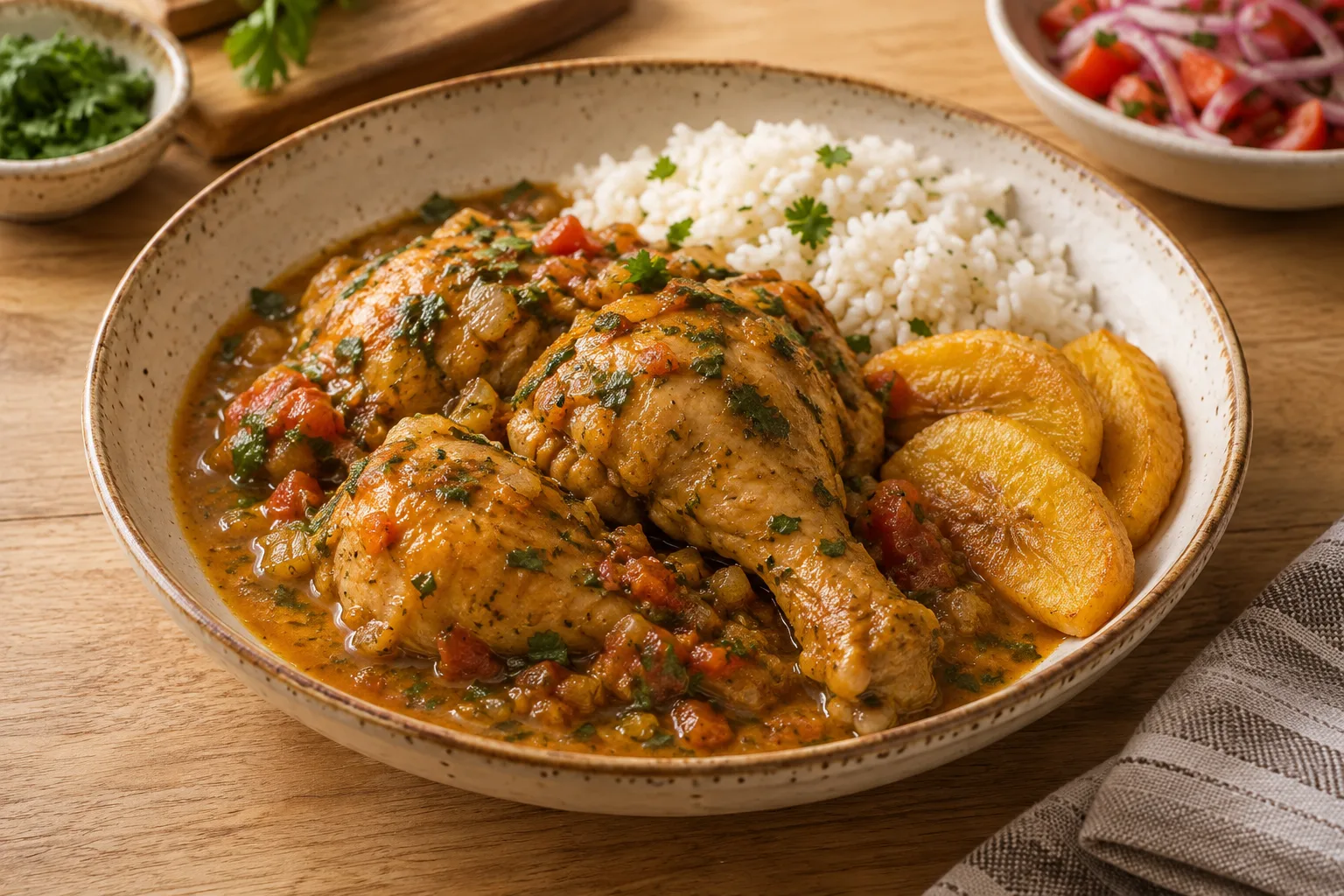
In the highlands, potatoes may be soft and creamy in locro de papa, or formed into llapingachos, potato cakes often filled with cheese and browned on a hot surface. Humitas offer a tender, corn-based texture, while mote pillo combines cooked maize with egg and cheese. Coastal dishes can draw on coconut or peanuts for richness, while plantain may be fried or mashed. These examples describe contrasts rather than a uniform national flavor profile. Seasoning and accompaniments vary across cooks and locations; there is no single level of heat or one required condiment for all Ecuadorian food. Ají may be served separately, allowing diners to add it according to preference. [Remove this text?]
Festive dishes and everyday transmission
Food knowledge is carried through homes, markets and communities, and recipes may differ from one family to another. A documented example from Talatac, in the parish of Zumbahua, identifies cariucho, caldo de mondongo and yahuarlocro among the community’s notable preparations, alongside everyday foods shaped by ingredient availability. This is evidence about a particular community, not a basis for generalizing about every Indigenous community or all Andean cooking.
Some dishes have a clear seasonal or celebratory association. Fanesca, made with bacalao, grains and vegetables, is associated with Holy Week. Humitas, made in maize-growing areas, may be eaten at breakfast or served alongside other food; sweet and savory versions are documented. Markets make culinary knowledge visible in daily life: Otavalo and Cuenca offer Andean preparations such as hornado and mote dishes, while Archidona and Portoviejo display different Amazonian and Manabí repertoires. Cooking and eating together are also ways that practical knowledge passes between generations, though the evidence does not support imposing one ritual on the whole country. Not every important dish belongs to a festival: soups, plantain preparations and market snacks are also part of ordinary meals. [Remove this text?]
Boiling, wrapping, mashing and browning
Cooking methods are tied to particular dishes and ingredients. Soups combine stocks or cooking liquids with fish, meat, vegetables, grains or tubers. In encebollado, fish and yuca are served in a savory broth with onion. Potatoes give locro a substantial texture, while mote is first cooked until tender and can then be combined with egg and cheese for mote pillo. These preparations share an emphasis on cooked ingredients but remain distinct in composition and result.
Wrapping food in leaves is another technique represented by specific dishes. A humita is made with maize and cooked in the husk of the cob; maito wraps fish in a leaf before cooking it over a fire. The leaf-wrapped method is associated with Amazonian examples, including preparations served in Archidona. Plantain can be cooked or fried and then mashed for bolón or tigrillo. Llapingachos are shaped into cakes and browned on a hot surface. These methods transform texture as much as flavor: boiling softens grains and tubers, mashing binds plantain, and browning creates a cooked exterior. They should not be treated as one national technique, but as practical methods embedded in distinct preparations. [Remove this text?]
Daily meals, markets and occasions to share
Soups are prominent in Ecuadorian meals, including everyday lunches. A meal may pair soup with rice or another accompaniment and a serving of meat, fish or legumes. In many places, a menú del día offers a set lunch that commonly includes soup, a main dish and a drink, sometimes with dessert. Market stalls and street vendors provide other ways to eat: empanadas and plantain-based foods can be taken as breakfast, a snack or a meal on the move. Encebollado is eaten at different times of day, rather than being restricted to a single occasion.
Markets also show how local foodways meet daily commerce. Otavalo’s market is associated with hornado, fritada, potato tortillas and mote; Cuenca’s with mote pillo, mote sucio and corn tortillas. Archidona’s food court offers maito with yuca or palm heart, as well as local drinks and other Amazonian foods. Portoviejo’s market includes Manabí preparations such as viche, ceviches and plantain dishes. These are particular documented settings, not exhaustive catalogues of what residents eat. Meals and market offerings change with ingredients, cooks and place. Shared dishes can have different accompaniments or seasoning, so encountering one version does not make it definitive. Everyday eating, seasonal occasions and market exchange all contribute to Ecuador’s food culture. [Remove this text?]
A short glossary of Ecuadorian foods
The names below refer to particular products and preparations documented in Ecuador. Their ingredients and presentation may vary by locality and cook; the definitions describe recognizable features rather than a single required recipe.
- Encebollado: A fish-and-yuca broth or stew, with onion as a characteristic topping or component. It may be served with crisp plantain, bread or popcorn.
- Humita: A maize preparation cooked in the husk of the cob. It can be savory or sweet and may include cheese.
- Maito: Fish wrapped in a leaf and cooked over a fire; documented Amazonian versions may be served with yuca or palm heart.
- Mote pillo: Cooked maize, or mote, combined with egg and cheese, especially visible in Andean market food.
- Llapingacho: A potato cake, often made with cheese, shaped and browned on a hot surface.
- Bolón de verde: A ball of mashed green plantain, which may include cheese, pork cracklings or both.
- Fanesca: A soup associated with Holy Week, combining bacalao with a variety of grains and vegetables.
- Viche: A Manabí fish soup that combines fish with peanuts and other ingredients.
These terms offer a starting point for recognizing foodways, not a claim that every household or market prepares them in the same way. [Remove this text?]
One country, many cuisines
Pacific Coast
Coastal cooking gives prominence to fish and shellfish, often paired with green or ripe plantain, peanuts or coconut. Encebollado, ceviches, encocado, bolón, tigrillo and viche illustrate different combinations of seafood and land-grown ingredients. Manabí has documented fish soups with peanuts and plantain preparations; Portoviejo’s market brings together ceviches, broths and other foods associated with this regional repertoire.
Andean Highlands
In the Sierra, potatoes, maize, mote and other grains appear in soups, cakes and market meals, alongside cheese and meats. Locro de papa, llapingachos, humitas, hornado and fritada are among the documented preparations. Otavalo and Cuenca markets show local variations, while research from Talatac, in Zumbahua parish, records cariucho, caldo de mondongo and yahuarlocro in the food traditions of that specific community.
Amazon
Documented Amazonian foods include preparations based on freshwater fish, yuca, plantain and local products. Maito wraps fish in a leaf for cooking over a fire; at Archidona’s market it is served with yuca or palm heart. The same setting offers chicha de chonta, guayusa and chontacuros. These examples belong to particular recorded contexts and should not be taken as a complete description of every community or food tradition across the Amazon.
Galápagos Islands
Galápagos food combines seafood and locally grown produce with preparations familiar from Ecuador’s Pacific coast. Documented ingredients include fish, crab, shrimp and lobster, alongside fruits and vegetables cultivated on the islands. Ceviche is a prominent offering, including ceviche de canchalagua, made with a mollusk associated with the archipelago. These examples describe the island setting without suggesting that its foodways are separate from mainland exchange.
Cook