Documentary synthesis prepared with AI assistance. It does not replace specialist review or certify kitchen testing. · Updated 12 November 2026
Two islands, a shared Caribbean table
Saint Kitts and Nevis is a two-island federation in the Caribbean Sea. The islands are separated by a narrow channel: Saint Kitts is larger, with mountainous terrain, beaches, and a history of sugar plantations; Nevis is smaller and has volcanic peaks and a coastal landscape. The sea and cultivated land both shape the food available, from fish and shellfish to tropical fruits and vegetables. These geographical features provide context, not a strict map of separate cuisines.
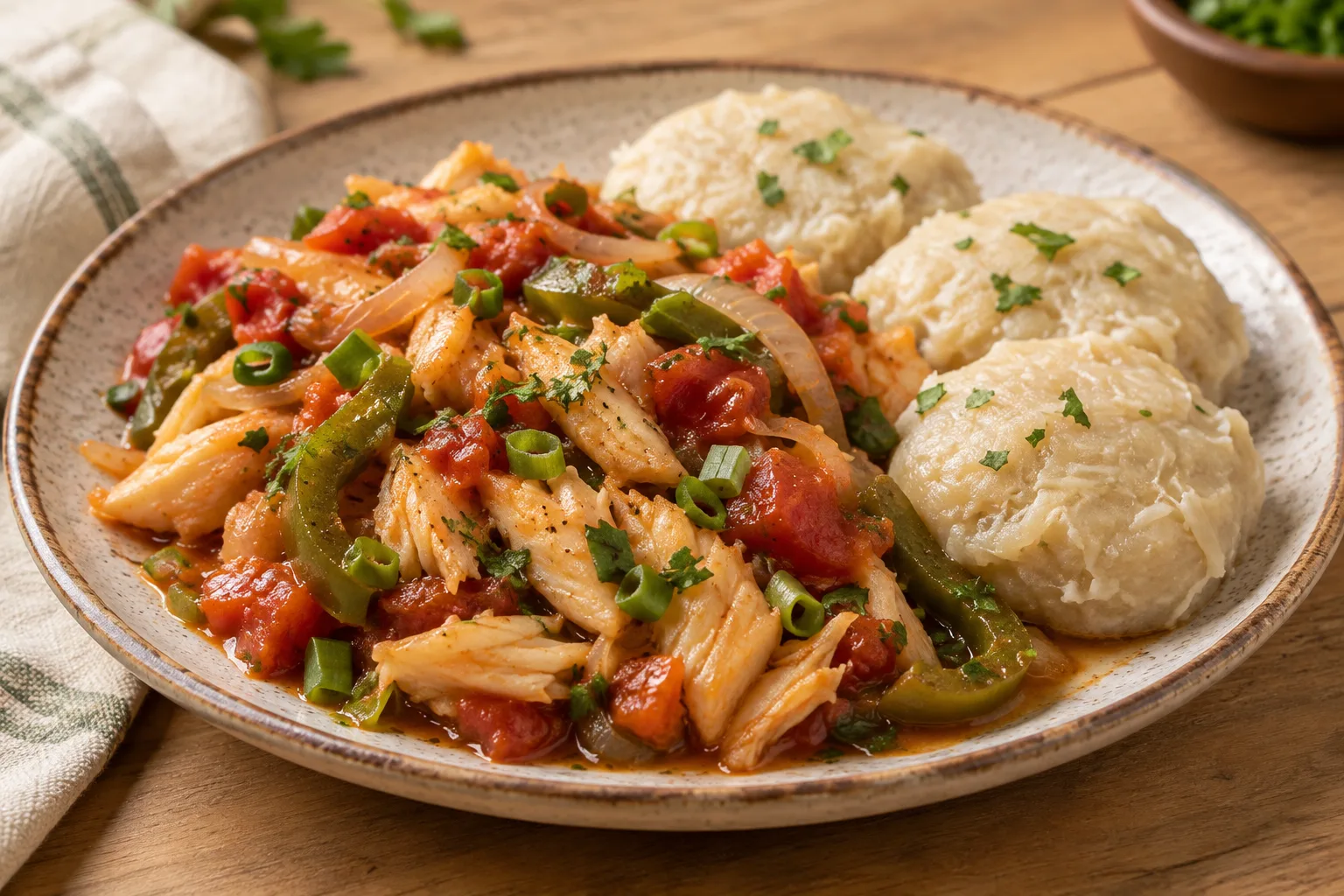
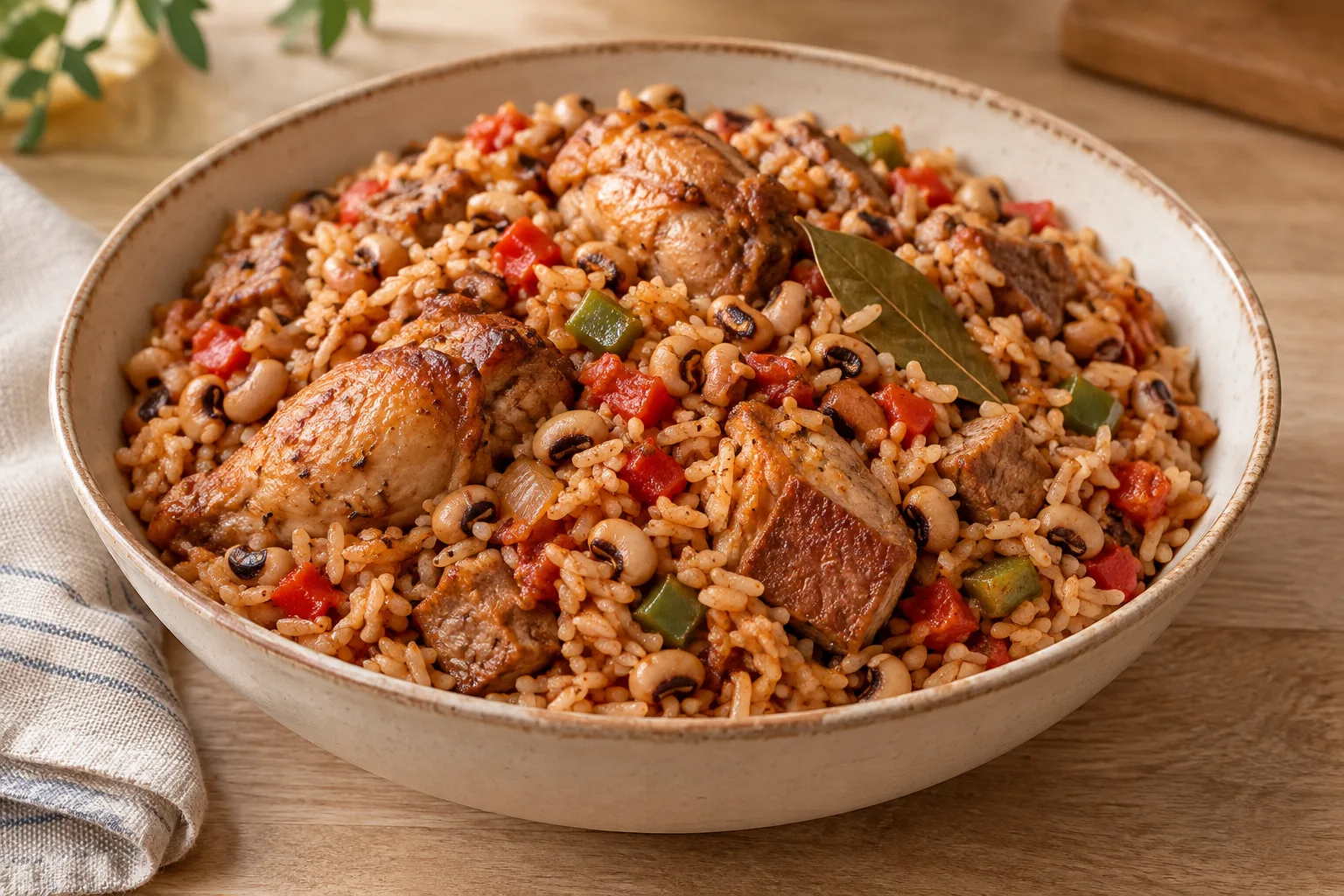
A few preparations make the national repertoire readily recognisable. Stewed saltfish is served with coconut dumplings, spicy plantain, and seasoned breadfruit in a combination identified as the national dish. Goat water is a substantial goat stew, while cook-up brings rice, pigeon peas, seasonings, and a variable choice of protein together in one pot. Each has versions rather than a single binding formula. The cuisine is best understood through these shared dishes and adaptable household practices, rather than as a fixed list of foods divided neatly between the islands. The names and ingredients also connect local cooking to a broader Caribbean food culture.
History, exchange, and changing foodways
Indigenous peoples lived on the islands before European settlement. Historical accounts refer to Arawak and Carib communities, while the details of their histories and relationships should not be reduced to a simple story of one group replacing another. English and French settlement began in the seventeenth century. Sugar plantations became central to the colonial economy, which relied on the forced labour of enslaved Africans. Emancipation in 1834 marked a major change, and the federation became independent in 1983.
The foodways of the country developed within this layered history and in contact with wider Caribbean traditions. African, European, Indigenous, and regional influences are often discussed in accounts of the islands’ culture, but that broad context does not prove a specific origin for every dish or technique. Salted fish, for instance, is part of a dish served with locally familiar tropical provisions; its presence alone does not establish a direct historical line from any one community. Sugar’s importance in the islands’ past is likewise significant, but it does not explain the whole cuisine. Food history here is a story of encounter and change, best told without assigning exclusive origins to preparations whose ingredients and forms are shared across the region.
A pantry of fish, provisions, rice, and peas
Saltfish—usually salted cod in descriptions of the national dish—is soaked and cooked before it is flaked and stewed. Onion, tomato, garlic, and peppers appear in accounts of its aromatic base. The islands’ coastal setting also brings fresh seafood into the repertoire. Sources name fish such as snapper and mahi-mahi, as well as spiny lobster and conch; these examples describe available and familiar foods, not ingredients served at every meal or in every season.
The word provisions refers to substantial plant foods served alongside a main dish. Breadfruit, plantain, and sweet potato are among the documented examples. Rice and pigeon peas are central to cook-up; recipes vary in the protein and seasonings, and may include chicken, pork, or saltfish. Coconut appears in coconut dumplings and in descriptions of some rice preparations. Goat is used for goat water, and chicken and pork feature in other stews and rice dishes. Garlic, onion, thyme, and hot peppers season some preparations, while tamarind and guava appear in descriptions of sweets. The pantry combines fresh and preserved foods, with the exact selection shaped by the dish and household rather than a universal ingredient list.
Salty, savoury, and contrasting textures
The national-dish combination brings several textures and tastes onto one plate. Saltfish is savoury and flaky after it has been soaked, cooked, and stewed. Its aromatic tomato and pepper base contrasts with the substantial, mild character of breadfruit and the sweetness of ripe plantain. Coconut dumplings add a chewy, tender element. The dish is recognised in this four-part form, though the proportions and precise preparation can differ.
Goat water offers a different kind of richness. It is a slowly cooked goat stew, described with herbs and seasonings; some versions include breadfruit, green papaya, or dumplings. Cook-up is defined more by its method and combination of rice with pigeon peas than by one fixed flavour profile. The rice absorbs seasoned cooking liquid, while the choice of protein and other ingredients changes from recipe to recipe. These dishes illustrate a repertoire spanning salty fish, savoury stews, fragrant aromatics, and the sweet or mellow notes of plant foods. Chilli is one possible source of heat, not a requirement for every dish: its presence and intensity depend on the particular preparation.
Celebrations, gatherings, and culinary transmission
Food is part of both everyday life and public celebration. Cook-up is described as a dish for family gatherings and special occasions, and its one-pot format brings rice, peas, seasonings, and a chosen protein together. Goat water is also associated with gatherings and celebrations; accounts particularly connect it with Nevis, but that association does not make it exclusive to the island or to a single event. The ingredients in both dishes can vary, so neither name guarantees one standard recipe.
The islands’ cultural calendar includes Carnival and Nevis’s Culturama. Culturama was established as a way to keep local cultural expressions visible through community and artistic activities. Contemporary food events provide further settings for showcasing dishes, ingredients, and cooking, alongside the meals prepared in homes. These occasions belong to a wider cultural life that includes music, performance, and community activity; they should not be mistaken for one uniform food ritual. Recipes are adapted and passed on within this varied setting, but the available accounts do not establish a single method of transmission for every household. Continuity and variation coexist: familiar dish names link people to shared foodways, while household choices shape what is cooked and served.
Soaking, stewing, boiling, and cooking in one pot
Preparing saltfish for stewing involves soaking it, then boiling it in fresh water before removing bones where necessary and flaking the fish. Aromatics and tomato are cooked to form a moist base, and the fish is added to finish the stew. This sequence is documented for the national-dish preparation, although soaking time and seasoning may differ. Breadfruit can be cut into pieces and seasoned with aromatics and herbs; plantain is described as fried in some versions of the accompanying meal.
Coconut dumplings are made from a firm dough of flour, grated coconut, and other ingredients, shaped into pieces, and boiled. Cook-up uses a different method: rice and pigeon peas cook together in one pot with seasoned liquid, allowing the rice to absorb flavour. Its protein and other ingredients vary, and the available descriptions do not establish a single order for every household version. Goat water is simmered slowly until the goat is tender and the broth has developed its flavour. These methods belong to particular dishes, not to a universal rule for cooking in the country. The choice between boiling, frying, stewing, and covered one-pot cooking depends on what is being prepared.
Serving the main dish and its companions
The saltfish meal is often presented as a combination: stewed fish with coconut dumplings, plantain, and seasoned breadfruit. These components provide different textures and make the meal substantial. The description is a recognisable national-dish arrangement, not a guarantee that every cook serves every component in the same form or proportion. Other provisions, including sweet potato, also occur in accounts of the islands’ food, and rice can accompany saltfish in some meals.
Cook-up organises ingredients differently. Rice, pigeon peas, seasonings, and a chosen protein cook together and are served as a filling main dish. Goat water is served as a stew; some versions are accompanied by dumplings or bread. Fresh fish and shellfish appear in other preparations, including stewed, fried, or grilled forms. The foods named here fit family meals as well as broader gatherings, but the evidence does not establish one formal serving ritual shared across all occasions. A dish’s ingredients matter: a cook-up may contain different proteins, and its name alone does not identify them. The table reflects both the preparation and the occasion, from a one-pot meal to a plate with distinct accompaniments.
A glossary of local foods and preparations
These terms identify particular ingredients and preparations found in accounts of Saint Kitts and Nevis. Some names cover more than one household version, so the label should not be taken as a complete ingredient list.
- Saltfish: Salt-preserved fish, usually described as cod for the national dish. It is soaked, cooked, flaked, and stewed with seasonings.
- Provisions: A general term for substantial plant foods served with a meal; documented examples include breadfruit, plantain, and sweet potato.
- Coconut dumplings: Pieces of firm dough made with flour and grated coconut, then boiled.
- Goat water: A slow-cooked goat stew, sometimes described with breadfruit, green papaya, or dumplings.
- Cook-up: A one-pot dish of rice and pigeon peas with seasonings and a protein that varies by recipe.
- Pigeon peas: A pulse cooked with rice in cook-up; the ingredient is also known in English as gandules in some Caribbean contexts, though naming varies by place.
The glossary distinguishes a broad ingredient category such as provisions from named preparations such as goat water and cook-up. It also highlights an important practical difference: a dish name may describe its method or central ingredients without specifying every component. In particular, cook-up recipes vary in protein and seasoning.
One country, many cuisines
Saint Kitts
Saint Kitts is the larger island of the federation, with mountainous terrain, coast, and a history shaped by sugar plantations. The documented food repertoire includes the national saltfish combination, provisions such as breadfruit and plantain, seafood, stews, and rice dishes. These foods are part of a shared national cuisine; the evidence does not establish a separate set of recipes exclusive to Saint Kitts.
Nevis
Nevis is the smaller island, known for its volcanic peaks and for Culturama, a cultural festival created to sustain visibility for local cultural expressions. Goat water is especially associated in some accounts with Nevis and with gatherings, while also belonging to the wider national repertoire. Available evidence does not establish a single Nevis recipe or a sharp culinary boundary between the two islands.
Cook