Documentary synthesis prepared with AI assistance. It does not replace specialist review or certify kitchen testing. · Updated 12 November 2026
A coastal country with many food traditions
Liberia lies on the Atlantic coast of West Africa. Its food traditions draw on ingredients familiar across the region, while reflecting the country’s own communities, agricultural practices, and history. Rice and cassava are important staples, joined by plantains, yams, taro, vegetables, tropical fruits, fish, and meat. The resulting cuisine is not a single fixed menu: ingredients, accompaniments, and cooking habits vary from household to household and among communities.
Rice is a particularly visible foundation of the meal. It may be served plain, with a stew or soup spooned over it, or cooked together with a seasoned sauce as jollof. Cassava offers a different kind of staple: it can be processed into flour or worked into pounded foods with distinct textures. Dumboy, made from boiled cassava, and geebee, associated with communities in Nimba, are examples of preparations that should not be treated as interchangeable simply because both involve cassava.
Stews and soups give meals much of their character. Greens, okra, palm fruit, peanuts, fish, meat, onions, and chiles can appear in varied combinations. Some dishes are thick and substantial; pepper soup is a more broth-like preparation. Smoked fish adds another distinctive element, particularly in coastal settings. These contrasts help explain why a staple such as rice or a cassava dough is often understood in relation to what accompanies it.
Liberia’s culinary landscape also includes baking and market foods as well as home-cooked meals. Cornbread, rice bread, banana bread, and coconut sweets are among the baked goods documented in the country. Monrovia’s markets and restaurants bring together coastal fish and other ingredients, while local food sellers offer snacks such as kala and fried ripe plantains. Shared staples connect meals, but local preparations and community associations remain important parts of the picture. This atlas highlights documented examples without claiming that any one dish represents every Liberian table.
Food shaped by local practice and exchange
Liberian cuisine reflects both longstanding West African food practices and historical contact across the Atlantic. In the nineteenth century, the American Colonization Society promoted settlement in the region by free and emancipated Black people from the United States. Settlement began in the 1820s, and Liberia declared independence in 1847. This history provides context for documented connections between Liberia and American foodways, particularly in baking, but it does not make Liberian cooking a simple import from abroad. Local ingredients, practices, and regional exchange are integral to the cuisine.
The country’s baking tradition includes cornbread, rice bread, banana bread, cakes, and other baked goods. Some accounts describe connections with the American South, while the ingredients and forms used in Liberia reflect local adaptation. For example, rice flour is used for country breh, and banana bread is also called rice bread in descriptions of Liberian cooking. These examples show how a food tradition can travel and change without erasing the setting in which it is made.
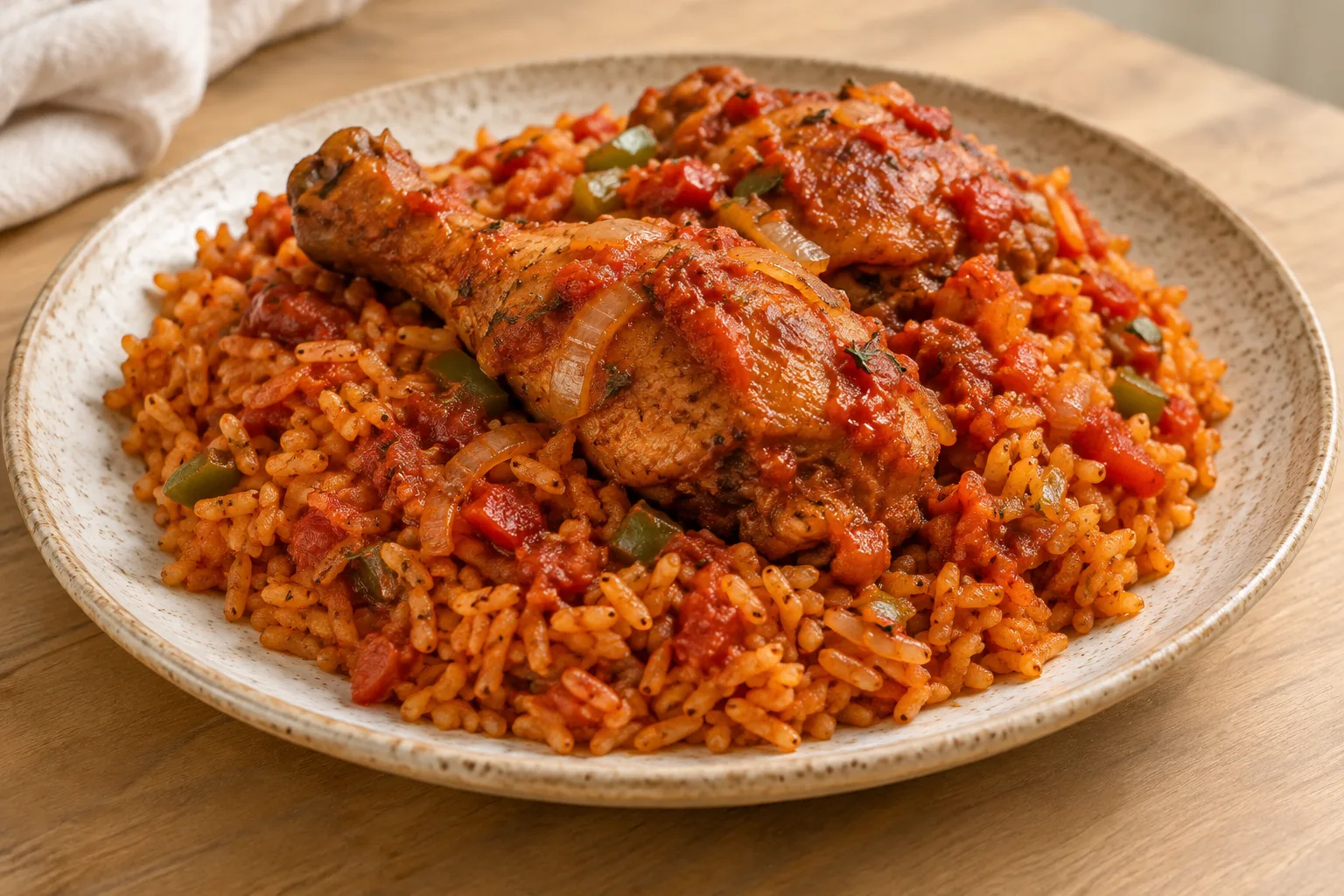
Jollof rice is another dish whose history belongs to a wider West African context. The dish is shared across the region, with variations; in Liberia it is described as rice cooked with tomato, onion, chile, and other seasonings, sometimes served with meat or fish. Some accounts connect its history to transatlantic culinary exchange, but the evidence does not establish a single, exclusive origin story for Liberian jollof. It is more careful to recognize regional connections and local adaptations than to assign the dish to one community or one historical route.
Historical events also affected the country’s society and economy, but the evidence available here does not give a detailed timeline for how particular recipes changed through every period. What can be said is that rice, cassava, leafy stews, and baking remain documented parts of the culinary landscape. Historical influence is best understood as one strand among several, alongside West African connections and the practices of Liberia’s diverse communities. A broad account should therefore avoid reducing the cuisine to either an American legacy or a single national dish.
Staples, greens, fish, and palm products
Rice and cassava anchor many meals, but the pantry is broader than those two staples. Rice may be purchased or grown as swamp rice, served plain, accompanied by soup or stew, prepared as jollof, or milled into flour for country breh. Cassava can be boiled and pounded, dried and processed into flour, or made into other starchy foods. Plantains, yams, and taro add further options; fufu may be prepared from different starches, so its composition is not always the same.
Leafy vegetables and other greens are central to several well-known stews. Sweet-potato leaves, commonly called potato greens, can be finely cut and cooked with oil, seasoning, and meat. Cassava leaves are ground before being braised, while jute leaves are associated with palava sauce. Okra and bitterball—a small vegetable resembling an eggplant—appear in soups and stews. These ingredients offer different textures and tastes, and the name of a dish does not by itself specify every green or addition used in a particular household.
Palm products have several culinary roles. Palm oil enriches stews, while palm-fruit pulp is the base of palm butter, a thick sauce cooked with fish or meat. Peanuts provide another base for soup; they may be ground, or peanut butter may be used in some preparations. Rice, cassava, greens, palm products, and peanuts thus contribute in different ways rather than acting as a single interchangeable set of ingredients.
Fish and meat supply further variety. Fresh fish, smoked fish, dried fish, shrimp, chicken, beef, and goat appear in documented dishes. Small dried fish are known by names including bonnies and bodies. In coastal Monrovia, fish is sold in markets and smoking is a visible means of preparing seafood for cooking. Tropical fruits—including mango, pineapple, papaya, coconut, citrus, and avocado—are also part of the documented food landscape. Together these ingredients make a flexible pantry, not a compulsory checklist for every meal.
Heat, savor, and contrasting textures
Liberian dishes can be boldly seasoned, but there is no single flavor profile that applies to every household or recipe. Chiles such as habanero and Scotch bonnet are used in many stews and soups, giving some preparations pronounced heat. Other important notes come from onions, greens, palm oil, peanuts, and fish, especially when dried or smoked. The combination depends on the dish: a green stew, a palm-based sauce, and pepper soup are not different names for one uniform preparation.
Leaf-based stews demonstrate how ingredients change both flavor and texture. Potato greens are chopped and cooked with seasoning and may be combined with meat. Cassava leaves are ground before cooking, giving their stew a different character. Palava sauce is associated with jute leaves and may include palm oil, fish, or meat. Toborghee, linked in the evidence to Lorma communities in Lofa, uses African eggplants and is described as bitter. That bitterness is a particular feature of this preparation, not a general description of Liberian food.
Palm butter and peanut soup provide another contrast. Palm butter begins with palm-fruit pulp and becomes a thick sauce; peanut soup uses peanuts as its defining base and may be served with rice or a starchy accompaniment. Pepper soup is described as a spicy broth with meat or fish. The word “soup” therefore covers preparations with different thicknesses, ingredients, and uses.
Starches contribute their own textural range. Plain rice can remain separate from its sauce, while jollof cooks rice with a seasoned mixture. Dumboy is pounded boiled cassava with a smooth, sticky texture. Geebee is another cassava preparation, associated with Nimba communities, and should not be collapsed into dumboy on the basis of a shared ingredient. Fish may be tender, dried, or smoke-rich; greens may be finely chopped and substantial. Meals often balance a mild or neutral starch against a more intensely seasoned accompaniment, but the exact balance is a matter of preparation rather than a rule that every dish must follow.
Sharing, celebrations, and culinary transmission
Food is prepared and shared in household, communal, and commercial settings. Dumboy is documented as a dish eaten at family gatherings as well as in everyday meals. Its preparation—boiling cassava and pounding it to a smooth dough—can involve substantial work. Accounts describe the dish as associated with togetherness and hospitality, but this should not be turned into a claim that every family makes it collectively or reserves it for special occasions. It is one valued food among many, not a complete representation of the country’s varied cooking.
Jollof rice is associated with celebrations and special events in descriptions of Liberian food. Rice with stew or sauce, by contrast, is a flexible meal arrangement that can be served routinely. These examples show how some dishes may be especially visible at a gathering while the same basic pantry supports ordinary meals. Food sellers, restaurants, and markets are also part of the picture: they provide ways to eat beyond the household and bring dishes and ingredients into public spaces.
Street foods and small bites include kala, a fried dough, as well as fried ripe plantains, roasted corn, and grilled meats. Baked foods—including breads, cakes, and coconut sweets—add another strand to the culinary repertoire. These documented foods are not limited to a single occasion; their place can vary by setting and availability. The evidence supports noting their presence without assigning each a specific ritual or calendar date.
Transmission is visible in both widely shared preparations and community-linked examples. Geebee is associated with Gio and Mano communities in Nimba, while toborghee is linked to Lorma communities in Lofa. Dumboy is documented in connection with Grand Bassa and Rivercess. Such associations help locate particular traditions, but they do not establish exclusive origins or imply that foods stop at county boundaries. Liberian culinary knowledge is carried through repeated cooking, sharing, and local variation, with familiar ingredients taking different forms across communities. A careful account leaves room for this variation rather than presenting one dish, group, or occasion as the whole cuisine.
Pounding, simmering, smoking, and baking
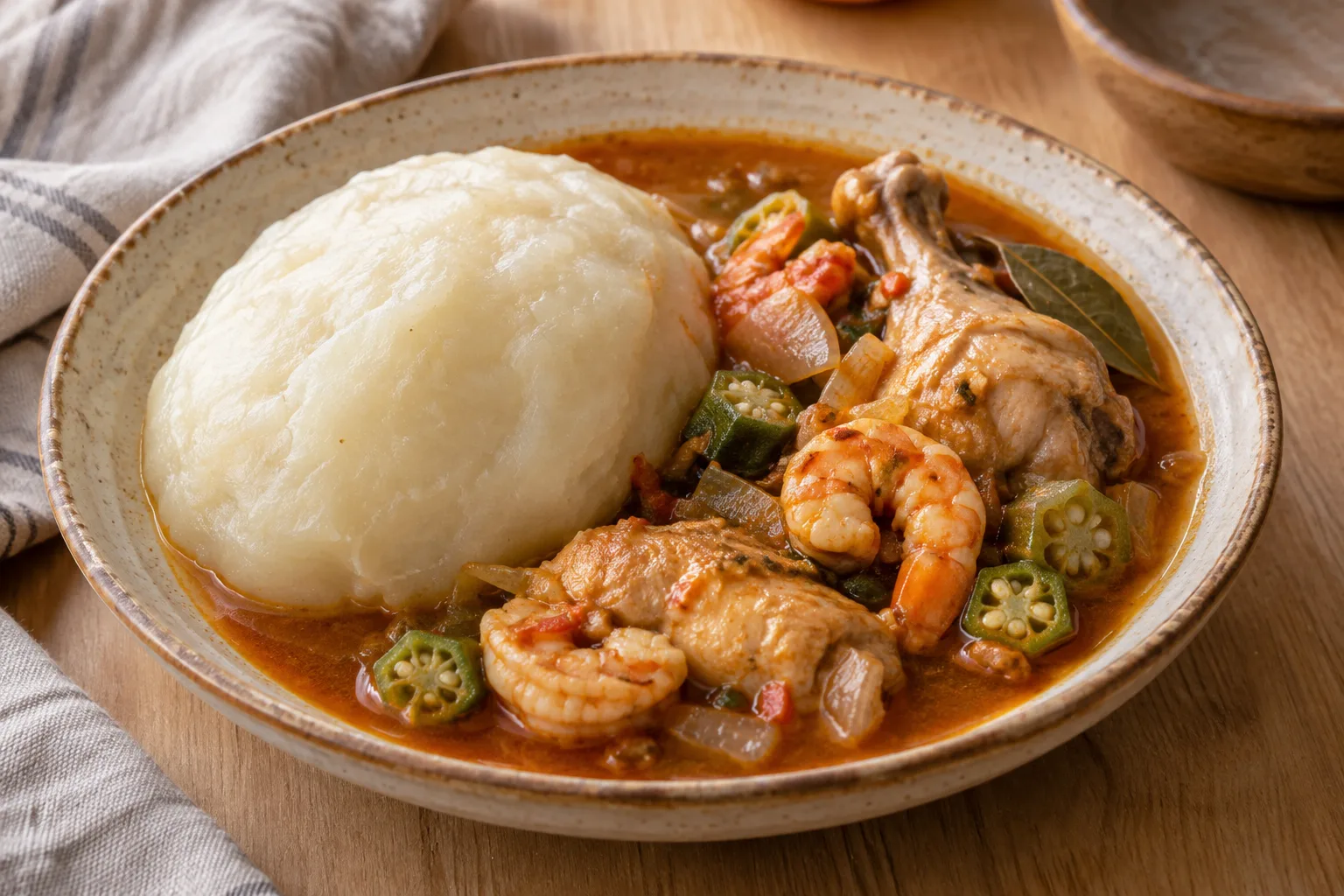
Pounding cooked cassava is a defining technique for dumboy. The root is peeled, boiled until soft, and worked with a mortar and pestle until it forms a cohesive, smooth, and sticky dough. Portions can then be shaped for serving with soup or stew. The process transforms a firm root into a supple accompaniment; it is distinct from preparing cassava as flour or from making other pounded staples. Fufu is a broader category whose base can include cassava, plantain, or other starches, so it should not be treated as another name for dumboy.
Guises and soups bring together ingredients through sustained cooking. Greens may be finely sliced or ground before they are cooked with oil, seasonings, and meat or fish. In documented accounts of potato greens, chicken is first seared and then stewed with greens, onions, chiles, and seasoning. Palm butter uses a different transformation: palm fruit is boiled and crushed, and the resulting pulp is cooked with fish, meat, or other ingredients until the sauce thickens. Peanut soup develops around peanuts, while pepper soup is a more broth-like preparation. These are useful distinctions in process as well as flavor.
Fish preparation reflects the importance of coastal markets. In a documented Monrovia fishing community, small fish are arranged on woven mats and smoked over smoldering wood in metal drums; the smoking process takes about a day. Smoked seafood can then be crumbled into stews, contributing a deep, savory character. Fish may also be cooked fresh, fried, or grilled, depending on the dish.
Liberian cooking includes baking as well as pot cooking. Cornbread, rice bread, banana bread, cakes, and coconut sweets are documented examples. Rice flour is used for country breh, and some descriptions refer to banana bread as rice bread. Palm sap can be fermented into palm wine; this is a separate transformation from preparing palm fruit for palm butter. Pounding, simmering, smoking, baking, and fermenting each make a different use of the pantry, and no one technique defines every Liberian meal.
How staples and accompaniments meet
Rice commonly serves as the base around which a meal is organized. It can be served plain, with sauce or stew placed over it, or with soup as an accompaniment. Jollof differs in that rice is cooked together with a seasoned tomato mixture rather than simply presented as a separate starch beside a sauce. The protein and vegetables alongside these dishes vary; documented combinations include fish, meat, and greens. No one arrangement should be assumed to describe every household meal.
Dumboy and other pounded starches work differently from loose rice. A portion of dough is paired with soup or stew, allowing the accompaniment to supply moisture and seasoning. Pepper soup, palm butter, and palava sauce are among the documented partners for cassava-based staples. Some descriptions mention taking a portion by hand and dipping it into soup, but that detail should not be presented as the only way to eat these foods. Geebee, especially associated with Nimba communities, also appears with soups and sauces, while its texture and preparation remain distinct from dumboy.
Meals can be eaten at home, at family gatherings, in restaurants, or from food sellers. Monrovia’s markets connect the coastal fish supply with city cooking; restaurants offer Liberian dishes as well as food from other traditions. Street vendors provide snacks such as kala, fried ripe plantains, roasted corn, and grilled meat. These examples show that the table extends beyond formal meals and that a shared food culture includes both cooked staples and foods bought ready to eat.
Baked goods and sweets provide another kind of accompaniment or snack. Cornbread, rice bread, banana bread, and coconut-based treats belong to a documented baking tradition. Palm wine is a traditional drink made by fermenting palm sap, while cane juice is a locally named sugarcane-derived liquor. They are distinct products and should not be confused with palm butter, which is a sauce ingredient. The Liberian meal is best understood through relationships: rice with stew, dough with soup, or a snack with a spicy sauce. These combinations are common patterns, not fixed rules for every occasion.
A glossary of Liberian foods
These terms identify documented ingredients and preparations. Recipes and serving combinations can vary; names describe recognizable foods rather than a single compulsory formula.
- Dumboy: A pounded cassava staple made by boiling cassava and working it into a smooth, sticky dough. It is commonly served with soup or stew, including pepper soup.
- Geebee (GB): A cassava-based preparation associated particularly with Gio and Mano communities in Nimba. It is served with accompaniments such as pepper soup, palava sauce, or palm butter.
- Fufu: A pounded, dough-like staple made from cassava or other starchy ingredients, including plantain or taro. The name does not specify one universal base or make it identical to dumboy.
- Jollof rice: Rice cooked with a seasoned mixture commonly including tomato, onion, and chile. Liberian versions may be served with meat or fish; jollof is also part of a wider West African food tradition.
- Palm butter: A thick sauce made from palm-fruit pulp and cooked with ingredients such as fish or meat. It is distinct from palm oil and from fermented palm wine.
- Palava sauce: A leafy stew associated in Liberia with jute leaves. Documented versions may include palm oil, fish, or meat and can accompany rice or a pounded staple.
- Potato greens: A stew made with leaves of the sweet-potato plant, often cut finely and cooked with seasoning and meat. The name refers to the leaves, not to a dish of sweet-potato roots.
- Bitterball: A small vegetable resembling an eggplant, used in documented Liberian soups and stews. Its name and use distinguish it from the leaf ingredients in other green sauces.
- Bonnies or bodies: Names recorded for small dried fish, used as an ingredient in some dishes.
- Country breh: A bread made with rice flour, illustrating another use of rice beyond serving it as a cooked staple.
- Toborghee: A stew of African eggplants associated in the evidence with Lorma communities in Lofa and described as having a bitter taste.
- Kala: A fried-dough snack, documented as a street-food option and served with chile sauce.
- Palm wine: A drink made by fermenting palm sap. It is different from the palm-fruit pulp used in palm butter and from sugarcane-based cane juice.
One country, many cuisines
Nimba and Gio and Mano communities
Geebee, also called GB, is a documented cassava preparation associated especially with Gio and Mano communities in Nimba. It is served with accompaniments such as pepper soup, palava sauce, or palm butter. This community-linked example locates a particular tradition without implying that it is exclusive to the area or uniform across households.
Grand Bassa and Rivercess
Dumboy is documented in connection with family gatherings and shared meals, and its presence is noted in Grand Bassa and Rivercess. Made by boiling and pounding cassava into a cohesive dough, it is served with soup or stew. This records a connection with these counties, not an exclusive claim or a single method followed by every family.
Monrovia and the coast
Coastal fishing and seafood are part of the documented food landscape, while Monrovia’s markets connect fish with urban cooking and restaurants. Fish may be smoked, fried, grilled, or added to stews. The smoking of small fish is documented in a Monrovia fishing community. These examples describe coastal and urban links, not a formal culinary boundary or one recipe shared by the entire coastline.
Cook