Documentary synthesis prepared with AI assistance. It does not replace specialist review or certify kitchen testing. · Updated 12 November 2026
An island food culture shaped by sea and land
The Maldives lies in the Indian Ocean, southwest of India and Sri Lanka. Its many atolls and islands give the sea a central place in everyday food, but the cuisine is not simply a collection of seafood dishes. Fish, coconut and starches form a useful picture of its pantry: tuna is widely used, coconut appears grated or as milk, and rice, tubers and breadfruit provide substance. The balance varies from one preparation to another, from a clear fish broth to a coconut-rich curry or a small savoury pastry.
The word Dhivehi is used for the cuisine and language associated with the Maldives. Familiar dishes include mas huni, a tuna-and-coconut breakfast mixture, garudhiya, a clear fish broth, and roshi, a flatbread served with meals. Together they show how one ingredient can take different forms: tuna may be fresh, cooked, smoked or dried, and coconut may be mixed into a fresh relish or turned into milk for a curry. These preparations are part of a broader food culture rather than a single defining meal.
Island resources and Indian Ocean connections
The archipelago’s position along Indian Ocean routes brought it into contact with visitors and traders from beyond the islands. The historical record represented here describes Arab travellers visiting from around the tenth century and the adoption of Islam from the twelfth century; it also places the Maldives within wider networks linking parts of Asia and Africa. This context helps explain why Maldivian food is discussed alongside neighbouring cuisines, but it does not establish a single origin for individual dishes.
India and Sri Lanka are commonly named as close culinary reference points, particularly for the use of spices, curries and flatbreads. Such similarities are best understood as part of regional exchange rather than proof that a shared preparation belongs exclusively to one place. Fish processing also gives the cuisine a distinctive range of uses: fish can be eaten fresh or cooked, while dried or smoked fish contributes to snacks and other dishes. Long-cooked fish becomes rihaakuru, a concentrated paste. Together, these practices reflect both the maritime setting and a history of contact, without reducing Maldivian cooking to outside influence alone.
Tuna, coconut, rice and a varied island larder
Tuna is prominent, but not the only fish used in Maldivian food. Sources name skipjack, yellowfin and little tunny as well as fish such as wahoo and mahi-mahi. Fish may be fresh, boiled, smoked or dried. Dried fish can be broken into pieces or shavings, while a long cooking process produces the thick, dark paste rihaakuru. These forms put fish to work in broths, curries, breakfast mixtures and small bites.
Coconut is used as fresh grated flesh, squeezed milk and oil. Grated coconut appears in mas huni and other mixtures; coconut milk enriches many curries. Rice is eaten cooked or milled into flour. Other starchy foods documented in the Maldivian pantry include taro, sweet potato, cassava and breadfruit. Pandan fruit and leaves also feature in the food vocabulary. Vegetables named in curry preparations include eggplant, pumpkin, sponge gourd and moringa leaves, as well as green banana and other leaves. Ginger, garlic, chilli, turmeric, cumin, cinnamon and cardamom provide aromatic depth. The exact combination depends on the dish, so this list describes a repertoire, not ingredients that appear together in every meal.
Fresh, smoky, savoury and warmly spiced
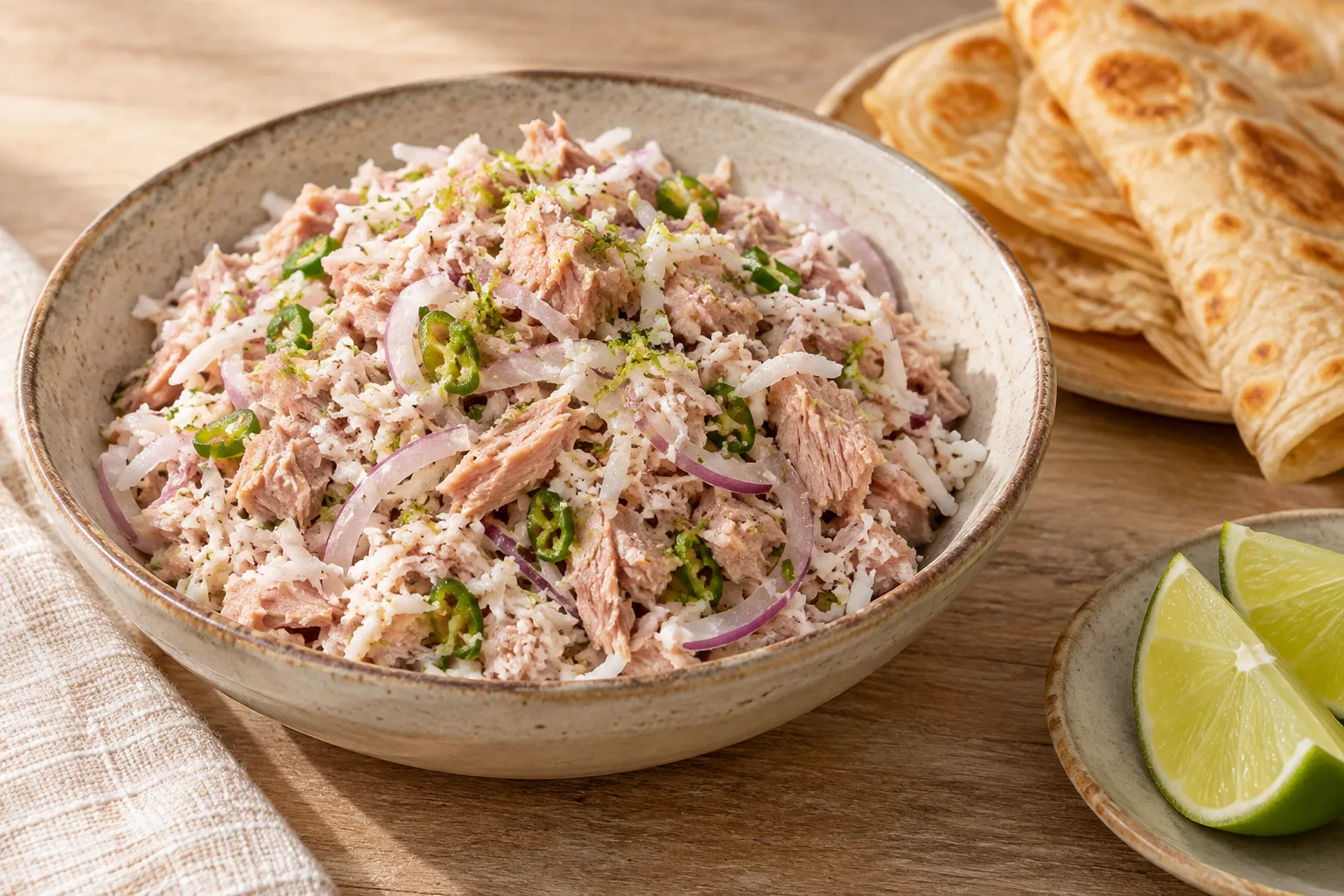
A recurring pairing is fish with coconut, but the two ingredients create different effects depending on how they are prepared. In mas huni, shredded tuna, grated coconut, onion and chilli form a fresh, crumbly mixture; lime is a common brightening addition. In a curry, coconut milk gives the sauce a fuller texture, while spices and aromatics shape its warmth. Smoked or dried fish brings a more concentrated flavour than fresh fish, and rihaakuru offers the deepest, most intensely fish-forward expression in this group of preparations.
Garudhiya provides a contrast: it is a clear fish broth, often served with rice or roshi. Lime, onion and chilli may be offered alongside it, allowing diners to add acidity or heat to their own bowl. Curries bring another range of textures, from the fish-based mas riha to chicken curry and vegetable versions. Chilli is only one part of their character. Fish type, coconut, herbs and spices all matter, and not every dish is described as sharply hot. This range—from clear broth to creamy curry, fresh relish and dark paste—is more revealing than treating the cuisine as a single flavour profile.
Breakfasts, tea-time bites and occasions to gather
Breakfast is an important setting for mas huni, usually served with roshi. The mixture of tuna, coconut, onion and chilli is one well-known morning preparation, while garudhiya is another familiar dish and can be eaten with rice or bread. There are also alternatives to tuna-based mixtures: boshi mashuni combines banana flower and coconut, and pumpkin-and-coconut preparations are also documented. These examples show variety within the breakfast repertoire rather than a single fixed menu.
Small savoury foods known collectively as hedhikaa are associated with tea, including afternoon tea. Examples include gulha, filled savoury balls; masroshi, a filled bread; and bis keemiya, a folded pastry that may contain egg and cabbage, or tuna in some versions. Food also appears in accounts of particular celebrations. Sweet rice bondibaiy is associated with special occasions, including christenings in some communities, while the fish cake kulhi boakibaa is described as a celebratory food. Maahefun is identified as a gathering connected with the beginning of Ramadan. These are documented examples, not a uniform ritual observed by every family or island.
Cooking, preserving, grating and shaping
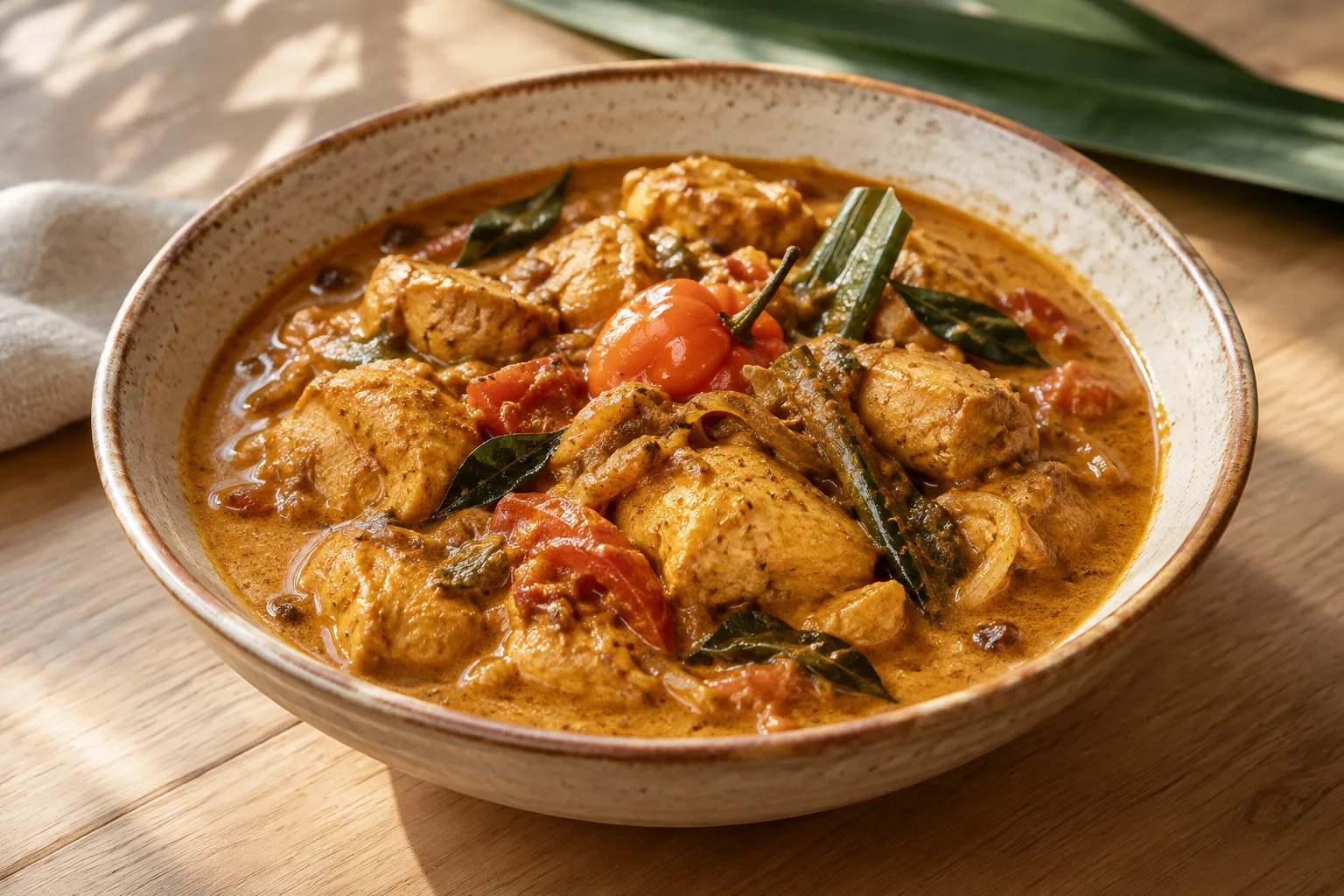
The methods used in Maldivian cooking respond to the ingredients and the dish. For garudhiya, fish is cooked in water to make a clear broth, commonly served with rice or roshi. Curries combine fish, chicken or vegetables with seasonings; coconut milk appears in many versions. The tuna curry mas riha and chicken curry kukulhu riha show how a shared curry form can have different main ingredients and spice combinations.
Preserving fish extends its use beyond a fresh catch. Fish may be boiled, smoked and dried; dried fish is broken up or grated for use in snacks and mixtures. Prolonged cooking also produces rihaakuru, a concentrated paste. Coconut has its own processing tool: the hunigondi is a low, elongated seat fitted with a toothed blade for grating its flesh. The grated coconut can be used directly or soaked and squeezed to obtain coconut milk.
Flatbreads and filled snacks require further handling. Roshi is cooked as a flatbread, while huni roshi incorporates coconut into the bread. Masroshi encloses a filling in bread; bis keemiya is folded around a filling and is commonly fried. Fish cakes such as kulhi boakibaa use ground rice to help bind fish, coconut and seasonings. These distinct processes explain the range of textures in the cuisine.
Rice, flatbread and dishes served together
Rice and roshi are versatile companions to Maldivian dishes. Rice provides a simple base for fish, broth or curry, while flatbread can be eaten alongside the same preparations. Mas huni is commonly paired with roshi at breakfast. Garudhiya may be served with rice or bread, and curries are also eaten with either accompaniment. These combinations allow fish and sauces to be part of a meal without requiring one prescribed arrangement for every household.
The table may include additions that change a mouthful at a time. Lime brings acidity to fish broth; chilli can add heat; and a small amount of rihaakuru contributes a concentrated fish flavour with rice or bread. Other documented accompaniments include fried fish, cooked leaves and chilli mixtures. They are options within a varied food repertoire, not a set of items that must all appear together. The occasion can be a morning meal of mas huni and bread, a meal of curry and rice, or tea accompanied by hedhikaa. Special-occasion foods such as sweet bondibaiy and kulhi boakibaa add another dimension to shared meals, while the sources do not establish a single formal dining protocol across the archipelago.
A glossary of Maldivian foods and tools
Local names distinguish dishes that may share fish, coconut or spices but differ in texture, preparation and occasion. These definitions describe the preparations documented here; household and recipe variations are possible.
- Mas huni: A tuna, grated-coconut, onion and chilli mixture commonly eaten at breakfast, often with roshi.
- Garudhiya: A clear fish broth, usually served with rice or flatbread and sometimes accompanied by lime, onion or chilli.
- Roshi: A flatbread eaten with breakfast, curries and other dishes. Huni roshi incorporates coconut into the bread.
- Rihaakuru: A thick, dark fish paste made by cooking fish for a long time; it is eaten with foods such as rice or bread.
- Hedhikaa: A collective term for small savoury bites, including gulha, masroshi and bis keemiya.
- Bondibaiy: A sweet rice preparation associated with special occasions, including some christenings.
- Hunigondi: A traditional low, elongated coconut-grating tool with a toothed blade.
The terms name particular foods or tools, not a single standard recipe for the whole country. A filled bite, for example, may have different ingredients in different accounts, while the broader name remains useful for identifying its kind.
One country, many cuisines
Maldivian Archipelago
The Maldives is an archipelago of atolls and scattered islands in the Indian Ocean, southwest of India and Sri Lanka. The documented national food repertoire includes fish, especially tuna, coconut and starches such as rice, alongside curries, clear fish broth, flatbreads and small savoury bites. The available evidence describes this shared island-wide framework more clearly than distinct culinary traditions for individual islands, so this entry does not assign exclusive dishes or flavours to particular localities.
Cook