Documentary synthesis prepared with AI assistance. It does not replace specialist review or certify kitchen testing. · Updated 12 November 2026
A delta cuisine shaped by land and water
The Netherlands lies in the low country of the Rhine–Meuse–Scheldt delta, beside the North Sea and threaded by rivers and inland waterways. Its foodways reflect this setting: fertile farmland and pasture support vegetables, grain, dairy, and livestock, while fishing and coastal trade bring fish and shellfish into the regional pantry. The landscape is not a recipe in itself, but it helps explain why bread, potatoes, cheese, and seafood are all familiar parts of Dutch food.
Everyday cooking includes both simple cold meals and substantial hot dishes. Bread with cheese or sweet toppings is common at breakfast and lunch; a cooked dinner may combine potatoes, vegetables, and meat. In colder weather, mashed-potato dishes and thick soups offer a different kind of meal, while fish stalls, bakeries, cafés, and markets provide foods eaten outside the home. These habits are neither universal nor unchanging: household routines and regional products vary.
It is also useful to distinguish the Netherlands from Holland, the name of two provinces rather than the whole country. Gouda and Edam are prominent cheese names, but they do not stand for every Dutch food tradition. Regional produce and local preparations—from southern fruit pastries to coastal fish—make the broader picture more diverse.
From medieval provisioning to global exchange
Historical food in the Low Countries varied by access to ingredients and by social position. Accounts of earlier everyday meals describe porridges and thick potages made from root vegetables, peas, herbs, meat, or fish. Milk and butter were important in pasture-rich areas such as Holland and Friesland. At the same time, elite cooking drew on wider European courtly fashions: a Dutch-language cookbook printed in 1510 recorded elaborate dishes and reflected links with the Burgundian Netherlands and French culinary writing.
Fishing and preservation also shaped the country’s economic and culinary history. The treatment of herring allowed it to keep and travel more effectively, supporting a substantial trade. This history helps explain the lasting place of herring in coastal food culture, but it should not be mistaken for a single origin story for all Dutch dishes.
In the seventeenth and eighteenth centuries, overseas trade brought spices, sugar, coffee, and cacao into circulation, though access differed between households. Dutch processing contributed to the development of modern cocoa products. Later, domestic-economy ideals and frugality helped shape a reputation for plain cooking. Colonial relationships and migration brought further exchanges; Indonesian foods and seasonings, including satay and sambal, became part of the contemporary Dutch food landscape. These are histories of adaptation and contact, not evidence that every dish has one source or one fixed identity.
Bread, potatoes, dairy, fish, and seasonal produce
The everyday pantry brings together products of field, pasture, and water. Bread is a practical base for breakfast and lunch, eaten with cheese, cold cuts, or sweet toppings. Potatoes became central to many cooked meals and are especially visible in stamppot, a family of mashed dishes combining potato with vegetables. Kale, endive, sauerkraut, and the carrot-and-onion combination in hutspot show how one basic preparation can take different forms.
Milk, butter, and cheese reflect the importance of dairy farming. Gouda and Edam are well-known names, alongside farmhouse cheeses and regional varieties, including cheeses seasoned with herbs or spices. The North Sea and other waters contribute herring, eel, mussels, and other fish. Herring may be cured or served in other preparations; eel is also eaten smoked. These products connect daily eating with longstanding fishing and preservation practices.
Seasonality is particularly clear in regional produce. White asparagus is associated with Limburg and has a spring season; Zeeland’s salt marshes provide samphire, a naturally salty plant used with grilled fish or in potato salad. Cherries are linked to the orchards of the Betuwe and Kromme Rijn. Such foods are not interchangeable emblems of the whole country: each makes most sense in relation to its place, growing conditions, and season.
Soft mashes, briny fish, and crisp-fried snacks
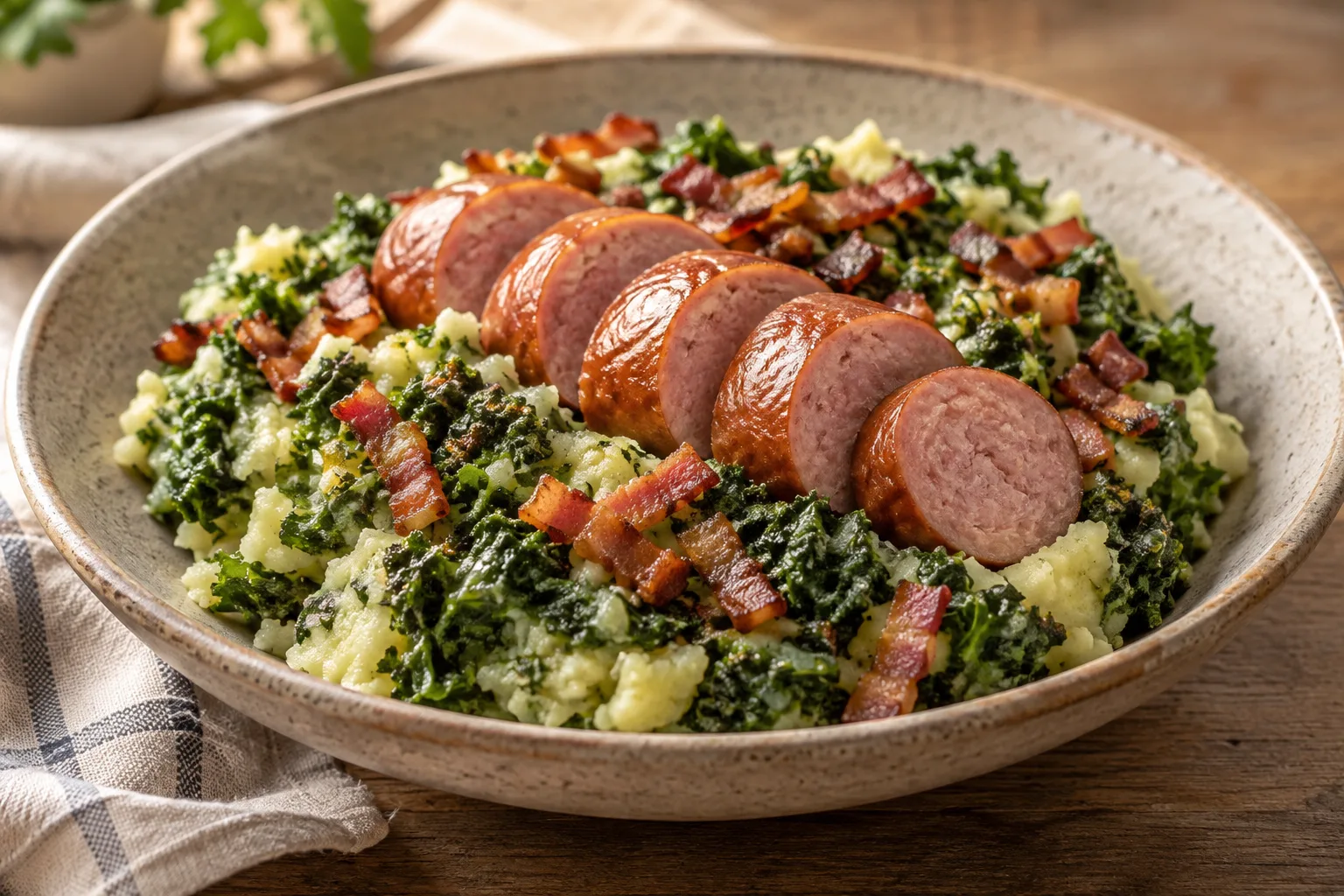
Many familiar Dutch savoury dishes emphasize texture as much as seasoning. In stamppot, soft potato is mashed with a vegetable, so the result can be mild and creamy, earthy with kale, or sharper with sauerkraut. A smoked sausage may add salt and smoke; bacon, mustard, or pickled accompaniments appear in some versions. The proportions and additions differ by cook and household, so the name describes a family of preparations rather than one rigid formula.
Erwtensoep, also called snert, is a thick split-pea soup often cooked with vegetables and pork or sausage. Its dense, spoon-coating character contrasts with the firmer bite of rye bread sometimes served alongside it. Fish offers another set of contrasts: cured herring with onion has a briny, soft quality, while kibbeling consists of bite-sized white fish in a fried coating. At cafés and gatherings, bitterballen pair a crisp crumb exterior with a soft ragout filling and are commonly served with mustard.
Sweet foods bring butter, fruit, sugar, and warm spices into the picture. Appeltaart is served with coffee, while a stroopwafel encloses syrup between thin waffles. Small, soft poffertjes are often finished with butter and powdered sugar. These foods make a richer counterpoint to plain bread meals and hearty savoury dishes without defining Dutch food as a whole.
Seasonal eating and food shared across generations
Dutch food traditions include ordinary routines as well as calendar-linked foods. Oliebollen, fried dough often dusted with powdered sugar, are associated with the New Year period; they may include raisins or other dried fruit. Warm, substantial meals such as pea soup and potato-and-vegetable mashes are especially associated with cold-weather eating. Markets and seasonal stalls make sweets and fish visible beyond the home kitchen, while family cooking passes familiar dishes between generations.
Herring carries a particular relationship to fishing communities and the annual catch. The spring celebration known as Vlaggetjesdag marks the beginning of the new-herring season and recalls the economic and social importance of fishing. The food remains connected with coastal places, though ways of serving and eating it vary. It may be sold at a stall, eaten with onion, or served in a bread roll.
Some food customs are strongly local. In Leiden, hutspot is associated with the city’s October 3 commemoration of the end of its siege. That association belongs to a particular civic memory; it does not establish the origin of every Dutch mash. Seasonal produce also gives communities occasions to visit farms and markets, as in cherry picking in the Betuwe and Kromme Rijn. Taken together, these practices show food transmitted through households, markets, and local celebrations, while changing with contemporary tastes and communities.
Mashing, curing, frying, and baking
The word stamppot points to its defining action: cooked potatoes and vegetables are mashed together. Kale, endive, or sauerkraut can each produce a different version; hutspot combines potato with carrot and onion. Some cooks prepare the vegetables with the potatoes, while others cook them separately before combining them. Butter or milk can soften the mash, though methods and preferred textures vary. A potato masher is a straightforward tool for this rustic preparation, but the essential technique is the combination and crushing of cooked ingredients.
Preservation techniques are important in the history of fish. Salting and curing helped herring keep and travel, and smoking is used for fish and sausage. Split peas become soft and thick through prolonged cooking, the characteristic texture of erwtensoep. These methods transform ingredients while keeping them recognizable as part of the meal.
Frying and baking supply other characteristic textures. Bitterballen and kroketten enclose a soft filling in a crumb coating that crisps in hot oil. Kibbeling is battered or coated fish fried in bite-sized pieces. Baking gives appeltaart its pastry structure, while stroopwafels are made as thin waffles and joined with syrup. Each technique belongs to a particular preparation; together they show how Dutch food ranges from pot cooking to snack foods and pastry.
Bread meals, hot dinners, and café snacks
A familiar daily pattern gives bread a central role at breakfast and lunch. Cheese, cold cuts, and sweet toppings such as hagelslag can be served on bread; lunch may also include soup or a sandwich. Dinner is often the main hot meal, with potatoes, vegetables, and meat among its established combinations. This pattern describes a recognizable convention, not every household or every contemporary eating routine.
A serving of stamppot is a complete, filling meal in many homes. The mash may be placed on the plate with smoked sausage alongside or on top, and versions differ in their use of bacon, mustard, or pickles. Thick pea soup is another substantial dish, often accompanied by bread. In either case, the meal is organized around a central hot preparation rather than a sequence of elaborate courses.
Food is also shared informally. In cafés, bitterballen are a familiar snack with drinks; at markets, herring and fried fish can be eaten as quick food. Cake or apple tart may accompany coffee. These occasions give different foods distinct social settings: a family dinner, a café gathering, or a stop at a market stall. The combination of bread-based meals, home cooking, and small shared snacks is more useful than treating any single dish as the definitive Dutch table.
A glossary of Dutch foods
These names identify particular products and preparations found in Dutch food culture. Some describe a broad dish family; others point to a snack, a preserved fish, or a sweet. Their meanings are most useful when read alongside the regional and seasonal contexts in which the foods appear.
- Stamppot: Mashed potato combined with one or more vegetables, including kale, endive, or sauerkraut.
- Hutspot: A potato mash with carrot and onion, associated particularly with Leiden’s October 3 commemoration.
- Boerenkool: Kale; the name is also used for the kale-and-potato preparation boerenkoolstamppot.
- Rookworst: Smoked sausage often served with a hot potato-and-vegetable dish.
- Erwtensoep / snert: Thick split-pea soup, commonly made with vegetables and pork or sausage.
- Haring: Herring, eaten in different forms, including cured preparations and bread rolls with fish.
- Kibbeling: Bite-sized pieces of fried white fish, familiar from fish stalls.
- Bitterballen: Small, round, crumb-coated fried snacks with a soft ragout filling, often served with mustard.
- Stroopwafel: Two thin waffles joined with a syrup filling.
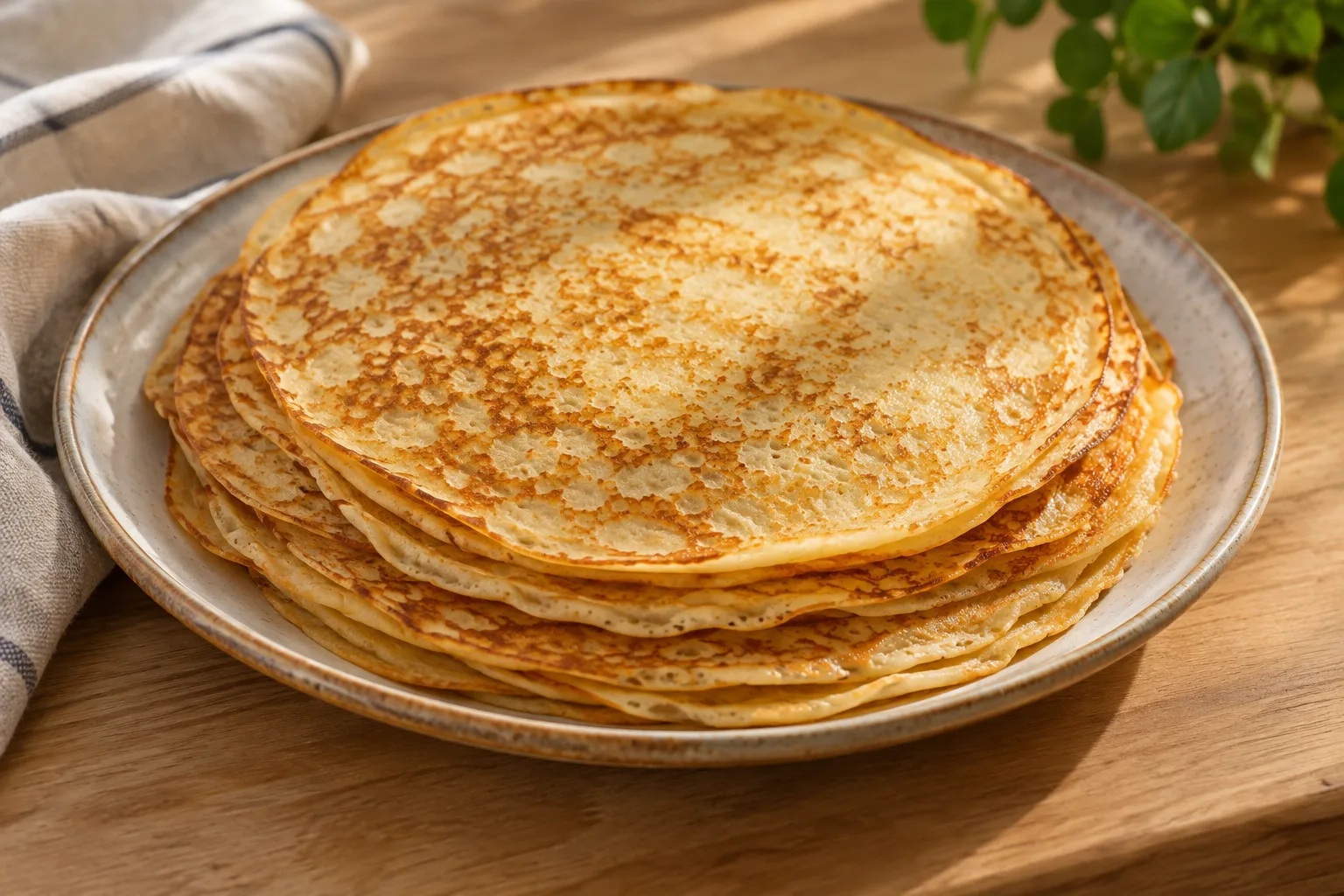
- Poffertjes: Small, soft pancakes commonly served with butter and powdered sugar.
One country, many cuisines
Limburg
Limburg is associated with white asparagus, known locally as “white gold,” and its season runs from April into late June. A documented traditional serving pairs the asparagus with butter sauce, parsley, a boiled egg, and ham. The province is also known for fruit tarts called vlaai and for nonnevot, a pastry associated with carnival. These foods express local traditions rather than standing in for the whole Dutch cuisine.
Zeeland
Zeeland’s salt marshes provide the setting for samphire, a naturally salty plant available mainly from May to August. A traditional way to serve it is with grilled fish or in potato salad. Zeeland’s coastal food culture also includes North Sea fish and local fish stalls. Samphire’s season and connection to salt-marsh conditions make it a particularly place-specific ingredient, not a general feature of every Dutch region.
Betuwe and Kromme Rijn
The Betuwe and Kromme Rijn areas are associated with cherries and orchard landscapes. During summer, visitors can pick fruit in some orchards and meet local growers; cherries are also made into foods such as fresh cake and jam. This connection between seasonal harvest and regional produce gives the area a distinct place in the Dutch food map, alongside better-known coastal fish and winter dishes.
Cook