Documentary synthesis prepared with AI assistance. It does not replace specialist review or certify kitchen testing. · Updated 12 November 2026
An Isthmus of Coasts, Countryside, and Crossings
Panama’s position between the Caribbean and Pacific, and between Central and South America, places coastlines, interior landscapes, and a major passage for people and goods within one national setting. Its food reflects that variety: corn and root vegetables sit alongside rice, plantains, poultry, pork, beef, fish, and shellfish. The ingredients and combinations change with place, community, household, and occasion; no single dish or flavor profile stands for every Panamanian table.
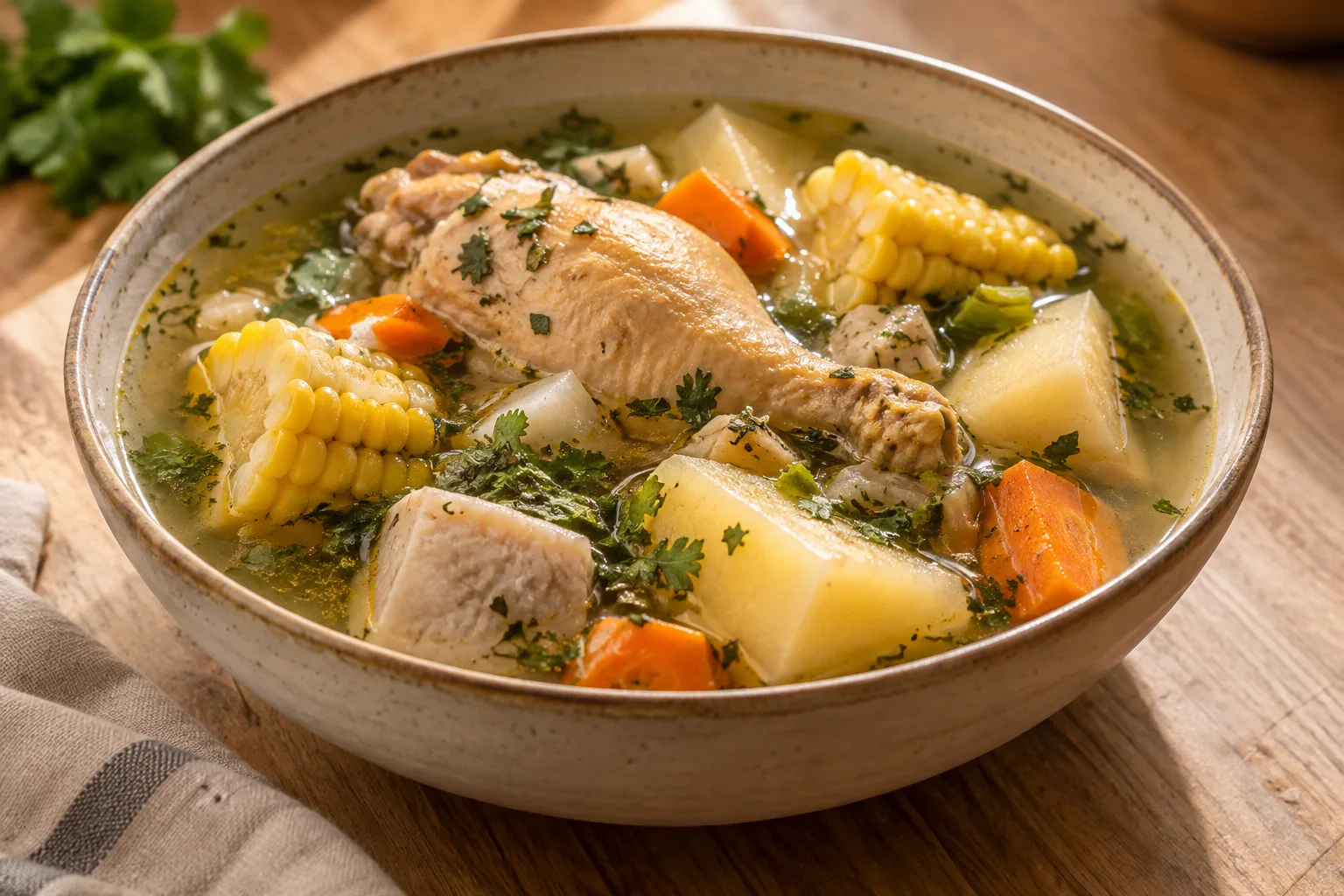
A useful way to approach this cuisine is through a handful of preparations that show different kinds of cooking. Sancocho de gallina is a chicken soup built around a savory broth, culantro, and roots. Tamales turn corn into a seasoned, wrapped dish. Patacones transform green plantain through frying and pressing, while guacho cooks rice into a thick, broth-based meal. Along the Caribbean coast, coconut and seafood are prominent in particular community traditions. These dishes are not interchangeable symbols: each speaks to specific ingredients, techniques, and settings within a diverse food culture.
Indigenous Foundations, Migration, and Exchange
Before Spanish colonization, Indigenous communities used ingredients including corn, cassava, other roots, and fish. Spanish arrival brought new foods and livestock, among them rice, wheat, sugarcane, cattle, pigs, and chickens. Over time, these ingredients entered local cooking alongside established products and practices. The resulting dishes should not be assigned a single cultural origin merely because they combine ingredients associated with different histories.
Panama’s role as a route of transit also shaped its society. The interoceanic railway and the canal projects drew workers and migrants, including Chinese and West Indian communities, and contributed to lasting demographic and cultural change. Afro-Caribbean communities have their own important culinary histories, particularly in Colón and other Caribbean settings. Chinese migration is associated with urban food influences, including stir-fried noodles and fried rice. These histories intersect, but they do not make every dish a simple fusion or explain every local variation. Panama’s food history is better understood as layered exchange, with community traditions and everyday adaptation continuing alongside wider movements of people and ingredients.
Corn, Roots, Rice, and Coastal Foods
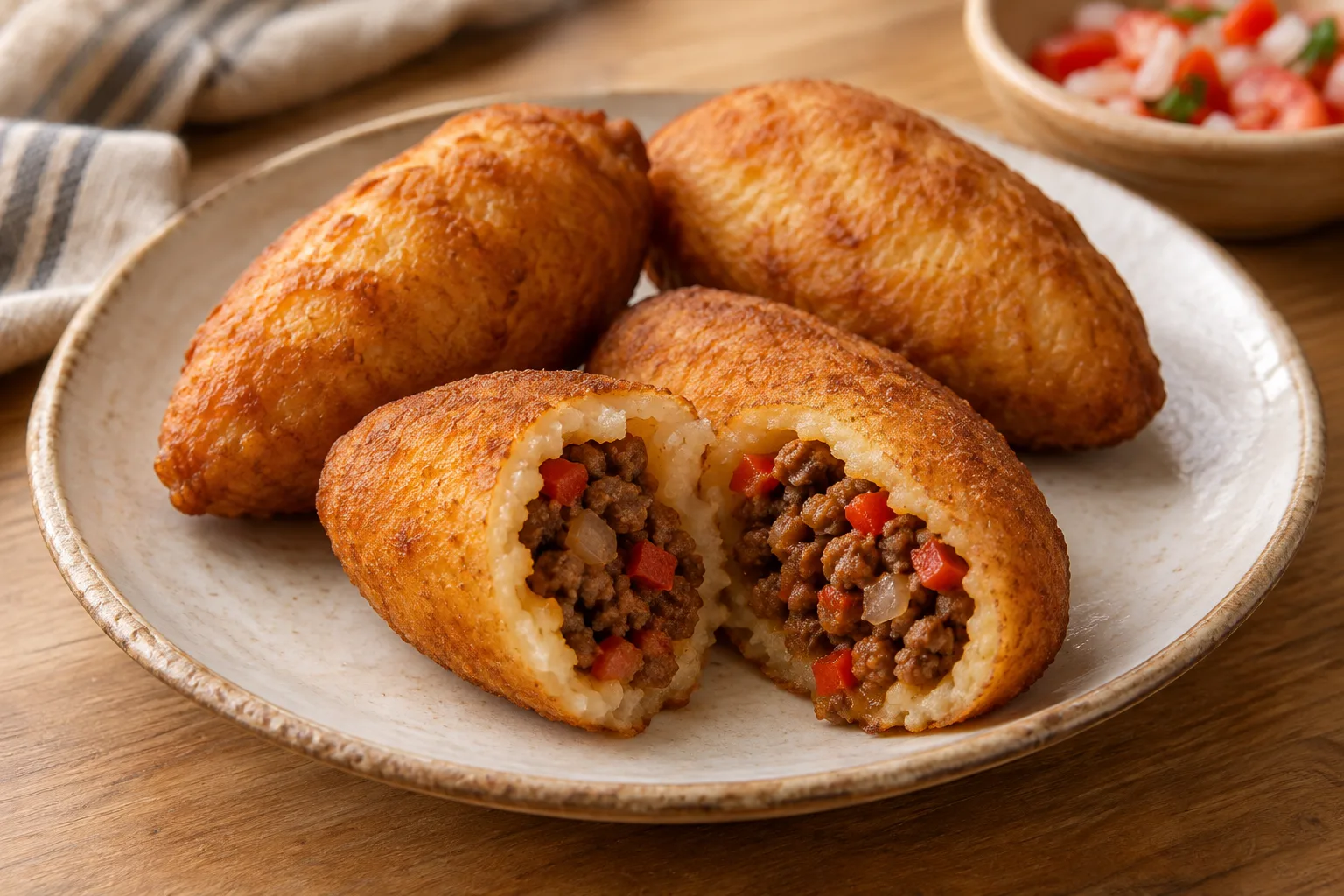
Corn, rice, plantains, and root vegetables anchor many recognizable preparations. Corn is ground or made into masa for tamales and thick tortillas, and it can also become fritters such as torrejitas. Tamales combine seasoned corn dough with fillings such as chicken or pork. A distinct preparation, tamal de olla, cooks the corn mixture in a vessel rather than forming individual leaf-wrapped parcels. Yuca, ñame, and otoe are used in soups and other substantial dishes; mashed yuca also forms the shell of a filled carimañola.
Rice serves both as an everyday staple and as the basis for dishes with distinct regional associations. Arroz con guandú combines rice with pigeon peas, and some versions include coconut milk. In guacho, rice simmers with broth until thick, with ingredients that may include seafood, pork, or guandú. Green plantain is fried and flattened for patacones. Poultry and other meats feature in soups and stews, while fish and shellfish are especially visible in coastal cooking. A compact guide to these pantry pairings is:
- Corn and masa: tortillas, fritters, and wrapped or pot-cooked tamales.
- Yuca and other roots: soup ingredients and the dough for carimañolas.
- Rice and guandú: a staple pairing, sometimes enriched with coconut.
- Plantain and seafood: fried accompaniments and coastal preparations, with local variation.
Herbal Broths, Coconut, and Contrasting Textures
A defining flavor in Panamanian sancocho is culantro, a strongly aromatic herb distinct from cilantro. In the soup, it seasons chicken broth and accompanies root vegetables; some preparations also include corn on the cob. The result is substantial but does not depend on a complex or uniformly hot spice blend. Onion and garlic appear in different savory bases, while the seasoning of a family’s pot or a regional dish can vary.
Coconut brings a different character to some Afro-Caribbean preparations. In coastal cooking, its richness can meet seafood and plantain in dishes such as rondón; coconut milk also appears in some rice and pigeon-pea preparations. These combinations belong to documented community and regional traditions, not to every style of Panamanian cooking. Texture is another source of contrast. Patacones are fried, flattened, and fried again, producing a crisp surface. Carimañolas pair a yuca exterior with a savory filling. Leaf-wrapped tamales cook into a soft, moist mass, while guacho is thick and spoonable. Together, these examples show a cuisine shaped as much by broth, starch, and cooking method as by seasoning.
Festive Foods and Everyday Transmission
Some preparations are associated with particular occasions, while others move easily between ordinary meals and gatherings. Panamanian tamales are linked with Christmas and other celebrations. Preparing them involves masa, seasoning, fillings such as chicken or pork, and wrapping in leaves; the work can be shared, but ingredients and methods differ from cook to cook. Rice with guandú, sometimes made with coconut, is also described as a popular holiday dish. These associations identify common occasions without implying that every household observes them in the same way.
Colón has a specific seasonal food tradition in bon, a spiced bread sought during Holy Week. It may be eaten in the morning with cheese and warm milk, though some people have it later. This is a concrete local custom, not a national Easter menu. Sancocho, by contrast, may be eaten at different times of day and is remembered as a family meal, including weekend lunches. Breakfast foods such as corn tortillas, fried dough, and carimañolas show that filling corn and yuca preparations are not reserved for festivals. Recipes are transmitted through households and shared cooking, with variation preserved rather than erased by a single official version.
Simmering, Grinding, Wrapping, and Frying
Slow, moist cooking is central to dishes such as sancocho and stewed chicken. In sancocho, chicken simmers with roots and culantro until the ingredients are tender; in some versions, whole corn is cooked in the pot as well. The choice of roots and their sequence can differ. The cooking method suits the dish’s broth and substantial ingredients without requiring that every version use an identical formula.
Corn preparations demonstrate how processing changes an ingredient’s form. Masa can be shaped into tortillas or seasoned, filled, and wrapped for tamales. Leaf-wrapped tamales and tamal de olla differ in both assembly and texture: one is enclosed in leaves, while the other is cooked as a softer corn mixture in a vessel. The particular leaves used for wrapped tamales can vary, with bijao documented as one traditional option. Yuca is cooked and mashed to make a workable dough for carimañolas, which are shaped around a filling and fried. For patacones, plantain pieces are fried, pressed flat, and fried again. These methods—simmering, grinding, wrapping, and frying—create distinct results from a pantry built around familiar staples.
Meals, Accompaniments, and Shared Occasions
Panamanian meals combine main dishes and accompaniments flexibly rather than following one national service pattern. Sancocho is served hot and can be accompanied by white rice; patacones may also accompany it in some settings. Shredded beef in tomato-based sauce, known as ropa vieja, is commonly paired with rice. Stewed chicken can be served with white or coconut rice, fried plantain, or patacones. These pairings show how rice and plantain can support quite different soups, stews, and meats.
Breakfast and casual food settings include thick corn tortillas, fried dough, and carimañolas. Along the coast, ceviche and seafood dishes foreground the catch; Panama City’s seafood market is one visible setting for that connection to marine foods. Festive tamales and rice with guandú sit alongside ordinary stews and rice dishes, rather than replacing them. In Colón, bon is associated with Holy Week and may be eaten with cheese and warm milk. There is no single table ritual established for the whole country: meals may be individually served or shared according to household and context. What recurs is the presence of substantial dishes, useful accompaniments, and family or community knowledge of how to make them.
A Glossary of Panamanian Foods
These names point to particular ingredients, preparations, or techniques, rather than to a complete inventory of Panama’s regional cuisines.
- Culantro: A strongly aromatic herb, distinct from cilantro, used as a characteristic seasoning in Panamanian sancocho.
- Guandú: Pigeon peas, commonly cooked with rice; coconut milk appears in some versions of the dish.
- Otoe: A root vegetable used in soups; it is identified in Panamanian cooking with malanga or taro in some descriptions.
- Patacón: A piece of green plantain fried, flattened, and fried again, served as a side or snack.
- Carimañola: A fried preparation made from yuca dough around a filling, commonly described with seasoned meat.
- Guacho: A thick rice preparation cooked with broth; ingredients vary and can include seafood, pork, or guandú.
- Tamal de olla: A corn-based tamal cooked in a vessel rather than wrapped as an individual parcel.
- Bon: A spiced bread associated with Colón and Holy Week, often eaten with cheese.
The vocabulary also makes variation visible. A tamal may be leaf-wrapped or cooked in a pot; a rice dish may be plain, paired with guandú, or thickened into guacho. Recognizing the name is a starting point, not proof that every cook uses one fixed ingredient list.
One country, many cuisines
Caribbean Coast
Along the Caribbean coast, including areas such as Bocas del Toro and Colón, documented preparations combine seafood or fish with coconut and plantain. Rondón is a coconut-based stew combining seafood and plantain. Colón also has a tradition of bon, a spiced bread particularly sought during Holy Week. These examples describe specific regional and community foodways, not a uniform style shared by every coastal household.
Azuero and the Interior Provinces
Interior foodways include hearty stews and corn-based preparations. The Azuero Peninsula is associated with sancocho in accounts of the dish’s history, and the tamal de olla is linked with the peninsula and its corn, pork, and seasoning. Thick corn tortillas are also part of the documented interior repertoire. These dishes are not exclusive to the area, and their recipes vary among cooks and households.
Panama City and the Canal Corridor
Panama City’s food scene includes seafood markets, restaurants, and food kiosks, in a capital shaped by the country’s role as a commercial and migratory crossroads. The history of Chinese and West Indian migration is part of the wider social history around the railway and canal. Urban cooking also reflects Chinese influences, including fried rice and stir-fried noodles. The city is a diverse setting, not a single culinary expression of the whole country.
Cook