Documentary synthesis prepared with AI assistance. It does not replace specialist review or certify kitchen testing. · Updated 12 November 2026
A landlocked country and a varied food culture
Paraguay lies inland in central South America, bordered by Argentina, Brazil, and Bolivia. Its food traditions are better understood as a history of contact than as the expression of a single culinary lineage. Cario-Guaraní and Spanish practices met and changed over time, while later migration and exchanges with neighboring countries added further influences. The resulting repertoire includes household foods, market and street fare, festive dishes, and meals built around meat or fish.
Cassava and corn are especially visible in everyday preparations, but their forms and uses differ. Cassava root may be served cooked, while its starch becomes the base for mbejú and chipa. Corn appears as fresh kernels, meal, or flour in chipa guazú, sopa paraguaya, and vori vori. Cheese, milk, and eggs recur in many of these preparations, though no single dish contains them all. River fish, beef, chicken, squash, and other vegetables extend the range. This is not a cuisine defined by one dish: a crisp, crumbly griddle cake, a baked savory corn preparation, and a substantial soup can all draw on related ingredients while having distinct textures and roles.
Historical contact and changing ingredients
Before Spanish colonization, the region was home to different Indigenous peoples and ways of life. One account distinguishes agricultural Guaraní communities in the east from nomadic and semi-nomadic groups in the west. Food practices included cultivation, fishing, hunting, and preparations based on grains and cassava. Spanish arrival and the establishment of Asunción in the sixteenth century brought sustained contact; they did not simply erase existing food knowledge.
The introduction of cattle and of ingredients such as milk, eggs, and cheese changed what cooks could combine. Corn and cassava preparations that were already part of local foodways could be made with these new ingredients, while beef and other meats became part of the food repertoire. This helps explain the characteristic pairing of local starches with dairy and meat, without reducing the whole cuisine to a single origin story. Spanish and Indigenous practices interacted in and around Asunción, and later influences included those associated with migration from neighboring countries and with Italian and German communities. The history is one of adaptation and exchange, rather than a neat division between Indigenous and European dishes.
Cassava, corn, cheese, and the working pantry
Cassava, also known as manioc, is used both as a cooked root and as a transformed ingredient. Its starch gives mbejú its particular character and is used in chipa; cassava dough also appears in the fried, often meat-filled pastel mandi’o. Corn has a similarly broad range. Fine corn flour or meal is used in sopa paraguaya and in the small dumplings of vori vori, while fresh kernels distinguish chipa guazú. The difference between whole kernels, meal, flour, and cassava starch is central to the identity and texture of these dishes.
Queso Paraguay, a soft fresh cheese, is an important partner to corn and cassava preparations. Milk and eggs are also common in dishes such as sopa paraguaya and chipa. Onions and cooking fat appear in savory mixtures, while beef and chicken are used in soups and stews. Fish from rivers, including surubí, features in fish soups; squash known as andai is used in preparations such as kivevé. These ingredients describe a pantry rather than a fixed meal plan: a dish’s character depends on the combination and form of its ingredients, and not every preparation uses the same set.
From crumbly cakes to hearty soups
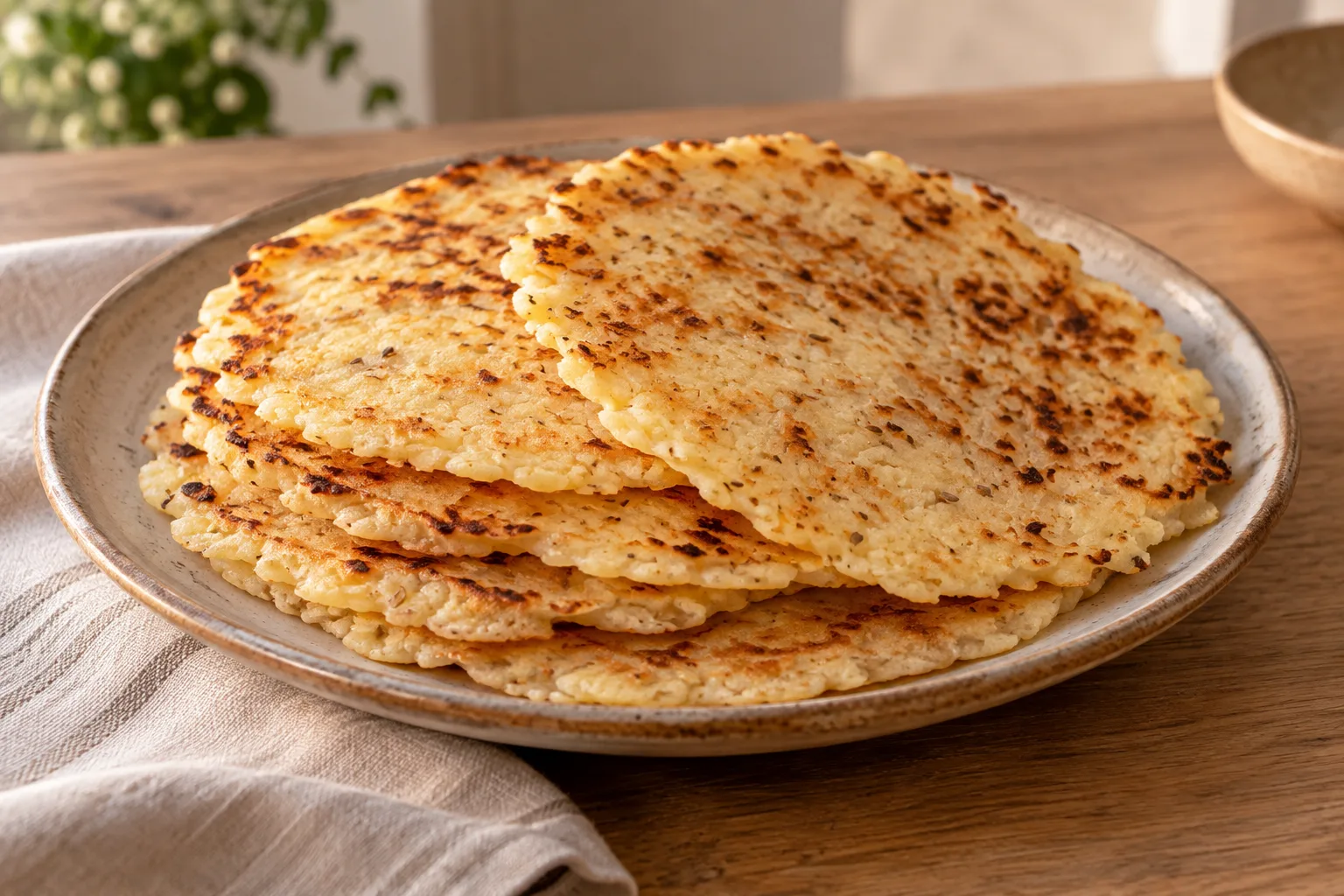
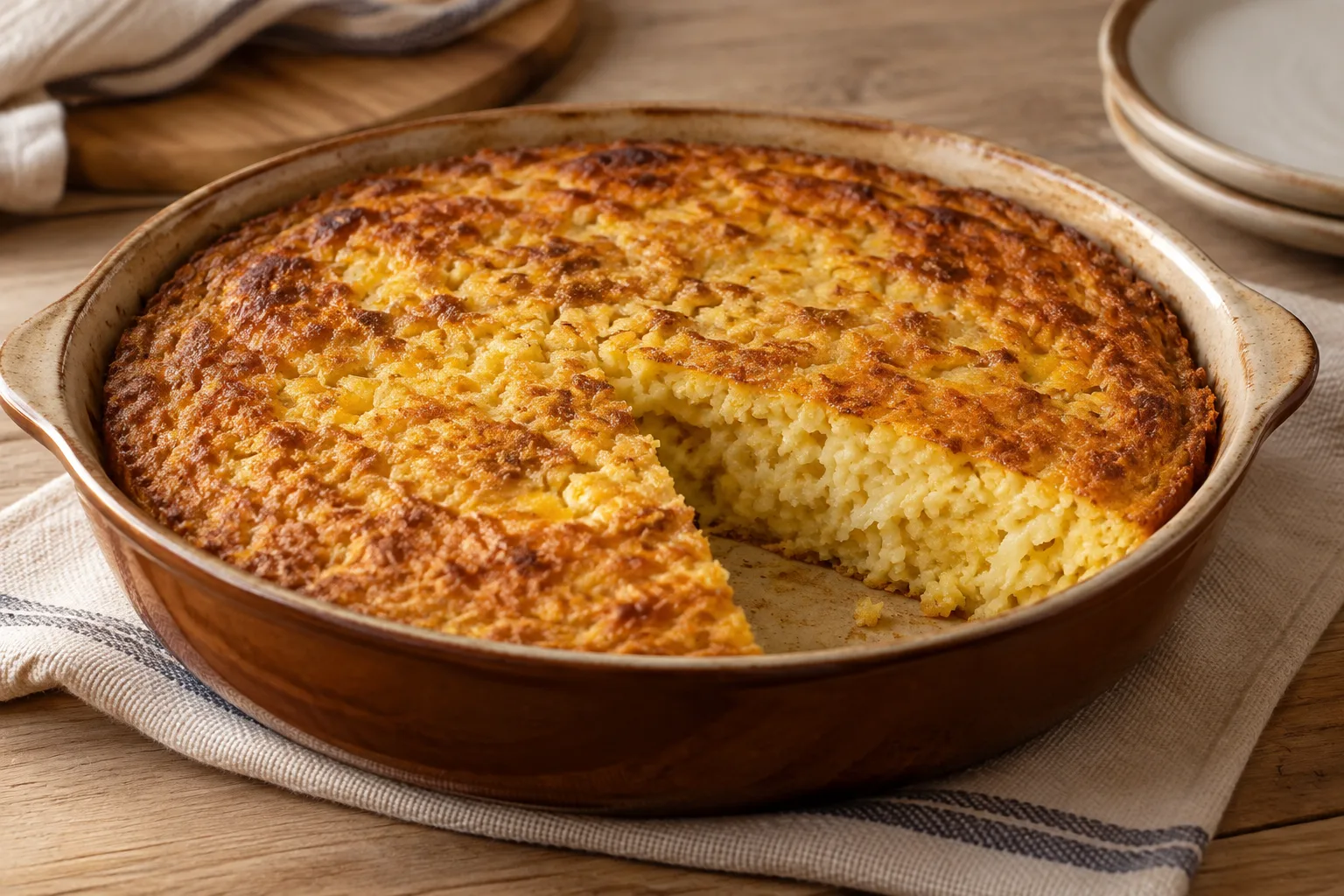
A defining pleasure of Paraguayan food is the contrast between preparations made from related ingredients. Mbejú is a flat, starch-rich cake cooked on a griddle or in a pan; its texture is commonly described as crumbly. Chipa is shaped as a small bread, often a ring, with cassava starch, cheese, and egg, and may include anise. Sopa paraguaya is not a liquid soup but a baked, sliceable savory preparation made with corn flour, cheese, and onion. Chipa guazú is also baked, but fresh corn kernels give it a different identity.
Soups offer another set of textures and flavors. Vori vori combines broth with small balls made from corn meal and cheese. Pira caldo brings freshwater fish together with vegetables, milk, and soft cheese, while soyo is a thick meat soup. Sweet preparations can contrast fruit acidity with deep sweetness: kosereva uses sour apepú orange and molasses, and ka’í ladrillo sets peanuts with cane syrup into a firm confection. These examples show why the cuisine cannot be summarized by ingredients alone. The same pantry can yield crisp, soft, dense, creamy, or chewy results, depending on the preparation.
Food across the calendar and between generations
Some foods have particularly well-documented connections to occasions. Chipa is associated with Holy Week, when it is prepared and eaten as part of Easter-season observance, but it is also available throughout the year. It may be made at home or sold by street vendors, so the tradition reaches beyond the family kitchen. Sopa paraguaya is served at gatherings and is mentioned for occasions such as birthdays and Christmas. Chipa guazú is often paired with asado, joining a corn-based preparation to a shared meal centered on grilled meat.
Food knowledge also travels through household cooking and recipes shared among families. Uses are not identical in every household: accounts describe mbejú and rorá as possible breakfast foods or simple evening meals, while mandi’o chyryry—cassava cooked with ingredients such as cheese, onion, and egg—may be prepared for breakfast or a special occasion. These are reported uses, not rules for everyone. Asado is both a way of cooking meat and a social occasion, while the cold-water yerba mate drink tereré belongs to everyday beverage culture. Traditions here are lived and adaptable: a dish can have a favored season or setting without being restricted to it.
Baking, griddling, frying, and simmering
Baking, pan-cooking, frying, grilling, and simmering each give Paraguayan preparations their own form. Sopa paraguaya and chipa guazú are baked savory cakes. Rural accounts describe the use of a tatakuá, a traditional clay oven, for corn-based baked foods. Chipa is formed as bread, while mbejú is cooked as a thin cake on a hot pan or griddle; the latter’s crumbly texture comes with its starch-based dough and compact form.
For vori vori, cooks combine corn meal and cheese to make a dough, shape it into small balls, and cook them in broth. Pira caldo simmers fish with vegetables and adds dairy ingredients, while soyo uses finely worked or ground meat in a thick soup. Pastel mandi’o takes a different route: cassava dough is filled and fried. Asado cooks meat over coals on a grill, making the fire and the shared cooking setting part of the occasion as well as the method. These are broad, documented techniques, not claims that every household uses one prescribed utensil or formula. The cooking method helps distinguish dishes even when corn, cassava, or cheese is shared among them.
Meals, accompaniments, and ways of sharing
A Paraguayan meal may center on a soup, grilled meat, or a baked corn preparation, with cassava served alongside other foods. Sopa paraguaya can accompany meat or soup; chipa guazú is commonly served with asado. Cooked cassava is also described as an accompaniment to a variety of meals. The distinction between a side, a snack, and a meal matters: chipa can be eaten as bread or a quick bite, while pira caldo and soyo may be substantial dishes in their own right.
Asado brings people together around grilled meats and is documented as both a cooking technique and a social event. Chipa circulates through home preparation and street vending, and its association with Holy Week coexists with year-round availability. Tereré is made with yerba mate and cold water; cocido is a hot drink made with yerba mate and sugar. These drinks represent different ways of preparing and serving mate, not interchangeable versions of one beverage. Breakfast and evening meals also vary: mbejú and rorá are described as options in some accounts, not universal routines. The table is flexible, shaped by the dish, occasion, household, and company rather than by one compulsory sequence of courses.
A short glossary of Paraguayan foods
These names refer to distinct ingredients, preparations, or cooking equipment. Some dishes have household variations, so the descriptions identify their characteristic form rather than prescribing a single recipe.
- Mandioca: Cassava, a starchy root eaten cooked and also processed into flour or starch for other foods.
- Mbejú: A flat cake made chiefly from cassava starch, often with cheese, cooked in a pan or on a griddle; its texture is typically crumbly.
- Chipa: A small bread made with cassava starch and cheese, commonly with egg; anise is used in some versions, and ring shapes are familiar.
- Sopa paraguaya: A baked savory corn preparation, usually made with corn flour, cheese, and onion. Despite its name, it is solid rather than a broth.
- Chipa guazú: A baked corn preparation distinguished by its use of fresh corn kernels; often served with asado.
- Vori vori: Soup containing small corn-meal-and-cheese balls cooked in broth, often with chicken or vegetables.
- Tatakuá: A traditional clay oven used for baking preparations including corn-based cakes.
- Tereré: Yerba mate served with cold water, distinct from hot cocido.
One country, many cuisines
Asunción and Surroundings
Asunción and nearby towns are documented as an important setting for the development and circulation of Paraguayan food traditions. Tobatí, Altos, Areguá, Ypané, Guarambaré, Itá, and Yaguarón are among the places associated with the capital’s wider cultural area. This grouping is useful for describing historical connections, not for claiming that one local cuisine represents the whole country or that all these towns share an identical food tradition.
Cook