Documentary synthesis prepared with AI assistance. It does not replace specialist review or certify kitchen testing. · Updated 12 November 2026
A meeting place on South America’s northeastern coast
Suriname lies on the northeastern coast of South America, and its food reflects the many peoples and histories that have shaped the country. Indigenous, African, Javanese, Indian, Chinese, and European influences are visible in ingredients and preparations, but they do not sit in sealed-off categories. Dishes circulate between households and acquire local forms through everyday cooking and exchange.
A single meal might pair roti with curry, while another brings together rice, salted fish, vegetables, or a bowl of soup. Familiar examples include pom, nasi goreng, saoto, bara, and cassava bread. These foods have distinct histories and associations; together they show a cuisine made up of many traditions, not one fixed national menu.
Paramaribo concentrates much of this variety in markets, eateries, and street-food settings. It is a useful place to understand how culinary traditions meet, but it cannot stand for every household or community across the country. Surinamese food is best approached through its particular dishes, their varied versions, and the occasions on which people prepare and share them.
Colonial history, migration, and changing foodways
Suriname’s food history is inseparable from colonial rule, forced migration, and later labor migration. British settlers from Barbados established plantations in the seventeenth century and brought enslaved Africans to work on them. Under Dutch rule, the plantation system continued and expanded. People who escaped enslavement formed Maroon communities in the interior, where communities developed cultural practices drawing on diverse African heritages and changing over generations.
After slavery was abolished in 1863, a transition system kept formerly enslaved people under compulsory labor for a further period. Contract laborers later arrived from India and the Dutch East Indies, now Indonesia; Chinese migration also contributed to the country’s cultural and culinary diversity. These histories help explain why rice dishes, roti and curry, Javanese soups and noodles, Chinese foods, and Creole preparations all belong to Suriname’s culinary landscape.
The food traditions that grew in this setting cannot be reduced to a simple tally of imported cuisines. Ingredients and methods were adapted locally, and dishes became part of shared life. Pom is a clear example of a locally established celebratory preparation with versions that incorporate different ingredients and influences. Its place in Surinamese meals is more securely described through its forms and occasions than through an exclusive claim of origin.
Roots, rice, fish, fruit, and condiments
The Surinamese pantry combines staple foods with ingredients associated with several culinary traditions. Rice is central to dishes such as nasi goreng and moksi alesi, the latter a mixed-rice preparation that can include salted meat or fish and vegetables. Cassava is made into bread or prepared as telo, boiled and then fried. Plantain appears in herheri with salted fish and as ripe, battered, fried bakabana.
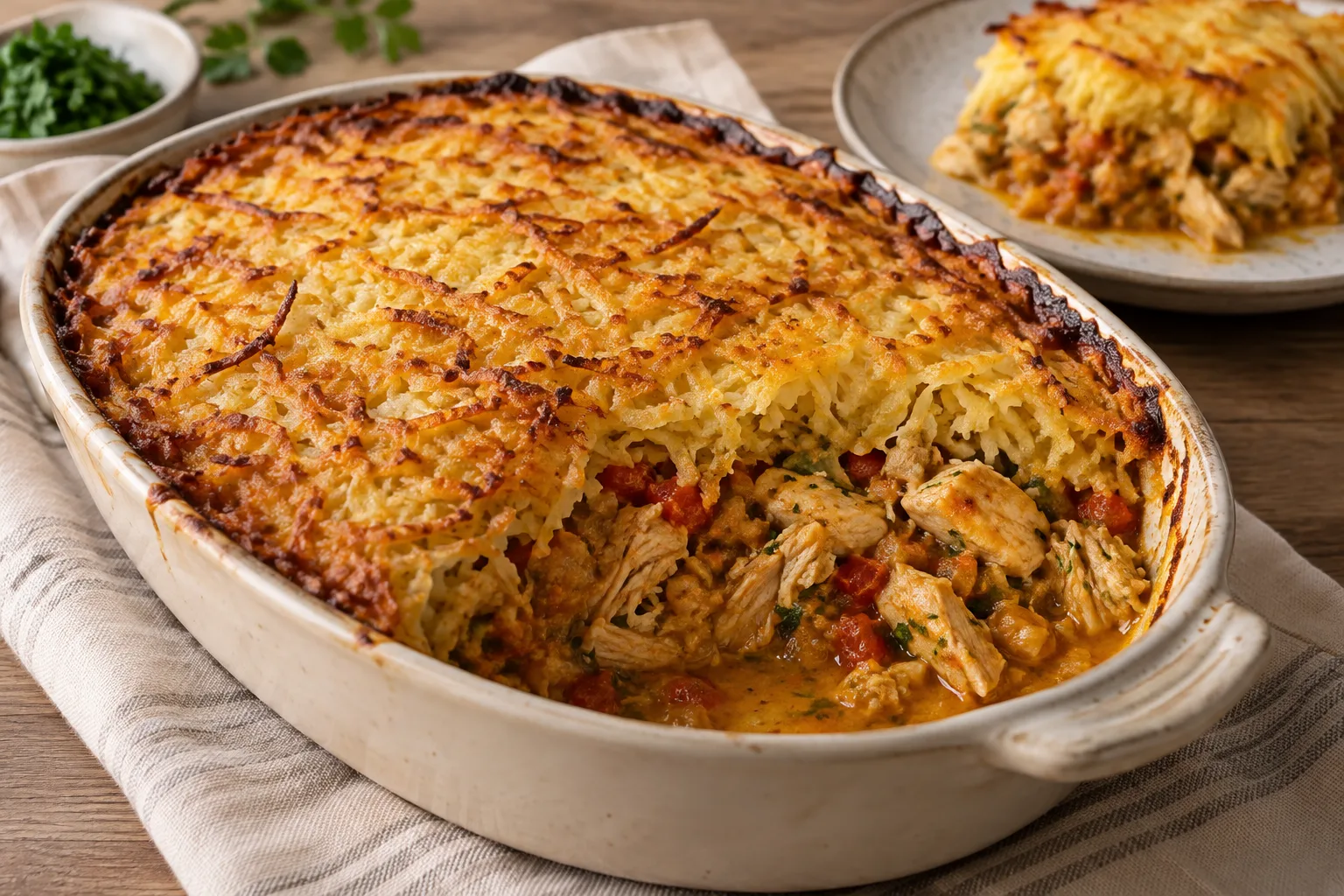
Root vegetables have different roles in different dishes. Grated pomtajer is used in pom, where it forms part of a baked, layered preparation with chicken. Sources use varying names and comparisons for this root, so it is helpful to preserve the local dish name rather than treat every proposed substitute as identical. Indigenous food traditions also include cassava bread, fish, and wild foods.
Other named pantry ingredients include salted fish, long beans, peanuts, and bitter sopropo. Sweet soy sauce, or kecap manis, and amsoy are among the products associated with Paramaribo’s Chinese markets. Sambal and pepper sauces offer ways to add heat, while pickled cucumber supplies a sharp accompaniment. These ingredients describe a varied larder, not a compulsory combination used by every household.
Sweet, sour, savory, bitter, and hot
Surinamese food offers contrasts rather than one defining flavor profile. Curry and pepper sauces can bring warmth and heat; kecap manis contributes sweetness to some dishes; salted fish provides a savory, concentrated taste; and sopropo is bitter. Citrus appears in descriptions of pom, while pickled cucumber adds a bright, acidic note alongside richer or more heavily seasoned foods.
Texture varies just as widely. Bakabana pairs the soft sweetness of ripe plantain with a fried coating. In pom, a grated root layer surrounds or covers chicken in a baked dish. Rice and noodles may be fried, while saoto is served as soup. Cassava becomes bread or is boiled and fried as telo, giving the same staple a different place and texture at the table.
These contrasts are assembled in different ways by cooks and vendors. Sambal or pepper sauce may be served separately, so diners can add heat to suit their portion; pickled vegetables can offer a cooler counterpoint. Such accompaniments are part of a flexible repertoire, not a uniform rule. The variety is also a reminder that no single seasoning or texture can represent every Surinamese community or meal.
Celebrations, home cooking, and shared dishes
Food is part of family visits and special occasions as well as daily meals. Pom is particularly associated with holidays and celebrations, including Christmas, and is prepared in households across community lines. Its place at a gathering reflects how a dish can become widely shared without making every family’s recipe identical. Chicken and grated root form a recognizable basis, while versions differ in their ingredients and seasoning.
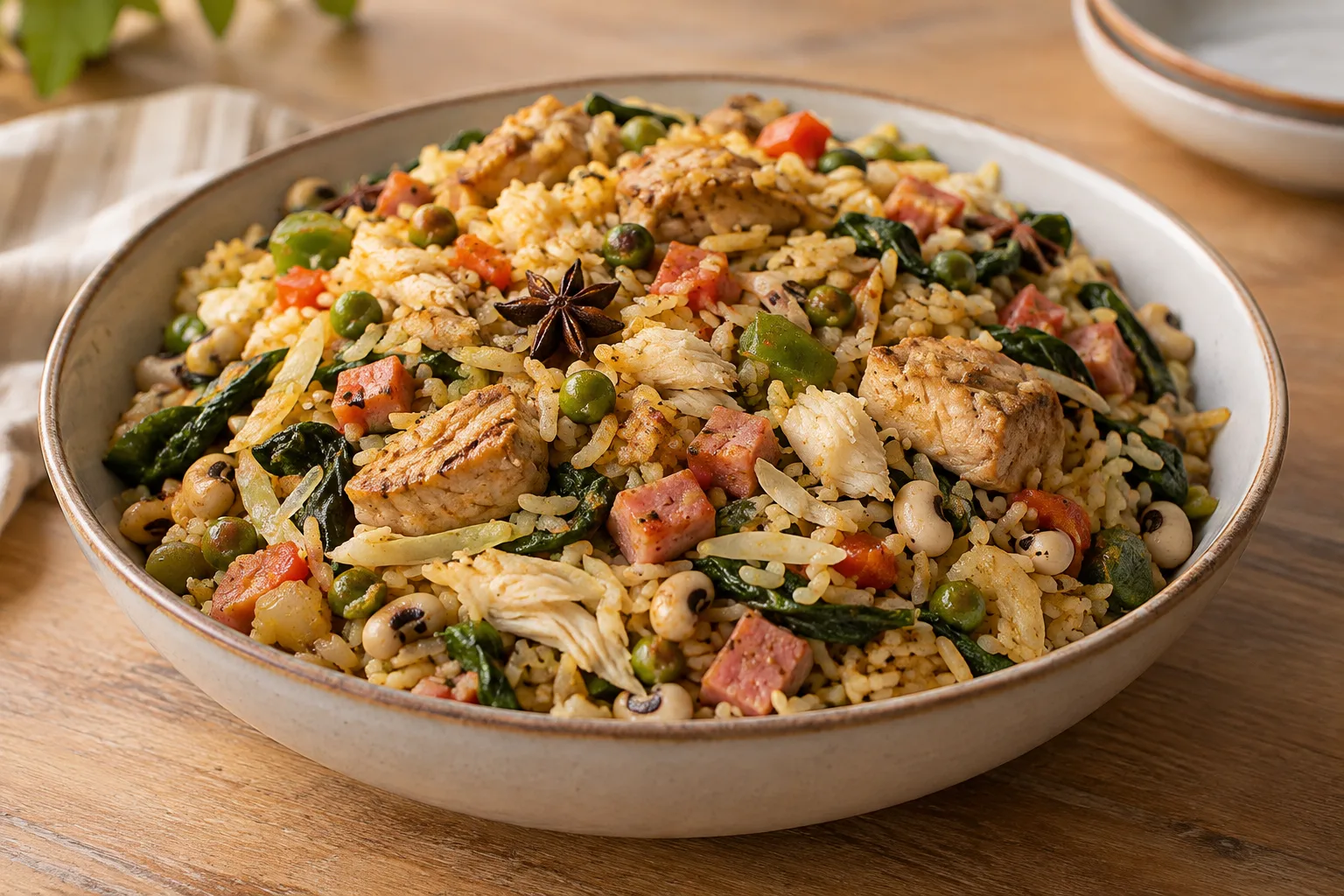
Other dishes mark different patterns of everyday cooking. Moksi alesi is mixed rice with variations that can include meat, fish, or vegetables; descriptions also connect it with using available ingredients. Nasi goreng and bami goreng bring fried rice and noodles into the local repertoire, while saoto is a Javanese-associated chicken soup. Roti and curry, bara, and bakabana are also familiar parts of meals and snack culture.
Markets and food stalls make this range visible beyond the home. In Paramaribo, people can encounter Javanese satay and noodles, Indian snacks, Chinese dumplings, and Creole foods in the same broad food scene. These settings encourage exchange, but they do not mean that all people eat alike or that each dish belongs exclusively to one group. Family recipes and community practices continue to shape how foods are prepared and shared.
Grating, boiling, frying, baking, and serving
The cooking methods documented in Surinamese dishes are varied and closely tied to particular ingredients. For pom, cooks grate pomtajer and layer it with a chicken preparation before baking. Specific recipes differ, including in the root used and the details of the filling, so the name refers to a family of versions rather than a single immutable formula. The result is a substantial baked dish suited to sharing at a gathering.
Cassava shows how one ingredient can undergo several transformations. For telo, peeled cassava is cut into pieces, boiled until tender but still firm, cooled, and fried. Cassava also appears as bread in Indigenous food traditions. Plantain for bakabana is battered and fried, while rice and noodles are cooked in fried preparations such as nasi goreng and bami goreng. Saoto takes a different route as a broth-based soup.
Maroon material culture provides a specific, community-grounded example of kitchen objects: Ndyuka men historically worked wood to make household items, including cooking utensils. That record concerns Ndyuka craftsmanship and changing practices; it does not establish a single set of utensils used throughout Suriname. Across the country’s varied kitchens, the documented techniques are best understood dish by dish.
Meals at home, in markets, and on the street
A Surinamese meal may bring rice, curry, roti, soup, meat or fish, vegetables, and fried snacks together in changing combinations. Roti served with curry is one familiar pairing; moksi alesi offers rice with other ingredients in a single preparation. Saoto is a soup, while pom is a baked dish often linked with celebrations. These examples point to different kinds of meals rather than a prescribed national sequence.
Condiments and sides give diners room to shape a plate. Sambal and pepper sauce may be served alongside food, and pickled cucumber can supply acidity. Roti can be torn and used to gather curry and other accompaniments, a practical way to eat that also makes the shared meal feel informal. The details of serving depend on the dish and household.
In Paramaribo, food markets and street vendors add another setting for eating and discovering regional and community-associated specialties. Documented foods include satay, noodles, bara, roti, dim sum, fruit, fish, and spices. This variety makes the capital a notable meeting place, not a template for every part of the country. Across settings, the common thread is a broad repertoire of foods that people combine according to occasion, availability, and preference.
A guide to Surinamese food terms
These names refer to specific foods found in Suriname’s varied culinary repertoire. Some are associated with particular community traditions, while their presence in the country and their circulation between households are part of a wider shared food culture.
- Pom: A baked, layered preparation commonly described with chicken and grated pomtajer. It is strongly associated with holidays and celebrations; versions vary.
- Bakabana: Ripe plantain battered and fried, often eaten as a snack.
- Bara: A fried lentil preparation associated with Indian culinary traditions in Suriname.
- Herheri: A preparation described with salted fish and plantain or other root foods.
- Moksi alesi: “Mixed rice,” a dish with variations that include rice and ingredients such as meat, salted fish, or vegetables.
- Nasi goreng: Fried rice associated with Javanese cooking and adapted within Suriname.
- Saoto: A Javanese-associated chicken soup.
- Telo: Cassava cut into pieces, boiled, and fried.
- Kecap manis: Sweet soy sauce, among the named ingredients found in the Surinamese pantry.
The list is not exhaustive, and a dish name does not guarantee one fixed ingredient list. Local versions and household choices are part of the country’s culinary variety.
One country, many cuisines
Paramaribo
Suriname’s capital brings together markets, street vendors, and food businesses offering dishes associated with several culinary traditions. Documented examples include satay, noodles, roti, bara, dim sum, fruit, fish, and spices. This concentration makes Paramaribo a notable place of culinary exchange, while its food scene should not be taken as a complete picture of eating practices throughout the country.
Cook