Americas · Latin America

Brazil

Brazil’s culinary traditions are best explored through specific places and preparations rather than a single national menu. From Bahia’s acarajé and vatapá to Minas Gerais’s cheese bread and Pernambuco’s layered bolo de rolo, ingredients, techniques, work, and occasions reveal regional identities and histories of exchange.

Food and eating habits

How people eat in Brazil

50 indicators exploring everyday meals, ingredients and food culture. Information is completed progressively from documented evidence.

3 of 50 indicators with documented information

Not all data are comparable: food supply, purchases and intake are different measures. Check the period, population and method for each finding. Qualitative descriptions do not establish percentages or amounts.

Timing and company

0/8
Timing and company — Brazil
IndicatorFindings and context
Meal times Awaiting research
Meals per day Awaiting research
Meal duration Awaiting research
Daily energy distribution Awaiting research
Weekdays and weekends Awaiting research
Eating at home and away Awaiting research
Cooking frequency Awaiting research
Eating together Awaiting research

Pantry and recipes

0/2
Pantry and recipes — Brazil
IndicatorFindings and context
Most consumed ingredients Awaiting research
Ingredient prevalence in recipes Awaiting research

Cereals and plant foods

0/6
Cereals and plant foods — Brazil
IndicatorFindings and context
Cereals and cereal products Awaiting research
Bread Awaiting research
Pulses Awaiting research
Vegetables Awaiting research
Fruit Awaiting research
Potatoes, roots and tubers Awaiting research

Protein foods

0/5
Protein foods — Brazil
IndicatorFindings and context
Meat Awaiting research
Fish and seafood Awaiting research
Eggs Awaiting research
Milk and dairy products Awaiting research
Protein sources Awaiting research

Fats, flavours and condiments

3/3
Fats, flavours and condiments — Brazil
IndicatorFindings and context
Cooking fats
Qualitative descriptionCultural context

Clarified butter is mentioned for coating arrumadinho ingredients, and palm oil as an ingredient in moqueca. These are dish examples, not estimates of use or amounts.

Scope, method and limitations
Observation period
No indicado; descripción cultural sin fecha.
Population or sample
No sample of people is described; Brazilian dishes are presented as examples.
Geographic scope
Brazil; arrumadinho is associated with Pernambuco, and moqueca includes variations from Bahia and Espírito Santo.
Definition and method
Qualitative descriptions of ingredients and culinary uses in dishes; this is not a measure of intake, supply, or purchases.
Comparison limitations
No amounts or frequency are given. These partial examples do not necessarily represent fat use across Brazil.
Herbs and spices
Qualitative descriptionCultural context

The description of tacacá mentions wild Amazonian basil, hot yellow chilli peppers, and jambú. These are ingredients in one dish example, not an estimate of frequency or prevalence.

Scope, method and limitations
Observation period
No indicado; descripción cultural sin fecha.
Population or sample
No sample of people or defined recipe sample is described; one Brazilian dish is presented as an example.
Geographic scope
Brazil; tacacá is described as a soup from the north of the country.
Definition and method
Qualitative description of a dish’s ingredients; no proportion of recipes containing herbs or spices is calculated.
Comparison limitations
This is partial evidence and does not establish frequency of use or prevalence in a defined recipe sample or in the population.
Sauces and condiments
Qualitative descriptionCultural context

Fiery sauces are described as accompaniments for churrasco, and a diced and mixed vegetable vinaigrette as part of arrumadinho. These are examples of culinary uses, not estimates of frequency or amounts.

Scope, method and limitations
Observation period
No indicado; descripción cultural sin fecha.
Population or sample
No sample of people is described; Brazilian dishes are presented as examples.
Geographic scope
Brazil; arrumadinho is associated with Pernambuco. No region is specified for the churrasco example.
Definition and method
Qualitative description of accompaniments and culinary uses; this is not a measure of consumption or recipe prevalence.
Comparison limitations
The sauces’ and vinaigrette’s ingredients are not detailed beyond what is stated, and no amounts or frequency of use are given. The examples are partial.

Meal composition

0/6
Meal composition — Brazil
IndicatorFindings and context
Breakfast composition Awaiting research
Main meal composition Awaiting research
Dinner composition Awaiting research
Appetisers and snacks Awaiting research
Desserts and sweets Awaiting research
Portion sizes Awaiting research

Techniques and equipment

0/5
Techniques and equipment — Brazil
IndicatorFindings and context
Cooking techniques Awaiting research
Vegetable preparation Awaiting research
Food preservation Awaiting research
Fermented foods Awaiting research
Kitchen equipment Awaiting research

Drinks

0/3
Drinks — Brazil
IndicatorFindings and context
Everyday drinks Awaiting research
Coffee and tea preparation Awaiting research
Drinks with meals Awaiting research

Nutrition and dietary patterns

0/3
Nutrition and dietary patterns — Brazil
IndicatorFindings and context
Energy and nutrients Awaiting research
Salt and sugars Awaiting research
Dietary patterns Awaiting research

Shopping, prices and waste

0/7
Shopping, prices and waste — Brazil
IndicatorFindings and context
Food expenditure Awaiting research
Cost of a common basket Awaiting research
Cost of specific meals Awaiting research
Grocery shopping locations Awaiting research
Shopping frequency Awaiting research
Prepared food and delivery Awaiting research
Household food waste Awaiting research

Seasons and celebrations

0/2
Seasons and celebrations — Brazil
IndicatorFindings and context
Seasonal produce Awaiting research
Celebration food Awaiting research
Explore its cuisines

Brazilian Foodways: Regional Ingredients, Shared Tables, and Distinct Traditions

Documentary synthesis prepared with AI assistance. It does not replace specialist review or certify kitchen testing. · Updated 11 November 2026

A country of many foodways

Brazil’s great scale and varied geography make any single dish an incomplete portrait of its foodways. The examples documented here lead to particular places and communities: Bahia’s Afro-Brazilian street-food traditions, Minas Gerais’s association with pão de queijo, and Pernambuco’s celebrated bolo de rolo. They are routes into the country’s culinary life, not a checklist of dishes that every Brazilian eats or a complete account of each state.

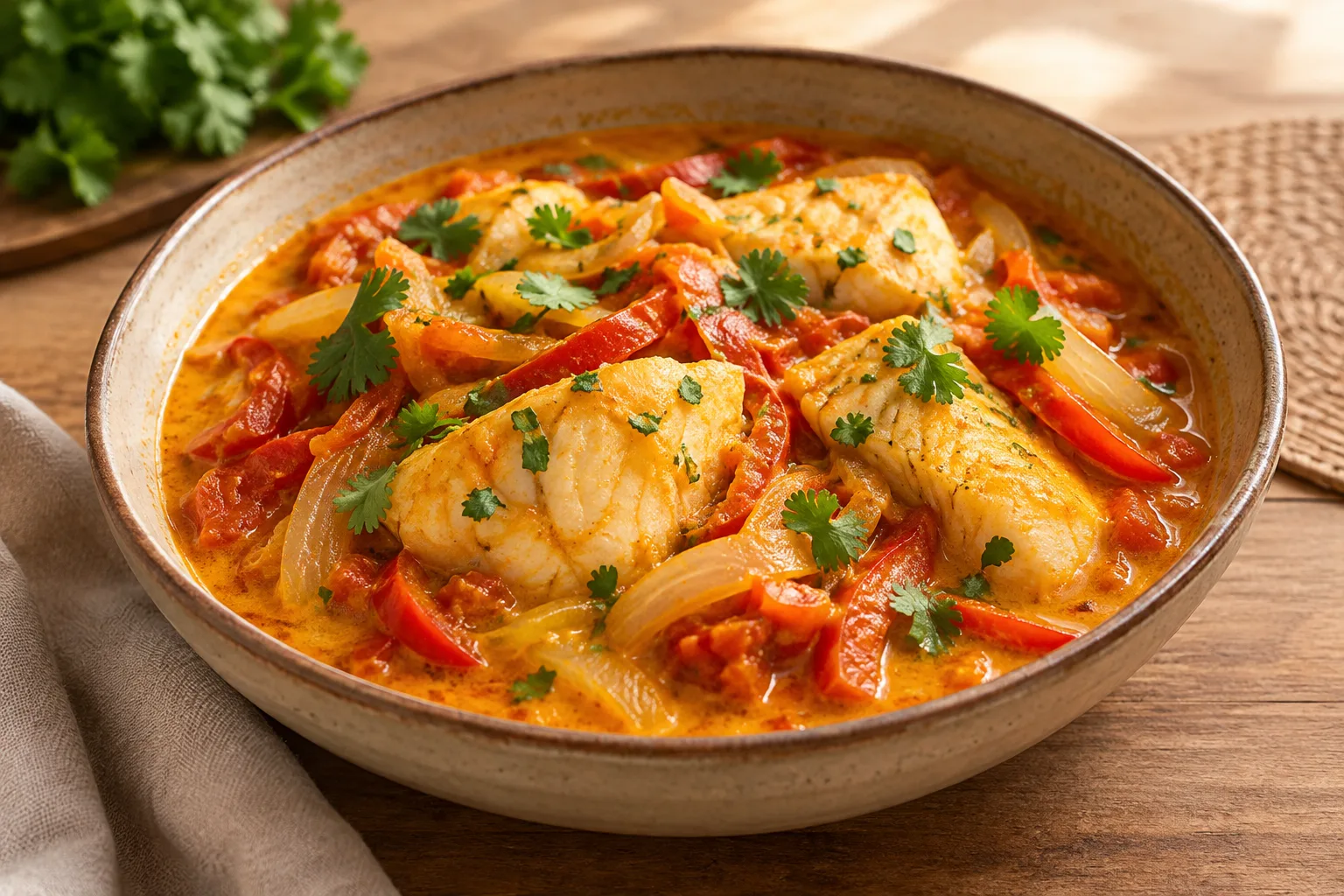
Coastal cooking offers one clear point of comparison. In Bahia, fish and seafood appear in preparations such as moqueca, while the country’s culinary record also includes bean-based snacks, baked foods, sweets, and substantial stews. A dish’s meaning may involve more than its ingredients: the work of a vendor, the setting of a street stall, or a sweet made for a gathering can matter just as much as technique.

The sections that follow focus on concrete, well-documented examples. Regional specificity matters: Bahia’s dendê-rich preparations are not a template for every Brazilian stew, just as the foods associated with Minas Gerais and Pernambuco do not stand for every community in those states.

History, inheritance, and exchange

Brazilian foodways reflect histories of contact and adaptation, but no single dish can explain the whole country. Accounts of moqueca connect it to Indigenous fish-cooking practices and describe later changes in ingredients and regional forms. The named versions from Bahia and Espírito Santo differ, and their ingredients should not be collapsed into one supposedly definitive recipe. In Bahia, the combination of seafood, coconut milk, and dendê belongs to a distinct regional expression.

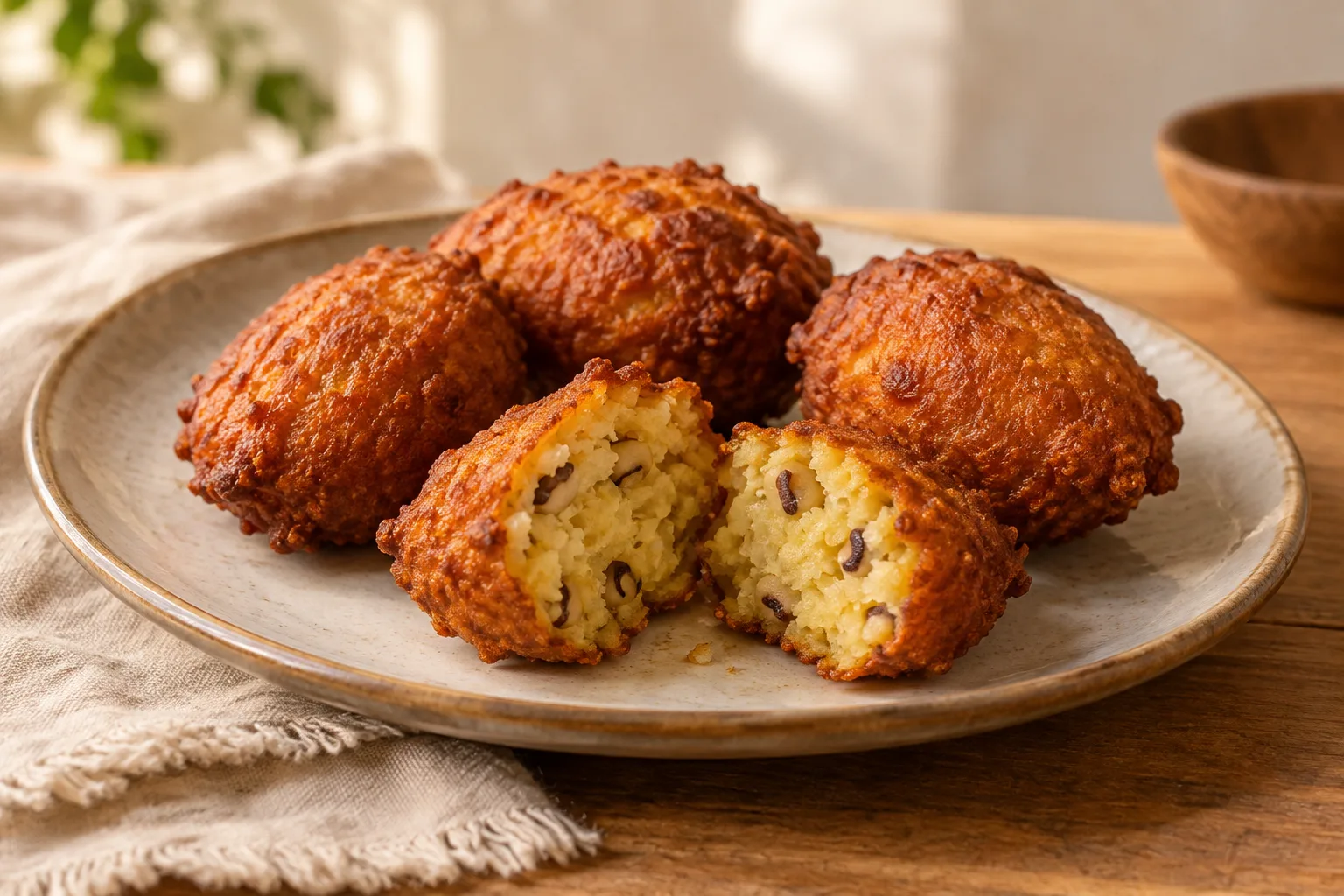
The history of acarajé is closely connected to Afro-Brazilian culture and to the West African akara. In Bahia, the food is associated not only with a bean batter and frying but also with religious traditions and the work of women who prepare and sell it. This relationship makes it important to discuss the food and the cultural setting together, without treating one description as the whole story of Afro-Brazilian cooking.

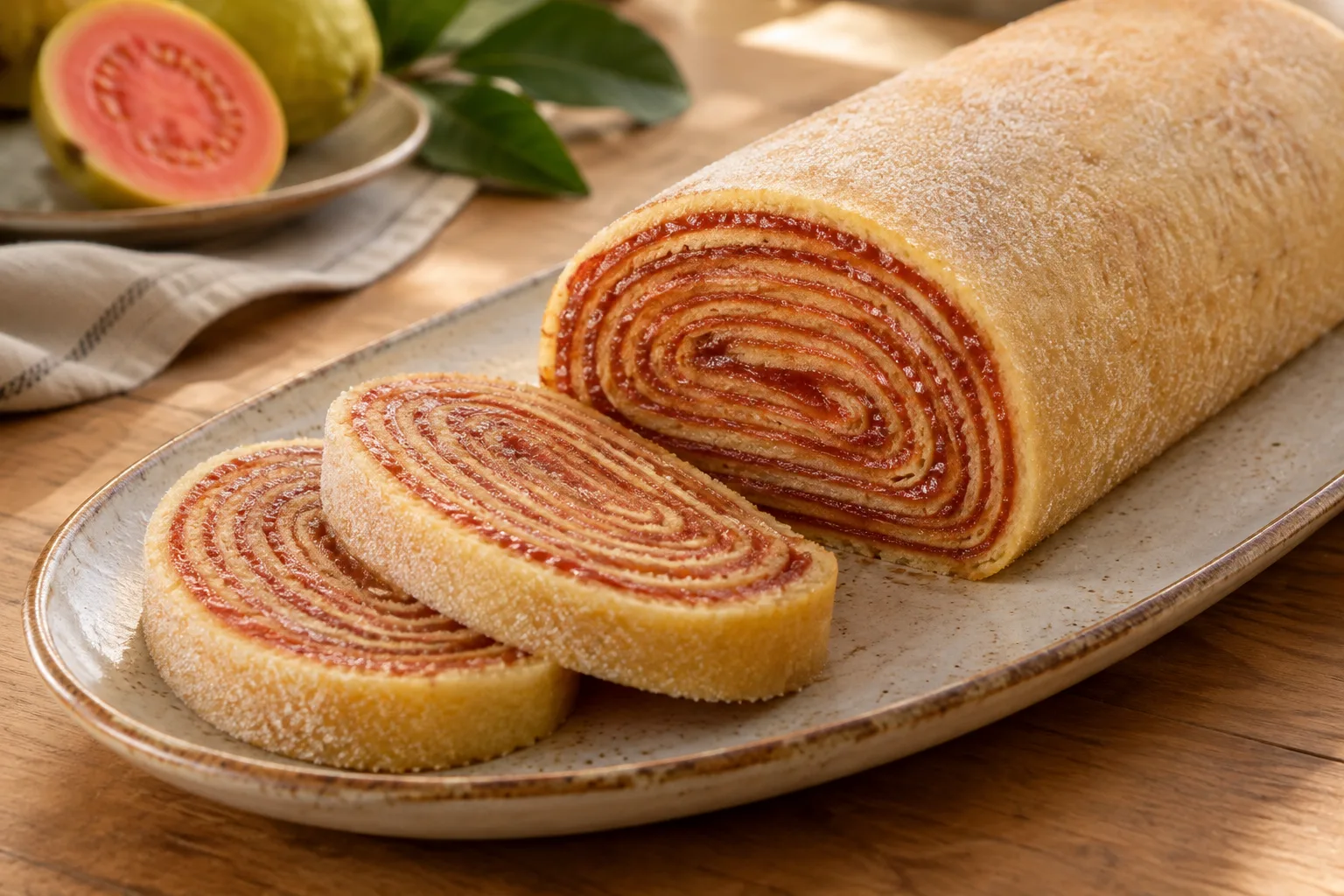
Pernambuco’s bolo de rolo offers another, different history of adaptation. One account describes it as developing from a Portuguese rolled cake, with guava replacing an earlier filling. That history belongs to this particular sweet; it does not establish a single origin for Brazilian confectionery. Exchange and local transformation are part of the record, alongside distinct regional practices.

Ingredients and their transformations

Several ingredients recur in the preparations documented here, but their roles differ. Mandioca—also called cassava or yuca—is used in Brazilian food in forms that include flour and starch. In pão de queijo, cassava starch, known in Portuguese as polvilho, gives the dough its structure; recipes and technical discussion distinguish sweet and sour starch, and variation in raw ingredients can affect the finished bread. In Bahia, black-eyed peas, or feijão-fradinho, form the base of acarajé batter.

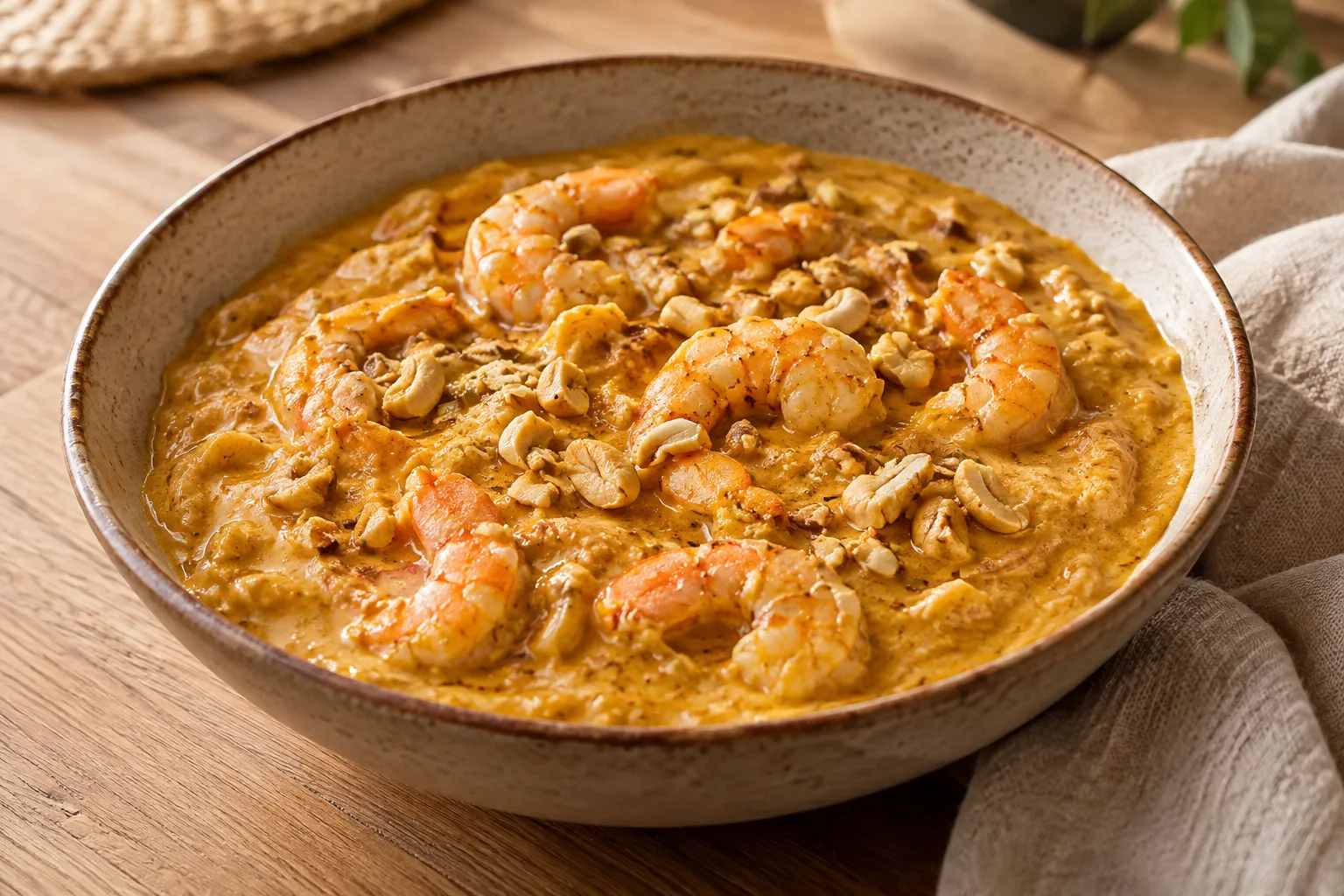
Other ingredients define particular regional preparations. Dendê, the red-orange palm oil, contributes color and a characteristic aroma to Bahian foods such as acarajé, vatapá, and one regional style of moqueca. Coconut milk, bread, peanuts or cashews, and shrimp can build vatapá into a thick, smooth preparation. Recipes vary in which nuts or seafood they use, so the name alone does not guarantee an identical ingredient list.

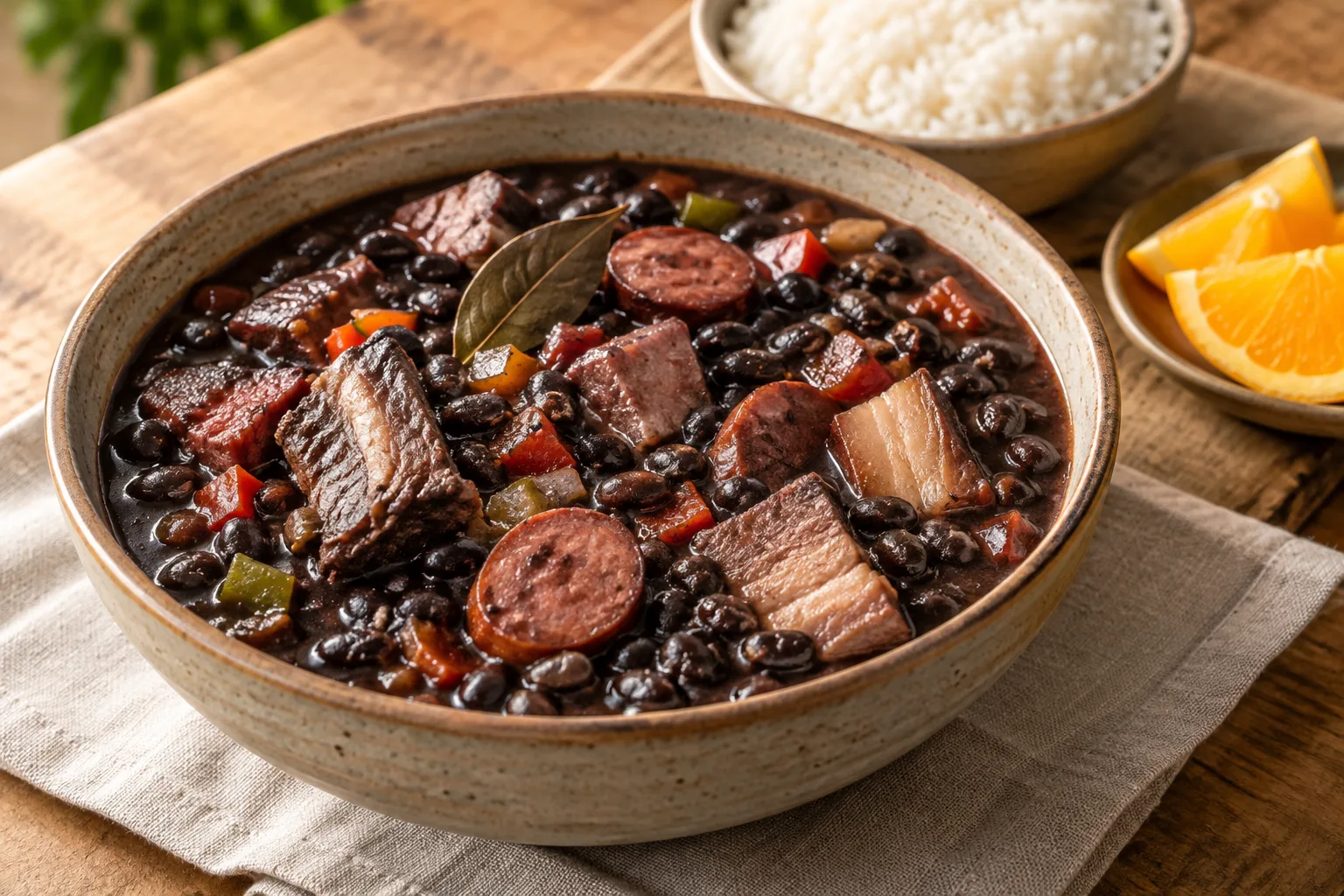
Guava paste or goiabada provides the filling in the thin layers of bolo de rolo. Elsewhere, black beans and varied pork cuts appear in feijoada. These ingredients are not a universal national pantry; they are specific materials transformed for specific dishes.

Contrasts of aroma, texture, and richness

The dishes documented here invite comparison by texture as much as by flavor. In acarajé, a crisp, fried exterior surrounds a softer bean interior; fillings such as vatapá add a dense, creamy counterpoint. A fresh tomato, onion, or herb mixture may bring a brighter contrast, while chili is an optional or variable element rather than a defining requirement for every version. The result depends on the combination served, not simply on the fritter by itself.

Vatapá is thick and smooth, with bread providing body and coconut milk, ground nuts, shrimp, and dendê contributing richness and aroma. Bahian moqueca also brings together seafood and regional seasonings, including dendê and coconut milk in descriptions of the Bahian style. These dishes share some ingredients, but their textures and uses are different: one may fill a fritter, while the other is a fish or seafood stew.

The contrast in pão de queijo is between a browned outside and a springy, tender center. In bolo de rolo, thin alternating layers of cake and guava create a fine spiral when sliced. A shared ingredient does not make two preparations interchangeable: texture, proportion, and assembly give each dish its own character.

Work, celebration, and transmission

In Salvador, acarajé is closely associated with the public work of women who prepare and sell it. The tabuleiro, the vendor’s stall, is part of the food’s setting, and accounts of the tradition connect its preparation and sale with Afro-Brazilian religious life. This is a specific cultural relationship, not a claim that every street food has a ritual role. The distinction between food sold on the street and food prepared in religious contexts also matters; practices and combinations can differ.

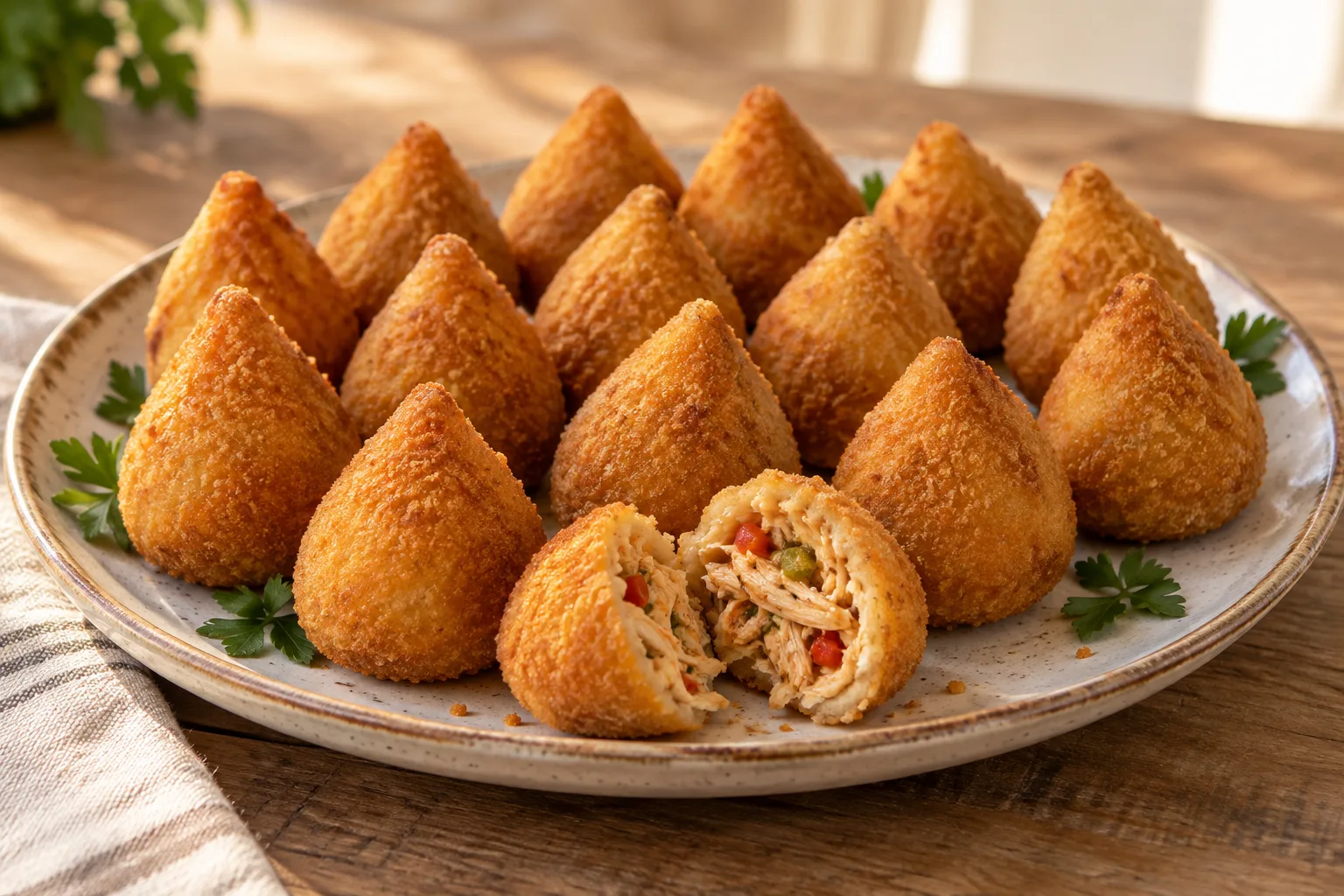
Brazilian sweets and snacks also make visible forms of everyday transmission. Pão de queijo appears in accounts of breakfast and afternoon coffee, while coxinha belongs to the broad category of savory snacks sold in bakeries, cafés, and snack bars and served at gatherings. These settings bring preparation into ordinary routines as well as social occasions.

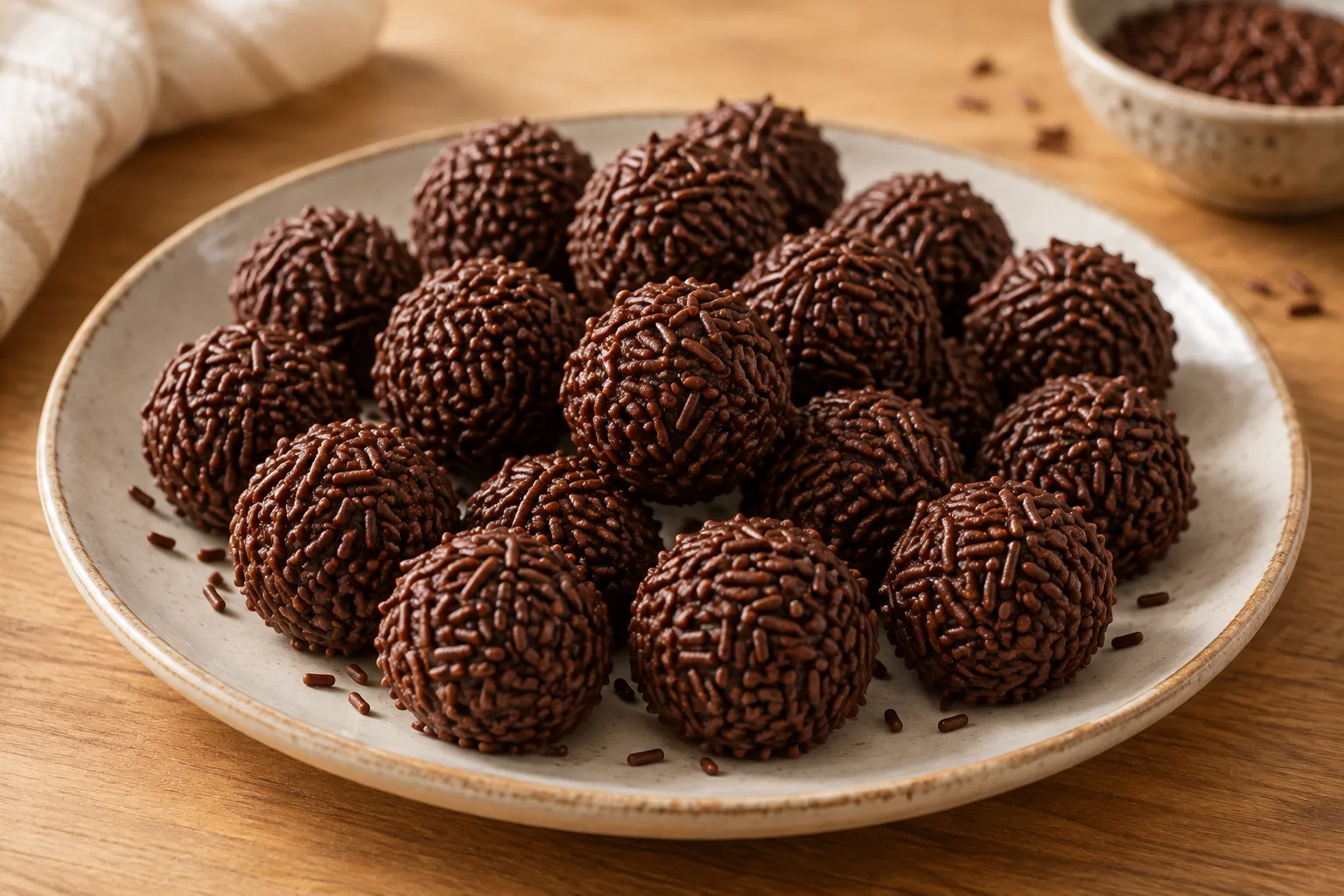
Brigadeiros are strongly associated with birthday parties, where small chocolate sweets can be made and shared among family and guests. The sweets are often rolled into balls and coated with chocolate sprinkles, though forms and flavors vary. Bolo de rolo is also served in slices and associated with Pernambuco. Tradition lives in work and repeated occasions, while recipes and details may change between households and vendors.

Grinding, shaping, frying, and layering

Different preparations call for different kinds of skilled work. To make acarajé, black-eyed peas are soaked, their skins removed, and the beans ground with onion into a batter. Beating the batter helps aerate it before portions are shaped and fried in hot dendê. The fritters are then opened and filled. The sequence—soaking, peeling, grinding, beating, and frying—helps explain why the finished food is more than a simple bean cake.

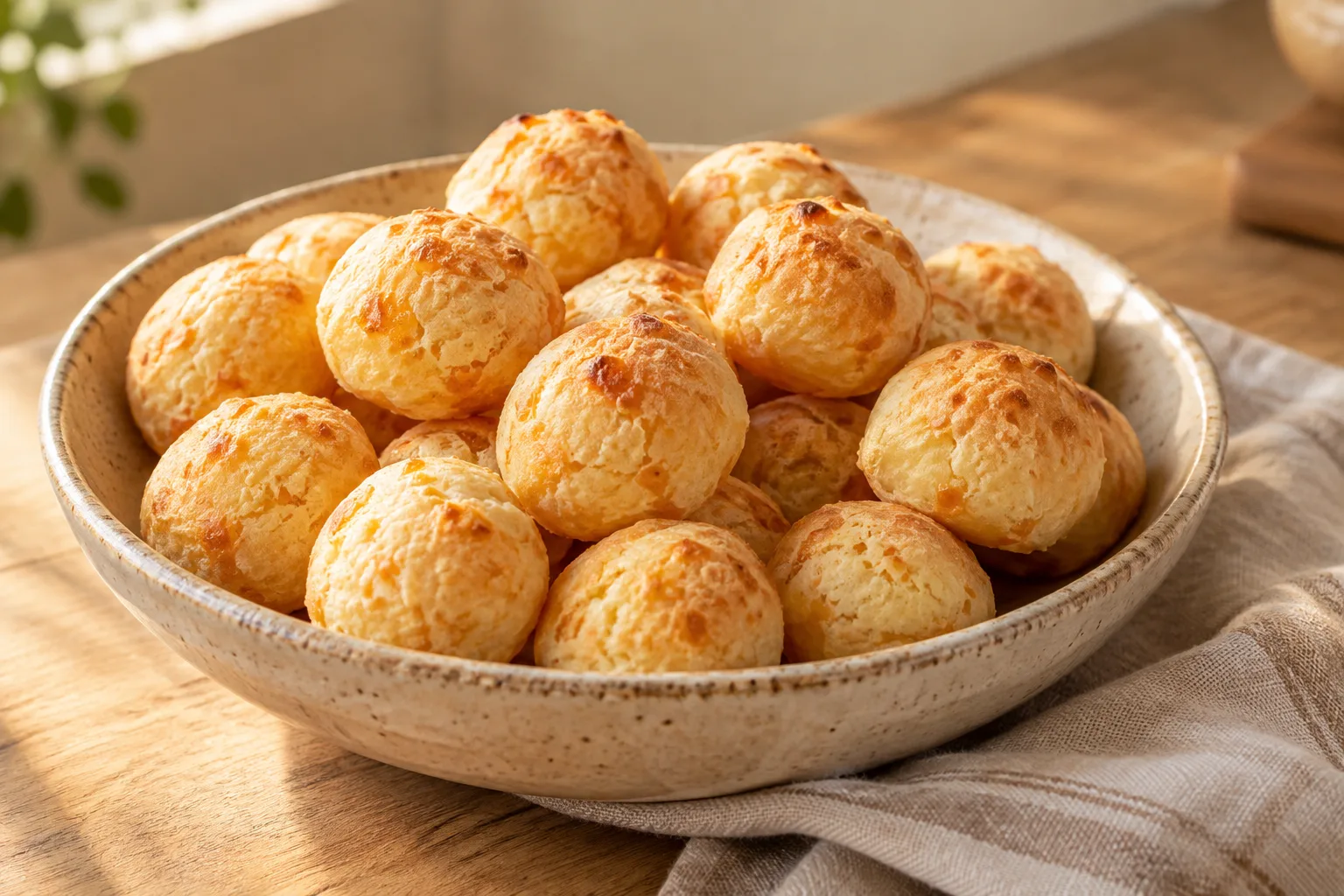
For pão de queijo, cassava starch is combined with hot liquid in a process often described as scalding, then worked with eggs and cheese. The dough is portioned into small rounds and baked. The balance of starch, liquid, and other ingredients affects the finished texture, and raw materials can vary. The aim is not the crumb of wheat bread but the characteristic tender, elastic interior.

Bolo de rolo depends on repetition and careful assembly: very thin sheets of cake are spread with guava filling and rolled in succession to form many fine layers. A slice reveals that construction. A moqueca, by contrast, is a fish or seafood stew; accounts describe it cooked gently in a pot, with its form and seasonings varying by region. Each technique serves a particular structure, rather than offering a general rule for Brazilian cooking.

Meals, snacks, and ways of serving

A Brazilian table can include a slow-cooked bean-and-meat dish, a quick savory snack, or a sweet served at a celebration; these are different kinds of eating, not parts of one fixed national meal. Feijoada is a substantial stew of black beans and assorted meats. Accounts describe it served with rice and orange, and some also include farofa or greens. The variety of accompaniments and meats means versions can differ, even when the dish name is shared.

In Bahia, acarajé is often sold as street food, opened and filled with preparations such as vatapá or caruru. Its public setting and the vendor’s work are central to how the dish is encountered. Moqueca is a stew, commonly served with rice in the documented examples; this is a different occasion and format from a handheld fritter. When the vatapá is served on its own, it may also accompany rice.

Small baked pão de queijo suits breakfast or an afternoon coffee, while coxinhas are familiar as snacks and party food. Slices of bolo de rolo and small brigadeiros make sweet endings or celebration foods. Serving context helps distinguish these dishes: a street snack, a shared stew, a coffee-time bite, and a birthday sweet each have their own place.

A glossary of dishes and ingredients

These terms refer to concrete preparations and ingredients found in the regional examples above. Their meanings are useful starting points, but recipes can vary by household, vendor, and place.

  • Acarajé: A Bahian fritter made from ground black-eyed peas and fried in dendê; it is often opened and filled with preparations such as vatapá or caruru.
  • Abará: A Bahian preparation made with bean batter and cooked wrapped in leaves rather than fried like acarajé; the different cooking method gives it a different texture.
  • Dendê: Red-orange palm oil with a distinctive aroma, used in characteristic Bahian preparations.
  • Feijoada: A black-bean stew with assorted meats, commonly served with rice and orange in the documented versions.
  • Mandioca and polvilho: Cassava and its starch; polvilho is an important structural ingredient in pão de queijo.
  • Pão de queijo: A small Brazilian cheese bread made with cassava starch, associated especially with Minas Gerais.
  • Vatapá: A thick Bahian preparation made in versions with bread, coconut milk, ground nuts, and shrimp; it is a well-known filling for acarajé.
  • Bolo de rolo: A Pernambuco cake made by layering thin cake sheets with guava filling and rolling them into a spiral.

Names point toward a tradition, not a guarantee of one fixed formula.

One country, many cuisines

Bahia

Salvador offers a documented entry into Afro-Brazilian foodways through acarajé, the bean fritter sold by baianas, and its relationship to religious traditions and street vending. Bahian vatapá combines ingredients such as bread, coconut milk, nuts, and shrimp into a thick preparation, often used to fill acarajé. Bahia is also associated with a distinctive moqueca made with fish or seafood and, in documented versions, coconut milk and dendê. These examples describe particular traditions, not every food in the state.

Minas Gerais

Minas Gerais is especially associated in the documented examples with pão de queijo, small cheese breads made with cassava starch, eggs, and cheese. The starch is known as polvilho, and sources describe differences in starch types and in the properties of raw ingredients that can affect the dough. The baked rolls are associated with coffee-time eating as well as everyday snacks. This connection makes the bread a useful regional point of entry without suggesting that it represents the full cuisine of Minas Gerais.

Pernambuco

Pernambuco is documented here through bolo de rolo, a cake made from very thin sheets of batter spread with guava filling and rolled in repeated layers. Its construction produces a fine spiral visible in each slice, and accounts describe it as a traditional sweet of the state. The technique depends on baking thin sheets and assembling them carefully, rather than making one thick cake. This is a specific point of connection to Pernambuco’s food traditions, not a complete description of the state’s varied cooking.

Cook
Read as an article ↗
Places and communities

One country, many cuisines

An initial selection of regions to explore. Culinary boundaries may differ from administrative divisions.

Brazil

Bahia

Salvador offers a documented entry into Afro-Brazilian foodways through *acarajé*, the bean fritter sold by baianas, and its relationship to religious traditions and street vending. Bahian *vatapá* combines ingredients such as bread, coconut milk, nuts, and shrimp into a thick preparation, often used to fill acarajé. Bahia is also associated with a distinctive *moqueca* made with fish or seafood and, in documented versions, coconut milk and *dendê*. These examples describe particular traditions, not every food in the state.

Brazil

Minas Gerais

Minas Gerais is especially associated in the documented examples with *pão de queijo*, small cheese breads made with cassava starch, eggs, and cheese. The starch is known as *polvilho*, and sources describe differences in starch types and in the properties of raw ingredients that can affect the dough. The baked rolls are associated with coffee-time eating as well as everyday snacks. This connection makes the bread a useful regional point of entry without suggesting that it represents the full cuisine of Minas Gerais.

Brazil

Pernambuco

Pernambuco is documented here through *bolo de rolo*, a cake made from very thin sheets of batter spread with guava filling and rolled in repeated layers. Its construction produces a fine spiral visible in each slice, and accounts describe it as a traditional sweet of the state. The technique depends on baking thin sheets and assembling them carefully, rather than making one thick cake. This is a specific point of connection to Pernambuco’s food traditions, not a complete description of the state’s varied cooking.

Cook
Recipes connected with Brazil

Each recipe documents one version. Geographic associations do not imply an exclusive origin.

Brazilian Shrimp Vatapá
Image generated by the Kitchenpause team
60 minIntermediate

Brazilian Shrimp Vatapá

A thick Bahian cream of bread, coconut milk, shrimp, peanuts, cashews, and dendê oil. Makes 4 servings; times are approximate.

View recipe
Brazilian feijoada
Image generated by the Kitchenpause team
840 minAdvanced

Brazilian feijoada

A stew of black beans, pork, sausage and vegetables. Serves 6; serve with boiled rice and orange if you like.

View recipe
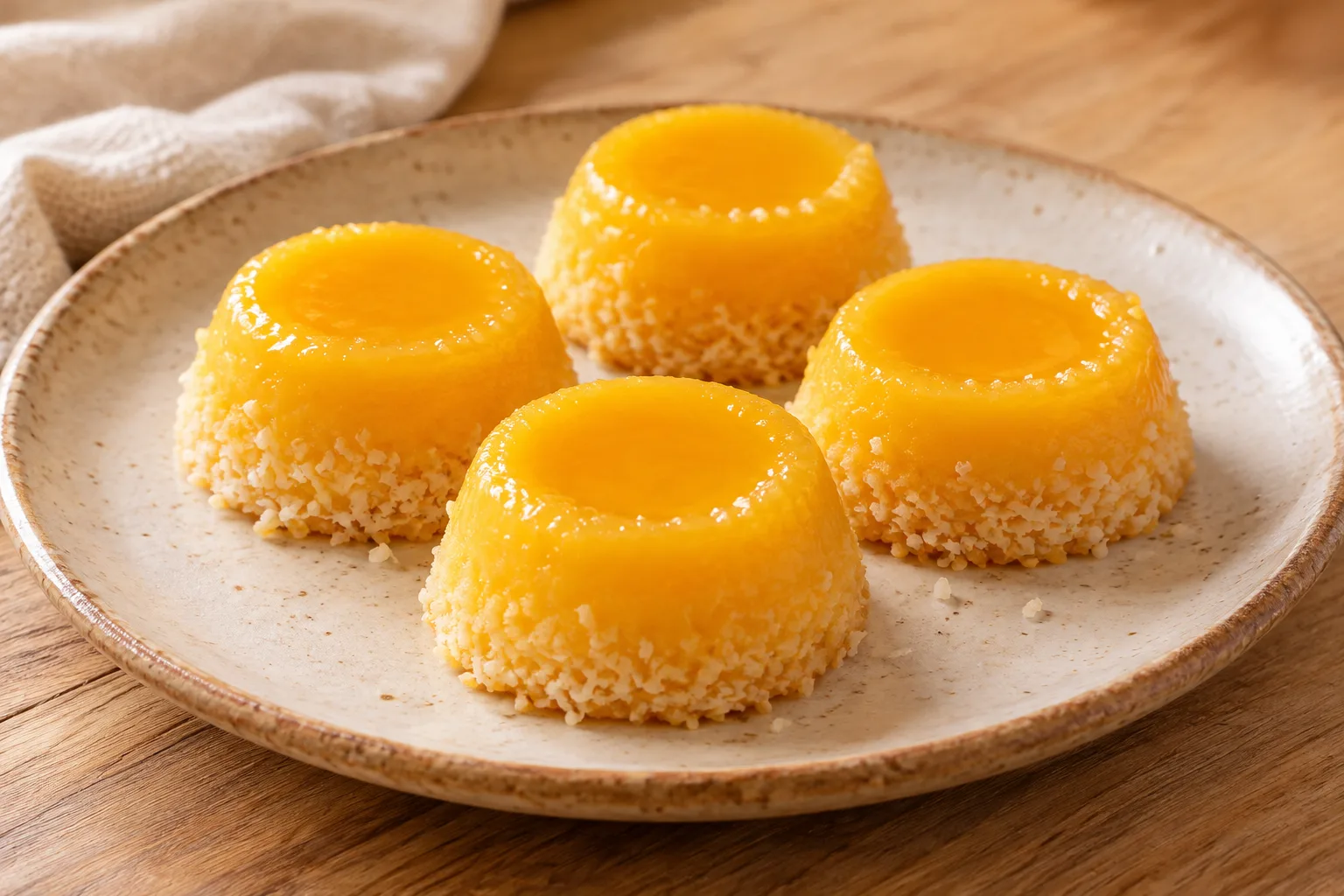
Brazilian quindim
Image generated by the Kitchenpause team
70 minIntermediate

Brazilian quindim

Small coconut, egg-yolk and sugar quindim baked in a water bath. The quantities make 4 servings; preparation times are approximate.

View recipe
Brazilian brigadeiros
Image generated by the Kitchenpause team
95 minEasy

Brazilian brigadeiros

Brazilian condensed-milk and cocoa sweets, cooked until thick, chilled, then rolled in chocolate sprinkles. Makes about 20 pieces, for 4 servings; preparation times and yield are estimates.

View recipe
Brazilian acarajé
Image generated by the Kitchenpause team
775 minAdvanced

Brazilian acarajé

Bahian fritters made with black-eyed peas, onion, and salt, fried in dendê oil. Makes 4 servings. Preparation and cooking times are estimates; soaking takes 12 hours.

View recipe
Bahian fish moqueca
Image generated by the Kitchenpause team
65 minIntermediate

Bahian fish moqueca

A Brazilian stew of firm fish with tomato, onion, bell pepper, coconut milk, and dendê oil. Serves 4.

View recipe
Brazilian chicken coxinhas
Image generated by the Kitchenpause team
85 minIntermediate

Brazilian chicken coxinhas

A Brazilian snack of shredded chicken wrapped in a broth-and-flour dough, breaded, and fried until golden. Makes 16 pieces for 4 people.

View recipe
Bolo de rolo
Image generated by the Kitchenpause team
60 minAdvanced

Bolo de rolo

A dessert from Pernambuco made with very thin layers of butter, egg, and sugar dough, rolled successively with guava jam.

View recipe

Sources consulted

Read the sources and each document’s scope. A heritage inscription concerns a particular practice, not all of a country’s cuisine.

  1. Traditional Brazilian Food - The Top Food and Drinks to Try in Brazil theplateunknown.com/traditional-brazilian-food/ theplateunknown.com Consulted: November 4, 2026
  2. Por qué el Sáhara Occidental es una pieza clave para la seguridad alimentaria mundial doi.org/10.64628/aao.swhdr6qsf doi.org Consulted: November 12, 2026
  3. Cómo Hacer Bolo de Rolo Auténtico | Receta Tradicional del Nordeste | Tramontina global.tramontina.com/es/blog/recetas/como-hacer-el-autentico-bolo-de-rolo-un-clasico-brasil… global.tramontina.com Consulted: October 3, 2026
  4. Cómo cocinar un rico bolo de rolo www.cocina-brasilena.com/recetas/reposteria/bolo-de-rolo cocina-brasilena.com Consulted: October 3, 2026
  5. Disfruta del sabor de Brasil: bolo de rolo en tu cocina ¡en pocos pasos! | MDZ Online www.mdzol.com/tendencias/disfruta-del-sabor-brasil-bolo-rolo-tu-cocina-en-pocos-pasos-n11658… mdzol.com Consulted: October 3, 2026
  6. Aprende la receta del "Bolo de Rolo" • Confitería Brasileña brasilfoodsafaris.com/es/confiteria-brasilena-viaje-y-gastronomia/ brasilfoodsafaris.com Consulted: October 3, 2026
  7. Bolo de Rolo of Brazil | VOV5.VN vovworld.vn/food-delight/bolo-de-rolo-of-brazil-1854841.vov5 vovworld.vn Consulted: October 3, 2026
  8. Archivo:Bolo de Rolo, doce brasileiro, típico de Pernambuco.jpg - Wikipedia, la enciclopedia libre es.wikipedia.org/wiki/Archivo:Bolo_de_Rolo,_doce_brasileiro,_t%C3%ADpico_de_Pernambuco.jpg es.wikipedia.org Consulted: October 3, 2026
  9. Akara - Wikipedia, la enciclopedia libre es.wikipedia.org/wiki/Akara es.wikipedia.org Consulted: November 4, 2026
  10. Coixinhas de frango o muslitos brasileiros de pollo www.directoalpaladar.com/recetas-de-aperitivos/receta-de-coixinhas-de-frango-el-delicioso-bo… directoalpaladar.com Consulted: October 18, 2026
  11. Poesía Culinaria . Sabores de Nati: Coxinhas de frango, bocados con sabor a Brasil... saboresdenati.blogspot.com/2017/12/coxinhas-de-frango-brasil.html saboresdenati.blogspot.com Consulted: October 18, 2026
  12. Coxinhas, la receta del delicioso bocado de pollo brasileiro bonviveur.com/es/recetas/coxinhas-brasilenas-de-pollo bonviveur.com Consulted: October 18, 2026
  13. Coxinhas brasileñas, receta paso por paso- Croquetas brasileñas | DECORECETAS www.decorecetas.com/2019/10/coxinhas-brasilenas-receta-paso-por-paso-croquetas-brasileiras.h… decorecetas.com Consulted: October 18, 2026
  14. [:en]Coxinha in Brazil - Brazilians Favorite Deep-Fried Snack | Blog[:br]Coxinha no Brasil - Salgado Preferido dos Brasileiros | Caminhos[:es]Coxinha en Brasil: Bocadillo Frito Favorito de Los Brasileños[:pt]Coxinha no Brasil - Salgado Preferido dos Brasi caminhoslanguages.com/es/blog/coxinha-brazil/ caminhoslanguages.com Consulted: October 18, 2026
  15. Coxinha - Wikipedia, la enciclopedia libre es.wikipedia.org/wiki/Coxinha es.wikipedia.org Consulted: October 18, 2026
  16. Coxinha: Calorías, Nutrición y Beneficios para la Salud nutriscan.app/es/calories-nutrition/coxinha nutriscan.app Consulted: October 10, 2026
  17. História da Coxinha: Origem e Lendas do Salgado | Bailon - Bailon - Fabricantes de equipamentos gastronômicos www.bailonequipamentos.com.br/post/historia-da-coxinha-origem-e-lendas-do-salgado-bailon?lan… bailonequipamentos.com.br Consulted: October 10, 2026
  18. Acarajé, el sorprendente bocado que conjuga sabores brasileños y africanos bonviveur.com/es/recetas/acaraje bonviveur.com Consulted: November 4, 2026
  19. Cómo hacer coxinhas de pollo, la versión brasileña de nuestras croquetas - Infobae www.infobae.com/espana/2026/02/19/como-hacer-coxinhas-de-pollo-la-version-brasilena-de-nuest… infobae.com Consulted: October 18, 2026
  20. Coxinha: receta y origen | Guide Cuisine www.guide-cuisine.ch/es/platos/coxinha/ guide-cuisine.ch Consulted: October 18, 2026
  21. Antes de ir a YouTube www.youtube.com/shorts/e1FFn1HHt6U?xstg=CAMSBhUDze3xHw%3D%3D youtube.com Consulted: October 18, 2026
  22. Los mercados de Belo Horizonte feel.visitbrasil.com/en/minas-is-plentiful-a-tour-of-bhs-markets/ Embratur — Visit Brasil Consulted: October 20, 2026
  23. Salvador y su cultura culinaria www.visitbrasil.com/es/location/salvador-es/ Embratur — Visit Brasil Consulted: October 20, 2026
  24. El repertorio gastronómico de Recife www.visitbrasil.com/en/location/recife-2 Embratur — Visit Brasil Consulted: October 20, 2026
  25. Receta de Moqueca brasileña de pescado con leche de coco www.lacocinadealigator.com/spa/p/food/recipe/recetas/receta-moqueca-brasilena-de-pescado.htm lacocinadealigator.com Consulted: October 22, 2026
  26. Moqueca brasileña: el guiso que divide a Bahía y Espírito Santo geogastronomica.com/moqueca-brasilena-bahia-espirito-santo/ geogastronomica.com Consulted: October 22, 2026
  27. Moqueca de peixe, la receta del exquisito guiso de pescado brasileño bonviveur.com/es/recetas/moqueca-de-peixe bonviveur.com Consulted: October 22, 2026
  28. Moqueca de peixe - Viaja en mi Cocina viaja-en-mi-cocina.blogspot.com/2017/09/moqueca-de-peixe.html viaja-en-mi-cocina.blogspot.com Consulted: October 22, 2026
  29. Moqueca - Wikipedia, la enciclopedia libre es.wikipedia.org/wiki/Moqueca es.wikipedia.org Consulted: October 22, 2026
  30. Moqueca. El guiso brasileño de pescado, tipos, historia y origen de la receta www.abc.es/recetasderechupete/moqueca-el-guiso-brasileno-de-pescado-tipos-historia-y-origen-… abc.es Consulted: October 22, 2026
  31. La moqueca, el gran plato costero de Brasil | Iguazu Athens www.iguazu.gr/es/blog/what-is-moqueca/ iguazu.gr Consulted: October 22, 2026
  32. Moqueca brasileña de camarones | Receta fácil | Recetas Fáciles ✔️ www.recetasfaciles.com.es/receta-facil/moqueca-camarones/ recetasfaciles.com.es Consulted: October 22, 2026
  33. Pão de queijo: fundamentos práticos para produção doi.org/10.14393/ufu.di.2022.569 doi.org Consulted: November 3, 2026
  34. PÃO DE QUEIJO. Pan de queso brasileño - Las Recetas de MJ www.lasrecetasdemj.com/2021/03/pao-de-queijo-pan-de-queso-brasileno.html lasrecetasdemj.com Consulted: November 3, 2026
  35. Pan de Queso Brasileño (Pao de Queijo) | El Mundo Eats elmundoeats.es/pan-de-queso-brasileno-pao-de-queijo/ elmundoeats.es Consulted: November 3, 2026
  36. Pão de queijo (Pan de queso) - Juliana Aguiar - Receta - Canal Cocina canalcocina.es/receta/pao-de-queijo-pan-de-queso canalcocina.es Consulted: November 3, 2026
  37. Pão de queijo (Pan de queso brasileño) - El Sabor de lo Bueno sabordelobueno.com/pao-de-queijo/ sabordelobueno.com Consulted: November 3, 2026
  38. Poesía Culinaria . Sabores de Nati: Pão de queijo / Pan de queso [Brasil] saboresdenati.blogspot.com/2016/10/pao-de-queijo-pan-de-queso-brasil.html saboresdenati.blogspot.com Consulted: November 3, 2026
  39. Cómo hacer acarajé, el bocado frito más típico de Bahía www.directoalpaladar.com/recetas-de-aperitivos/como-hacer-acaraje-bocado-frito-tipico-bahia directoalpaladar.com Consulted: November 4, 2026
  40. Receta de acarajé, directa desde Brasil www.rtve.es/play/videos/aqui-la-tierra/receta-acaraje-brasil/6920584/ rtve.es Consulted: November 4, 2026
  41. El Acarajé de Brasil - HITCOOKING hitcooking.com/recetas/el-acaraje-de-brasil/ hitcooking.com Consulted: November 4, 2026
  42. Platos de la cocina brasileña: acarajé okdiario.com/recetas/platos-cocina-brasilena-acaraje-10142431 okdiario.com Consulted: November 4, 2026
  43. Cultura y memoria del maíz, de la mandioca y del frijol en cuanto prácticas de resistencia a los modelos hegemónicos y sus impactos en las tradiciones alimentarias en Brasil | OpenAlex openalex.org/W3174962247 openalex.org Consulted: November 9, 2026
  44. Race under dictatorship: the political articulation of blackness in the Dominican Republic and Brazil | OpenAlex openalex.org/W2562844990 openalex.org Consulted: November 4, 2026
  45. El acarajé es una delicia brasileña hecha de frijoles y cebollas | Bienmesabe elestimulo.com/bienmesabe/geografia-del-paladar/2018-09-07/el-acaraje-una-delicia-de-bahia-p… elestimulo.com Consulted: November 4, 2026
  46. Cómo hacer acarajé: los buñuelos de frijol de los puestos de Bahía | Sekai Gohan sekaigohan.com/es/recipes/south-america/brazil/acaraje sekaigohan.com Consulted: November 4, 2026
  47. Acarajé: origen, ingredientes y alérgenos www.menuella.com/es/food-wiki/acaraje menuella.com Consulted: November 4, 2026
  48. Receta de acarajé www.petitchef.es/recetas/aperitivo/acaraje-fid-1361280 petitchef.es Consulted: November 4, 2026
  49. Abará (Albóndigas de frijol carita) | COOK CAL AI cookcalai.com/es/abara-albondigas-de-frijol-carita/ cookcalai.com Consulted: November 4, 2026
  50. Acarajé Baiana — Blog di ViaggiandoMangiando — blog.giallozafferano.it/viaggiandomangiando/acaraje/ blog.giallozafferano.it Consulted: November 4, 2026
  51. Receta Brigadeiros: la receta brasileña más dulce y fácil - Torras chocolatestorras.com/recetas-chocolate/brigadeiros-receta/ chocolatestorras.com Consulted: November 5, 2026
  52. Cómo preparar brigadeiros, la receta brasileña de bombones de chocolate - Tapas www.tapasmagazine.es/como-preparar-brigadeiros-receta-bombones-brasilenos/ tapasmagazine.es Consulted: November 5, 2026
  53. Brigadeiro brasileño - Andrea Dopico - Receta - Canal Cocina canalcocina.es/receta/brigadeiro-brasileno/vista/ canalcocina.es Consulted: November 5, 2026
  54. Brigadeiros brasileños. Receta de cocina fácil, sencilla y deliciosa www.directoalpaladar.com/postres/brigadeiros-brasilenos-descubre-el-bocadito-mas-dulce-de-br… directoalpaladar.com Consulted: November 5, 2026
  55. Brigadeiros brasileños tradicionales + variaciones - Recetas de Laylita www.laylita.com/recetas/brigadeiros-brasilenos-tradicionales/ laylita.com Consulted: November 5, 2026
  56. Receta original de Brigadeiros Tradicionales postresoriginales.com/brigadeiros-tradicionales/ postresoriginales.com Consulted: November 5, 2026
  57. Brigadeiros brasileños | Receta fácil y rápida | Recetas Fáciles ✔️ www.recetasfaciles.com.es/receta-facil/brigadeiros-brasilenos/ recetasfaciles.com.es Consulted: November 5, 2026
  58. BRIGADEIROS BRASILEÑOS glacemokablogspot.wordpress.com/2017/09/01/brigadeiros-brasilenos/ glacemokablogspot.wordpress.com Consulted: November 5, 2026
  59. Los Brigadeiros - Leti's Atelier Gourmet letis.es/los-brigadeiros/ letis.es Consulted: November 5, 2026
  60. Brigadeiro brasileño - A Dica do Dia, Brasil en Portugués - Rio & Learn rioandlearn.com/es/brigadeiro-brasileno/ rioandlearn.com Consulted: November 5, 2026
  61. Brigadeiro - Wikipedia, la enciclopedia libre es.wikipedia.org/wiki/Brigadeiro es.wikipedia.org Consulted: November 5, 2026
  62. Brigadeiro - Origen de este dulce típico brasileño postresoriginales.com/brasil-brigadeiros/ postresoriginales.com Consulted: November 5, 2026
  63. Quindim, el postre brasileño | Excelencias Gourmet excelenciasgourmet.com/es/recetas/quindim-el-postre-brasileno excelenciasgourmet.com Consulted: November 6, 2026
  64. Quindim - Sergio Fernández - Receta - Canal Cocina canalcocina.es/receta/quindim-1 canalcocina.es Consulted: November 6, 2026
  65. Quindim Brasileños - Recetas italianas de GialloZafferano www.giallozafferano.es/recetas/quindim-brasilenos.html giallozafferano.es Consulted: November 6, 2026
  66. Quindim (flan coco brésilien) - Cookidoo® – la plataforma de recetas oficial de Thermomix® cookidoo.es/recipes/recipe/es-es/r688615 cookidoo.es Consulted: November 6, 2026
  67. Feijoada brasileña: receta de cocina fácil, sencilla y deliciosa de la fechuada www.directoalpaladar.com/recetas-de-legumbres-y-verduras/receta-de-feijoada-el-plato-naciona… directoalpaladar.com Consulted: November 7, 2026
  68. Feijoada. Receta fácil del plato nacional de Brasil recetasdecocina.elmundo.es/2025/01/feijoada-receta-plato-nacional-brasil.html recetasdecocina.elmundo.es Consulted: November 7, 2026
  69. Feijoada Brasileña: Receta Pro del Plato Nacional de Brasil | Blog AI Chef Pro aichef.pro/blog/feijoada-brasilena-plato-nacional-receta-pro aichef.pro Consulted: November 7, 2026
  70. Feijoada, la receta brasileña para celebrar la vuelta de Lula da Silva www.lavanguardia.com/comer/recetas/20230102/8665362/receta-feijoada-brasilena-lula-da-silva.… lavanguardia.com Consulted: November 7, 2026
  71. Vatapá brasileño. Receta tradicional y casera de Brasil recetasdecocina.elmundo.es/2026/09/vatapa-brasileno-receta-tradicional-y-casera-de-brasil.ht… recetasdecocina.elmundo.es Consulted: November 9, 2026
  72. Cómo hacer vatapá brasileño, una crema tradicional de Bahía llena de sabor www.directoalpaladar.com/recetas-de-salsas-y-guarniciones/como-hacer-vatapa-brasileno-crema-… directoalpaladar.com Consulted: November 9, 2026
  73. Vatapá: la irresistible receta brasileña con un sabor y una cremosidad sorprendentes bonviveur.com/es/recetas/vatapa bonviveur.com Consulted: November 9, 2026
  74. Vatapá - Juliana Aguiar - Receta - Canal Cocina canalcocina.es/receta/vatapa canalcocina.es Consulted: November 9, 2026
  75. Vatapá - Wikipedia, la enciclopedia libre es.wikipedia.org/wiki/Vatap%C3%A1 es.wikipedia.org Consulted: November 9, 2026
  76. Vatapá: El Sabor Cremoso de la Tradición Afrobrasileña eusouoluiz.com/english/f/vatap%C3%A1-el-sabor-cremoso-de-la-tradici%C3%B3n-afrobrasile%C3%B1… eusouoluiz.com Consulted: November 9, 2026
  77. Vatapá: origen, ingredientes y alérgenos www.menuella.com/es/food-wiki/vatapa menuella.com Consulted: November 9, 2026
  78. Lagunas culturales en la traducción al español del cuento brasileño El Picapalo amarillo de Monteiro Lobato | OpenAlex openalex.org/W4415762633 openalex.org Consulted: November 9, 2026

We use session and security technologies to provide our features. Only with your permission do we load Google Analytics to measure visits and Google Maps on Contact. Choose separately, reject or accept both.

Withdraw either permission here. Withdrawing analytics reloads the page to unload the running tag.

Cookie policy