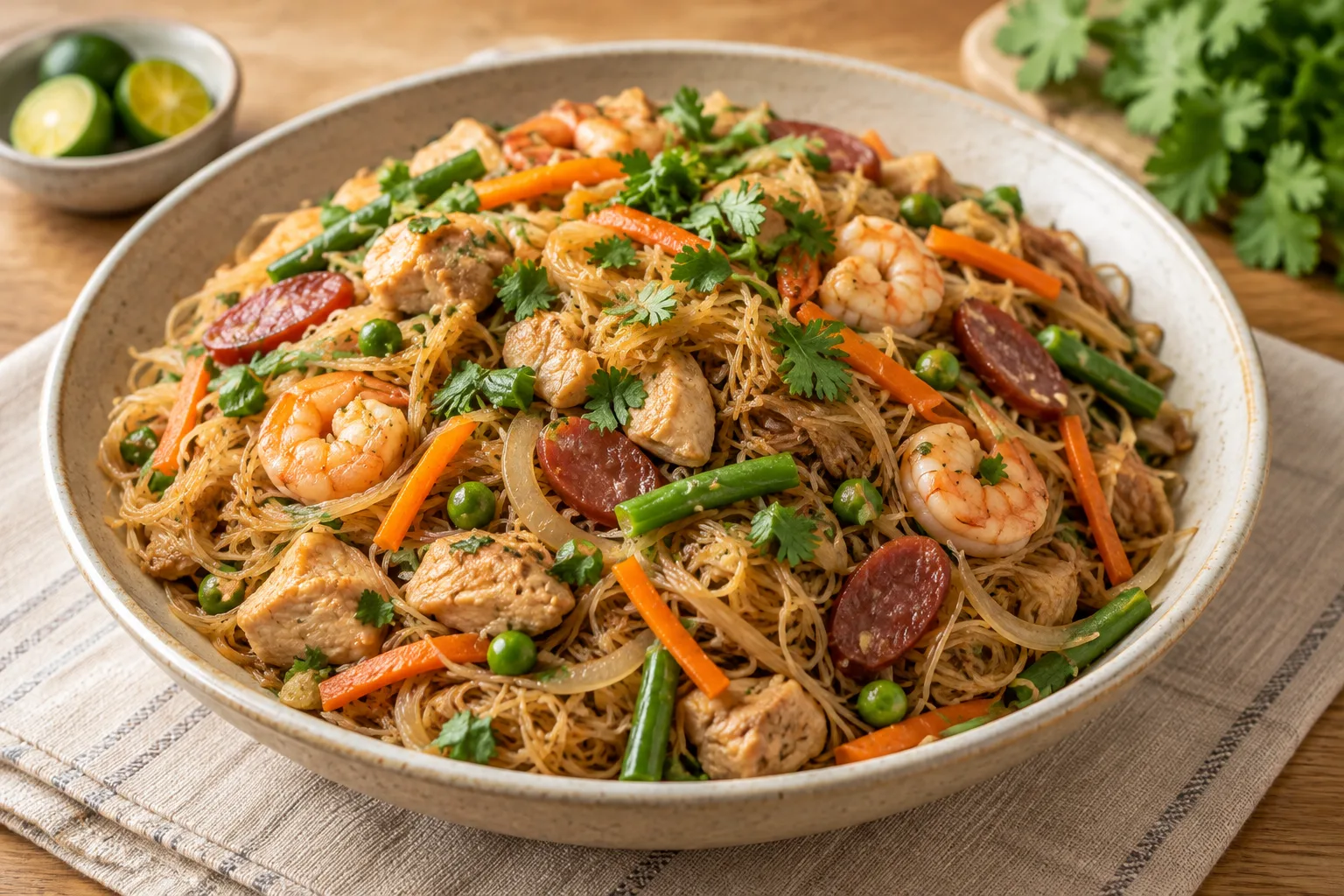
- Category
- Meat
- State
- Preserved
- Usual unit
- unit
What it is
Chinese sausage, including varieties known as lap cheong, is a strongly flavoured sausage usually made with meat and pork fat, sugar, salt and seasonings. Some versions are cured by drying, while others may be smoked; there are also Chinese sausages with different compositions, so the name alone does not mean every product is the same. It is often used in modest amounts to add a sweet, savoury, deeply seasoned note to rice, noodles and other dishes. Check the package for ingredients and preparation directions: products vary, and they are not all sold in the same form.
When to use it
Use it when you want to add a cured-meat note, sweetness and concentrated savouriness without relying on many extra seasonings. It works well with plain rice, fried rice, noodles, stir-fried vegetables and steamed-bun fillings. Because its flavour can be assertive, start with a modest amount and adjust after tasting the dish. Varieties differ in sweetness, fat, texture and processing, so take that into account when pairing it with other salty ingredients.
How to use it
Read the package directions first: Chinese sausage varieties do not necessarily require the same preparation, and some need cooking before they are eaten. One practical way to use it with rice is to cook it alongside the rice, if the product directions allow, then slice or chop it to mix in or serve on top. You can also cut it into slices or dice and stir-fry it with vegetables, add it to noodles, or use it in steamed-bun fillings. If adding it to an already seasoned dish, taste before adding more salt or soy sauce. Use clean utensils and a clean cutting board, and do not assume a cured product is ready to eat; follow its label.
Flavour and texture
Its flavour commonly combines sweet and savoury notes with a pronounced, deeply seasoned character. Cured or dried versions can be firm and concentrated, while the variety and processing affect texture and sweetness. When cooked, it can lend fat and aroma to rice or a stir-fry; the intensity depends on the particular product.
How to choose it
Check the product name and description, ingredient list and preparation directions on the package. Chinese sausage varies: some versions are dry or cured, others may be smoked, and some varieties have different ingredients. Do not infer the contents or whether it is ready to eat from the name or appearance alone; check the label.
Storage
Follow the storage directions on the package, since products can be sold in different forms and recommendations vary. Check whether it needs refrigeration before opening and how to store it once opened; keep leftovers as directed and do not leave them at room temperature longer than the label allows. Do not assume every dried or cured variety is stored in the same way.
Substitutions
For a similar role in rice, a thin cured pork sausage such as fuet may work, though it can be drier. Chistorra gives a more strongly seasoned result and may tint rice. Mild pork longaniza or fresh pork sausage offers a less pronounced flavour, but needs preparation appropriate to its label. No substitute exactly reproduces the flavour and texture of every Chinese sausage variety.
Common mistakes
Do not assume all Chinese sausages are alike or that they can be eaten without cooking: check the label. Avoid adding plenty of salt or soy sauce before tasting, since the sausage may be salty and strongly flavoured. If you cut it up before cooking it with rice, it may release more fat and juices than you want.
Safety and allergens
Check and follow the package preparation and storage directions. If the product says it must be cooked, do not eat it uncooked; handle it hygienically and refrigerate leftovers as directed on the label.
Culinary uses
- Savory, aromatic addition to rice dishes
- Meaty ingredient for stir-fries, noodles and steamed buns
Recommended techniques
- Steam or cook with rice, then slice or chop before serving
- Slice and stir-fry, pan-fry or grill; follow the product label for preparation
Pairs well with
- Rice
- Noodles
- Stir-fried vegetables
- Steamed buns
Frequently asked questions
Is Chinese sausage always made from pork?
Do not assume that it is. Many familiar versions are made with pork, but varieties differ; check the ingredient list for the specific product.
Does Chinese sausage need to be cooked?
That depends on the product. Check its package directions and cook it before eating if they say to do so.
How can I use it with rice?
You can cook it with the rice if the package directions allow, then slice or chop it, or stir-fry it and serve it mixed with the rice.
Ingredient allergens
Allergen listThere are no verified associations for these ingredients yet.
Sources and review
Automatically researched, cross-checked and validated content. Sources consulted:
- Alérgenos alimentarios | EFSA www.efsa.europa.eu/es/safe2eat/food-allergens
- Client Challenge doi.org/10.2307/jj.27939689.16
- Agencia Española de Seguridad Alimentaria y Nutrición www.aesan.gob.es/
- - YouTube www.youtube.com/watch?v=_qX36XGm570
- La salchicha: un alimento universal que ha marcado la tradición culinaria de todo país y civilización - Picken picken.es/la-salchicha-un-alimento-universal-que-ha-marcado-la-tradicion-culinaria-de-todo-p…
- Coriandrum sativum - Wikipedia, la enciclopedia libre es.wikipedia.org/wiki/Coriandrum_sativum
- Evolución del léxico culinario desde 1932 a 1972 | OpenAlex openalex.org/W2291578502
- Food Allergies | FDA www.fda.gov/food/nutrition-food-labeling-and-critical-foods/food-allergies
- Food allergens | Food Safety and Quality | FAO www.fao.org/food-safety/scientific-advice/food-allergens/en
- Centre for Food Safety www.cfs.gov.hk/english/food_leg/food_leg_lgfa.html
- food hypersensitivity assets.publishing.service.gov.uk/media/69c552404a06660f085442d1/fsa-sfbb-chinese-cuisine-cro…
- Precautionary labelling of foods for allergen content: are we ready for a global framework? - PMC pmc.ncbi.nlm.nih.gov/articles/PMC4005619/
- • Revises definitions of ingredients, date of manufacture, shelf life, and ... svs.gov.cz/?dl_name=obchodovani%2FGB_7718-2025_Prepackaged_Food_Labeling_1.pdf
- El sorprendente ingrediente secreto que hace que mejore muchísimo el arroz blanco www.directoalpaladar.com/ingredientes-y-alimentos/sorprendente-ingrediente-secreto-que-hace-…
- Lap Cheong (Salchicha China) - Receta Tradicional China | 196 flavors www.196flavors.com/es/china-lap-cheong-salchicha-china/?srsltid=AYCX9vLFqpadjcx2ezVjBeOS2qed…
- salchicha china – Ni Hao Arturo Soria nihaomadrid.es/arturosoria/etiqueta/salchicha-china/
- Salchichas chinas losniseiros.blogspot.com/2013/07/salchichas-chinas.html