- Category
- Meat
- State
- Other
- Usual unit
- g
What it is
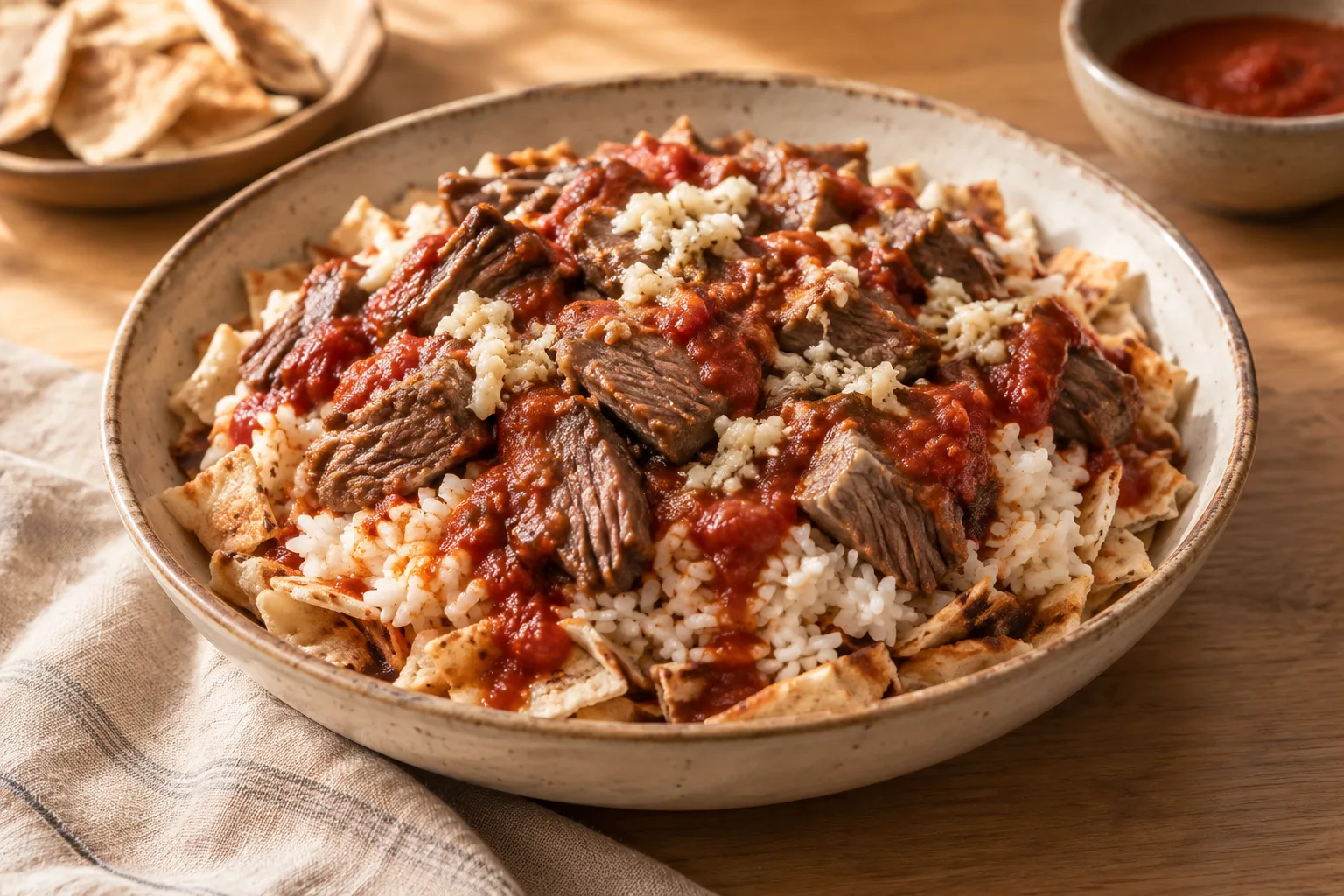
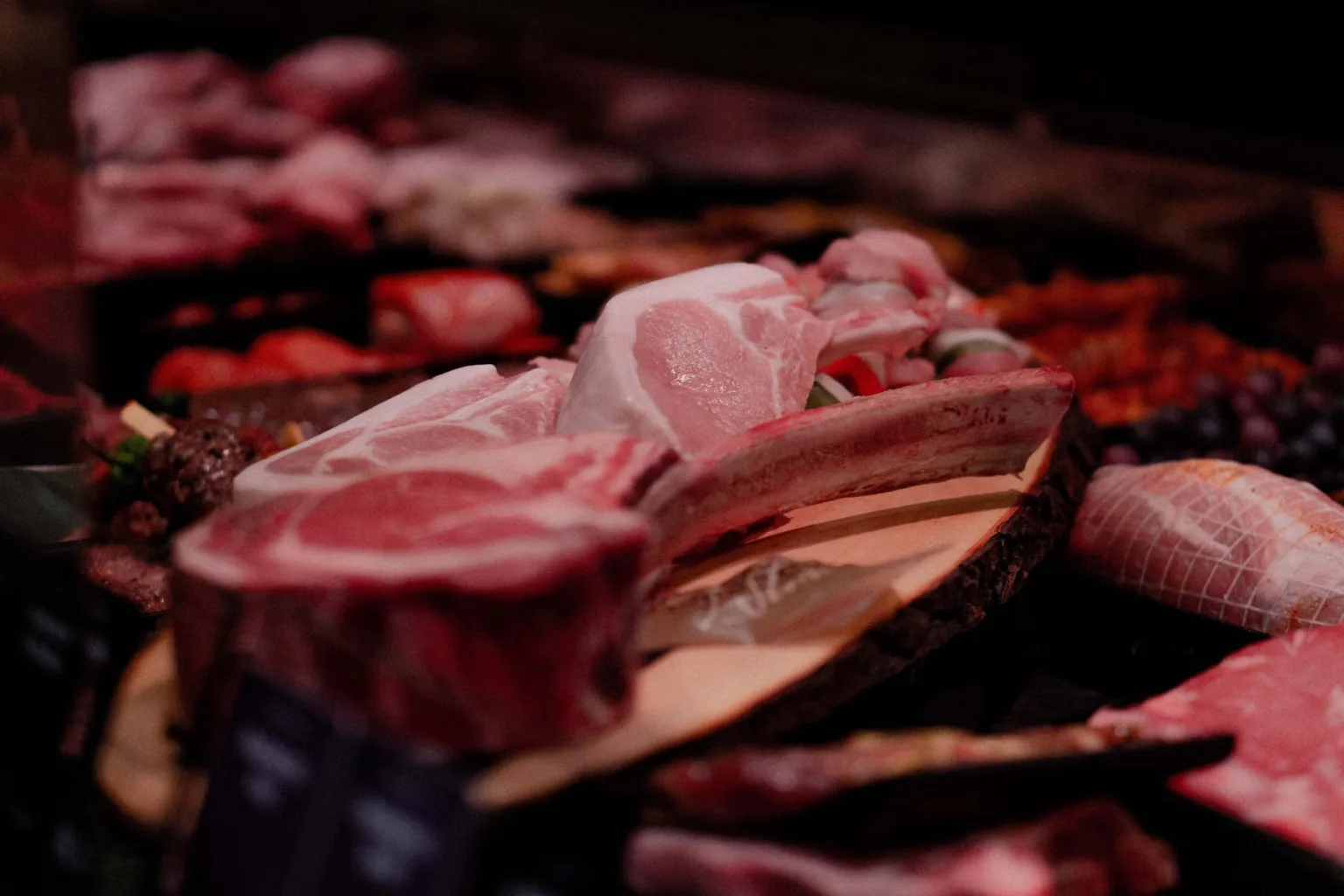
Cooked red meat describes mammalian meat that has already been cooked; the term alone does not identify a species, cut or particular preparation. Beef, pork, lamb, horse and goat are among the meats commonly grouped as red meat. It is also useful to distinguish red meat from processed meat: cooking does not automatically make meat processed, while processing refers to additional treatments such as curing, salting or smoking. In cooking, the result depends on the cut, its fat content and the cooking method. One piece may be tender and juicy, while another is firmer or drier. Check which species and cut you have before deciding how to serve or use it in another dish.
When to use it
Use it when you want to add a savory component to a meal without starting with raw meat: serve it sliced, cut it into cubes or shred it to distribute through a dish. It can be the main component of a meal or an addition to stews, soups and grain dishes. Vegetables and whole grains are possible accompaniments. Remember that species and cut affect flavor and texture; choose the way you cut it for the dish, and do not assume that all cooked red meat is interchangeable or that cooking alone makes it processed.
How to use it
First identify the species and cut, then check whether the piece is tender, firm, lean or fatty. Slice it to serve as a main component; for soups, stews or fillings, dice it or shred it if its texture allows. If adding it to a moist dish, stir it in gently and avoid prolonged cooking that could dry it out. Pair it with vegetables or whole grains and adjust the seasoning to suit the cut. When reheating, follow the package directions or applicable food-handling guidance; the evidence available here does not establish reheating times or temperatures.
Flavour and texture
Flavor and texture vary with species, cut and fat content. Meat may taste mild or robust and feel tender or firm; cooking can leave it juicy or dry. Do not infer fat content just from the red-meat label or color: cuts from the same species can differ.
How to choose it
When buying cooked meat, check the product name, species, cut and package storage directions. Distinguish cooked meat from products that have also been cured, salted or smoked: cooking alone is not enough to call it processed, and prepared products may contain additional ingredients.
Storage
Store the product according to its package directions, and do not assume that all cooked meats have the same shelf life. For meat cooked at home, use official storage guidance suited to the preparation and your location; the evidence available here does not support a specific time, temperature or method. Keep the meat protected and do not eat it if its storage history is uncertain.
Substitutions
You can swap one cooked red-meat cut for another, or use a different species in the category, but the result will not be identical: firmness, fat and flavor may change. Adjust the cut size and seasoning to suit the dish. The evidence here is not sufficient to present other foods as equivalent culinary substitutes.
Common mistakes
Do not treat all cuts or species as identical: their texture, flavor and fat can differ. Also, do not confuse red meat with processed meat; cooking alone is not the same as curing, salting or smoking. Avoid reheating it longer than the dish needs, as it may dry out.
Safety and allergens
Follow the package storage directions and official food-handling guidance where you live. If you do not know how long the meat has been stored or how it was handled, do not assume it is safe.
Culinary uses
- Main component of a meal
- Ingredient for stews, soups, grain dishes, or fillings
Recommended techniques
- Slice or shred and reheat gently in a dish with moisture
- Cut into pieces and add to stews or soups
Pairs well with
- Vegetables
- Whole grains
Frequently asked questions
Which meats are commonly classed as red meat?
The category commonly includes mammalian meats such as beef, pork, lamb, horse and goat. Classification can vary with the criteria being used.
Does cooked red meat mean processed meat?
No. Cooking alone does not make meat processed. Curing, salting, smoking or other additional treatments are separate processes.
How can I use it in another dish?
Slice, dice or shred it and add it to soup, stew or a grain dish. The cut’s texture helps determine which form will work best.
Ingredient allergens
Allergen listThere are no verified associations for these ingredients yet.
Estimated nutrition
- Fat
- 0.11 g
- Saturates
- 0.02 g
- Carbohydrate
- 4.01 g
- Sugars
- 2.49 g
- Fibre
- 0.7 g
- Protein
- 0.95 g
- Salt
- 0.03 g
Sources and review
Automatically researched, cross-checked and validated content. Sources consulted:
- Alérgenos alimentarios | EFSA www.efsa.europa.eu/es/safe2eat/food-allergens
- Agencia Española de Seguridad Alimentaria y Nutrición www.aesan.gob.es/
- Carne - Wikipedia, la enciclopedia libre es.wikipedia.org/wiki/Carne
- ¿Por qué la carne de los atunes es roja y la de los lenguados, blanca? doi.org/10.64628/aao.hf5dhj7pt
- Allergies - Food Safety - European Commission food.ec.europa.eu/food-safety/campaign-2026/allergies_en
- Food Allergies | FDA www.fda.gov/food/nutrition-food-labeling-and-critical-foods/food-allergies
- Risk assessment of food allergens: part 1: review and validation of Codex alimentarius priority allergen list through risk assessment: meeting report www.who.int/publications/i/item/9789240042391
- Food allergens | Food Safety and Quality | FAO www.fao.org/food-safety/scientific-advice/food-allergens/en
- Allergen guidance for food businesses - GOV.UK www.gov.uk/government/publications/allergen-guidance-for-food-businesses/allergen-guidance-f…
- Carne roja o procesada y su relación con el cáncer www.unizar.es/actualidad/vernoticia_ng.php?id=85579&idh=
- Todo lo que debes saber sobre la carne roja para tu dieta www.academianutricionydietetica.org/saber-comprar/carne-roja/
- ¿Qué tan perjudicial es comer carne (roja) para nuestra salud y el medioambiente? | Eufic www.eufic.org/es/vida-sana/articulo/que-tan-perjudicial-es-comer-carne-roja-para-nuestra-sal…
- Carnes rojas: cuáles son, tipos y propiedades nutricionales buenfindeboutique.com/carnes-rojas-caracteristicas-y-beneficios-para-la-salud
- Tipos de carne: conócelos y descubre cuáles son sus características escuelaturismopirineos.com/tipos-de-carne/
- ¿Qué es la carne roja? Toda la información que necesitas saber www.laguapamenorca.es/que-es-la-carne-roja-caracteristicas-beneficios-y-consejos/