- Category
- Fruit
- State
- Dry
- Usual unit
- g
What it is
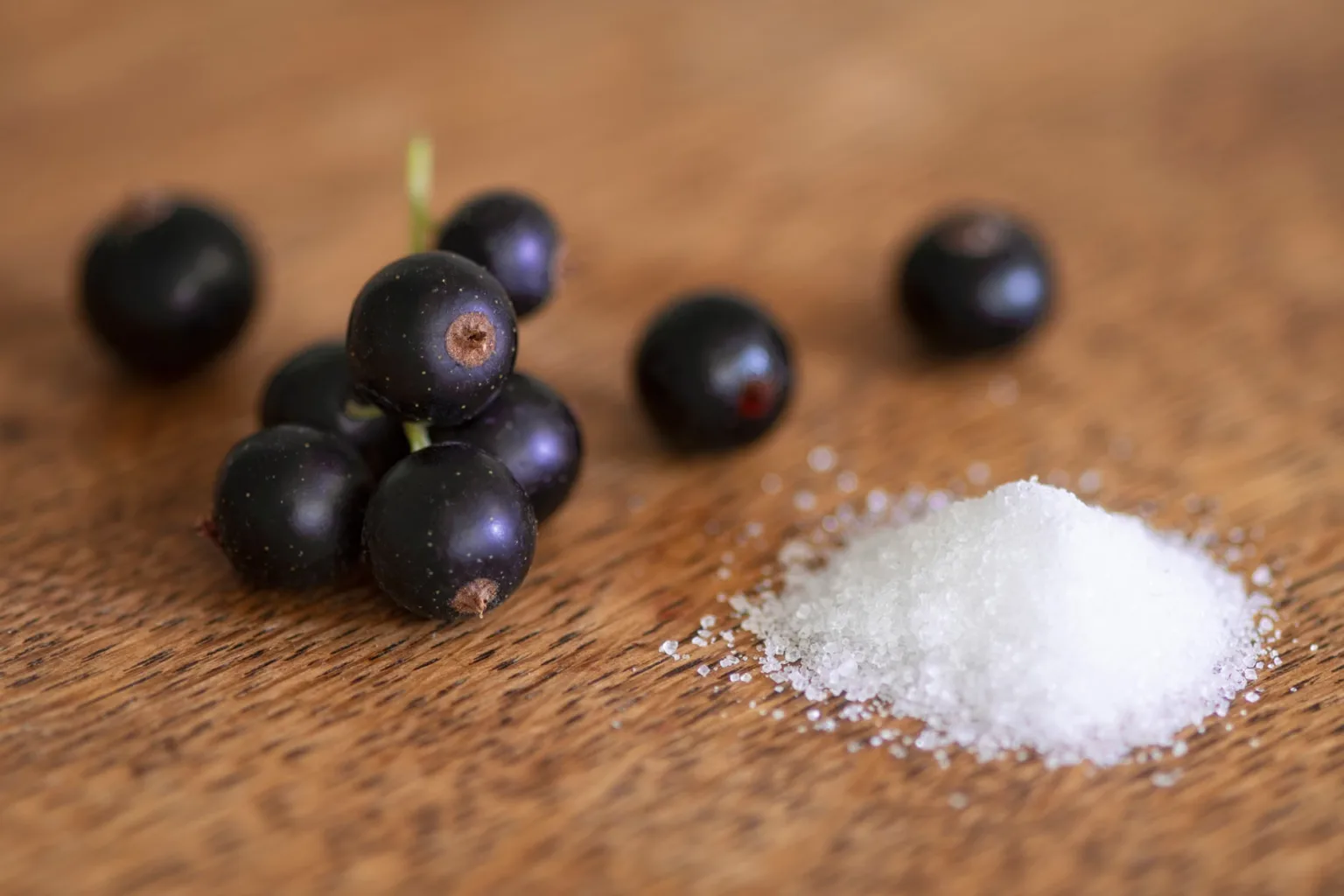
In this culinary context, currants or Corinth currants are small, dark dried grapes, usually seedless and commonly associated with Black Corinth grapes, also called Zante. They are not fresh blackcurrants or redcurrants from the Ribes genus. Compared with larger raisins, their small size makes them easy to distribute through doughs and ingredient mixes. Their flavour is commonly described as sweet, aromatic and slightly tart. Commercial products can vary: grapes may be dried in the sun or mechanically, and some batches have a light coating of oil to reduce clumping. Check the package for the product identity, processing details and ingredients rather than assuming every product sold under a similar name has the same composition.
When to use it
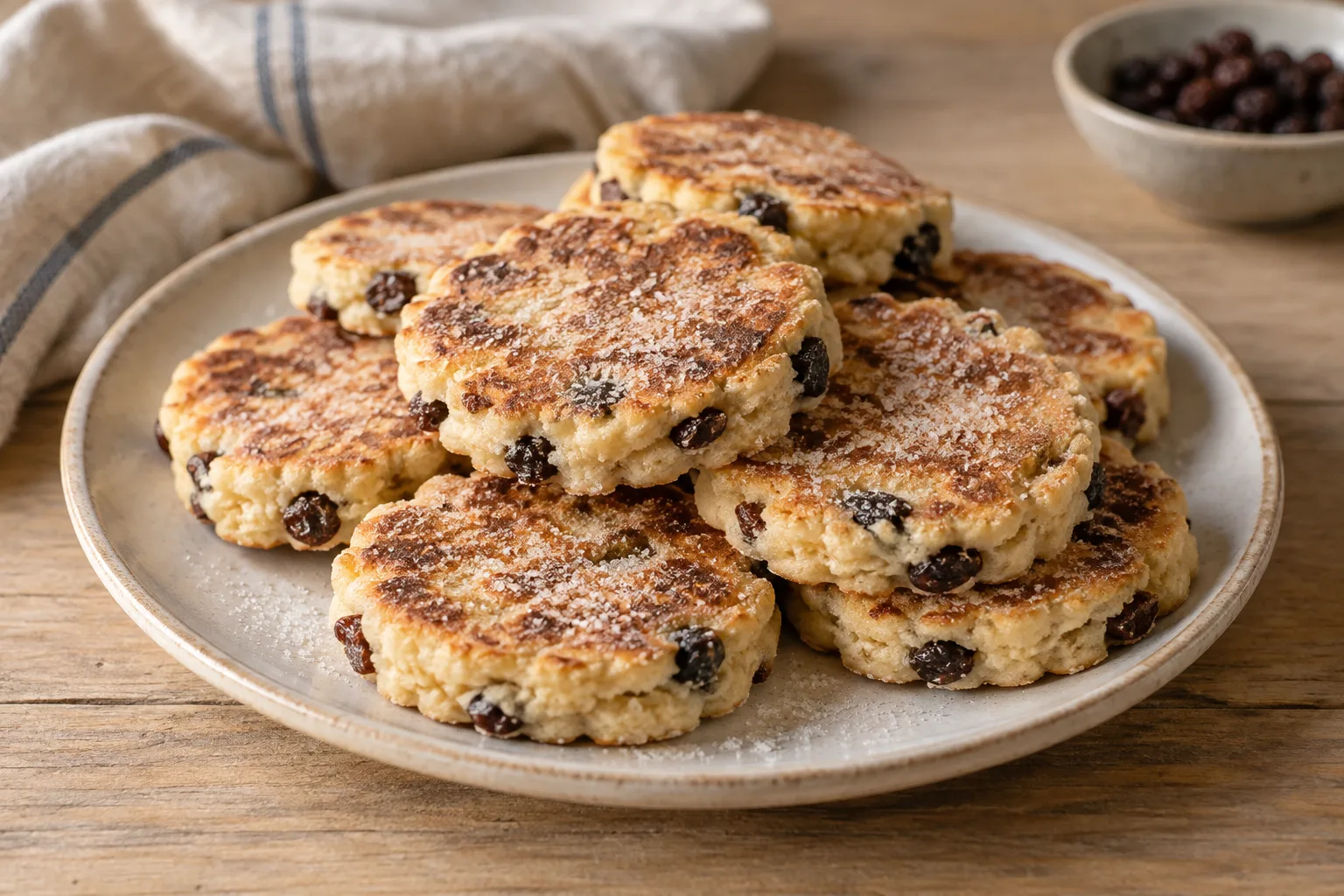
Choose them when you want small pieces of dried fruit distributed through a dish rather than large, fleshy raisins. They are used in scones, breads, mince pies, biscuits, cereals and snack bars, and can also add a sweet contrast to chutneys and grain dishes. Their small size can make them convenient to mix through a preparation, although size and flow vary between products. Choose another type if you want a larger, especially plump raisin or a pronounced Muscat aroma; different raisins will not give exactly the same result.
How to use it
First check the package to confirm that the product is Corinth or Zante currants, and read the ingredient list because some products may include oil or other additions. Mix them into scone, bread or biscuit dough, or add them to cereal and snack-bar mixtures. They can also be used in chutneys and grain dishes for small, sweet fruit notes. If substituting sultanas or Muscat raisins, account for differences in size, sweetness and texture; adjust the amount and distribution to suit the recipe rather than assuming a direct, equal-for-equal swap. Distribute them through the other ingredients for an even mix, and follow the storage directions on the package.
Flavour and texture
Their flavour is described as sweet, concentrated and slightly tart, with a fruity aroma. They are much smaller than Muscat raisins and are usually seedless, so they add small pieces of fruit to a mixture. The colour ranges from deep violet to black. Texture depends on drying and the product's specified moisture: not every batch is equally soft or free-flowing, and some products may have a light oil coating to reduce clumping.
How to choose it
Look for a package that clearly identifies Corinth, Black Corinth or Zante currants. Do not mistake them for fresh currants or a different type of raisin. Check the ingredient list, as some products may have a light coating of oil. If size or texture matters to your recipe, check the product specification and confirm the offered size; these details can vary between products and batches.
Storage
Store the product as directed on its package and keep it closed to protect it from moisture and loss of quality. Product presentation and processing can vary, so do not assume every package has the same storage conditions or shelf life. After opening, follow the manufacturer's directions and avoid leaving the currants exposed to air.
Substitutions
Sultanas or Muscat raisins can play a similar role in some recipes, but they are not identical: size, sweetness, texture and, for Muscat raisins, aroma can differ. Corinth currants are characteristically small and usually seedless; Muscat raisins are larger and may contain seeds. Adjust the amount and distribution to suit the recipe, and do not assume that a substitute works in the same proportion.
Common mistakes
Do not confuse Corinth currants with fresh currants, which are a different fruit, or assume that every small raisin has the same grape variety, size or processing. Check the product identity and ingredients on the package. Substituting without considering size and texture can change how the fruit is distributed through a dish.
Safety and allergens
Read the ingredient list and allergen information for the specific packaged product, particularly if it includes added ingredients. If you have a food allergy, do not rely on the fruit name alone: check the actual product label and avoid eating it if the information you need is unclear.
Culinary uses
- Fruta seca dulce y ligeramente ácida para repostería y panadería
- Ingrediente pequeño que distribuye sabor y textura en cereales y platos de grano
- Contrapunto dulce en chutneys y preparaciones saladas
Recommended techniques
- Mezclar en masas de panes, scones, galletas y otros productos de repostería
- Incorporar a mezclas de cereales, barritas o platos de grano
- Añadir a chutneys o a rellenos y preparaciones saladas
Pairs well with
- Scones, panes, galletas y tartas
- Cereales y barritas
- Chutneys y platos de grano
- Rellenos y preparaciones saladas
Frequently asked questions
Are Corinth currants fresh currants?
No. In this culinary name, they are small dried grapes, usually associated with Black Corinth or Zante grapes, not fresh Ribes currants.
What can I use them in?
They are used in scones, breads, mince pies, biscuits, cereals and snack bars, as well as chutneys and grain dishes.
Can I substitute sultanas?
You can try them in similar preparations, but sultanas may differ in size, sweetness and texture. Adjust the quantity and distribution to suit the recipe.
Ingredient allergens
Allergen listThere are no verified associations for these ingredients yet.
Estimated nutrition
- Fat
- 0 g
- Saturates
- 0 g
- Carbohydrate
- 75 g
- Sugars
- 67.5 g
- Fibre
- 7.5 g
- Protein
- 5 g
- Salt
- 0 g
Sources and review
Automatically researched, cross-checked and validated content. Sources consulted:
- Alérgenos alimentarios | EFSA www.efsa.europa.eu/es/safe2eat/food-allergens
- ¿Por qué la muerte es origen de miedos y tabúes? doi.org/10.64628/aao.fccyk3qj3
- Pasa - Wikipedia, la enciclopedia libre es.wikipedia.org/wiki/Pasa
- Agencia Española de Seguridad Alimentaria y Nutrición www.aesan.gob.es/
- Food Allergies | FDA www.fda.gov/food/nutrition-food-labeling-and-critical-foods/food-allergies
- Risk assessment of food allergens: part 1: review and validation of Codex alimentarius priority allergen list through risk assessment: meeting report www.who.int/publications/i/item/9789240042391
- Pasas de Corinto | Especificaciones y suministro | Cardassilaris www.cardassilaris.com/es/dried-fruits/dried-currants
- Uvas pasas: ¿por qué consumir uvas secas? meditts.com/beneficios-uvas-pasas/?srsltid=AYCX9vLFnp-bPEpRjHq9eJg_-wX_n9NA2uIfkScoegGkHFxFh…
- Las famosas pasas de Corinto | Visit Peloponnese visitpeloponnese.com/es/prdct/las-famosas-pasas-de-corinto
- Pasas de Corinto – villa de madrid es.openfoodfacts.org/producto/8410944650285/pasas-de-corinto-villa-de-madrid
- Uvas pasas. Tipos | Gastronomía & Cía www.gastronomiaycia.com/uvas-pasas-tipos/
- Uva pasas: análisis y comparación de vinos y bebidas alcohólicas que evocan notas dulces y pasificadas oganyo.es/uva-pasas/
- Guía de control del etiquetado y composición de complementos alimenticios: notas interpretativas - ELIKA www.elika.eus/es/guia-de-control-del-etiquetado-y-composicion-de-complementos-alimenticios-n…