- Category
- Drinks
- State
- Liquid
- Usual unit
- ml
What it is
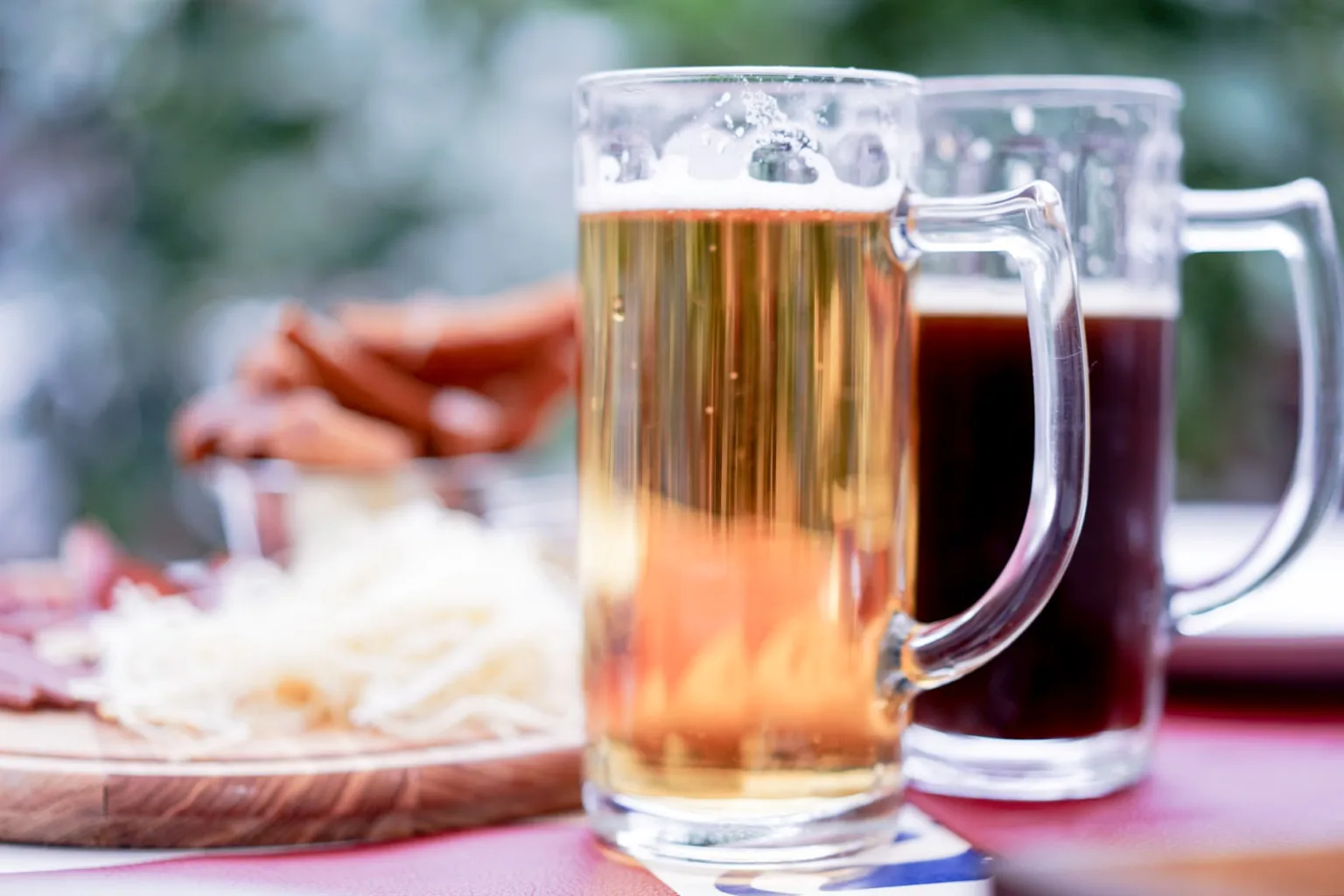
Dark beer describes beer with a dark colour; it does not identify one fixed style or recipe. The roast of the malt affects the colour and can bring roasted, caramel, coffee or chocolate notes, while hops contribute bitterness. Some dark beers are mild, while others are more intense, sweet or bitter. Products can also differ in their grains, yeast and other ingredients. In cooking, treat dark beer as a flavourful ingredient rather than a neutral liquid: its character can stand out in a sauce and may change as the liquid reduces. Check the label for the style and the composition of the specific product.
When to use it
Use it when you want to add a malty, roasted character to a dish, especially robust stews, soups, creamy soups or sauces. It can also be used in some batters and chocolate desserts, where roasted notes may complement cocoa. Choose a style with the finished dish in mind: a more bitter beer may become more prominent as it reduces, while a sweeter one can give a different impression. For delicate dishes, start with a modest amount and adjust to the recipe. Do not choose by colour alone; dark beers do not all taste alike.
How to use it
Measure the beer as directed by the recipe and add it as part of the liquid in a stew, soup or sauce. If reducing it, remember that bitterness can become more noticeable; avoid reducing for longer without tasting the result. Beer can add aroma and flavour to marinades, but do not assume it replaces other parts of a recipe. It is also used in some batters, doughs and desserts: follow a recipe designed for beer, since the amount of liquid and the chosen style affect the mixture. In an uncooked preparation, remember that beer is alcoholic; if someone avoids alcohol, do not assume the dish is suitable. Taste and adjust the balance with the other ingredients.
Flavour and texture
Dark colour may come with roasted malt aromas and caramel, coffee or chocolate notes, but the profile depends on the style. A dark beer may be sweeter, more bitter or more intense than another. It is fizzy when poured and adds liquid to a dish; cooking and reduction change the result in a stew or sauce.
How to choose it
Read the label and choose by style and flavour profile, not colour alone. A roasted beer or stout may give pronounced notes, but dark beers vary and some are more bitter or intense than others. If a recipe specifies a style, try to follow it; otherwise, consider how the beer's character will work with the other ingredients. Check the ingredient list and allergen information on the package as well.
Storage
Follow the storage instructions on the package, as they can differ between products. For an opened bottle or can, also check the label and keep it properly closed. Do not assume that every style or package format is stored in the same way; follow any product-specific instructions.
Substitutions
Another dark beer may serve a similar role in a recipe, but it will not necessarily taste the same: bitterness, sweetness and roasted notes vary by style. An acidic wheat beer may suit a vinaigrette or an acidic sauce, but it has a different profile and does not replace dark beer's roasted notes. Adjust by tasting the dish rather than assuming a direct equivalence.
Common mistakes
Do not assume all dark beers taste alike or that colour alone predicts bitterness. Reduction can make bitterness more prominent and throw a dish out of balance. Avoid swapping in any beer without considering the roasted notes a recipe depends on. Do not assume a dish made with beer is suitable for someone avoiding alcohol.
Safety and allergens
Beer is an alcoholic drink. If someone avoids alcohol, do not assume that a dish made with beer is suitable, especially when it is served without cooking. Check the product label for ingredients and allergen information; composition can vary between beers.
Culinary uses
- Líquido para guisos, sopas y cremas
- Aromatizante en salsas, marinadas y masas
Recommended techniques
- Añadir a guisos para aportar líquido y sabor; el amargor puede concentrarse al reducir la cerveza.
- Incorporar a masas de rebozado o repostería siguiendo una receta que especifique cerveza.
Pairs well with
- Carnes de cocción prolongada y ahumadas
- Chocolate y preparaciones de cacao
Frequently asked questions
Do all dark beers taste the same?
No. Style and product affect bitterness, sweetness and roasted notes; some may suggest caramel, coffee or chocolate.
What dishes can I make with dark beer?
It can be used in stews, soups, creamy soups, sauces, some batters and chocolate desserts. Choose a recipe that explains how to add it.
Does cooking dark beer remove all its alcohol?
Do not assume that it does. If someone avoids alcohol, do not assume a dish cooked with beer is suitable.
Ingredient allergens
Allergen listThere are no verified associations for these ingredients yet.
Sources and review
Automatically researched, cross-checked and validated content. Sources consulted:
- Alérgenos alimentarios | EFSA www.efsa.europa.eu/es/safe2eat/food-allergens
- ¿Qué es la Leyenda Negra española? doi.org/10.64628/aao.smkkpgd3y
- Agencia Española de Seguridad Alimentaria y Nutrición www.aesan.gob.es/
- Cerveza - Wikipedia, la enciclopedia libre es.wikipedia.org/wiki/Cerveza
- El “lujo culinario”: elites, cocina y poder en el espacio Atlántico | OpenAlex openalex.org/W4408399161
- Allergies - Food Safety - European Commission food.ec.europa.eu/food-safety/campaign-2026/allergies_en
- Food allergen labelling and information requirements: technical guidance - GOV.UK www.gov.uk/government/publications/food-allergen-labelling-and-information-requirements-tech…
- De la Porter a la Stout: la evolución de la cerveza negra www.cervezasalhambra.com/es/mirador/estendencia/de-la-porter-la-stout-la-evolucion-de-la-cer…
- Cocina con cerveza - Gallina Blanca www.gallinablanca.es/noticia/cocina-con-cerveza/
- Por qué la cerveza negra es negra, cómo usarla en la cocina con las mejores recetas y tres marcas que vale la pena probar www.directoalpaladar.com/cata-de-cerveza/que-cerveza-negra-negra-tres-marcas-que-vale-pena-p…
- 5 recetas fáciles con cerveza que querrás cocinar hoy mismo – Bigcrafters bigcrafters.com/blogs/posts/5-recetas-faciles-con-cerveza-que-querras-cocinar-hoy-mismo?srsl…
- Maridaje de cerveza y marisco - Tuvinyco tuvinyco.es/maridaje-de-cerveza-y-marisco/
- Cerveza artesana y alta cocina: el maridaje con cerveza como una forma de potenciar el plato maltmanbrewing.com/cerveza-artesana-y-alta-cocina-maridaje-con-cerveza/
- Cerveza en la cocina: recetas, maridajes y empanados | Frumen - Fabricantes de pan rallado www.frumen.com/blog/cerveza-en-la-cocina-recetas-maridajes-y-empanados/