- Category
- Herbs and spices
- State
- Dry
- Usual unit
- g
What it is
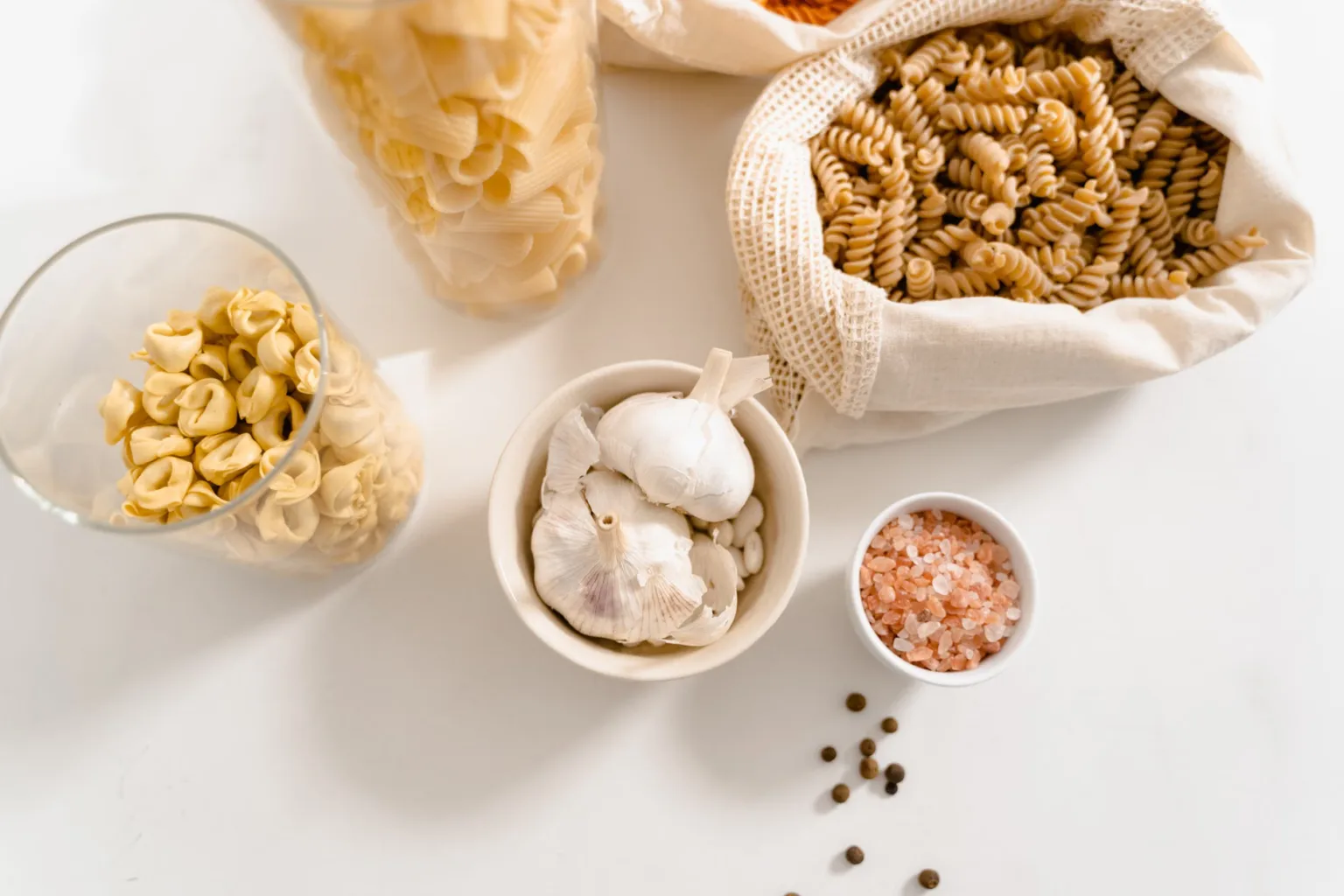
Garlic salt is a dry seasoning that combines salt and garlic. Some versions are described as ground garlic mixed with salt; others may use salt flakes with roasted or wild garlic. As a result, appearance, texture and garlic intensity can differ from one product or variety to another. It is not the same as garlic powder: garlic powder is ground dried garlic, whereas garlic salt also contains salt. It can be convenient when a dish needs both flavours, but remember that it already contributes salt and that the exact composition depends on the product label.
When to use it
Use garlic salt when you want to bring garlic flavour and salt seasoning to a savoury dish at the same time. It can season sautéed vegetables and other recipes that call for both salt and garlic. It is handy when you want a garlic note milder than garlic powder alone, although the intensity depends on the particular blend. Before adding it, check whether the recipe already includes salt in other ingredients and adjust the seasoning to avoid adding it twice. Do not treat it as an identical replacement for fresh garlic in recipes where moisture, texture or pieces of garlic matter.
How to use it
Sprinkle a small amount over the dish and taste before adding more, because the blend already contains salt. You can add it to vegetables as they sauté or use it to season savoury dishes that need both salt and garlic. If a recipe calls for salt and garlic separately, garlic salt can combine those roles, but adjust the amount to the product’s flavour and saltiness; there is no universal equivalent for every blend. If replacing garlic powder alone, remember that garlic salt adds salt too: reduce or omit separately added salt as appropriate. Add it gradually so you can control the result.
Flavour and texture
The main taste is salty, with a garlic note whose strength depends on the formulation. Garlic salt is generally milder in garlic flavour than garlic powder on its own. It may be finely ground or sold in crystal or flake forms, which create a different texture when sprinkled. Versions made with roasted or wild garlic can have a different profile from simple mixtures of ground garlic and salt.
How to choose it
Read the product name and ingredient list to check what kind of salt and garlic it contains and whether there are other ingredients. Blends can differ: some use ground garlic and salt, while others combine salt flakes with roasted or wild garlic. Check whether the texture is fine or flaky, since this affects how it distributes over food. Do not assume that every brand has the same ratio or garlic intensity.
Storage
Keep garlic salt in its container and follow the storage directions on the label, since instructions can differ between products. Close the lid after use and avoid letting wet utensils touch the contents. If the blend contains flakes, handle it in a way that preserves the texture offered by that product. Check the packaging before use and do not use a product if its condition or label raises concerns.
Substitutions
To replace salt and garlic separately, you can use garlic salt and adjust the amount gradually: it supplies both flavours, but commercial proportions vary. To replace garlic powder, remember that you will also be adding salt; reduce the recipe’s extra salt if needed. Using garlic powder and adding salt separately gives you more independent control over each component.
Common mistakes
A common mistake is adding garlic salt without accounting for the salt already in the blend, as well as the salt called for in the recipe. Another is assuming all brands contain the same proportion of garlic and salt, which can lead to an overly salty result. Do not use it as though it were garlic powder without adjusting the rest of the seasoning, or expect it to provide the texture or moisture of fresh garlic.
Safety and allergens
Always check the ingredient list and any warnings on the package, especially if you need to avoid a particular ingredient. Composition can vary between products and manufacturers.
Culinary uses
- Condimento salado con sabor a ajo
- Aporte conjunto de sal y ajo en una sola mezcla
Recommended techniques
- Espolvorear para sazonar platos salados
- Añadir a verduras mientras se saltean
Pairs well with
- Verduras salteadas
- Platos salados que requieran tanto sal como sabor a ajo
Frequently asked questions
Is garlic salt the same as garlic powder?
No. Garlic powder is ground dried garlic; garlic salt combines garlic with salt, so it seasons with salt as well.
Can I use garlic salt instead of separate salt and garlic?
Yes, in dishes that need both flavours, but adjust the amount to the product and reduce extra salt if needed. Blends do not all have the same proportions.
What can I use garlic salt in?
Use it to season savoury dishes, such as sautéed vegetables, and recipes where you want to add salt and garlic flavour together.
Ingredient allergens
Allergen listThere are no verified associations for these ingredients yet.
Sources and review
Automatically researched, cross-checked and validated content. Sources consulted:
- Alérgenos alimentarios | EFSA www.efsa.europa.eu/es/safe2eat/food-allergens
- ¿Por qué la muerte es origen de miedos y tabúes? doi.org/10.64628/aao.fccyk3qj3
- Sal común - Wikipedia, la enciclopedia libre es.wikipedia.org/wiki/Sal_com%C3%BAn
- 15 tipos de sal para dar variedad a nuestros platos: cómo elegirlas y usarlas en la cocina www.directoalpaladar.com/ingredientes-y-alimentos/15-tipos-sal-para-dar-variedad-a-nuestros-…
- Agencia Española de Seguridad Alimentaria y Nutrición www.aesan.gob.es/
- Ingredientes para la receta: El ajo — Cuaderno de Cultura Científica culturacientifica.com/2017/04/10/ingredientes-la-receta-ajo/
- El ajo como ingrediente estrella en la cocina española - Especias El explorador especiaselexplorador.com/el-ajo-como-ingrediente-estrella-en-la-cocina-espanola/
- Allergies - Food Safety - European Commission food.ec.europa.eu/food-safety/campaign-2026/allergies_en
- Food Allergies | FDA www.fda.gov/food/nutrition-food-labeling-and-critical-foods/food-allergies
- Food allergens | Food Safety and Quality | FAO www.fao.org/food-safety/scientific-advice/food-allergens/en
- Centre for Food Safety www.cfs.gov.hk/english/food_leg/food_leg_lgfa.html
- Allergen labelling for food businesses | Food Standards Australia New Zealand www.foodstandards.gov.au/business/labelling/allergen-labelling
- Food allergen labelling and information requirements technical guidance - GOV.UK www.gov.uk/government/publications/food-allergen-labelling-and-information-requirements-tech…
- El ajo, aporta un aroma incomparable a muchos platos. Además, ofrece muchos compuestos protectores, sobre todo si se consume con regularidad. www.fondation-louisbonduelle.org/es/verdura/el-ajo/
- SAL MARINA DE AJO ¿QUÉ ES CÓMO USARLA? - Sal Maldon maldonsalt.com/es/que-es-la-sal-marina-de-ajo-y-como-hay-que-usarla/
- Ajo: Un ingrediente fundamental en la cocina. – Sabor USA Chile saborusachile.cl/ajo-un-ingrediente-fundamental-en-la-cocina/
- Origen del ajo e historia: ¿de dónde viene realmente? chemajos.com/blog/origen-del-ajo/