- Category
- Other
- State
- Other
- Usual unit
- Variable
What it is
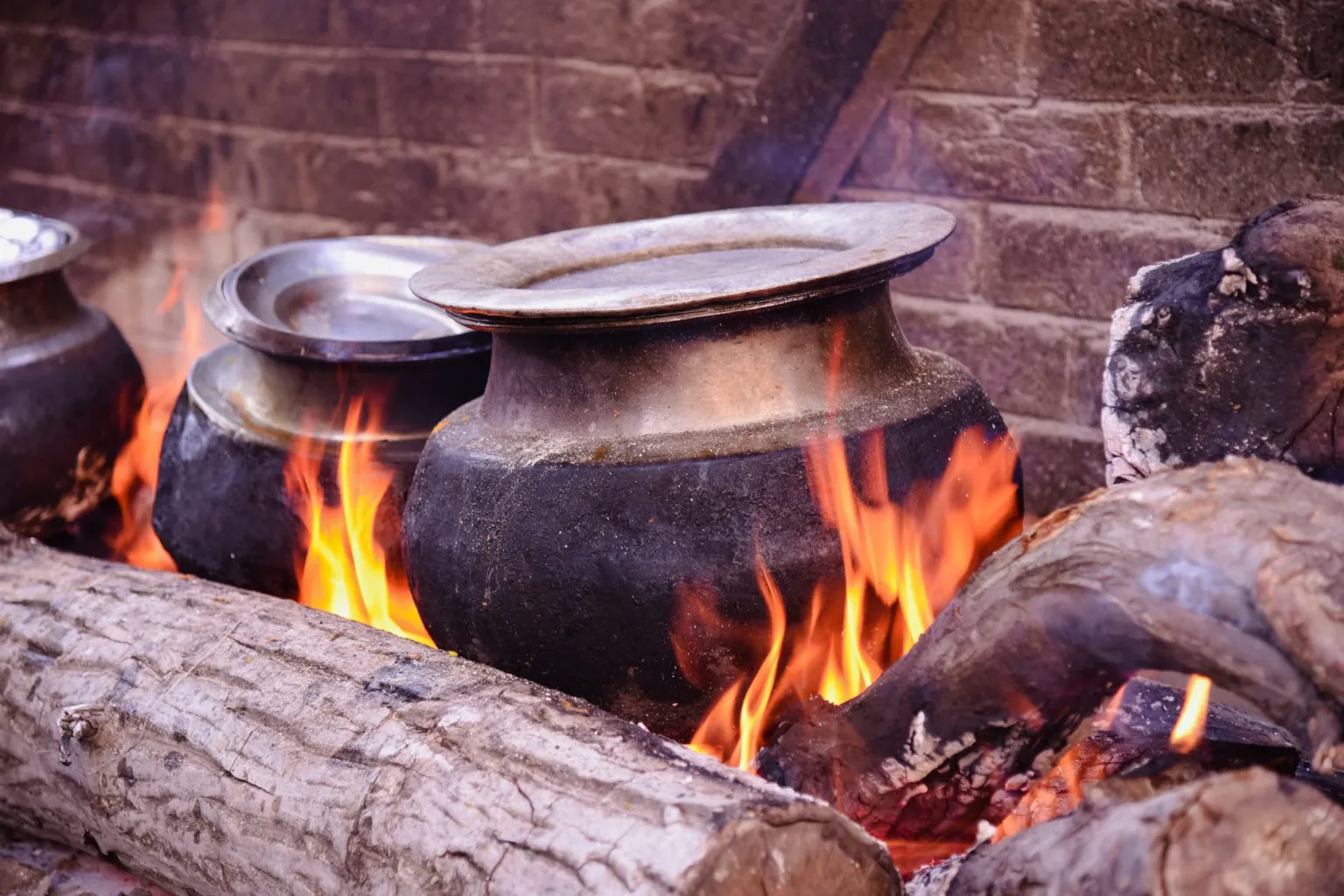
Open fire is a way of cooking in which food is heated by a flame, embers, or both. It is not an edible ingredient and has no food unit or harvest season; it is a cooking method and heat source. Direct flame can brown the surface quickly, while embers let you cook using the heat remaining after wood has burned down. Indirect heat is another option, with the food kept away from direct flame. Open-fire cooking can be used for meat, fish, vegetables, and other foods. The result depends on heat intensity, distance from the heat, the food’s size and shape, and the technique chosen. A smoky flavor is not automatic: it is associated with smoke and fuel and can vary.
When to use it
Choose open-fire cooking when you want to grill directly or cook over embers and can control the food’s exposure to heat. It can be used for meat, fish, and vegetables, either whole or cut into suitable portions. Direct heat encourages browning, but can burn the surface before the inside is cooked; embers and indirect heat reduce direct exposure to flame. This is not the best choice when you need a very precise temperature or exactly repeatable results. Consider the equipment, food, and degree of heat control available before choosing the method.
How to use it
Prepare the food for the chosen technique and arrange the cooking area so you can move it away from direct flame if the heat becomes too intense. For direct grilling, place the food on a suitable grill or support and watch its browning; do not rely on surface color alone to decide whether it is done. To cook over embers, use their heat and adjust the food’s position according to the intensity. Indirect heat is useful when less direct flame exposure is appropriate. Turn or reposition pieces as needed for more even cooking. Food type, size, and fire intensity all affect the result, so there is no single cooking time for every food. For meat, follow food-safety guidance appropriate to the cut and do not rely on generic times.
Flavour and texture
Open fire can create browned surfaces and toasted aromas; smoke may also add smoky notes. How strong these qualities are depends on the fuel, smoke, distance, and exposure time. Intense direct cooking can brown food quickly and create more deeply toasted patches, while embers offer a different way to cook. The inside and outside may cook at different rates, so watch the food and adjust its position.
How to choose it
Open fire is not bought as food: cooking requires suitable equipment or a setup that can generate and control heat. Choose the method and equipment according to where you will cook, the food, and your ability to manage flame or embers. Wood and other fuels can affect smoke and heat; do not assume that every fuel gives the same aroma or result. Follow the equipment instructions and local rules on using fire.
Storage
Open fire is not stored like an ingredient. For cooking, prepare suitable equipment and fuel in advance, and follow the storage instructions for that fuel and equipment. Keep fuels and cooking utensils away from an active flame. When finished, make sure the fire is out before leaving, and follow applicable local rules.
Substitutions
A gas grill or oven can replace the cooking function of an open fire, but the result will not be identical. Gas can provide heat without a wood flame and may make heat control easier; an oven provides dry, surrounding heat. Neither option guarantees the same smoke, browning, or texture as cooking directly over fire or embers. Adapt the method to the equipment and food.
Common mistakes
A common mistake is to assume that flames and embers always provide the same heat. Food can also burn outside if left too close to an intense flame, or if different pieces are cooked for one fixed time. Watch the browning, reposition food when needed, and do not use surface color as the only sign that food is cooked.
Safety and allergens
Fire and hot surfaces can cause burns. Handle equipment carefully, follow its instructions, and cook only where fires are permitted. For meat, follow food-safety guidance specific to the food and cut.
Culinary uses
- Fuente de calor para cocinar alimentos directamente sobre la llama o las brasas
- Método para dorar y aportar aromas tostados y ahumados
Recommended techniques
- Asar directamente sobre la llama o el calor del fuego
- Cocinar sobre brasas, aprovechando su calor más constante
- Cocinar lentamente con calor indirecto
Pairs well with
- Carnes y pescados para asar
- Verduras enteras o cortadas en piezas gruesas
- Frutas que puedan cocinarse a la parrilla
Frequently asked questions
Is open fire an ingredient?
No. It is a heat source and cooking method, not something bought or eaten as food.
What can be cooked over an open fire?
Meat, fish, and vegetables can be grilled, among other foods. The method depends on the food’s shape and heat control.
Does a gas grill give the same result?
Not necessarily. It can cook with heat, but does not by itself reproduce smoke or aromas associated with wood and embers.
Ingredient allergens
Allergen listThere are no verified associations for these ingredients yet.
Estimated nutrition
- Fat
- 0 g
- Saturates
- 0 g
- Carbohydrate
- 0 g
- Sugars
- 0 g
- Fibre
- 0 g
- Protein
- 0 g
- Salt
- 27 g
Sources and review
Automatically researched, cross-checked and validated content. Sources consulted:
- Métodos de cocción de alimentos | Aprende Institute aprende.com/blog/gastronomia/tecnicas-culinarias/metodos-de-coccion-de-alimentos/
- Alérgenos alimentarios | EFSA www.efsa.europa.eu/es/safe2eat/food-allergens
- El control del fuego, origen de la cocina - RAG - Real Academia de Gastronomía realacademiadegastronomia.com/el-control-del-fuego-origen-de-la-cocina/
- Fuego - CocinoPedia.com cocinopedia.com/enciclopedia-gastronomica/fuego/
- Etiquetado de sustancias que causan alergias e intolerancias alimentarias www.aesan.gob.es/seguridad-alimentaria/informacion-alimentaria/etiquetado-sustancias
- Food Allergies | FDA www.fda.gov/food/nutrition-food-labeling-and-critical-foods/food-allergies
- Food allergens | Food Safety and Quality | FAO www.fao.org/food-safety/scientific-advice/food-allergens/en
- Allergen labelling for food businesses | Food Standards Australia New Zealand www.foodstandards.gov.au/business/labelling/allergen-labelling
- Managing allergens | Food Standards Scotland www.foodstandards.gov.scot/business-guidance/running-a-food-business/managing-allergens
- Allergens in food | safefood.vic.gov.au www.safefood.vic.gov.au/allergens-in-food
- Allergen guidance for food businesses - GOV.UK www.gov.uk/government/publications/allergen-guidance-for-food-businesses/allergen-guidance-f…
- Historia del fuego en la cocina www.directoalpaladar.com/cultura-gastronomica/historia-del-fuego-en-la-cocina
- - YouTube www.youtube.com/watch?v=2EMnLrEg1aE
- General 2 — Tres Estrellas www.tresestrellasfosforos.es/blog/cocinar-a-fuego-abierto