- Category
- Bread and dough
- State
- Dry
- Usual unit
- g
What it is
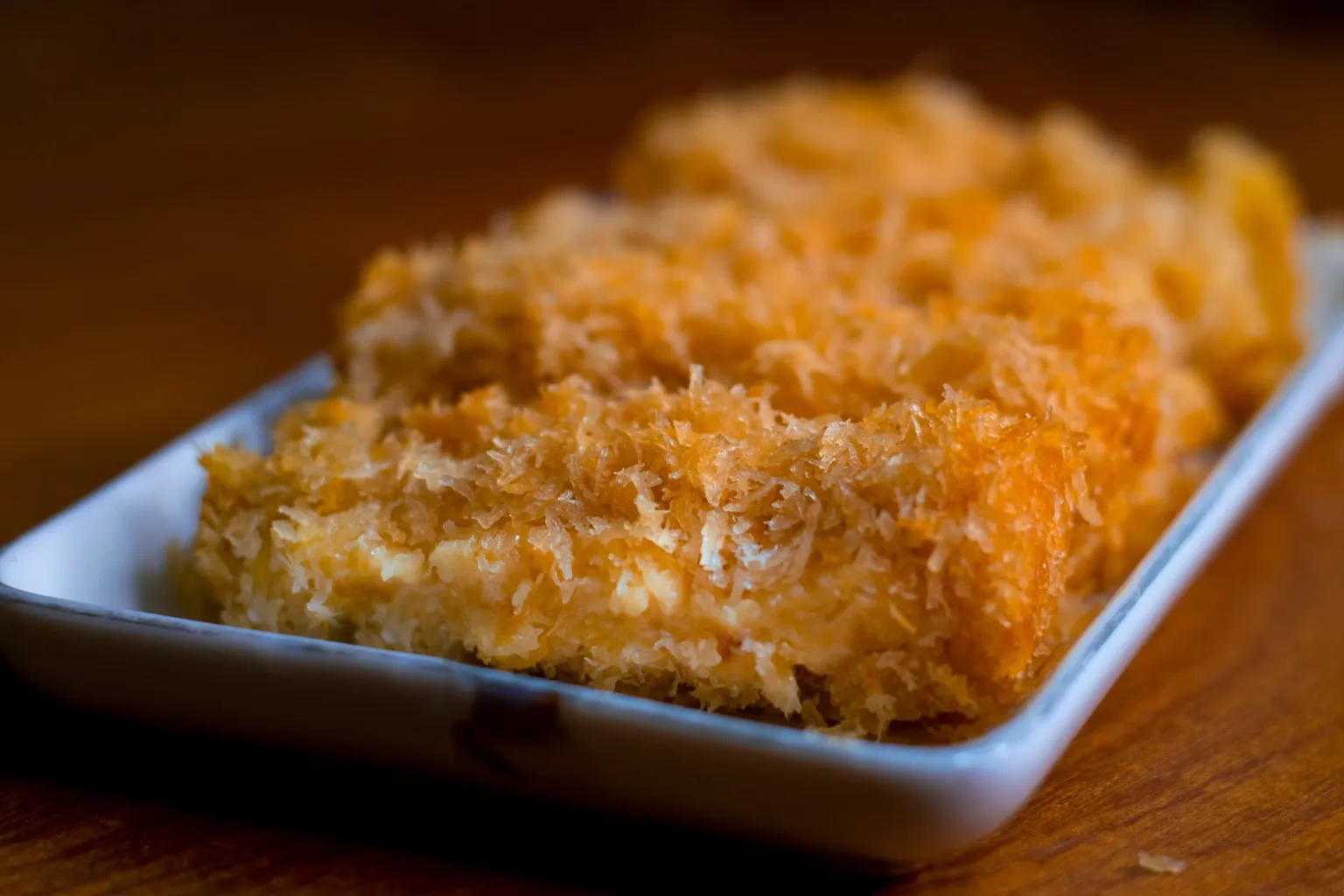
Panko is a Japanese-style breadcrumb that is commonly sold as flakes or larger crumbs than conventional fine breadcrumbs. It is used to coat foods for a crisp outer layer and can also be sprinkled over dishes before baking or gratinating. Commercial products do not all have the same size, appearance or ingredients, so the exact result and composition can vary. Do not assume that every product follows the same recipe. Read the package information, especially if you need to avoid a particular ingredient.
When to use it
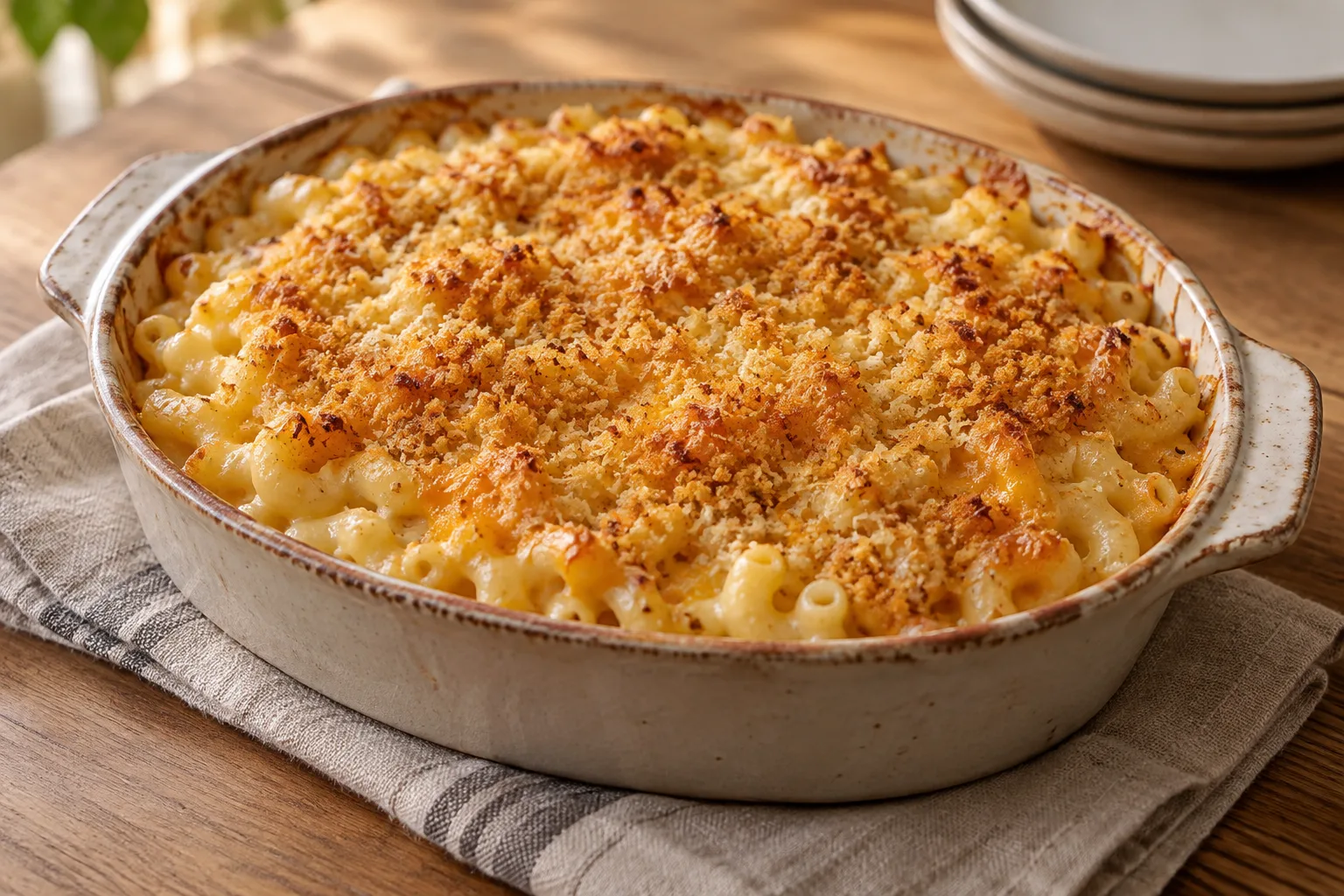
Choose panko when you want a visibly flaky, crisp coating for chicken, pork, fish, seafood or vegetables. You can also scatter it over a dish before baking to add a crunchy top to a gratinated preparation. In recipes that call for breadcrumbs, panko can be an alternative when you want a coarser finish, but the result will not be identical because the textures differ. Consider the flake size when you need a thin or even coating, and follow the method in your recipe.
How to use it
To coat food, place panko in a wide dish and press the prepared food gently into the flakes so they adhere without being crushed. Cook the coated food according to your recipe and until it is safely cooked through. You can also spread panko over a dish before baking it to add a crisp topping. If you stir it into a filling, add it gradually and consider how it will change the texture. Panko is not an automatic substitute for every other ingredient: adapt the amount and method to the recipe, and check the package for the product's ingredients and directions.
Flavour and texture
Panko has a mild, bread-like flavor; its main contribution is the texture of its flakes. When cooked, it can form a crisp coating that looks coarser than one made with fine breadcrumbs. Flake size and color vary between products, with some appearing pale and others having a different shade. The final texture also depends on the food, the cooking method and how the coating is applied.
How to choose it
Choose a dry product in intact packaging, and select a flake size that suits your recipe. Larger flakes make a more noticeable coating, while smaller ones can be less prominent. Read the ingredient list and any package warnings because commercial formulations are not necessarily identical. If you need to avoid an ingredient because of an allergy or intolerance, do not rely on the word “panko” alone; check the specific product information.
Storage
Keep panko dry and protected from moisture. Reseal the package firmly after each use, or transfer the crumbs to a clean, airtight container if the original pack cannot be closed. Follow any storage directions and date information on the package. Do not use the product if it has become damp, changed in appearance or shows signs of deterioration. Storage life is not necessarily the same for every brand or pack.
Substitutions
Conventional breadcrumbs can replace panko in many coatings and toppings, but they usually give a finer, different texture. For a homemade panko-style alternative, use crustless white bread, break it into pieces and dry the pieces without browning them. The result depends on the bread and crumb size; it is not an exact equivalent and may not match the finish of a commercial product.
Common mistakes
Do not treat panko as identical to fine breadcrumbs: its flakes can give a different-looking coating and texture. Avoid crushing the flakes while coating food if you want to keep the layer loose and crisp. Do not assume every product has the same ingredients or is suitable for every dietary need; check the label before use.
Safety and allergens
Panko is an ingredient and does not by itself establish whether a coated dish is safely cooked. Cook the dish using a reliable recipe and check the product label, particularly if you need to manage an allergy or intolerance. Allergen information for a packaged product depends on its specific ingredients.
Culinary uses
- Cobertura crujiente para empanados y rebozados
- Cobertura para gratinar y dar textura a platos al horno
- Ingrediente para añadir textura a rellenos y preparaciones
Recommended techniques
- Rebozar alimentos con panko antes de cocinarlos
- Espolvorear sobre preparaciones para gratinar
- Incorporar a rellenos cuando se busca una textura más ligera y crujiente
Pairs well with
- Cerdo
- Pollo
- Pescado y marisco
- Verduras
Frequently asked questions
How is panko different from regular breadcrumbs?
Panko is commonly sold as larger flakes, while conventional breadcrumbs are often finer. This can give a coating a different appearance and texture.
What can I use panko for?
Use it to coat meat, fish, seafood or vegetables, or sprinkle it over a dish before baking to create a crisp topping.
Can I replace panko with regular breadcrumbs?
In many preparations, yes, but the result will usually be finer and will not have exactly the same texture.
Do all panko products have the same ingredients?
Not necessarily. Formulations can vary, so read the label whenever you need to check ingredients or allergens.
Ingredient allergens
Allergen listThere are no verified associations for these ingredients yet.
Estimated nutrition
- Fat
- 0 g
- Saturates
- 0 g
- Carbohydrate
- 75 g
- Sugars
- 0 g
- Fibre
- 5 g
- Protein
- 5 g
- Salt
- 3.88 g
Sources and review
Automatically researched, cross-checked and validated content. Sources consulted:
- Alérgenos alimentarios | EFSA www.efsa.europa.eu/es/safe2eat/food-allergens
- Client Challenge doi.org/10.2307/jj.27939689.16
- Agencia Española de Seguridad Alimentaria y Nutrición www.aesan.gob.es/
- ¿Qué es el panko? Descubre este pan rallado japonés sibuyaurbansushibar.com/blog/que-es-panko-japones/
- ¿Qué es el panko? el pan rallado japonés que está de moda | Ibercook Food Service www.ibercook.com/blog/panko-pan-rallado-japones
- Todo sobre el panko directoajapon.com/blog/todo-sobre-el-panko/276.html
- Allergies - Food Safety - European Commission food.ec.europa.eu/food-safety/campaign-2026/allergies_en
- Food Allergies | FDA www.fda.gov/food/nutrition-food-labeling-and-critical-foods/food-allergies
- Food allergens | Food Safety and Quality | FAO www.fao.org/food-safety/scientific-advice/food-allergens/en
- Food allergen portal | Food Standards Australia New Zealand www.foodstandards.gov.au/consumer/foodallergies/food-allergen-portal
- Allergens in food | safefood.vic.gov.au www.safefood.vic.gov.au/allergens-in-food
- Allergen guidance for food businesses - GOV.UK www.gov.uk/government/publications/allergen-guidance-for-food-businesses/allergen-guidance-f…
- Common food allergens - Canada.ca www.canada.ca/en/health-canada/services/food-nutrition/food-safety/food-allergies-intoleranc…
- Cómo hacer panko casero o pan rallado japonés, receta de cocina fácil y sencilla www.directoalpaladar.com/curso-de-cocina/como-hacer-panko-casero-receta-facil-pan-rallado-ja…
- Panko: qué es, usos, receta casera y dónde comprarlo - Oriental Market www.orientalmarket.es/panko-el-pan-rallado-japones/?srsltid=AYCX9vKPPqskLJcjFLFq5N6-weQW-ILf…
- 10 RECETAS CON PANKO, el empanado ligero de moda | Santa Rita Harinas www.santaritaharinas.com/recetas-panko/
- Antes de ir a YouTube www.youtube.com/shorts/ggW6abvcQnU
- El Panko Japonés - Muy Japones www.muyjapones.com/el-panko-japones/