- Category
- Grains, flour and pasta
- State
- Dry
- Usual unit
- g
What it is
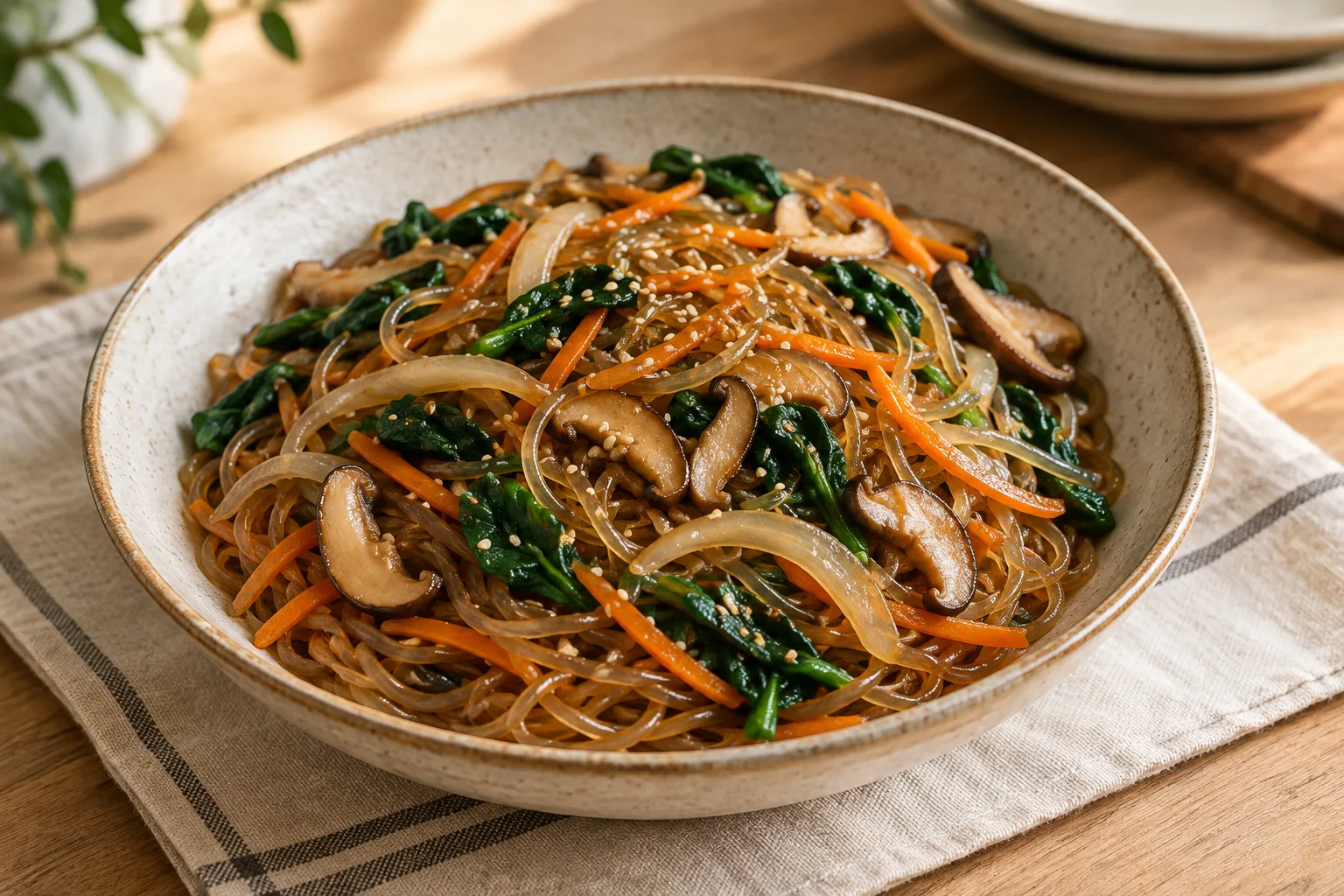
The sweet-potato noodles covered here are dried noodles made with sweet-potato starch; some commercial products may contain additional ingredients. In Korean cooking, sweet-potato starch noodles are known as dangmyeon and are used in dishes such as japchae. The broader term “glass noodles” also covers noodles made from other starches, so the name alone does not confirm a product’s composition. When cooked, these noodles can become translucent, elastic, and chewy. Check the ingredient list and package directions to identify the particular product and prepare it as directed by its manufacturer.
When to use it
Choose these noodles when you want an elastic, translucent texture in a noodle dish, such as a vegetable stir-fry or soup. They are used in japchae, where they are combined with vegetables and seasonings, and can also accompany hot dishes with mushrooms. Products sold as glass noodles may be made from different starches, so check the ingredients if you specifically want sweet-potato noodles. Follow the directions for the product you have rather than borrowing instructions for another variety.
How to use it
Read the package directions first: soaking, cooking, and draining requirements can depend on the product. If the directions call for boiling, cook the noodles as specified and drain them before adding them to a dish. You can combine them with sliced vegetables and mushrooms, then season with soy sauce, sesame, and garlic if those ingredients suit your recipe. For a japchae-style dish, mix the cooked noodles with stir-fried vegetables and chosen seasonings. They can also be added to soups or other hot dishes. Do not assume that one cooking time or amount of liquid applies to every brand.
Flavour and texture
The noodles generally have a mild flavor, so sauce and accompanying ingredients provide much of the character of the finished dish. When cooked, they can be translucent, elastic, and chewy. Their final texture depends on the product and its preparation; use the package directions rather than instructions intended for another type of noodle.
How to choose it
Check the product name and ingredient list: glass noodles can be made from different starches, and not all are made from sweet potato. If you are looking for dangmyeon, choose a product specifically identified as Korean sweet-potato starch noodles rather than relying on the general name alone. Also check whether it is sold dried and read its preparation directions before cooking.
Storage
The noodles described here are commonly sold dried, but storage instructions depend on the product and its packaging. Follow the directions on the label and reseal the package between uses if indicated. Do not automatically apply storage guidance for dried noodles to a fresh product or cooked noodles; consult the information for the specific product.
Substitutions
Rice or wheat noodles can be used instead in a noodle dish, but the result will change: the texture and ingredients differ. Choose a substitute that suits the dish and follow its own preparation directions. Do not expect another variety necessarily to reproduce the elasticity or translucence of sweet-potato starch noodles.
Common mistakes
Do not assume that all glass noodles are made from sweet potato; other starches may be used. Avoid applying a generic cooking time or ignoring the package directions, since preparation depends on the product. If you substitute another variety, remember that the texture and composition of the dish will also change.
Safety and allergens
Check the ingredient list and follow the package preparation directions. Composition can vary between products; do not infer it from the name “sweet-potato noodles” alone.
Culinary uses
- Noodle base for stir-fries and japchae
- Noodle component for soups and other hot dishes
Recommended techniques
- Cook according to the product package directions, then drain
- Combine cooked noodles with vegetables and seasoning in a stir-fry
Pairs well with
- Vegetables and mushrooms
- Soy sauce, sesame, garlic, and other seasonings
Frequently asked questions
Are all glass noodles made from sweet potato?
No. They can be made from different starches. Check the ingredient list to find out what a particular product contains.
How are sweet-potato noodles commonly used?
They are cooked and used in dishes such as stir-fries, soups, and japchae. Follow the package directions to prepare them.
Can I substitute rice noodles?
Yes, in a noodle dish, but the ingredients and texture will change. Prepare rice noodles according to their own directions.
Ingredient allergens
Allergen listThere are no verified associations for these ingredients yet.
Sources and review
Automatically researched, cross-checked and validated content. Sources consulted:
- ¿Por qué la muerte es origen de miedos y tabúes? doi.org/10.64628/aao.fccyk3qj3
- Gastronomía de Argentina - Wikipedia, la enciclopedia libre es.wikipedia.org/wiki/Gastronom%C3%ADa_de_Argentina
- Agencia Española de Seguridad Alimentaria y Nutrición www.aesan.gob.es/
- Batata o boniato | Gastronomía & Cía www.gastronomiaycia.com/batata-o-boniato/
- Food Allergies | FDA www.fda.gov/food/nutrition-food-labeling-and-critical-foods/food-allergies
- Food allergen portal | Food Standards Australia New Zealand www.foodstandards.gov.au/consumer/foodallergies/food-allergen-portal
- RISK ASSESSMENT OF FOOD ALLERGENS - IRIS iris.who.int/server/api/core/bitstreams/6c71a3db-88b8-4fcd-a807-f5220eb4fc34/content
- Food Safety - Food Safety - European Commission food.ec.europa.eu/index_en
- Fideos de batata coreanos: análisis y comparativa de las mejores opciones para preparar auténtico japchae yuanlaosi.es/fideos-de-batata-coreanos/
- ▷ Japchae (Fideos de Boniato salteados con Verduras) cocinaconcoqui.com/japchae/
- - YouTube www.youtube.com/watch?v=ImQbO6hW91k
- Fideos de boniato con verduras y setas – COMMEMEMUCHO commememucho.com/2020/04/17/fideos-de-boniato/
- Fideos de batata dulce_Baidu Enciclopedia baike.baidu.com/es/item/Fideos%20de%20batata%20dulce/491291
- Noodles: tipos, donde comprarlos y receta - Oriental Market www.orientalmarket.es/conoce-acerca-los-noodles/?srsltid=AYCX9vLCMp3FGXkhPc7BE1tjRSJunXMjHkX…
- Batata (Ipomoea batatas, L.) tubérculo nutritivo y saludable. Revisión | OpenAlex openalex.org/W4411347539
- Fideos de batata coreanos: análisis y comparativa de los mejores productos para preparar sushi shokudo.es/fideos-de-batata-coreanos/