- Category
- Sauces and condiments
- State
- Other
- Usual unit
- tablespoon
What it is
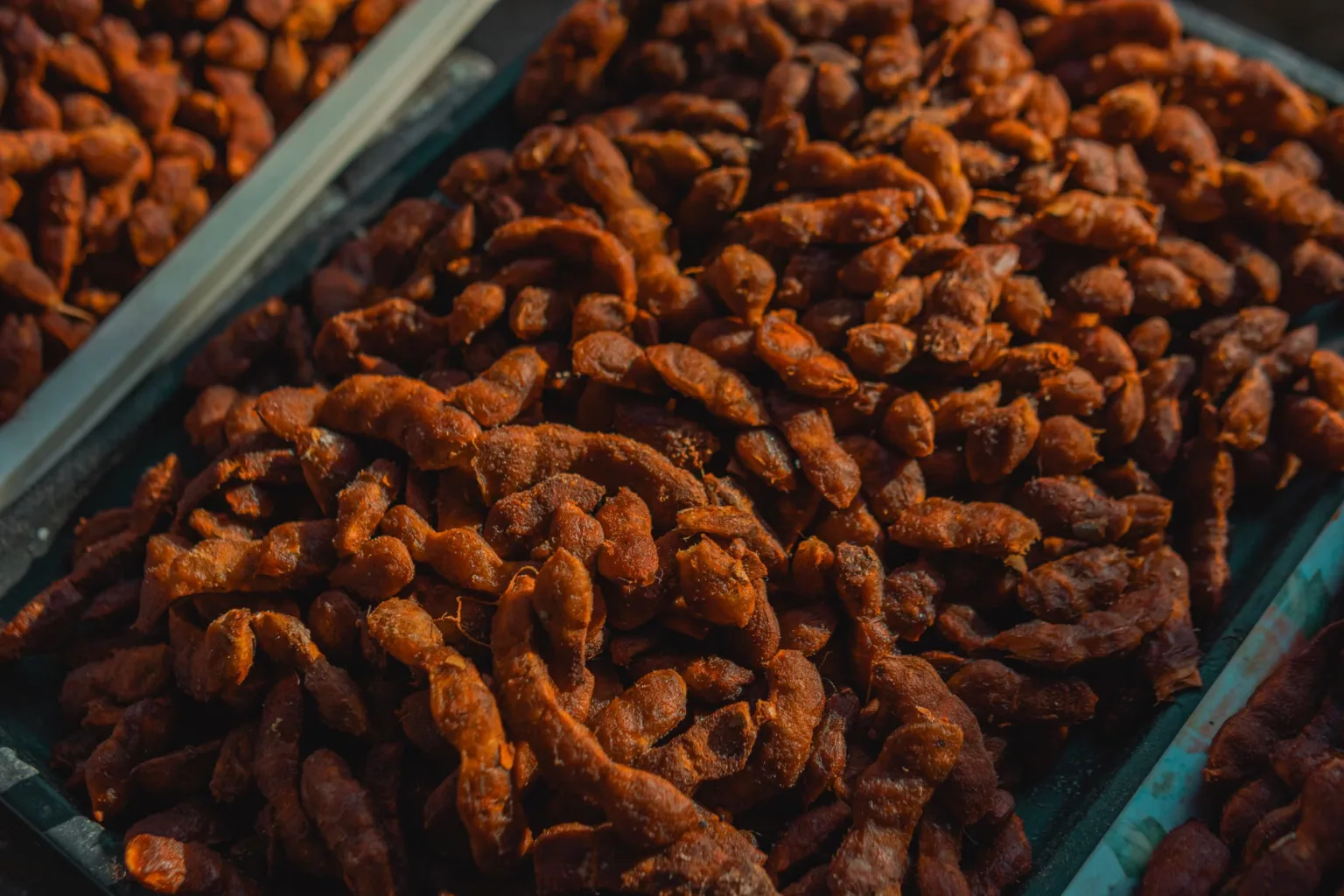
Tamarind extract is a prepared or concentrated form of tamarind used as a seasoning. The fruit contains brown, sticky, fibrous pulp around its seeds, and tamarind is also sold commercially as paste or extract. The word extract can refer to products with different consistencies, so check the packaging and adapt how you add it to suit its texture. Its main culinary contribution is a pronounced sweet-and-sour flavor, useful for adding contrast and depth to both savory and sweet dishes.
When to use it
Use it when a dish needs fruity acidity alongside a sweet note, such as in sauces, dressings, chutneys, curries or stews. It also works in tamarind drinks and sweet preparations. Products vary in intensity, and too much can dominate a dish, so add it gradually and taste before adjusting the balance with other ingredients. If a recipe needs a smooth, pourable texture, dissolve it in warm water first.
How to use it
Check the product’s texture and label directions first: products called extract may differ from tamarind paste. To help it blend in, mix a small amount with warm water until it is easy to incorporate. If the product contains fibrous pulp or seeds, strain the liquid when the recipe calls for it. Add the tamarind gradually to a sauce, stew or dressing, and taste before adding more. It suits sweet and savory preparations, but do not assume every product has the same concentration or use a fixed measure without checking the result.
Flavour and texture
Its flavor is sweet and sour and can be intense, with acidity that adds contrast and sweetness that rounds out a dish. Texture depends on the product: tamarind is sold as paste or extract, while the fruit pulp is described as sticky and fibrous. Some products blend or dissolve easily; others may benefit from warm water or straining.
How to choose it
Check whether the package contains extract, concentrate or paste, since names and consistencies can vary. Read the ingredient list and manufacturer’s directions to guide use; do not assume two products have the same concentration. If you want a milder flavor or a pourable texture, choose a form that is easy to mix and measure.
Storage
Follow the package storage directions, since commercial forms are not all the same. Close the container securely after use and avoid putting dirty or wet utensils into it. If the label does not explain how to store it after opening, check with the manufacturer rather than assuming all extracts keep in the same way.
Substitutions
Lime juice with a little brown sugar can imitate some of tamarind’s sweet-and-sour contrast, but it will not reproduce its exact flavor. Lemon juice or vinegar can add acidity, although they may change the character of the dish. Adjust gradually and taste; there is no universal equivalent for tamarind extract.
Common mistakes
Adding too much at once can let tamarind overpower a dish. Start with a small amount, mix it in fully and taste before adjusting. Another common mistake is treating extract, concentrate and paste as identical products: check the texture and package directions.
Safety and allergens
Check the product label, especially if you have food allergies, and follow the manufacturer’s storage directions. Product composition can vary.
Culinary uses
- Aporta acidez y dulzor a salsas y aderezos.
- Da profundidad a bebidas, guisos y preparaciones dulces.
Recommended techniques
- Disolver el extracto o la pasta en agua tibia para integrarlo con más facilidad.
- Ajustar la cantidad poco a poco y probar, porque su sabor puede ser intenso.
Pairs well with
- Azúcar y vinagre en salsas agridulces.
- Verduras, carnes, pescado, legumbres, curry y chutney.
Frequently asked questions
What does tamarind extract taste like?
It has a sweet-and-sour profile, with pronounced acidity and a sweet background. Its intensity depends on the product.
How can I add it to a sauce?
Mix it in gradually and taste as you go. If it is thick, dissolve it in a little warm water first.
Are tamarind paste and extract the same?
Not necessarily. They are sold in different forms and consistencies; check the label and adjust the amount for the product you have.
Ingredient allergens
Allergen listThere are no verified associations for these ingredients yet.
Sources and review
Automatically researched, cross-checked and validated content. Sources consulted:
- Alérgenos alimentarios | EFSA www.efsa.europa.eu/es/safe2eat/food-allergens
- ¿Por qué la muerte es origen de miedos y tabúes? doi.org/10.64628/aao.fccyk3qj3
- Gastronomía de México - Wikipedia, la enciclopedia libre es.wikipedia.org/wiki/Gastronom%C3%ADa_de_M%C3%A9xico
- Etiquetado de sustancias que causan alergias e intolerancias alimentarias www.aesan.gob.es/seguridad-alimentaria/informacion-alimentaria/etiquetado-sustancias
- Tamarindo. Qué es, propiedades y cómo usarlo en la cocina para dar un toque exótico www.abc.es/recetasderechupete/tamarindo-que-es-propiedades-y-como-usarlo-en-la-cocina-para-d…
- Tamarindo | Gastronomía & Cía www.gastronomiaycia.com/tamarindo/
- Tamarindo: mucho más que chutneys | CocinaSinReceta.com www.cocinasinreceta.com/tecnicas/manual-de-instrucciones/tamarindo-mucho-mas-que-chutneys/
- Tamarindo: una palabra que cruzó océanos y se hizo Caribe - Eva Bravo ebravo.es/tamarindo-una-palabra-que-cruzo-oceanos-y-se-hizo-caribe/
- Tamarindo: qué es, propiedades, beneficios y cómo hacer con esta fruta tropical una salsa exquisita www.directoalpaladar.com/ingredientes-y-alimentos/tamarindo-fruta-tropical-que-parece-vaina-…
- Preparaciones culinarias a base de tamarindo (tamarindus ... revistas.ulcb.edu.pe/index.php/REVISTAULCB/article/download/32/219/527
- Declaration of allergens on food labels: overview of Latin America - PMC pmc.ncbi.nlm.nih.gov/articles/PMC11205258/
- Questions and Answers Regarding Food Allergens, ... www.fda.gov/media/117410/download
- Food safety and quality: detail www.fao.org/food/food-safety-quality/scientific-advice/jecfa/jecfa-additives/detail/es/?ipp=…
- Tamarindo: qué es, propiedades y nutrientes - Frutas Eloy tienda.frutaseloy.com/frutas/tamarindo-que-es-propiedades-y-nutrientes/?srsltid=AYCX9vKdnNXn…
- Tamarindo: propiedades, beneficios y usos | Fine Dining Lovers www.finedininglovers.es/explorar/noticias/todo-sobre-el-tamarindo
- - YouTube www.youtube.com/watch?v=_ENL2Bf29yk
- Evaluación Fisicoquímica y Sensorial de Concentraciones de Pulpa de Tamarindo (Tamarindus Indica) en un Licor Macerado | OpenAlex openalex.org/W4413122958