- Category
- Vegetables
- State
- Fresh
- Usual unit
- g
What it is
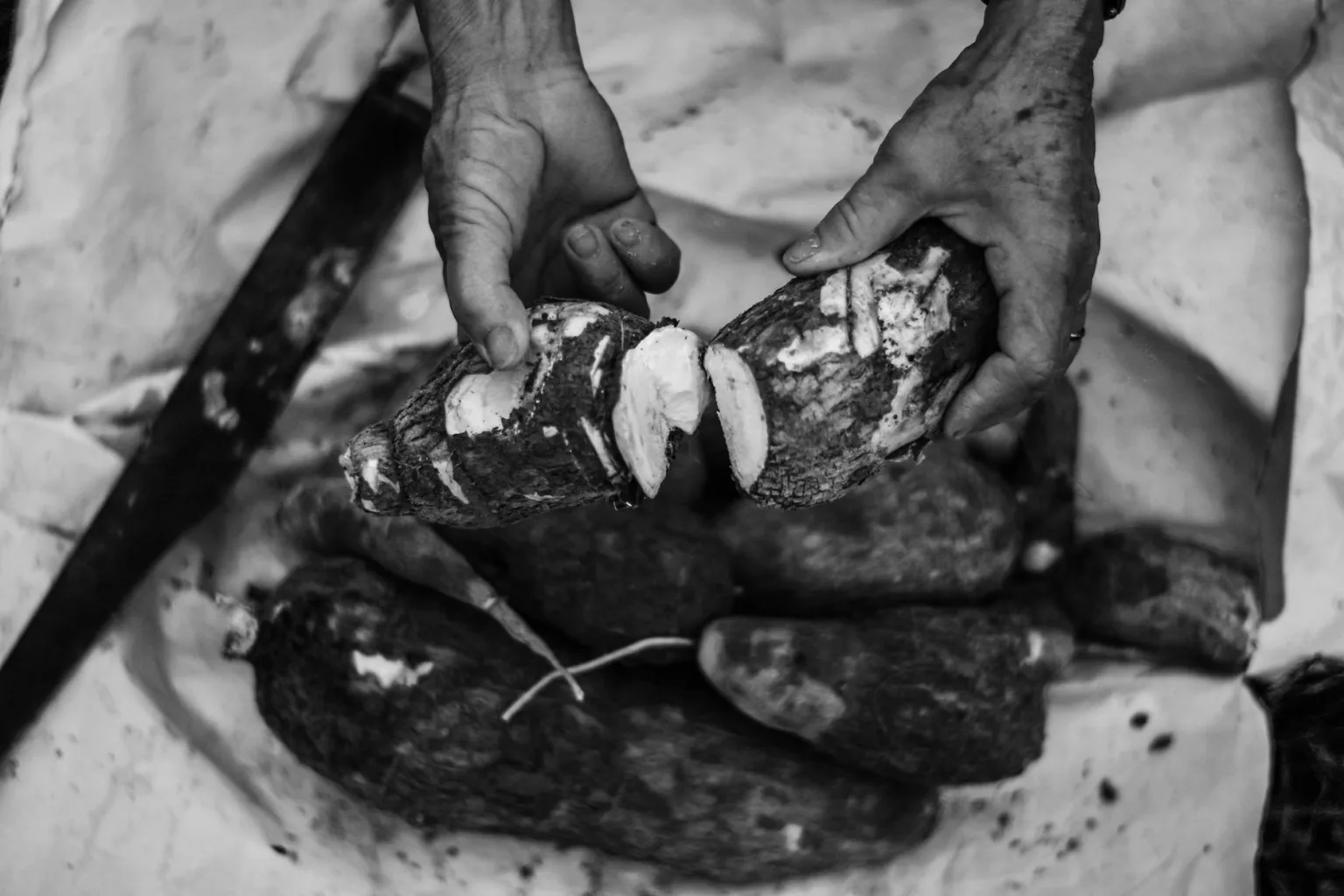
Taro usually refers to the edible corm of Colocasia esculenta, a member of the arum family, Araceae. It is commonly sold as a brown-skinned root or tuber, although botanically it is a corm. The flesh is often pale, but some varieties have pink or purple streaks or flecks. Size, color, and texture vary by variety and growing conditions. Once cooked, the flesh becomes tender, starchy, and often creamy, making taro suitable as a side dish or for mashing. It is used in savory dishes such as soups and stews, as well as in some sweet preparations. The name can be confused with other edible aroids, including cocoyam and other plants called malanga, which are distinct crops. When buying and cooking it, identify the product as edible taro rather than an ornamental plant. Raw taro is not ready to eat: the corm must be thoroughly cooked before tasting or serving.
When to use it
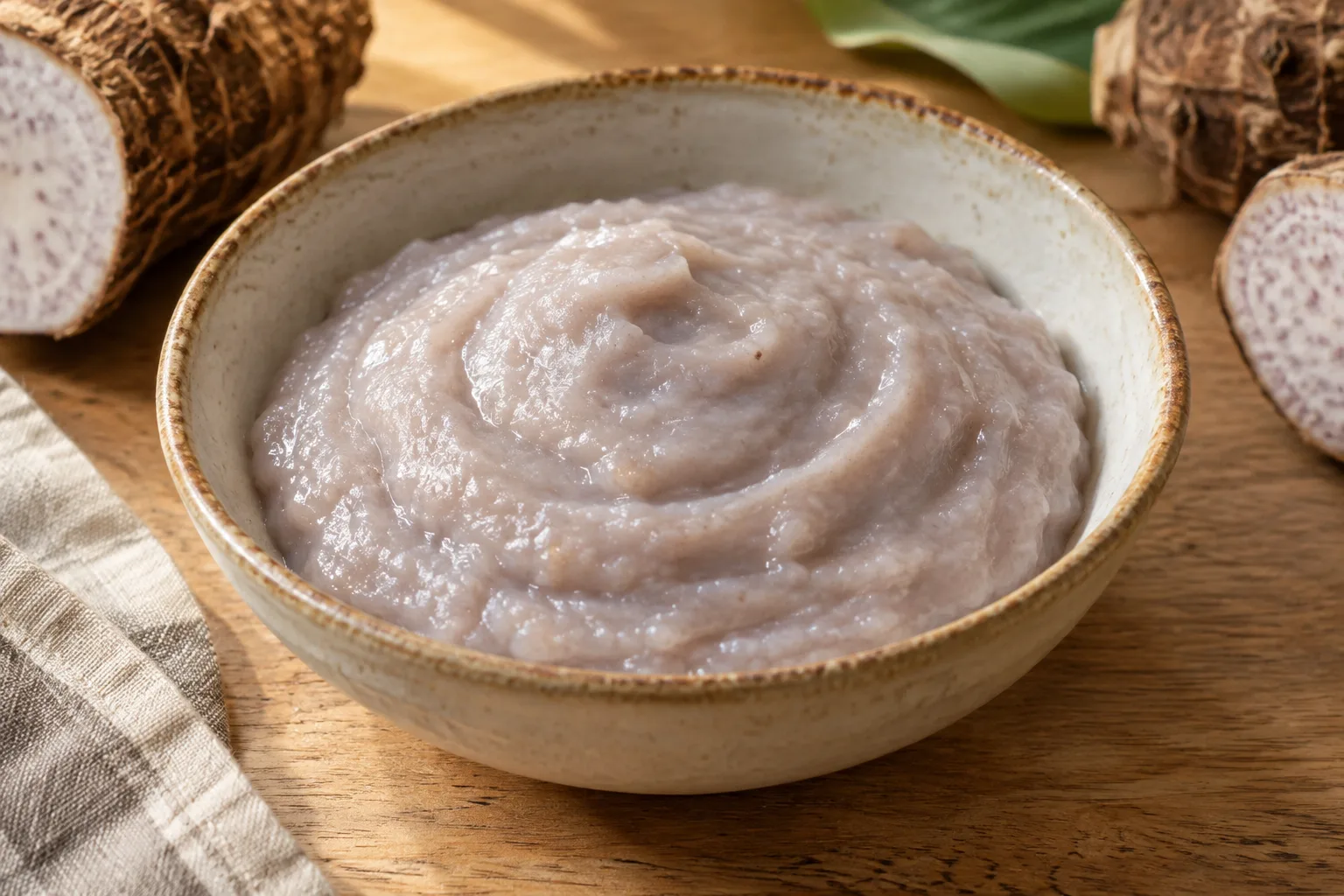
Use taro when you want a substantial vegetable side or an ingredient that adds body to a soup or stew. Once cooked and mashed, it makes a thick purée; a traditional Hawaiian preparation of pounded taro is known as poi. Taro can also be cut for roasting or frying, or included in sweet recipes where its cooked texture and mild flavor suit the dish. Its soft, starchy consistency works well in recipes that call for a tender root vegetable. Do not expect it to behave exactly like a crisp vegetable without adjusting the cut and cooking method. Plan for thorough cooking before you start: taro is not an ingredient to eat raw or to stir into a finished dish uncooked.
How to use it
Choose a firm corm without obvious soft spots. Peel the skin and cut the flesh with clean utensils; if handling it irritates your skin, avoid direct contact and wash your hands and tools afterward. For a simple preparation, cut the taro into pieces and boil or steam it until thoroughly tender. It can also be roasted or fried after cutting, but make sure the center is fully cooked rather than relying on a browned exterior. For a purée, mash the cooked taro and add liquid gradually until it reaches the consistency you want. Taro can thicken soups and stews, be served with coconut cream, or be used in some sweet dishes. Do not taste the raw flesh while preparing it: raw taro can irritate the mouth and throat. Leaves and other parts of the plant also require appropriate preparation; this profile focuses mainly on the edible corm.
Flavour and texture
Cooked taro has a mild, slightly sweet, earthy flavor that can recall other root vegetables. The flesh color depends on the variety: it may be pale, with pink or purple streaks or flecks. Raw, the corm is firm and may be fibrous; cooking makes it tender, starchy, and often creamy. The result varies with the variety and method: mashed taro becomes thick, while pieces can hold their shape when cooked carefully. Do not expect every taro corm to have the same color or exactly the same texture.
How to choose it
Choose taro corms that feel firm and heavy for their size, without soft areas, suspicious moisture, or deep visible damage. The skin is commonly brown, while the flesh may be pale or show colored streaks, so some variation in appearance is normal. If the product is labeled with another common name, check that it is edible taro rather than a different aroid. Buy an amount you can use and inspect each corm before cooking. Do not use a corm with obvious spoilage, and do not assume that extra cooking will make badly damaged produce suitable.
Storage
Keep fresh taro in a cool, dry, well-ventilated place, and avoid letting it become wet or excessively dry. The available evidence does not establish a precise household storage period, so follow store or package guidance when provided. Check the corms and separate any that show deterioration. Once peeled or cut, handle the pieces cleanly and cook them without leaving them at room temperature unnecessarily. For frozen or processed taro, follow the package directions; those instructions may differ from guidance for fresh corms.
Substitutions
Potato is often the most practical substitute in stews, purées, and dishes that call for a starchy root vegetable. Sweet potato can work in recipes that suit its sweeter flavor. Neither substitute reproduces taro's exact flavor or texture, so adjust the cooking method to the ingredient and the consistency you want. Taro itself must be thoroughly cooked before eating; substituting another ingredient does not make a dish containing raw taro safe.
Common mistakes
The most important mistake is tasting or serving taro raw or undercooked. Browning the outside alone does not show that the center is cooked. Taro can also be confused with other aroids sold under similar common names, so check the product's identity before preparing it. Finally, do not assume every variety has white flesh: some have purple coloring or streaks, and color variation by itself does not establish quality.
Safety and allergens
Do not eat taro corm raw. It can contain irritating calcium oxalate crystals, so cook it thoroughly before consumption. Handle any corm that irritates your skin with care, and wash hands, cutting boards, and utensils after preparing the raw product. Do not automatically treat an ornamental Colocasia plant as food: use taro sold for consumption and correctly identified.
Culinary uses
- Almidón vegetal para guarniciones y purés
- Ingrediente para sopas y guisos
- Base para preparaciones dulces y saladas
Recommended techniques
- Hervir o cocinar al vapor hasta que esté completamente cocido
- Asar o freír después de pelar y cortar
- Machacar para hacer puré o poi
Pairs well with
- Crema de coco
- Caldo y otros ingredientes de guisos
- Rellenos salados para dumplings
Frequently asked questions
Can you eat taro raw?
No. Cook the corm thoroughly before eating it; raw taro can irritate the mouth and throat.
What does taro taste like?
Cooked taro tastes mild, slightly sweet, and earthy. Its texture becomes tender, starchy, and often creamy.
What can I use instead of taro?
Potato often works in stews and purées; sweet potato can suit recipes that accommodate a sweeter flavor. Neither is an exact match.
Estimated nutrition
- Fat
- 0.11 g
- Saturates
- 0.02 g
- Carbohydrate
- 34.6 g
- Sugars
- 0.49 g
- Fibre
- 5.1 g
- Protein
- 0.52 g
- Salt
- 0.04 g
Sources and review
Automatically researched, cross-checked and validated content. Sources consulted:
- Client Challenge doi.org
- Food Timeline: food history research service libguides.umflint.edu
- Taro | www.cocinista.es cocinista.es
- El taro joseanalija.com
- Colocasia esculenta (Caladium, Dasheen, Elephant Ears, Green Taro, Malanga, Taro) | North Carolina Extension Gardener Plant Toolbox plants.ces.ncsu.edu
- Taro - Traditional Pacific Island Crops - Research Guides at University of Hawaii at Manoa guides.library.manoa.hawaii.edu
- Taro - Vegetable Resources Vegetable Resources aggie-horticulture.tamu.edu
- Effects of salinity on the growth and nutrition of taro (>Colocasia esculenta>): Implications for food security - Monash University research.monash.edu
- Consumer food storage practices and methods at the ... ageconsearch.umn.edu
- El Taro: El Tubérculo Ancestral que Conquista la Cocina Moderna — ChefBusiness chefbusiness.co
- ¿Qué es el taro y cuáles son sus famosas propiedades? salroche.com
- Taro raíz china: qué es y cómo se cocina finedininglovers.es