Documentary synthesis prepared with AI assistance. It does not replace specialist review or certify kitchen testing. · Updated 1 November 2026
A cuisine shaped by landscape and shared meals
Ethiopia’s foodways are diverse, and no single dish or serving custom describes every community. In many documented meals, injera—a soft, fermented flatbread most often associated with teff—provides both a base for other foods and a way to gather bites of stew. Its sourness and porous surface make it a distinctive partner for moist preparations, but other breads and grain dishes also belong in the picture.
The country’s landscapes matter to that picture. Highland grain cultivation is associated with injera, while Gedeo’s documented agroforestry brings coffee and enset into view together with the trees and knowledge that sustain cultivation. In Sidama, food has a place in a particular New Year celebration and its traditions of visiting and sharing. These are different kinds of evidence: one describes a cultivated landscape, another a community’s occasion, and neither stands for the whole country.
A useful starting point is therefore not a single “national menu” but a set of relationships: crop and place, fermentation and texture, stew and bread, and food offered among people. Recipes in the KitchenPause collection provide practical entry points through dabo, firfir, and chechebsa; they do not define the full range of Ethiopian cooking.
Continuity, change, and documented food traditions
The evidence here points most securely to enduring practices and changing reach, rather than to a single origin story. Injera is made from fermented grain batter and cooked as a large, flat bread; archaeological discussion of the circular cooking surface called a mitad includes finds dated to around 600 CE. That evidence documents the use of a cooking implement, not the precise date when injera or a national cuisine began.
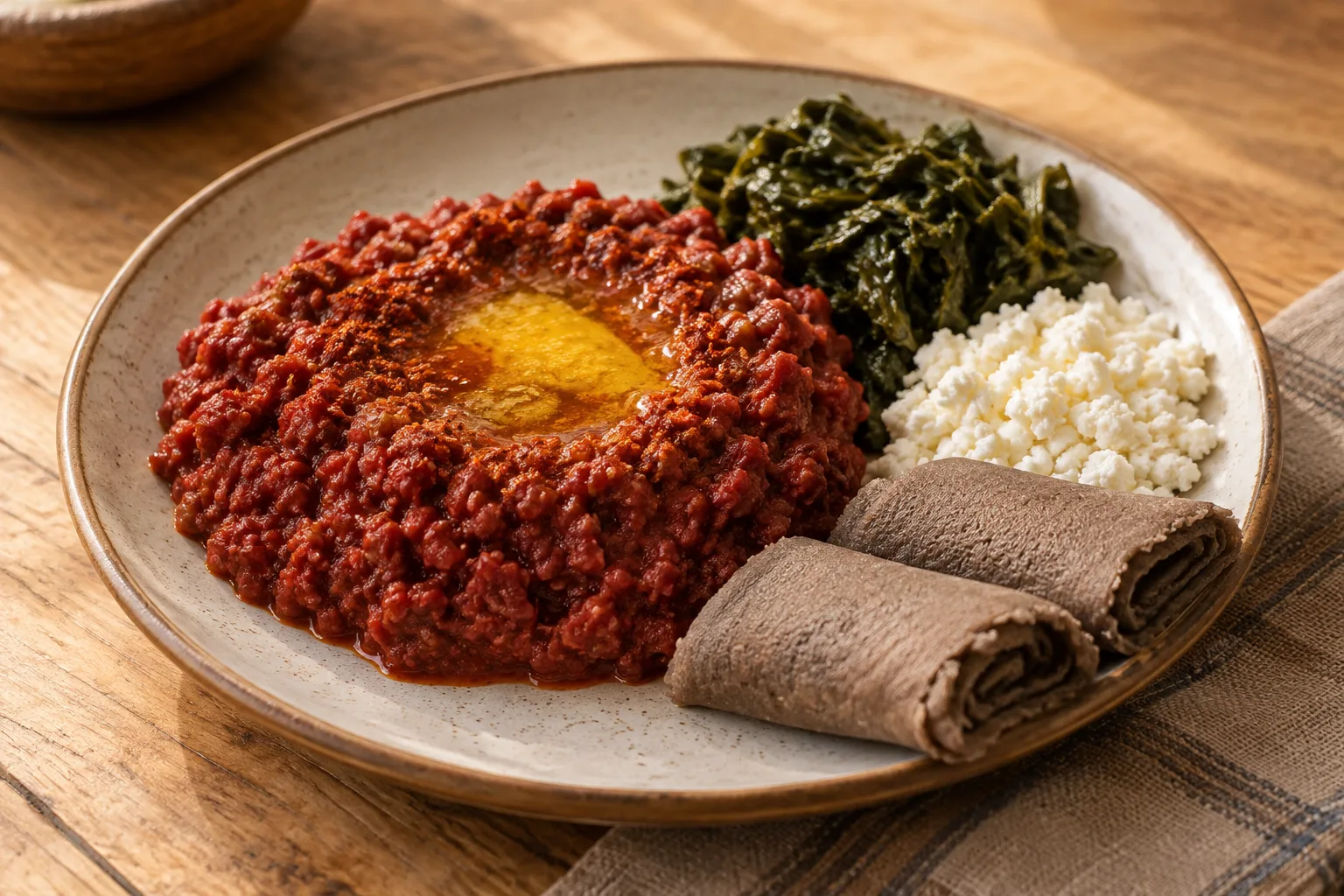
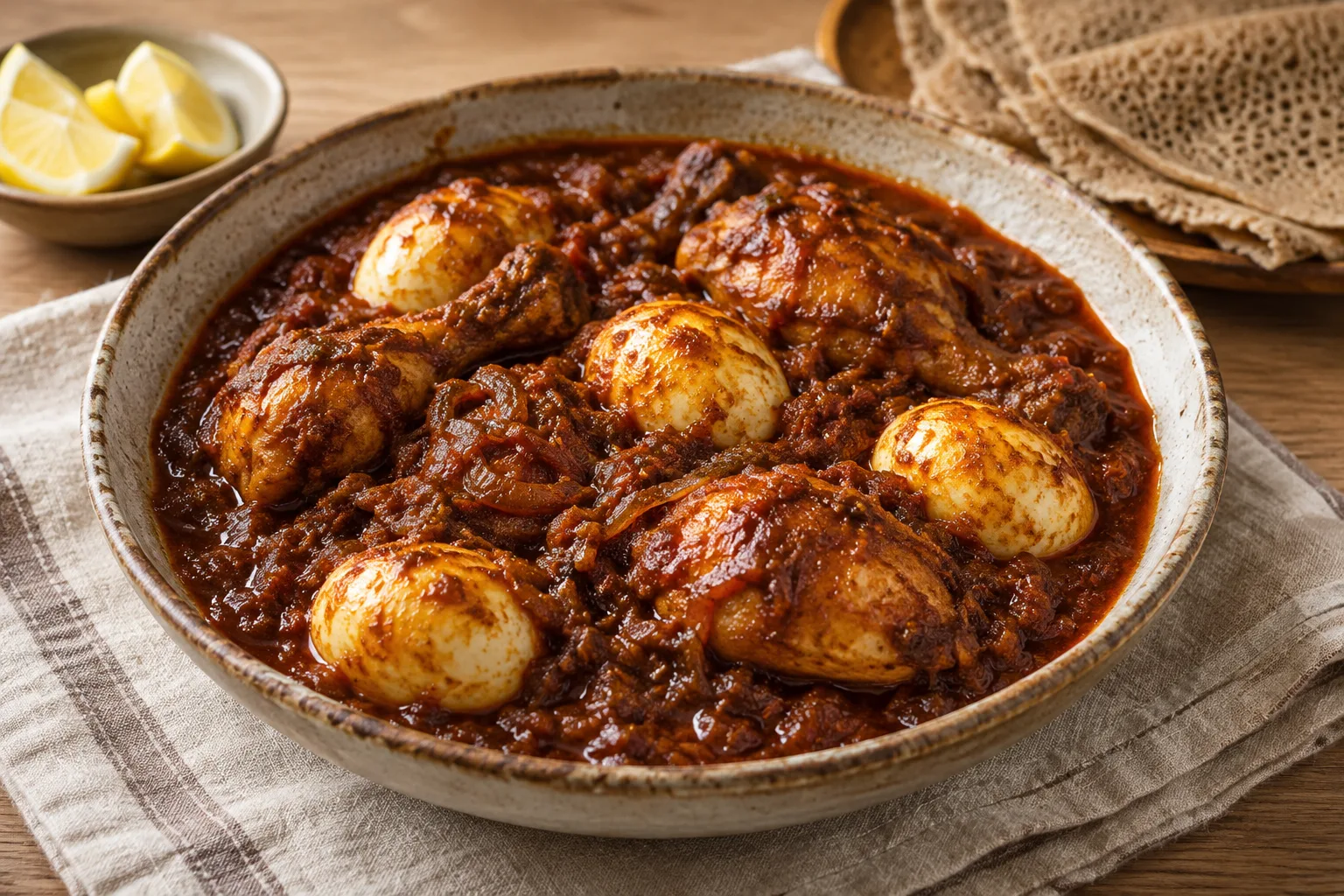
Food traditions also travel between communities within the country. Doro wat, described as a festive dish associated with northern Ethiopia, is now enjoyed more widely in central and southern areas. Kitfo is associated with Gurage tradition and has also become widely known beyond that community. These examples show circulation and adoption, but they do not establish exclusive origins for every later version or meal.
Religious practice has helped shape what is cooked on particular days. Ethiopian Orthodox fasting periods exclude animal products, and accounts of the cuisine describe an extensive range of vegetable and legume preparations in this context. Ethiopian Jewish dabo traditions add a distinct household and holiday history: the bread is associated with Shabbat and holidays, with family foodways documented between Gondar, Addis Ababa, and Israel. Such examples reveal particular histories, not a single religious explanation for all Ethiopian food.
Grains, enset, legumes, and seasonings
Teff is a grain strongly associated with injera. Other grains—including barley, wheat, sorghum, maize, and rice—can also be used in breads or in versions of injera, depending on availability and practice. Injera’s ingredients and fermentation affect its character: teff batter left to ferment develops acidity, while cooking produces the characteristic porous upper surface. A teff-based preparation should not be assumed to describe every injera made in Ethiopia.
Legumes are central ingredients in many stews and purées. Lentils appear in misir wat; chickpea or other legume flour is used for shiro. These preparations sit alongside vegetable and meat-based wot rather than forming one fixed set of accompaniments. In Gedeo, enset is documented as part of an agroforestry system alongside coffee and trees. Enset is also important in Sidama food traditions, including the buurisame shared during Fichee-Chambalaalla. Its cultivation and transformation involve specific knowledge; the landscape evidence alone does not supply a complete guide to processing it.
Seasonings include berbere, a red spice blend whose ingredients and proportions vary, and niter kibbeh, spiced clarified butter used in some preparations. Chiles, ginger, garlic, and other aromatics contribute warmth and depth. For fasting dishes, accounts describe vegetable oil in place of butter. The pantry is consequently flexible: its contents and combinations depend on dish, household, community, and occasion.
Tang, heat, and contrasts of texture
Fermentation gives injera its familiar tang, while the cooked bread remains supple and porous enough to take up sauces. Its flavor and texture vary with grain and fermentation, so “injera” does not mean one invariant taste. When it accompanies a stew, the bread’s mild acidity provides a counterpoint to a rich or strongly seasoned sauce; its soft structure also makes it useful for collecting food.
Heat is prominent in preparations that use berbere, but Ethiopian food is not uniformly hot. Berbere is a mixture rather than a single standardized ingredient, and its make-up can differ among versions. By contrast, alicha names a milder style of stew in descriptions of the cuisine. The contrast between red, chile-forward preparations and gentler seasoning is more informative than treating intensity as a rule for every dish.
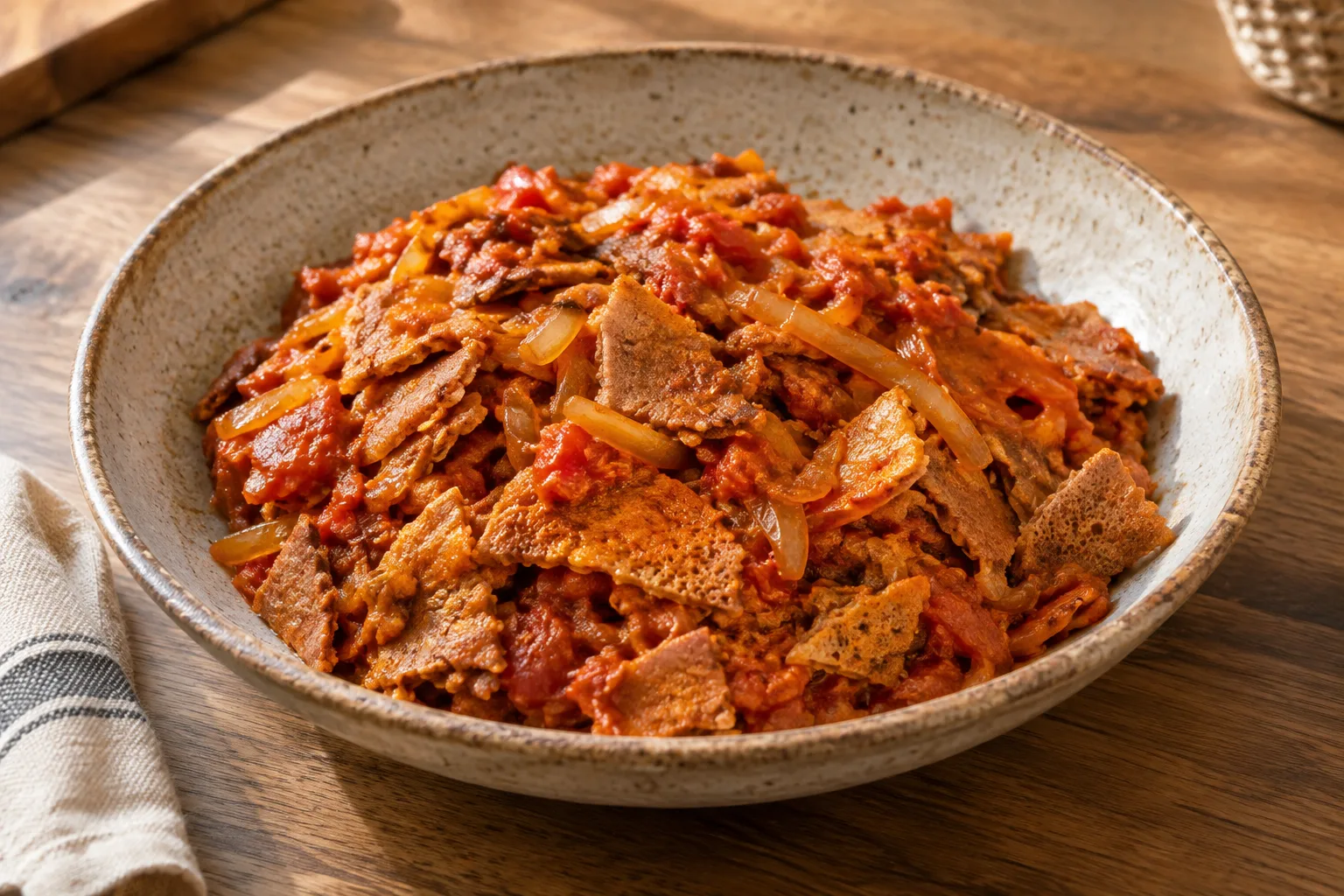
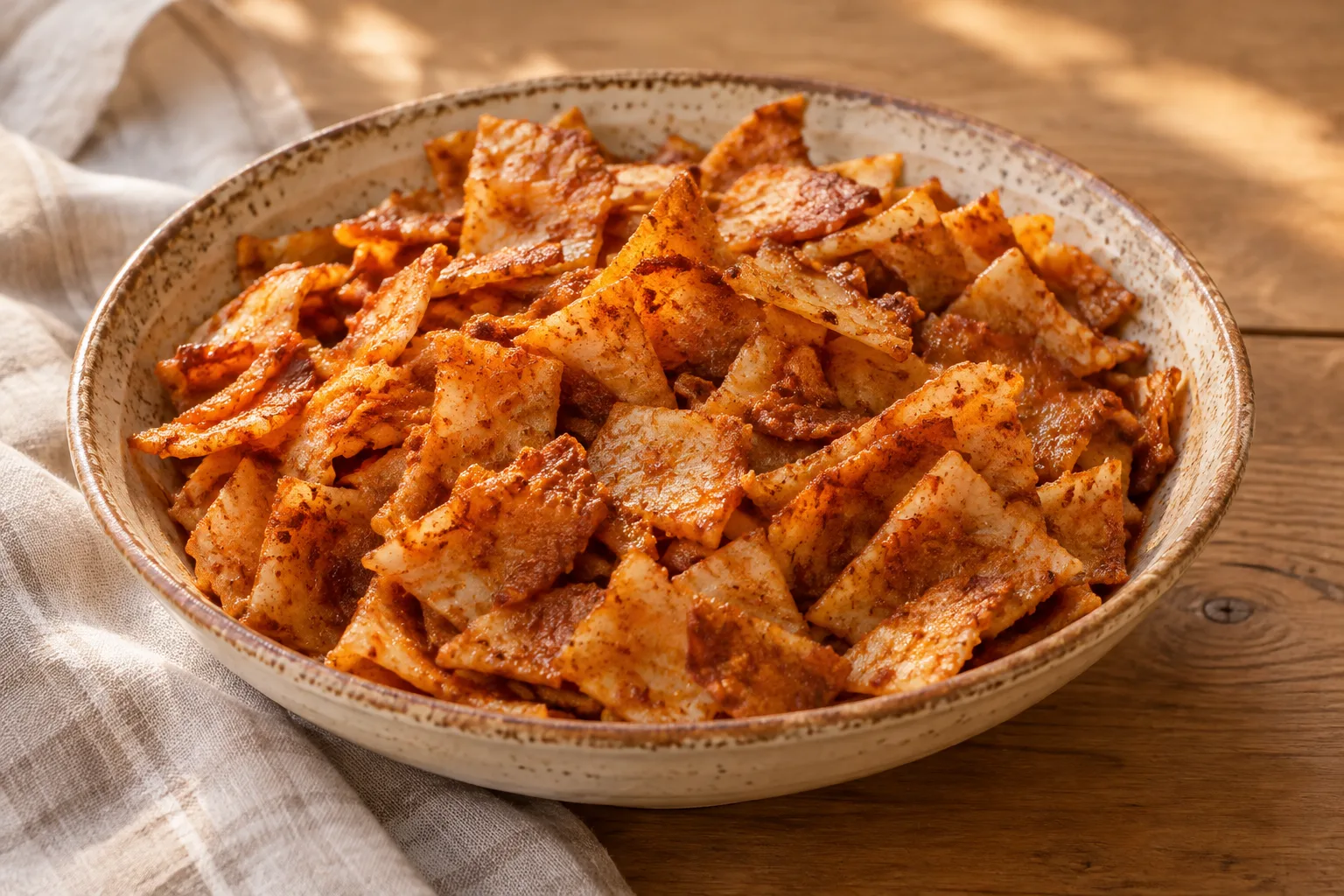
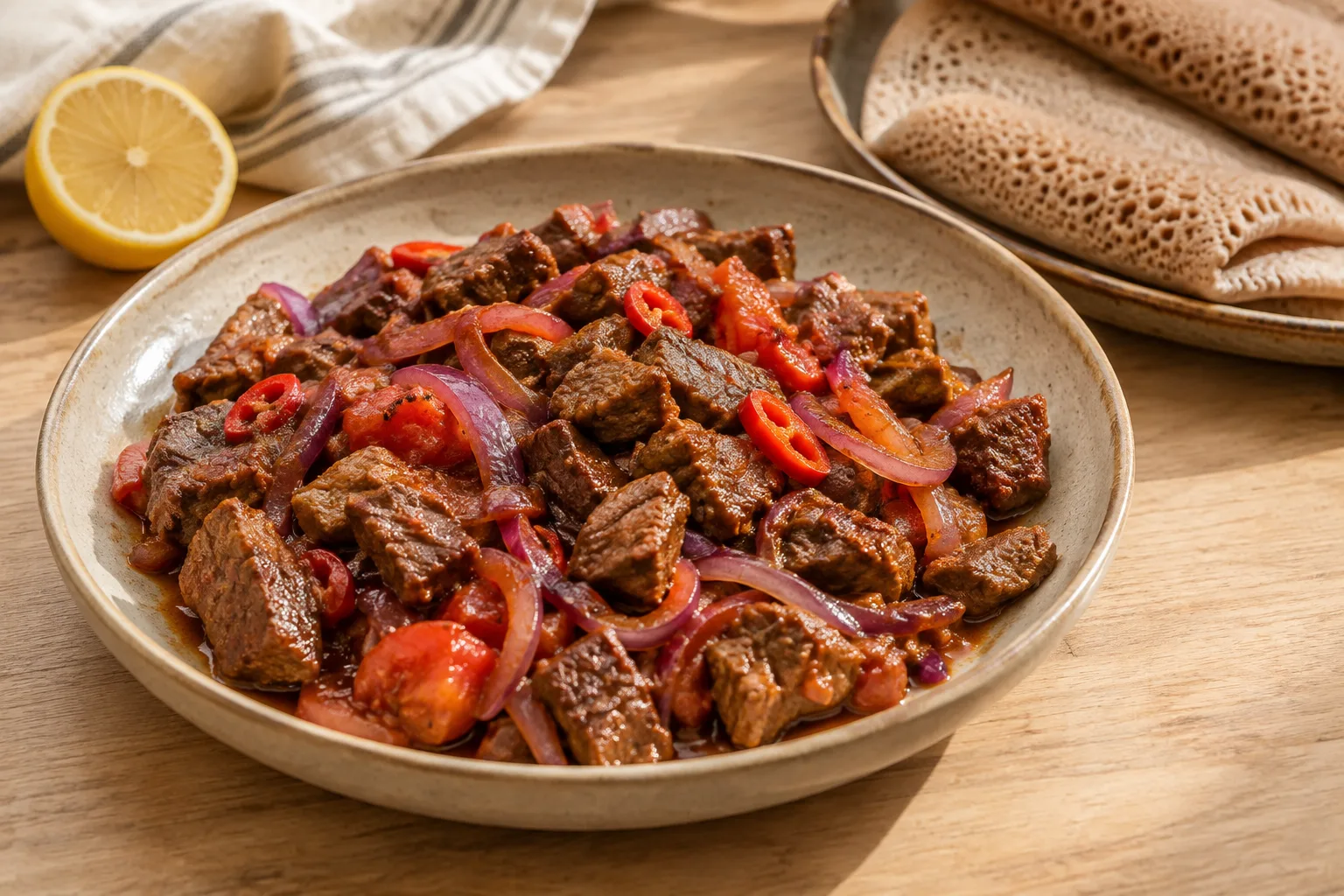
Texture shifts with preparation. A wot is generally a stew; tibs is meat or another ingredient prepared as a sauté rather than as a long-simmered stew. Firfir changes injera into a sauced preparation: torn pieces take on liquid and seasoning, with the final texture depending on how the bread is combined with the sauce. Chechebsa offers another contrast, using pieces of flatbread coated with spiced butter and berbere. These are related through grain and seasoning, yet they are not interchangeable dishes.
Celebrations, fasting, and transmission
Fichee-Chambalaalla, the Sidama New Year, is a community-specific tradition with its own calendar and oral accounts. One recorded story tells of a woman visiting her family with buurisame, a preparation of enset, milk, and butter, which she shared with neighbors. The story brings together food, visits, and reciprocity; it should be understood as part of this Sidama celebration, not as a claim about the origin of enset foods or the customs of every Ethiopian community.
Religious fasting also shapes meals. Ethiopian Orthodox fasting practices include periods when animal products are avoided, and vegetable, grain, and legume dishes are important in that setting. This makes meatless stews such as lentil-based preparations especially relevant, without implying that every household observes the same schedule or that every meatless meal is tied to a religious occasion.
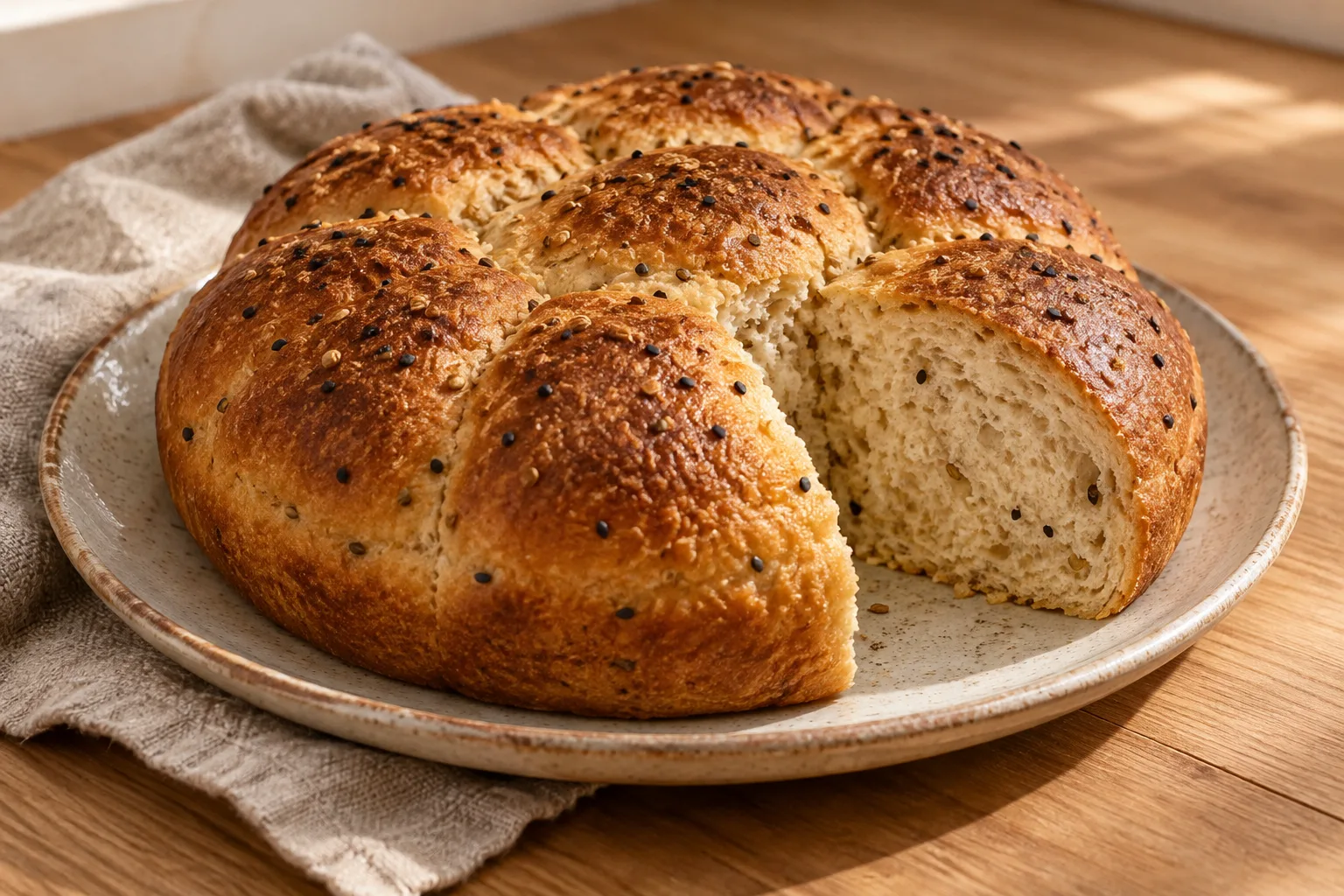
Dabo provides another specific example of transmission. It is a wheat bread with multiple forms, and Ethiopian Jewish family traditions connect it with Shabbat and holidays. Recipes and accounts describe variation in its seasonings and baking methods. Such household practices sit alongside wider food customs, including the preparation of injera and stews. Together, these examples show how cooking knowledge is carried through family life, community gatherings, and recurring occasions, while remaining rooted in distinct traditions.
Fermenting batter, cooking breads, building stews
Injera begins as grain flour mixed with water and left to ferment. The fermentation produces a slightly sour batter; the time and conditions influence its development. The batter is poured onto a hot, broad cooking surface, commonly described as a mitad, to form a large round bread. The surface develops pores as it cooks. Accounts differ on whether the bread is cooked on one side or turned in particular home methods, so a single technique should not be presented as universal.
Other breads call for different work. Dabo is made from a wheat-based dough and baked as a loaf, with versions that incorporate spices such as coriander, fenugreek, or nigella. Chechebsa uses a thin flatbread cooked in a pan, torn into pieces, and combined with spiced butter and berbere. The KitchenPause dabo and chechebsa recipes reflect those distinct transformations rather than a common method.
Stews and sautés also have their own rhythms. A wot often begins with onion and develops as ingredients and seasoning cook together; tibs is prepared by sautéing pieces of meat or other ingredients. For firfir, the bread is torn and folded or mixed with a seasoned sauce, so that it absorbs flavor while retaining some structure. The point is not to impose one standard sequence on every household, but to recognize how fermentation, pan cooking, baking, simmering, and combining bread with sauce produce different foods.
How food is arranged and shared
A meal built around injera can be arranged with the bread beneath or alongside a selection of stews and other preparations. Diners may tear pieces and use them to gather food, making the bread part of the meal’s structure as well as something eaten. Descriptions of the mesob, a woven serving table, and of food placed for sharing offer a specific picture of table practice; they do not establish that every Ethiopian meal is served in the same way.
The food served over injera can vary. A combination may bring together meat, legumes, or vegetables, while a beyaynetu is described as an assortment of preparations presented together. During fasting periods, the mix can emphasize plant-based dishes. Elsewhere, breads such as dabo provide a different way to accompany food. These variations make the meal’s arrangement part of its meaning: the choice of bread, stew, and accompaniments differs with context.
Coffee has a distinct place in Ethiopian food and hospitality. Accounts describe a coffee-serving ceremony associated with a clay jebena and note the importance of coffee in the country’s everyday and ceremonial life. It is a separate practice from the arrangement of a shared injera meal, even when both appear within a broader experience of gathering. Read together, these customs show different ways food and drink can mark welcome, conversation, or a particular occasion without reducing all hospitality to one ritual.
A vocabulary of breads, stews, and ingredients
These terms name particular foods or practices documented in Ethiopian cooking. Spellings vary in English and transliteration; the definitions here identify useful distinctions rather than claiming that every version is identical.
- Injera — A large, fermented flatbread, commonly made with teff. Its porous texture takes up stews, and pieces may be used to gather food.
- Wot (wat) — A stew, often made with meat, legumes, or vegetables and served with injera.
- Berbere — A red spice blend used in many seasoned preparations; the ingredients and intensity can vary.
- Niter kibbeh — Clarified butter infused with spices, used in some dishes. Vegetable oil may be used in certain fasting preparations instead.
- Firfir — A preparation in which torn injera is combined with seasoned sauce, changing bread into a warm, cohesive dish.
- Dabo — Wheat bread made in different forms, including spiced loaves; it is distinct from fermented injera.
- Chechebsa — Torn pieces of flatbread combined with spiced butter and berbere, associated in documentation with breakfast and Oromia.
- Enset — A cultivated plant important in documented Gedeo and Sidama foodways. Its transformation into food depends on specific local knowledge.
One country, many cuisines
Gedeo
Gedeo’s documented cultural landscape includes an agroforestry system in which trees, coffee, and enset are cultivated together. This makes food inseparable from knowledge of land and cultivation, rather than merely a list of ingredients. The available evidence supports that landscape connection, but does not establish one uniform Gedeo menu or provide a complete account of how every crop is processed into food.
Highlands and Addis Ababa
Highland foodways are closely associated in the evidence with teff and injera, a fermented flatbread served with a range of stews. The cooking surface and the bread’s porous texture help explain its role in serving and eating. Addis Ababa is also described as a place where food traditions from different communities meet; this broad setting does not make the capital a single representative cuisine for the country.
Sidama
Fichee-Chambalaalla is the Sidama New Year, documented as a community-specific celebration with traditions of visiting and sharing food. An oral account connects the occasion with buurisame, prepared with enset, milk, and butter and shared with neighbors. This evidence illuminates one named tradition and its community context; it should not be generalized into a description of all Ethiopian celebrations or all enset dishes.
Cook