Documentary synthesis prepared with AI assistance. It does not replace specialist review or certify kitchen testing. · Updated 31 October 2026
An island cuisine with many local expressions
Sri Lanka is an Indian Ocean island where coastal fishing and tropical crops meet the cooler central highlands. Its cooking reflects that range, as well as the foodways of communities including Sinhalese, Tamil, Muslim and Burgher people. Rice and coconut appear in many settings, but they do not make every meal alike: ingredients, seasoning and preparations vary across households and places.
The familiar phrase rice and curry describes more than one fixed dish. Rice may be accompanied by several curries, sambols or other sides, including vegetables, lentils, fish or meat. Other meals center on a particular form of rice or dough: a bowl-shaped hopper, delicate steamed string hoppers, or kiribath pressed into a soft slab. These foods offer different textures and ways to gather a meal around accompaniments.
The island’s food is best understood as a set of connected traditions rather than a single menu. Regional ingredients and community histories matter, while shared dishes and neighboring influences also cross boundaries. A meal might be simple or elaborate; the number and identity of its components depend on the occasion and the cook.
Trade, migration and culinary exchange
Sri Lanka’s position in the Indian Ocean has placed it within long histories of exchange. The island’s cinnamon and other spices became part of wider trading networks, while contact with South India and movements of people helped shape overlapping food traditions. These connections are part of the story, but they do not make Sri Lankan cooking simply a branch of another cuisine: local ingredients and preparations give it its own character.
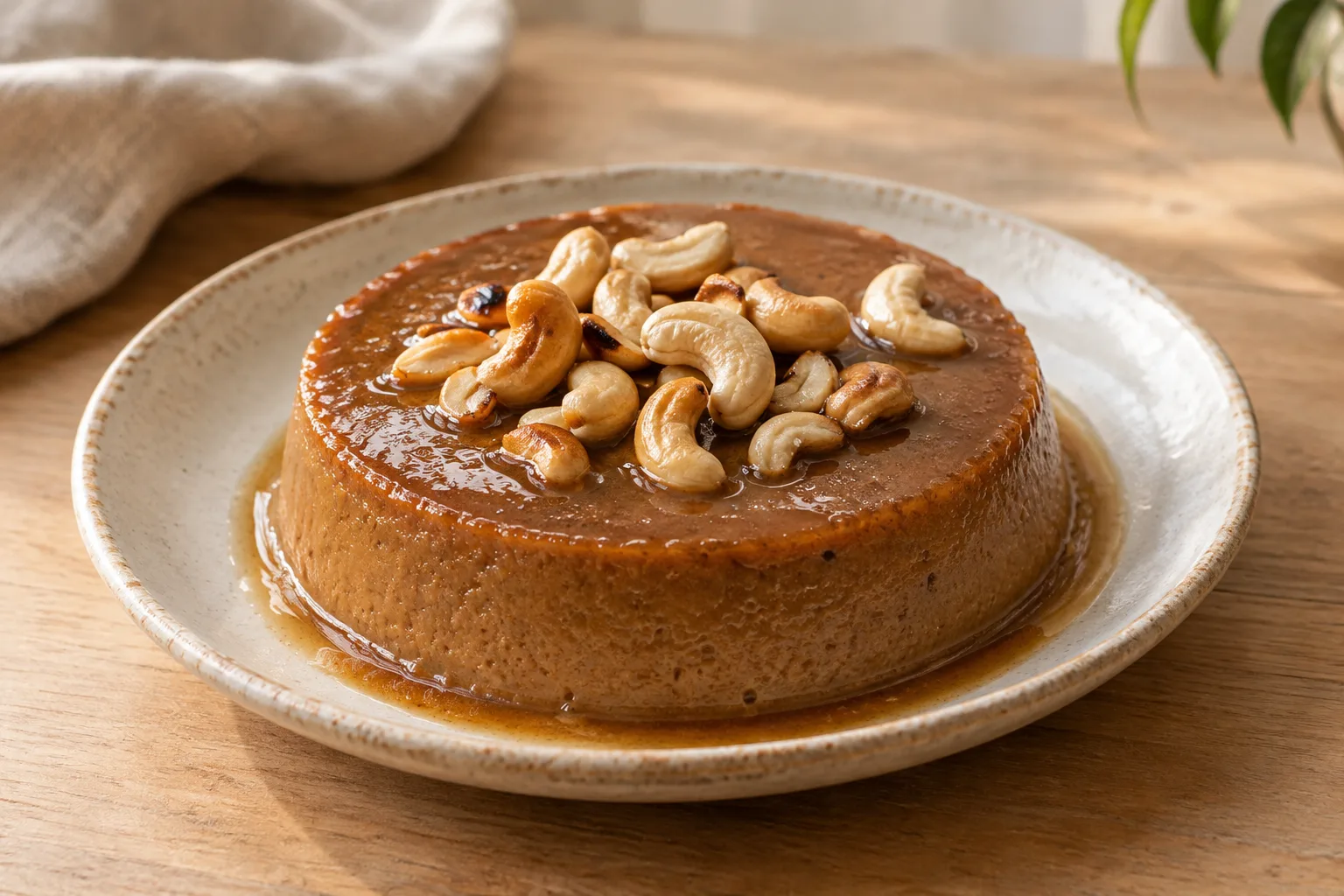
The island’s history includes Portuguese, Dutch and British colonial rule, alongside the lives and exchanges of Sinhala, Tamil, Muslim, Burgher and other communities. Culinary traces are associated with these varied histories. Lamprais, for example, is described as a Burgher-associated rice preparation with Dutch and Indonesian influences. Wattalappam is particularly loved in Sri Lanka’s Muslim communities, and accounts connect its history to Malay migration during Dutch rule. Such examples reveal specific strands of a wider history, not a single origin story for the entire cuisine.
Food traditions also change through household practice. Recipes have been adapted to local ingredients and circumstances, and similar dishes can have different versions. Recognizing exchange therefore means noticing both shared techniques and meaningful distinctions, rather than assigning exclusive ownership where the evidence points to contact and adaptation.
Rice, coconut, seafood and aromatic ingredients
Rice is a central staple, served as cooked grains and transformed into flour or other preparations. The rice used for kiribath needs to become very tender so the grains bind when cooked with coconut milk. Rice flour, by contrast, forms the basis of hoppers and string hoppers, whose shapes come from different methods of cooking and forming dough.
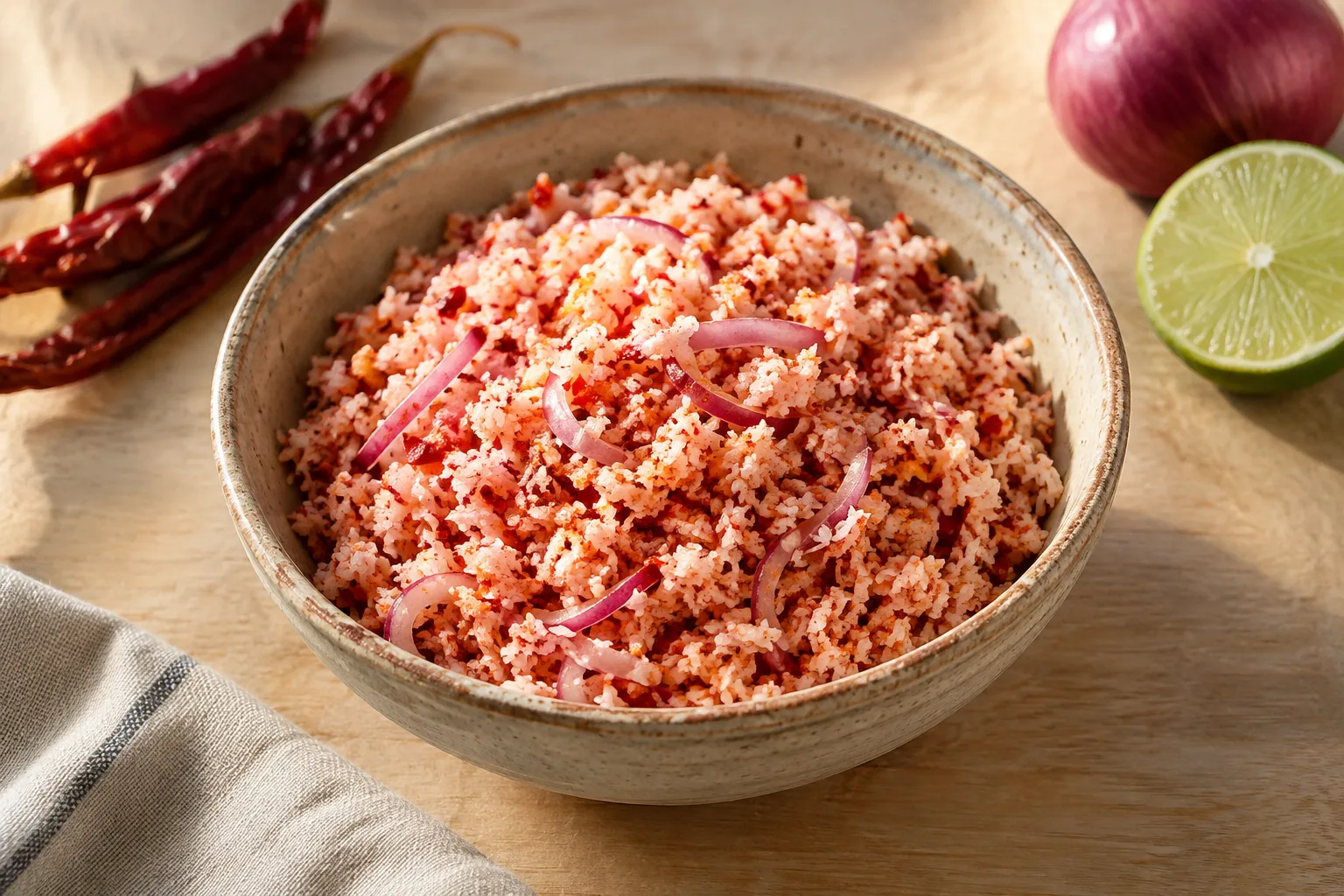
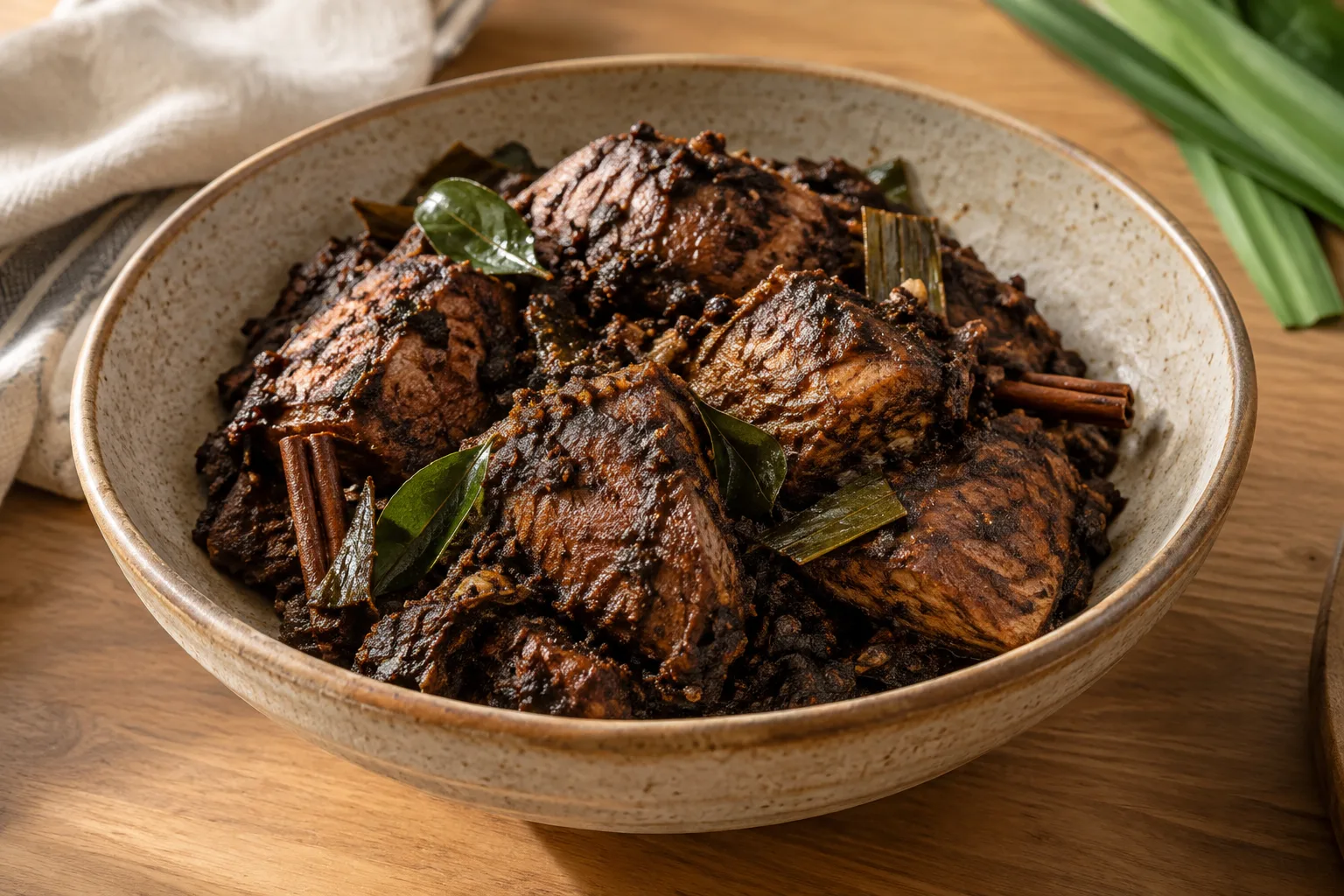
Coconut is used in several forms: grated flesh, coconut milk and coconut-based accompaniments. It gives curries and rice preparations richness, while fresh grated coconut can be mixed into pol sambol. The dried fruit goraka brings a pronounced sourness and dark color to ambul thiyal; its role is distinct from that of lime or tamarind. Firm fish, often tuna, is used for this slowly cooked preparation, while coastal cooking more broadly includes fish and other seafood.
The aromatic pantry includes black pepper, curry leaves, pandan, cinnamon, chilli, cardamom, cloves and turmeric. Their use varies by recipe and cook. Kitul palm products appear in sweet preparations: jaggery or treacle can provide a dark, rounded sweetness in desserts and as an accompaniment. A few ingredients recur across the cuisine, but their proportions and combinations—not a single universal spice mix—make each preparation specific.
Sour, peppery, rich and crisp
Sri Lankan food often brings contrasting sensations into one meal. Coconut milk lends a smooth, rounded quality to rice or curry; chilli and black pepper contribute heat, while sour ingredients brighten richer or milder components. Coconut sambol adds a fresh, textured counterpoint. These are useful broad impressions, not rules for every dish: recipes differ in their balance, and a meal need not be uniformly hot.
Ambul thiyal shows how a preparation can concentrate a few strong flavors. Goraka supplies a distinctive acidity, and black pepper provides much of the heat in versions that emphasize the southern style. As the liquid reduces, the fish takes on a dark coating rather than a flowing coconut-based gravy. This is different from a curry whose sauce is intended to be spooned over rice.
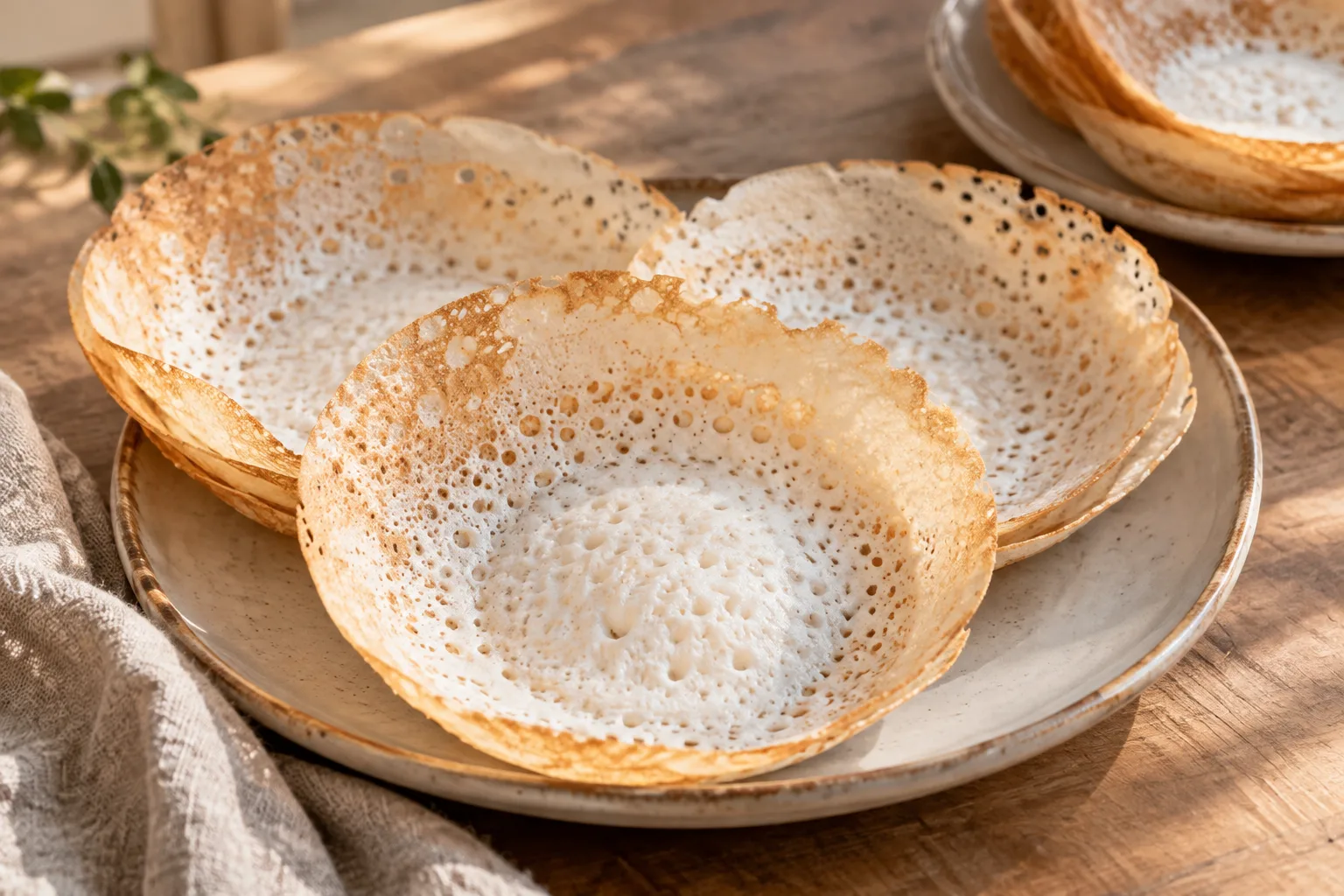
Texture is just as important. A hopper has thin crisp edges around a tender center; kiribath is soft and cohesive enough to flatten and cut; string hoppers form delicate rice-flour strands. A table of rice, curries and sambols lets diners combine these qualities in different mouthfuls. The appeal lies in contrast and balance, not in making every component taste the same.
Celebrations, snacks and the passing on of foodways
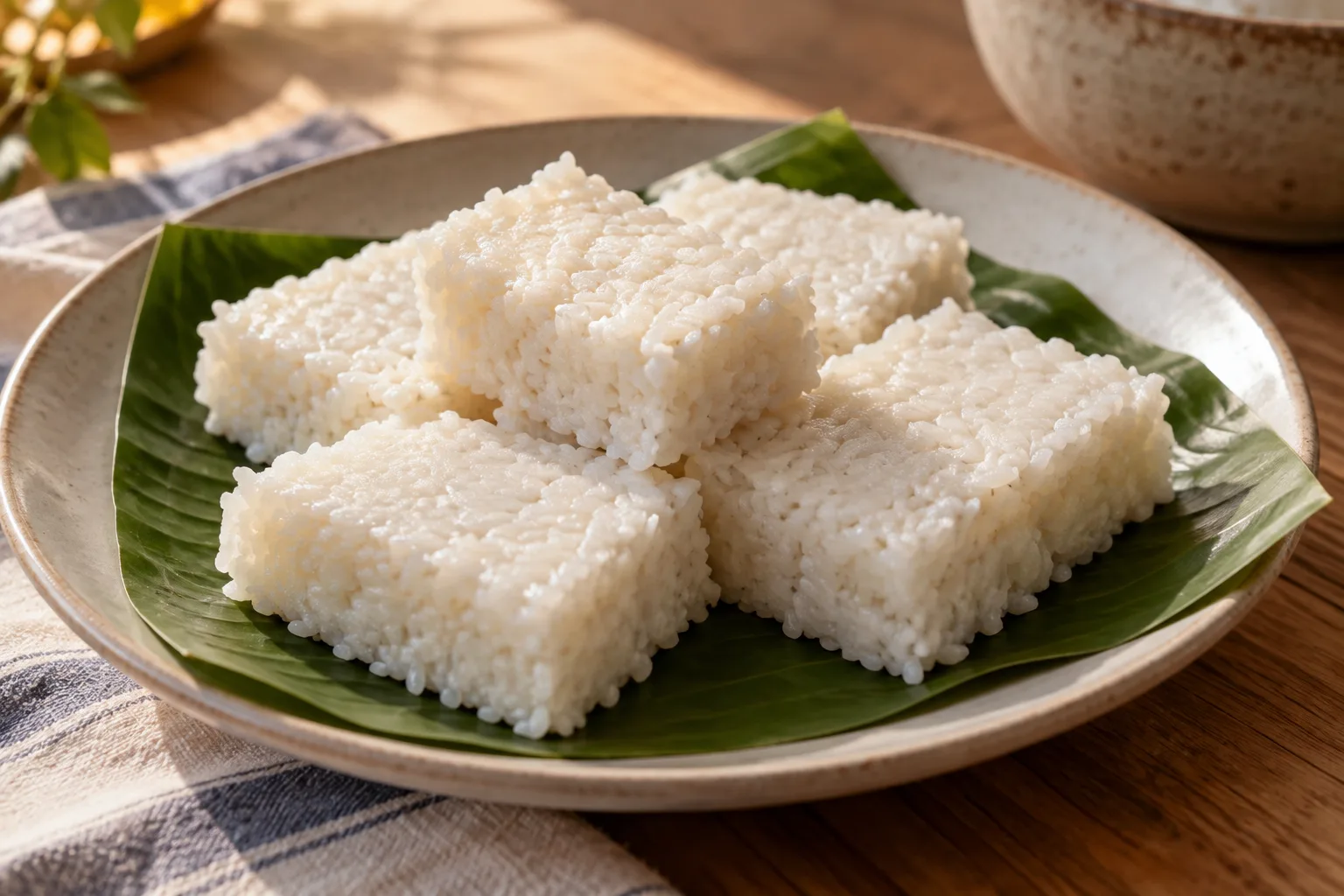
Kiribath, or coconut-milk rice, is closely associated with beginnings and auspicious occasions. It is served during Sinhala and Tamil New Year celebrations and at family events such as birthdays and weddings; in some homes it is also part of an ordinary breakfast. The cooked rice is shaped while warm and cut once it firms. It may be served with a savory onion-and-chilli sambol, another accompaniment, or a sweet partner. The dish’s cultural importance is well documented, but its presence does not make every serving a ceremony.
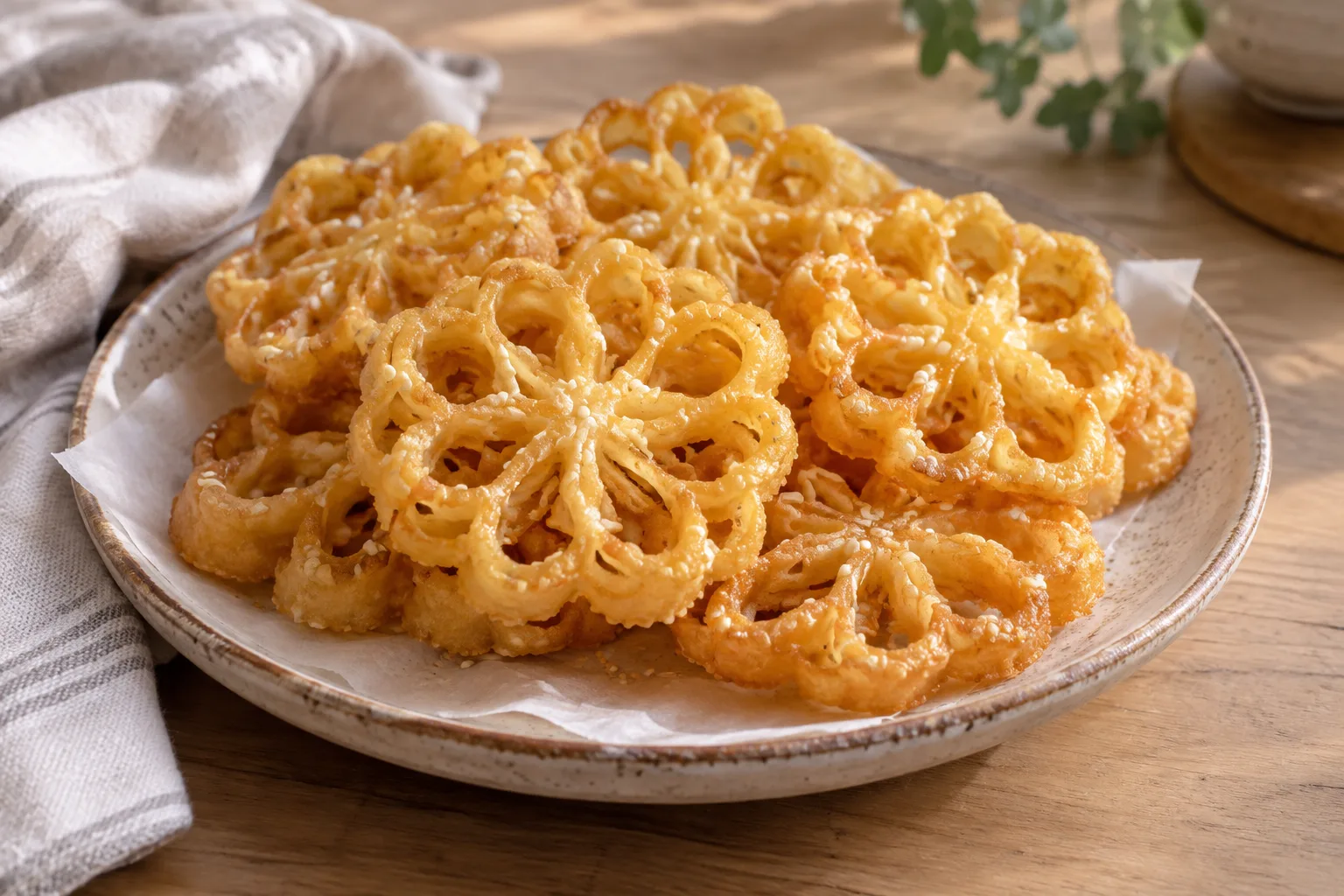
Kokis is associated with the April New Year festivities. A rice-flour and coconut-milk batter is formed into a delicate, patterned shape using a special metal mould and fried until crisp. It is served among festive foods and can be prepared in batches for the occasion. Its mild, lightly salted character also suits serving alongside tea or other snacks.
Wattalappam, a coconut custard sweetened with palm jaggery and scented with spices, is especially associated with Sri Lanka’s Muslim communities and with celebrations such as the end of Ramadan. These examples show that food can mark shared seasonal occasions while particular dishes also carry community associations. Skills and preferences are transmitted through household cooking, repeated preparations and the adaptation of recipes across generations.
Fermenting, shaping, reducing and steaming
Different preparations depend on distinct transformations. For appa, or hoppers, rice-based batter is fermented before cooking. A small rounded pan is tilted so the batter coats its sides, leaving a thicker center. The result is a crisp rim and softer middle. An egg may be cooked in the center of an egg hopper. The related name string hopper refers to a different preparation: rice-flour dough is pressed into fine strands, arranged in small nests and steamed.
Kiribath follows another sequence. Rice is first cooked until very tender, then combined with coconut milk and salt until cohesive. It is spread or pressed flat while hot, often on a plate or banana leaf, and cut after it sets. The method produces a shapeable rice dish rather than loose grains.
For ambul thiyal, fish is coated with a sour, peppery seasoning and cooked slowly as the liquid reduces. Gentle handling helps keep the pieces intact; the finished coating is concentrated rather than soupy. Kokis uses a different tool: a patterned mould is heated in oil, dipped into batter and fried to create a crisp rosette. These techniques—fermentation, pressing, reduction and mould-frying—are part of what makes the dishes recognizable.
Meals built from a base and its accompaniments
Rice and curry is a way of assembling a meal, not the name of a single standard curry. Rice provides a base, with curries and sides adding different ingredients and seasoning. A meal may include vegetables, lentils, fish or meat, alongside sambols and other accompaniments. The selection varies; there is no required number of bowls or fixed order that describes every household table.
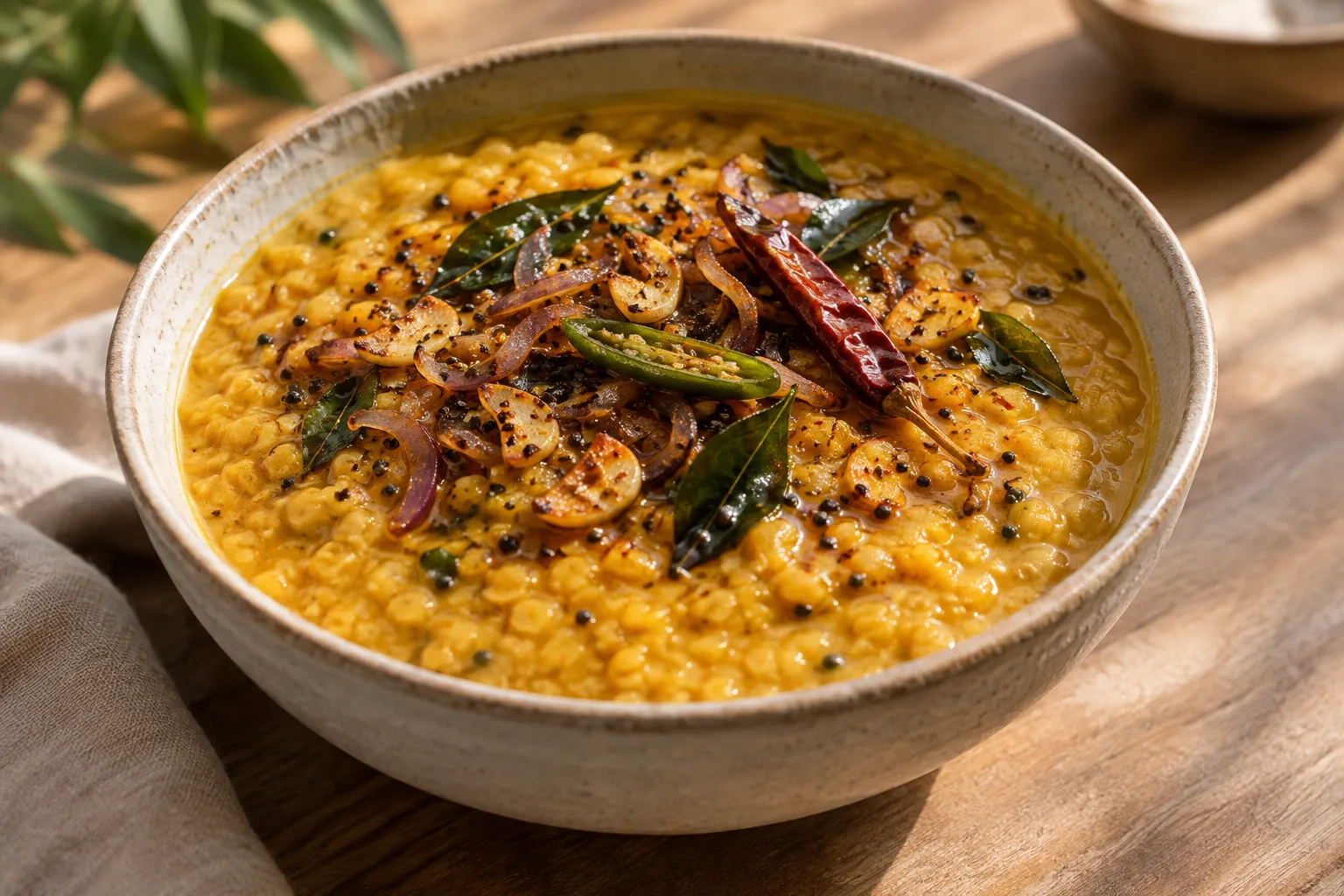
Kiribath is often served in cut pieces, with savory sambol or a sweet accompaniment. Its mild, compact texture contrasts well with strongly seasoned sides. Hoppers and string hoppers also rely on what accompanies them: curries, dhal or sambols can add moisture and flavor to their rice-based forms. Ambul thiyal is intensely seasoned, so it can be served in small portions alongside rice and milder dishes. These combinations demonstrate how one meal can bring together distinct preparations rather than one all-purpose sauce.
Shared eating can involve building each bite from the foods set out together. The dishes remain identifiable, but diners can combine them to taste. The composition changes with ingredients, community and occasion: an everyday meal, a celebratory breakfast and a snack table have different purposes. This flexible structure helps explain how familiar staples support many kinds of Sri Lankan meals.
A short vocabulary of Sri Lankan foods
These names refer to particular foods or ingredients; spellings and recipes can vary. They are useful starting points for recognizing different forms and functions in Sri Lankan cooking.
- Kiribath: Rice cooked with coconut milk until the grains bind, then often pressed flat and cut into pieces. It is associated with New Year and other auspicious occasions.
- Appa or hopper: A bowl-shaped preparation made from fermented rice batter, cooked with crisp edges and a soft center. An egg can be cooked in the middle.
- String hopper: A small steamed nest of fine rice-flour strands. Despite the shared name, it is made differently from a bowl-shaped hopper.
- Pol sambol: A coconut relish, commonly served as an accompaniment rather than as a curry.
- Ambul thiyal: A sour, reduced fish preparation associated with Sri Lanka’s southern coastal regions; goraka and black pepper are prominent in documented versions.
- Goraka: A dried sour fruit used in ambul thiyal, giving the preparation acidity and a dark appearance.
- Wattalappam: A coconut custard sweetened with palm jaggery and flavored with spices, particularly associated with Sri Lankan Muslim food traditions.
- Kokis: A crisp, patterned fried snack made with rice-flour batter and formed using a special mould, associated with New Year festivities.
One country, many cuisines
Coastal Cuisines
Coastal foodways include fish and other seafood, with preparations shaped by local ingredients and cooking methods. Ambul thiyal is documented as a sour, reduced fish dish associated with the southern coast; its goraka and pepper coating differs from a coconut-based curry. This example offers a specific coastal connection without treating every seaside community or recipe as the same.
Jaffna and the North
Jaffna is associated with Tamil food traditions and distinctive spice blends. These traditions sit within a broader history of connections between Sri Lanka and South India, while retaining local expressions. The region is not represented by a single dish or one fixed level of seasoning: recipes and preferences vary among cooks and households.
Kandy and the Central Highlands
The central highlands offer a useful contrast with coastal foodways. The available regional account describes vegetables as prominent in the highlands and notes that local food traditions reflect their setting. This is a broad regional perspective rather than a claim that all meals in Kandy or the surrounding highlands follow one pattern.
Cook