Documentary synthesis prepared with AI assistance. It does not replace specialist review or certify kitchen testing. · Updated 1 November 2026
Landscapes, staples and local variety
The Republic of the Congo lies in Central Africa, with an Atlantic coastline and an interior shaped by the Congo River and its tributaries. These landscapes matter at the table: freshwater fish is an important protein in the hinterland, while Pointe-Noire’s coastal position brings access to Atlantic fish and seafood. The difference is not a strict division between two cuisines, but a reminder that ingredients depend on where people live and what is available.
Many meals bring together a substantial staple and a more strongly seasoned accompaniment. Cassava appears as a root, flour, leafy vegetable and fermented preparation; maize flour is another basis for fufu. Fish, chicken and goat may accompany these staples in local-style restaurants, while sauces give a meal much of its character. Rice and plantains also feature as accompaniments.
There is no single plate that represents every household or community. Names and preparations cross national borders in the Congo Basin, and shared dishes should not be treated as exclusive to one country. Here, “Congolese” refers to the Republic of the Congo, also called Congo-Brazzaville to distinguish it from the neighbouring Democratic Republic of the Congo.
History, borders and culinary exchange
The modern country’s history helps clarify why its food is discussed alongside, but not collapsed into, that of its neighbour. The territory was known as Moyen-Congo and formed part of French Equatorial Africa. In 1958 it became an autonomous Republic of the Congo within the French Community; independence was proclaimed on 15 August 1960, with Brazzaville as the capital. The Republic of the Congo and the Democratic Republic of the Congo have separate political histories, even as the Congo River and the wider basin connect them.
Food traditions also travel across this region. Cassava-based staples, cassava-leaf preparations and leaf-wrapped cooking are found beyond national borders. Saka-saka is a familiar name in the Republic of the Congo, while pondu is used in some neighbouring contexts; those names and their usage vary. Shared presence does not establish an exclusive national origin, nor does it mean every version is identical.
Urban food life reflects other contacts as well. French-style bakeries, including some run by Lebanese immigrants, and Indian and Chinese restaurants are part of the documented city food landscape. These sit alongside local restaurants and roadside grills: an expanded urban offer, not evidence that local staples have simply been displaced.
Cassava, fish and the everyday pantry
Cassava is both an ingredient and a family of foods. The root can be served in dense pieces, made into flour for fufu, or transformed into chikwangue, a fermented cassava paste wrapped in leaves and steamed. Cassava leaves are cooked as a vegetable in saka-saka. These preparations differ in texture and use; they are not interchangeable names for one staple.
Fish reflects the country’s varied waters and methods of preserving food. River fish is important in inland communities, while coastal seafood is associated with Pointe-Noire. Salted and dried freshwater fish is also found in local markets and can flavour sauces and stews. Chicken and goat are among the meats served with cassava- or maize-based staples. Plantains provide another accompaniment, and safou, a purple-skinned fruit, is commonly boiled and salted.
Palm oil gives body to preparations such as cassava-leaf dishes, and pili-pili offers a separate source of chilli heat. Palm sap is fermented into palm wine. These ingredients form a useful picture of the pantry, not a fixed shopping list: a particular meal will use only some of them, according to its preparation and local availability.
Rich sauces, salt and contrasting textures
A plate often pairs a mild, filling staple with a more concentrated accompaniment. Cassava or maize fufu has a firm, neutral character beside a stew; cassava pieces and chikwangue serve a similar role in some meals. Sauces built around fish, leaves or meat bring savoury depth, while palm oil contributes richness. The contrast between a plain starch and a seasoned sauce is central to many of the documented combinations, although no one arrangement applies everywhere.
Saka-saka brings cassava leaves together with palm oil and salted fish in a rich, dense preparation. Salt fish also appears in tomato-and-onion sauces, and goat stew is served with fufu or cassava. Since preserved fish is already salty, its flavour is distinct from that of fresh fish; the finished seasoning depends on the particular preparation. Pili-pili is served on the side, allowing diners to add chilli to their own taste rather than making every dish equally hot.
Texture varies beyond the stewpot. Boiled and salted safou has a buttery pulp; plantains may be boiled, fried or roasted, changing from soft to crisp or browned. Fresh coastal seafood and preserved inland fish bring different flavours to the table, shaped by source and handling.
Foodways, celebration and transmission
Culinary knowledge is carried through everyday preparation: choosing how to transform cassava, cooking leaves until tender, or seasoning fish for a sauce. The range of cassava foods shows how one crop can become a dense root portion, a flour-based staple, a fermented paste or a cooked leafy dish. These forms belong to different preparations and have different textures at the meal.
One specifically documented occasion connects food and national memory beyond the country’s borders. The Republic of the Congo proclaimed independence on 15 August 1960. For Congolese diaspora communities in France and Belgium, the date is described as an occasion to cook dishes associated with the country and maintain a connection with it. This is a practice documented for those communities, not a claim that every family marks the date through food or celebrates in the same way.
Within urban life, roadside grills, local restaurants, bakeries and restaurants serving other cuisines offer distinct contexts for eating. They show how urban food practices can draw on local and outside influences at once. It is more accurate to describe this as variety and adaptation than as a simple replacement of home cooking. Particular dishes, settings and ways of sharing differ among households and communities.
Fermenting, steaming and preserving
Cassava’s different forms depend on different transformations. For chikwangue, cassava is fermented into a paste, wrapped in leaves and steamed. The result is dense and firm, suitable for eating alongside a savoury sauce. Fufu, by contrast, is a stiff porridge or dough made from cassava or maize flour. It offers a softer, more mouldable accompaniment. Keeping these methods distinct helps explain why both foods can appear on tables without being the same preparation.
Cassava leaves are cooked as part of saka-saka, often with palm oil and salted fish. Fish itself may be eaten fresh or preserved by salting and drying, practices that make it available in forms beyond the immediate catch. Cooking methods for freshwater fish include grilling, boiling and frying; the choice depends on the fish and dish rather than defining one national technique.
In liboké, seasoned fish or meat is enclosed in leaves and cooked by steaming or over embers. The wrapped preparation cooks within its parcel and is associated with food traditions across the Congo Basin, including the Republic of the Congo. Open-air grills offer another direct way of preparing fish and other foods. Each method belongs to a wider repertoire, not a complete description of the country’s cooking.
Staple and accompaniment at the table
A meal may be organised around a substantial base—cassava, fufu, chikwangue, maize or rice—with a sauce, stew or fish alongside it. The staple provides substance and a mild counterpoint to more strongly seasoned foods. Plantains may also accompany a stew or grilled food. There is no single obligatory pairing: the food served depends on the dish, the place and what is available.
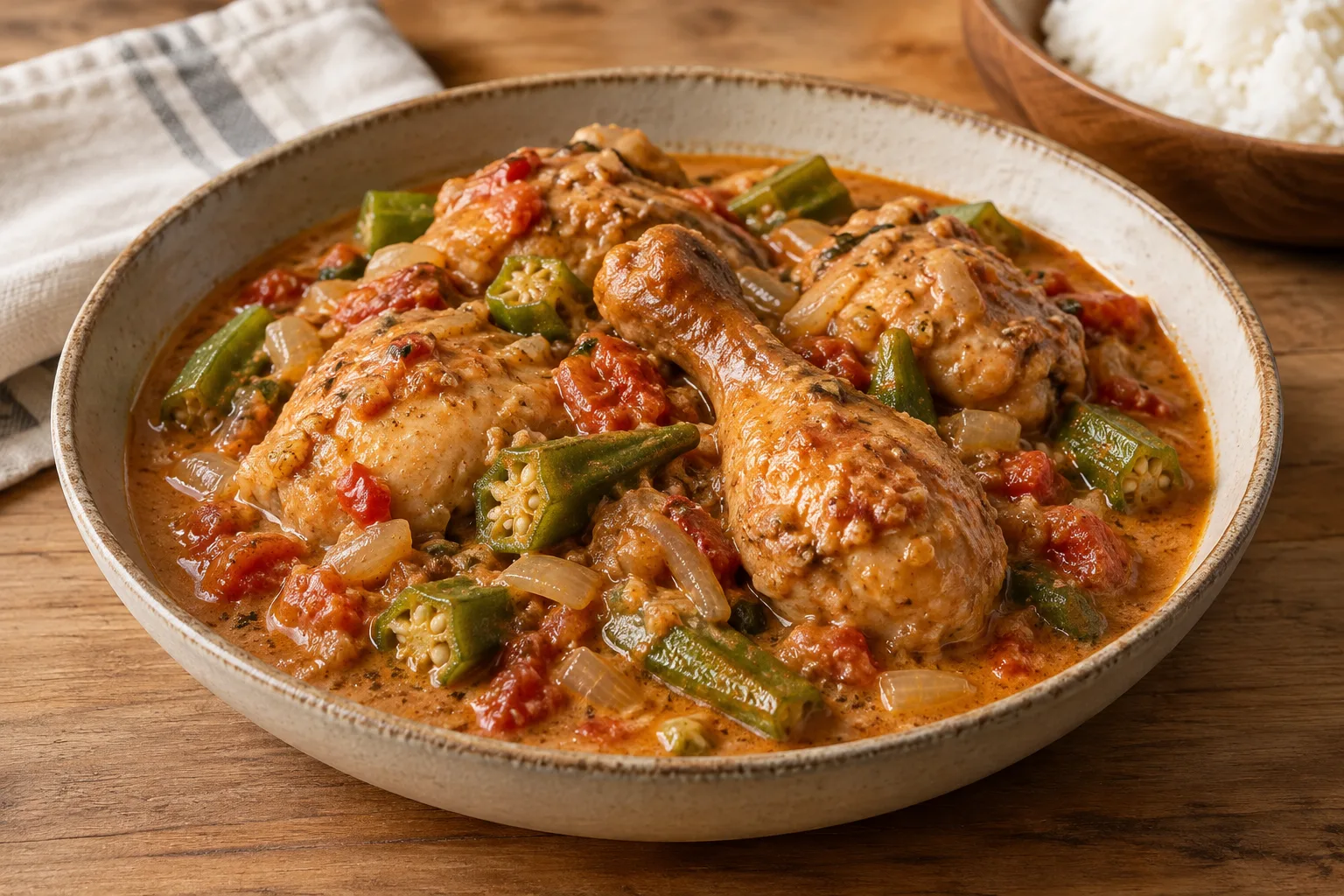
Local-style restaurants commonly offer chicken, fish or goat with a cassava- or maize-based staple. For many inland communities, freshwater fish is an important source of protein; in Pointe-Noire, the Atlantic makes fish and seafood part of the coastal offer. Roadside grills provide a more informal setting for grilled foods, while bakeries and restaurants serving French, Indian or Chinese cuisines form part of the wider urban choice.
The documented 15 August cooking tradition among some Congolese people in France and Belgium is a particular example of a meal carrying memory and connection. It should not be turned into a universal national ritual. More generally, the table can bring together a shared staple and a sauce or fish dish, but the people present, the occasion and local ingredients shape how that meal is served.
A glossary of foods and preparations
These terms identify particular ingredients, staples and methods documented in the Republic of the Congo. Some are also used in neighbouring countries, where names and versions may differ. The glossary distinguishes the food itself from the technique used to prepare it.
- Fufu: A stiff porridge or firm dough made with cassava or maize flour, served as a staple alongside sauces and stews.
- Chikwangue: Fermented cassava paste wrapped in leaves and steamed; a firm accompaniment to savoury dishes. Kwanga is a related name used in the region.
- Saka-saka: A dense preparation of cassava leaves, commonly cooked with palm oil and salted fish. The name pondu is also used in neighbouring contexts; terminology varies.
- Liboké: A method of wrapping seasoned fish or meat in leaves and cooking it by steaming or over embers.
- Pili-pili: A hot chilli sauce commonly served on the side.
- Safou: A purple-skinned fruit, often boiled and salted; its cooked pulp is buttery in texture.
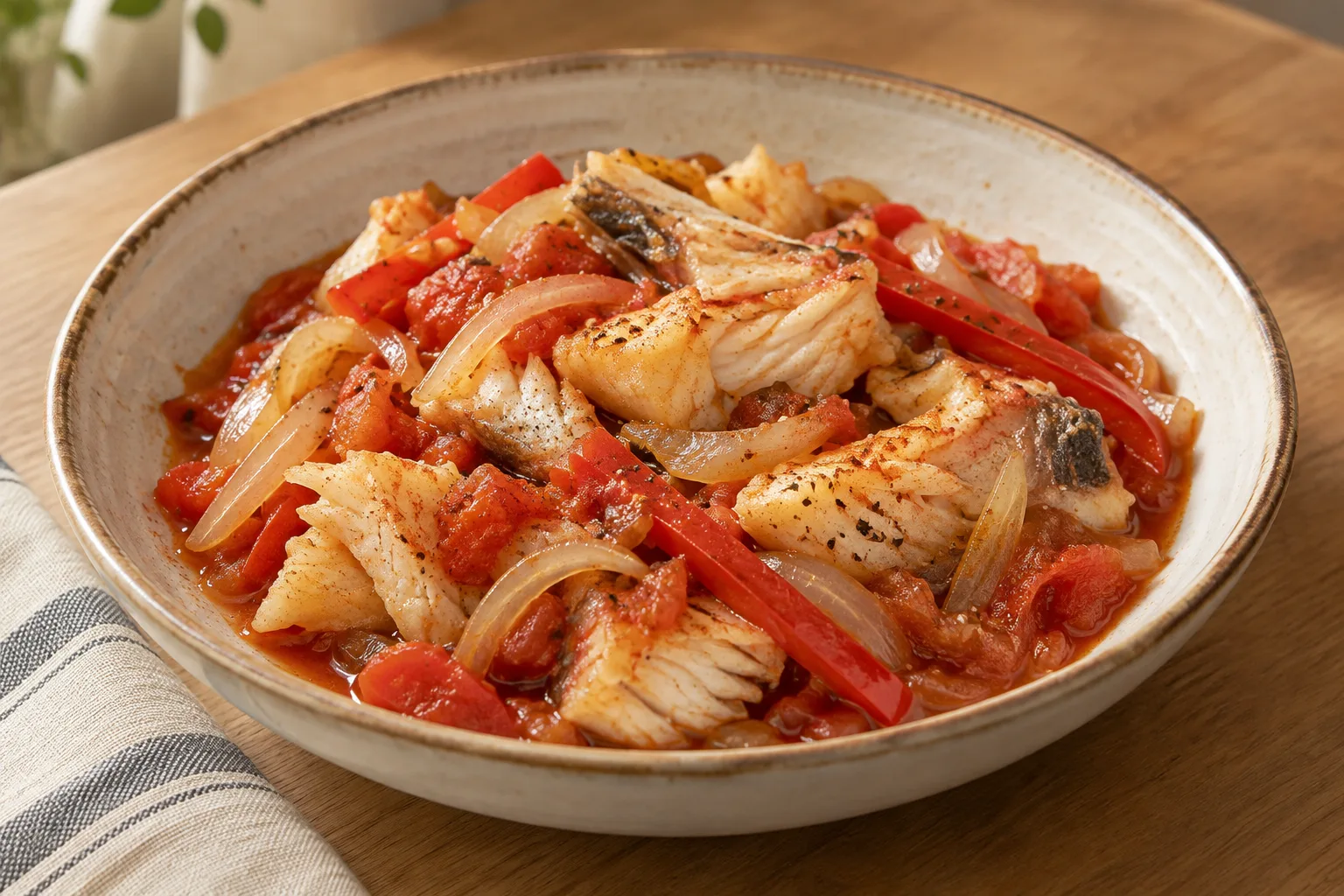
- Makayabu: A salted-fish preparation. A Congo-Brazzaville version is described as desalted fish simmered with tomato, onion and chilli, and may be served with rice, fufu or chikwangue.
One country, many cuisines
Brazzaville
Brazzaville offers an urban setting where local restaurants and roadside grills exist alongside French-style bakeries and restaurants serving other cuisines. Research on eating in the city includes a study of urban cuisine in Brazzaville, making the capital a documented context for changing food practices; it should not be treated as a stand-in for the whole country.
Pointe-Noire
Pointe-Noire’s Atlantic coastal position distinguishes its access to fish and seafood. This coastal offer contrasts with the importance of freshwater fish described for inland communities, though it does not mean that every meal in the city is seafood-based or that coastal foodways form a single uniform tradition.
Riverine interior
Inland communities connected to the Congo River and its tributaries rely in part on freshwater fish as a source of protein. Fish may be eaten fresh or preserved by salting and drying. These documented patterns reflect access to waterways and do not describe every inland community or determine a single preparation.
Cook