Documentary synthesis prepared with AI assistance. It does not replace specialist review or certify kitchen testing. · Updated 12 November 2026
Atlantic Coast and Inland Foodways
Guinea-Bissau lies on the Atlantic coast of West Africa, between Senegal to the north and Guinea to the east and south. Its foodways reflect this meeting of coastal and inland environments: seafood is an important part of the diet, while crops and staple foods vary with locality. Rice is particularly associated with coastal meals; inland diets also make substantial use of millet and other grains, as well as cassava, yams and maize.
Rather than one national menu, a useful picture is a collection of overlapping food traditions. Rice, roots or grain commonly provide a substantial base, with a soup, stew or sauce supplying fish, meat, vegetables or legumes. Fish, shrimp and shellfish are among the foods associated with the coast; crops such as peanuts, beans and tropical fruits broaden the pantry. Portuguese colonial history forms part of the story, but does not replace the West African roots of these foodways. The balance of ingredients and dishes changes across communities and households, so a dish described nationally should not be mistaken for a uniform daily meal.
Agriculture, Exchange and Colonial Influence
The foundations of Guinea-Bissau’s cuisine belong to wider West African food traditions. Rice, millet, cassava and palm products are among the staples described in accounts of the region, with fishing along the coast and rivers contributing to the food supply. Rice cultivation in Guinea-Bissau has a history that predates Portuguese colonial rule; coastal mangrove rice is one documented cultivation system, shaped by local water conditions and farming knowledge. These histories caution against treating rice as a crop introduced to the country by colonial rule.
Portuguese rule, which ended with independence in 1974, nevertheless influenced agriculture and cooking. Sources describe colonial encouragement of peanut production and the incorporation of some Portuguese ingredients and techniques into existing food traditions. Cashews are now an important cultivated crop, though they are also grown for export. Rice consumption has included imported rice, alongside locally grown rice. These facts describe shifts in production and exchange, not a single origin story for every dish. Local practices continued while ingredients and influences moved through changing trade and political relationships. Present-day dishes are best understood through this layered history rather than assigned to one outside influence.
Grains, Roots, Legumes and Coastal Harvests
Rice is a familiar base for meals, especially in coastal areas, where it is commonly served with soups and stews. Inland, millet is also significant; millet appears as couscous and in grain preparations, while cassava, yams, sweet potatoes and maize offer other substantial foods. The balance depends on location and availability, and rice is not the only staple. Black-eyed peas and other legumes contribute to the pantry, including Bambara and Hausa groundnuts, both distinct from the familiar peanut.
The coast and rivers supply fish, shrimp and shellfish. Vegetables such as onion, tomato, okra and peppers appear in dishes, alongside palm oil and peanuts, which are used in sauces and stews. Cashew nuts are widely grown, and the cashew fruit is used for juice and, when fermented, alcoholic drinks. Other documented drinks draw on baobab fruit and hibiscus. These ingredients do not necessarily appear together: each preparation reflects its own combination of crops, fishing, trade and household preference. The pantry is varied, not a fixed list of ingredients required in every region or recipe.
Saucy Stews, Peppers and Contrasting Textures
A common pattern is a staple food served with a flavorful, often moist accompaniment. Rice can sit alongside a fish stew, a vegetable-rich sauce or a peanut-based preparation; roots and grains provide other ways to make a meal substantial. Peanut sauces give stews body and a rounded, nutty taste, while palm oil is another important ingredient in sauces and cooked dishes. Fish and shellfish bring coastal flavors, and onions, tomatoes, okra and peppers contribute sweetness, acidity, vegetal notes or heat depending on the dish.
Chiles and other peppers are used, as are seeds of Aframomum melegueta, known in English as grains of paradise or Guinea pepper. Their presence does not mean every dish is hot, or that one level of heat defines the national cuisine. Texture varies too: a stew may be loose and brothy or thickened into a substantial sauce; cooked rice and soft roots contrast with pieces of fish or meat. The country’s food is therefore better described through its specific combinations than by a single label such as “spicy.” Sweet peanut preparations and fruit drinks offer different flavors from savory stews.
Hospitality, Family Gatherings and Celebrations
Food is shared with family, guests and community members, and meals accompany important gatherings. Weddings, births, circumcision ceremonies and funerals are among the occasions associated with preparing food for others. Such meals are meaningful social occasions, but the available descriptions do not establish one shared ceremonial menu or sequence for every community. Palm wine and drinks made from cashew fruit are also associated with gatherings in accounts of local food culture.
Some national celebrations are linked with particular foods. One documented example connects 12 September, the birthday of independence leader Amílcar Cabral, with yassa chicken: chicken prepared with mustard and citrus and cooked with onion. This is an association reported for a celebration, not a requirement followed by every household. Food traditions are also sustained through ordinary preparation and sharing, not only festival meals. Recipes and preferences can be carried within families and communities while changing with ingredients and circumstance. Hospitality and communal eating are important themes, but they do not imply identical customs across Guinea-Bissau’s many foodways.
Simmering, Grilling, Frying and Fermenting
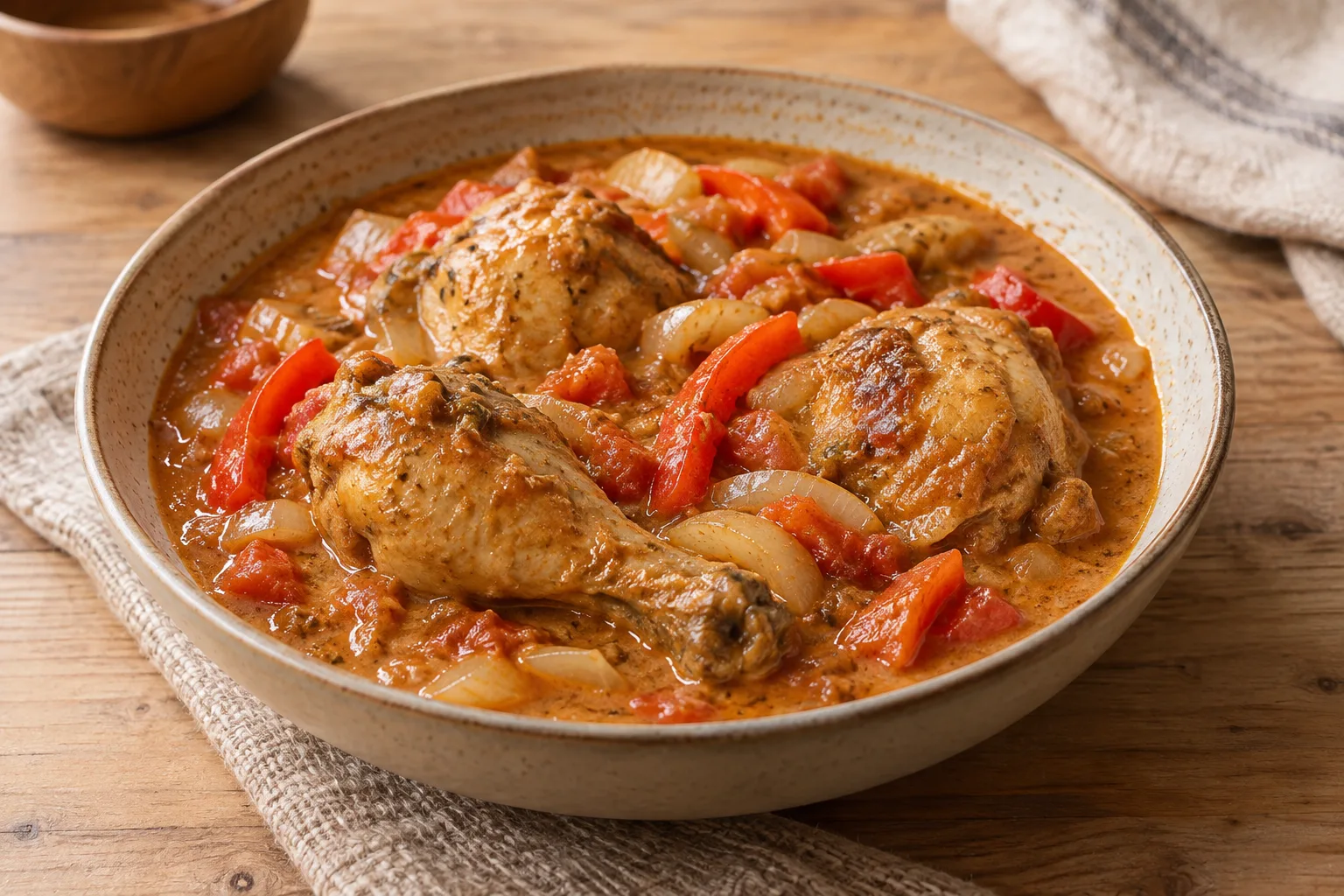
Stewing is a versatile way to bring meat or fish together with vegetables and a seasoned liquid or sauce. In caldo de mancarra, peanut forms the basis of a substantial sauce, often paired with chicken and served with rice. Another documented preparation, caldo de tchebem, combines fish with palm-fruit extract, okra and vegetables. These examples show how the cooking liquid and accompanying staple help define a dish without making every household’s method identical.
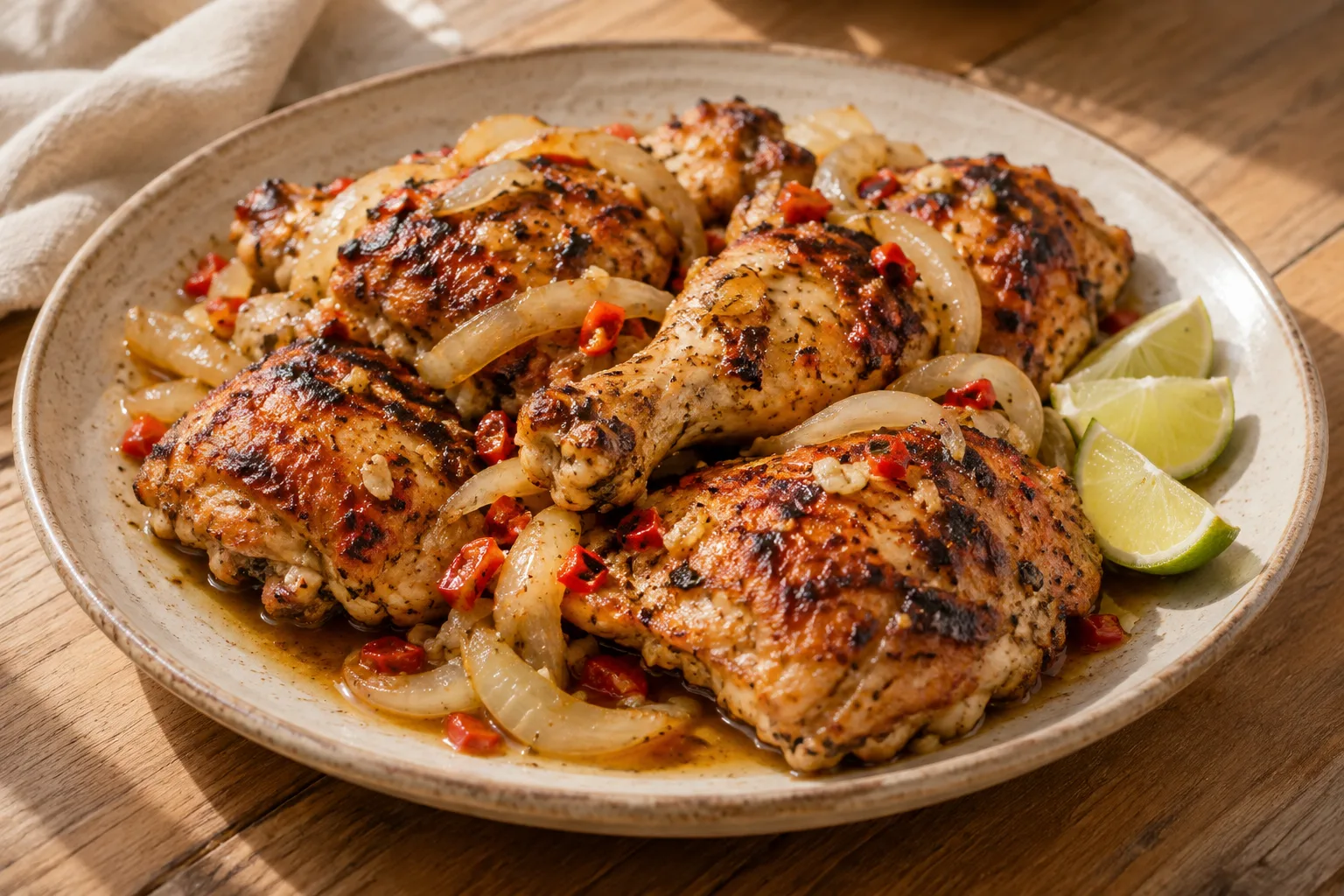
Other techniques include grilling or otherwise cooking marinated chicken, frying cassava and making fried banana fritters. In cafriela de frango, chicken is associated with a marinade of lemon, garlic, onion and spices; accounts describe grilled or combined cooking methods. Fruit can be pressed for juice, while cashew juice and palm sap can be fermented into alcoholic drinks. These are distinct processes for different ingredients, not steps in one general method. The cited food accounts do not support assigning a single traditional utensil or exact cooking time to the country as a whole. What they do show is a practical range of transformations: simmering, sauce-making, grilling, frying, juicing and fermenting.
Staples and Shared Accompaniments
Many meals bring a staple together with a shared or accompanying soup, sauce or stew. Rice is a common base, particularly in coastal food descriptions; millet and root crops also feature, especially in accounts of inland diets. A dish’s accompaniment may include fish, meat, vegetables or peanut sauce. This flexible arrangement accommodates different local products without establishing one national menu or a rule that every meal must contain the same foods.
Family and community gatherings are documented occasions for shared food, and meals may include local drinks as well as prepared dishes. Some general accounts describe three meals a day, but this is not enough to establish identical schedules throughout the country. Nor does it establish a national rule for serving order, seating or whether people eat with their hands. It is more accurate to describe a pattern of staple foods and accompaniments than to prescribe table customs where they are not documented. The social importance lies in the act of sharing and the dishes prepared for a particular occasion, while details vary by household and community.
A Short Glossary of Dishes and Drinks
These terms name particular dishes and products documented in Guinea-Bissau. Spellings can vary in written accounts, and the descriptions identify recognizable preparations rather than one definitive household recipe.
- Caldo de mancarra: A peanut-based stew, often made with chicken and served with rice. Mancarra refers here to peanut.
- Caldo branco: A fish stew served with rice.
- Caldo de tchebem: A fish preparation with palm-fruit extract, okra and other vegetables, commonly served with rice.
- Djambo: A stew made with sweet-potato leaves, peanuts and beef or chicken.
- Sigá: A stew or sauce with palm oil and okra, made with meat or fish and commonly served with white rice.
- Cuscús de mijo: Millet couscous, a grain preparation associated with village food traditions.
- Canjira: An alcoholic drink made from fermented cashew juice; unfermented cashew juice is a separate drink.
- Cafriela de frango: A chicken dish associated with lemon, garlic, onion and spices, prepared by grilling or a combination of cooking methods.
- Yassa: A chicken preparation with mustard, citrus and onion, associated in one account with a national celebration.
The names reflect a culinary landscape shaped by local ingredients and a Portuguese-language history; they should not be taken to imply that every version is identical.
One country, many cuisines
Atlantic Coast
Coastal foodways give rice a prominent place and draw on fish, shrimp and shellfish from the Atlantic and river environments. Stews and soups can accompany rice with seafood, vegetables and seasonings, while the ingredients available vary by locality and fishing. This broad description identifies a documented coastal pattern, not a single menu shared by every coastal community.
Inland Areas
Inland food descriptions emphasize millet and other grains alongside cassava, yams and maize, with additional roots and legumes contributing to meals. Rice is also part of the country’s foodways, but the broad coastal–inland contrast in staples does not support dividing the interior into smaller culinary regions. These foods and their relative importance vary with local cultivation and availability.
Cook