Documentary synthesis prepared with AI assistance. It does not replace specialist review or certify kitchen testing. · Updated 31 October 2026
Mountain Landscapes and a Varied Food Culture
Kyrgyzstan is a landlocked country in Central Asia, and its mountain terrain is an important setting for understanding many of its food traditions. Pastoral livelihoods made livestock a major source of nourishment, while cold seasons and travel encouraged filling meals built around meat, dairy, grain, and dough. These foundations remain visible, but they do not account for every dish eaten across the country.
There is no single menu that represents every community or region. Beshbarmak and kuurdak are strongly associated with Kyrgyz traditions; noodles, dumplings, breads, and rice dishes also belong to a wider Central Asian food culture. The country’s cities and communities bring these traditions into contact. Karakol is particularly associated with Dungan-influenced ashlyan-fu, while Osh’s food culture includes strong Uzbek connections and pilaf. In Naryn, a dish of fine noodles and meat bears the city’s name.
A meal may be shaped by where it is eaten, who prepares it, and whether it is an everyday dinner or a gathering for guests. The result is a cuisine with a recognizable pastoral foundation and meaningful local variation—not a collection of dishes with rigid national boundaries.
Pastoral Foundations and Culinary Exchange
Historically, many Kyrgyz communities relied on mobile pastoral livelihoods. Livestock supplied meat and milk, while grains and flour supplemented the diet when available or acquired through exchange. Cooking practices included boiling and frying, and the drying or fermentation of dairy helped preserve food. This history is an important context for the prominence of meat, noodles, breads, and dairy, though it should not be taken as a complete description of modern eating habits.
Kyrgyzstan has also been a meeting place for culinary traditions. Foods shared across Central Asia—including lagman, manty, samsa, and pilaf—are prepared and eaten in the country, with local variations. Dungan and Uyghur traditions are especially visible in noodle dishes; pilaf has strong Uzbek associations and is widespread beyond Uzbekistan. Russian and Soviet-era influences are also part of the broader food environment, particularly in urban settings, where soups, salads, and bakery foods are among the foods encountered.
Shared dishes tell a history of contact, adaptation, and community, not necessarily a story of exclusive origin. A dish may be familiar across borders yet carry a particular local identity through its ingredients, preparation, or place in social life. Karakol’s ashlyan-fu and Osh’s pilaf traditions illustrate how a town’s food culture can express this layered history.
Meat, Flour, Dairy, and Preserved Foods
The traditional pantry centers on meat, dairy, grain, and dough. Lamb or mutton and beef are common; horse meat appears in dishes and sausages associated with special meals. Depending on the place and household, other meats may also be eaten. Onions, potatoes, carrots, and seasonal vegetables accompany many preparations, while rice is used in pilaf and flour becomes noodles, dumplings, bread, and pastries.
Dairy is more than a fresh ingredient. Milk is made into yogurt-like products, cream, curds, cheeses, and dried sour-milk balls. Kurut is a compact, dried form of fermented milk; kaymak is a rich cream, and zhүүrat is a yogurt-like product. Kymyz, fermented mare’s milk, is a distinctive drink associated with pastoral life. Such foods connect the pantry to livestock and to methods of transforming or preserving what milk provides.
Bread is a regular presence at meals. Nan is a round, flat loaf, while boorsok consists of small pieces of dough fried in oil. Seasonal fruits and vegetables broaden the everyday diet, and bazaar food culture brings produce and baked goods into view. The pantry is not only a list of ingredients: it reflects preservation, local availability, and the practical value of foods that can sustain a household or be served to guests.
Savory Broth, Fermented Tang, and Contrasting Textures
Many familiar Kyrgyz dishes draw their flavor from meat, rendered fat, broth, onions, and the texture of dough. This is not a rule that every dish is mild or identical. Black pepper, garlic, tomatoes, peppers, vinegar, and fresh herbs appear in different preparations and can shift a dish from warm and savory to sharp or spicy. Local cooks and communities make their own choices about seasoning and balance.
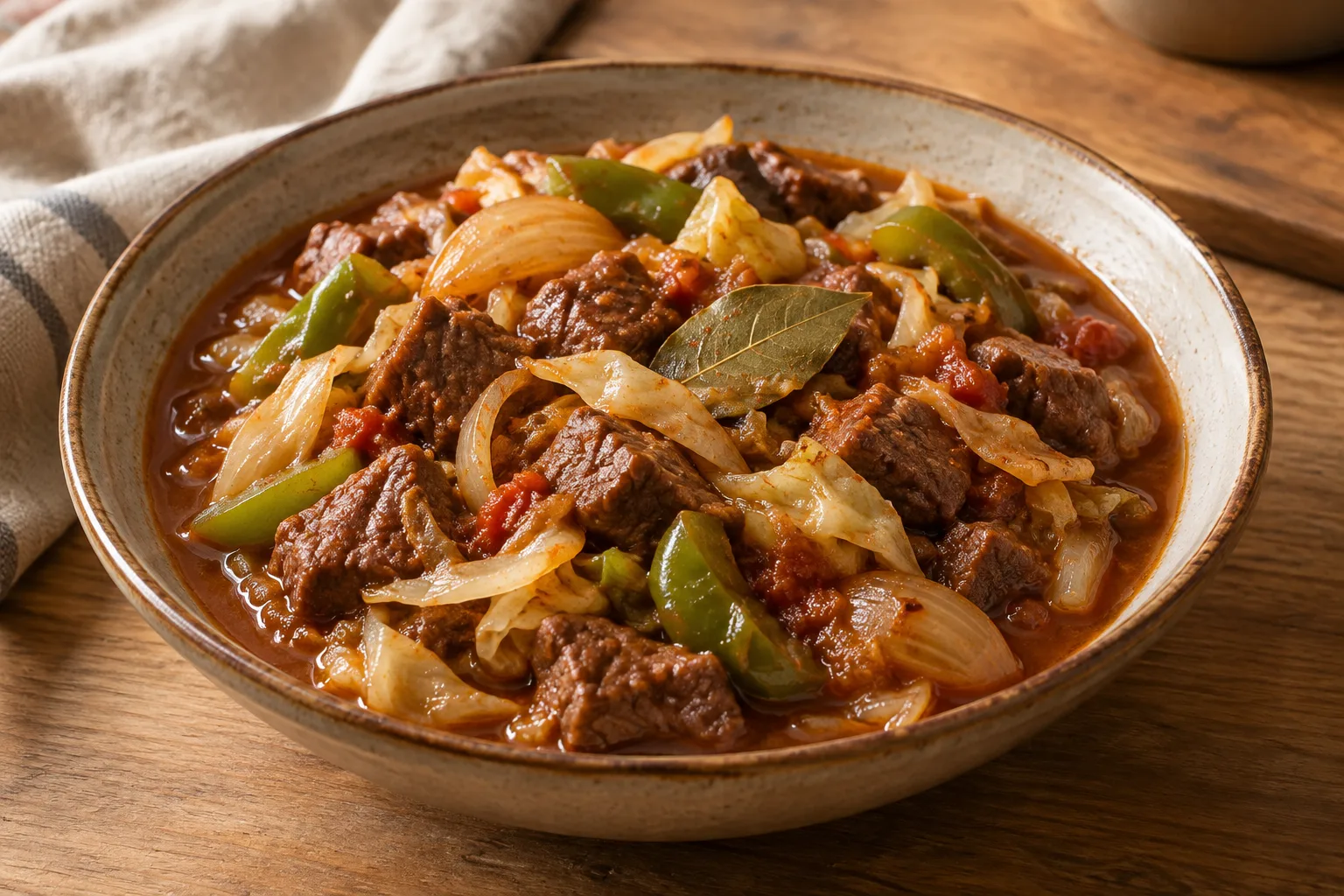
Beshbarmak combines boiled meat with broad noodles and onion-rich broth. Its texture is soft and substantial, with the noodles carrying the meat juices. Kuurdak, made from fried meat and onions, has a more concentrated, browned character; some versions include potatoes or other vegetables. Shorpo is a meat broth served as soup, while lagman pairs noodles with meat and vegetables in a broth or a less-soupy sauce.
Karakol’s ashlyan-fu offers a different balance: cold noodles, vinegar, and a tangy, sometimes spicy character, with Dungan culinary connections. Fermented dairy adds another register, from the sourness of kymyz to the concentrated tang of kurut. Across these dishes, broth, fat, acidity, and dough create distinct experiences—from a gentle soup to crisp-edged fried bread or cold, sharply seasoned noodles.
Hospitality, Celebrations, and Everyday Transmission
Food has an important place in hospitality and social life. Guests may be welcomed with tea, bread, and boorsok, while a larger gathering can bring several dishes to the table. Beshbarmak is strongly associated with celebrations and shared meals, although it is also eaten in family settings. Its name is commonly translated as “five fingers,” referring to a traditional way of eating the dish by hand. Today, utensils may also be used.
In some documented settings, the serving of meat carries social meaning. Particular cuts may be offered according to age, standing, or local custom; these practices vary and should not be treated as universal rules. The care given to a guest and the act of sharing food are more broadly recognizable themes than any single fixed arrangement.
Knowledge also passes through everyday work: making dough, shaping noodles, preparing bread, or transforming milk into fermented and dried foods. Seasonal pastoral life is associated with kymyz, and summer pasture settings can make dairy traditions especially visible. At Nooruz, sumolok is documented as a customary food. These examples show how food can connect household practice, seasonal change, and celebration, without suggesting that every family observes a tradition in the same way.
Boiling, Frying, Steaming, and Baking
Kyrgyz cooking uses different techniques to create distinct dishes from familiar ingredients. Boiling meat can yield both a main ingredient and a broth. In beshbarmak, meat is boiled, noodles are cooked, and the components are brought together with onion and broth. Shorpo makes the broth itself central. These preparations show how liquid from cooking can have a role at the table rather than being discarded.
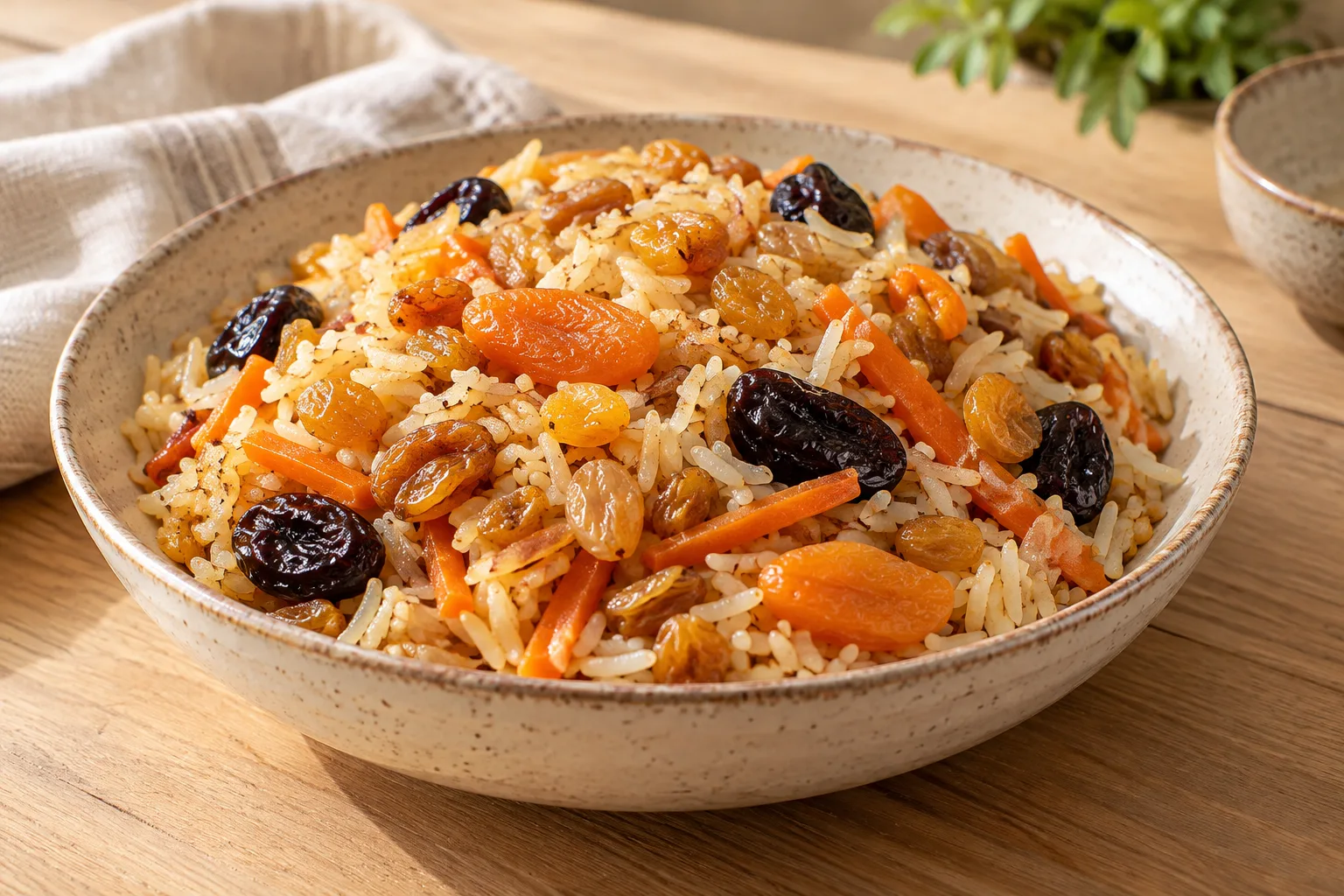
Frying gives kuurdak its characteristic contrast with boiled meat dishes: pieces of meat are cooked with onions, and potatoes may be included in some versions. Pilaf is made in a large kazan, where rice is cooked with meat, carrots, and onions. For breads and pastries, baking and frying offer different results. Nan is baked in a clay oven; boorsok is fried dough, and samsa are baked filled pastries.
Dough is also steamed. Manty are filled dumplings, commonly made with meat and onion, and oromo is a filled sheet of dough rolled and steamed. Noodles may be hand-shaped or stretched, as in some lagman traditions, and can be served in soup or with a thicker topping. Boiling, frying, steaming, and baking are not interchangeable steps: each gives the food a different texture, from tender dumpling wrappers to browned meat or crisp pastry.
The Shared Table and Occasions for Eating
A meal may be served communally or as individual portions, depending on the household, setting, and dish. The word dastorkhan refers to the table or gathering space where friends and guests come together. Traditional descriptions include low tables and seating on the floor, but arrangements vary across homes and contemporary restaurants. Bread is a frequent presence, and tea is part of hospitality and everyday food culture.
For a celebration or family gathering, a large dish such as beshbarmak can become the focus of a shared meal. Bread, small dishes, and tea may accompany a succession of foods, while a bowl of soup or a portion of manty can form a more everyday meal. In rural homes and yurt-camp settings, visitors may encounter home-cooked soups, rice dishes, breads, and dairy served in a convivial setting. These experiences are examples, not a prescription for how all meals are arranged.
A table’s meaning lies as much in the occasion as in its dishes. Welcoming guests, eating with family, and sharing food can shape how a meal is offered. Customs of seating or distributing particular cuts of meat are documented for some settings, but should not be generalized to every household. The shared table is a useful way to understand hospitality while leaving room for contemporary habits and local variation.
A Glossary of Foods and Table Terms
These terms identify particular foods, drinks, and settings found in Kyrgyzstan. Some are strongly associated with Kyrgyz traditions; others are shared across Central Asia or connected to specific communities. Recipes and serving styles can differ between households and places.
- Beshbarmak: Boiled meat served with broad noodles and broth, closely associated with celebratory and shared meals.
- Kuurdak: A dish of fried meat and onions; potatoes or other vegetables may appear in some versions.
- Lagman: Noodles served with meat and vegetables, either in broth or with a thicker sauce; part of a wider regional tradition.
- Ashlyan-fu: A cold, tangy noodle dish with Dungan connections, especially associated with Karakol.
- Manty: Filled dumplings cooked by steaming, commonly containing meat and onion, with other fillings also found.
- Kurut: Small pieces or balls of dried fermented milk.
- Kymyz: Fermented mare’s milk, associated with pastoral food traditions.
- Boorsok: Small pieces of dough fried in oil and served as bread or hospitality food.
- Dastorkhan: The table or gathering space where guests and friends are welcomed.
- Kazan: A large cooking vessel used, among other preparations, for pilaf.
The terms point to the range of Kyrgyzstan’s food culture: pastoral products and shared dishes, local specialties and everyday staples. Their meanings are most useful when understood alongside the place and occasion in which the food is prepared.
One country, many cuisines
Karakol and Dungan Food Traditions
Karakol is especially associated with ashlyan-fu, a cold, tangy noodle dish connected with Dungan food traditions. The city’s food culture also includes hand-shaped noodles and varied lagman styles associated with Dungan and Uyghur communities. These dishes make Karakol a distinctive example of culinary diversity within Kyrgyzstan; they describe a local food identity, not the whole country or an exclusive origin for shared regional foods.
Osh and the Cuisine of the South
Osh is associated with pilaf, samsa, and shashlik in a food culture with a strong Uzbek presence. Pilaf combines rice, meat, carrots, and onions, and is widely eaten across Central Asia while retaining strong Uzbek associations. Samsa and grilled meat also belong to a broader regional repertoire. These associations describe an identifiable local context without claiming that the dishes belong exclusively to Osh or that every southern meal follows the same pattern.
Naryn and Fine Noodles with Meat
The city of Naryn is associated with naryn, a preparation of very fine noodles mixed with small pieces of meat. The dish offers a local example of the importance of meat and dough in Kyrgyz food traditions. Its association with the city identifies a documented specialty rather than a boundary: the name does not mean it is made only in Naryn, nor does the dish represent every meal eaten there.
Cook