Americas · Northern America

Canada

Canada’s food traditions are regional and shaped by Indigenous communities, French and British inheritances, and successive migrations. Explore Montreal bagels and Quebec’s maple-syrup cooking, Acadian dishes in New Brunswick, and documented culinary influences in British Columbia through specific ingredients, preparations, and occasions rather than a single national menu.

Food and eating habits

How people eat in Canada

50 indicators exploring everyday meals, ingredients and food culture. Information is completed progressively from documented evidence.

0 of 50 indicators with documented information

Not all data are comparable: food supply, purchases and intake are different measures. Check the period, population and method for each finding. Qualitative descriptions do not establish percentages or amounts.

Timing and company

0/8
Timing and company — Canada
IndicatorFindings and context
Meal times Awaiting research
Meals per day Awaiting research
Meal duration Awaiting research
Daily energy distribution Awaiting research
Weekdays and weekends Awaiting research
Eating at home and away Awaiting research
Cooking frequency Awaiting research
Eating together Awaiting research

Pantry and recipes

0/2
Pantry and recipes — Canada
IndicatorFindings and context
Most consumed ingredients Insufficient data in the sources consulted
Ingredient prevalence in recipes Insufficient data in the sources consulted

Cereals and plant foods

0/6
Cereals and plant foods — Canada
IndicatorFindings and context
Cereals and cereal products Awaiting research
Bread Awaiting research
Pulses Awaiting research
Vegetables Awaiting research
Fruit Awaiting research
Potatoes, roots and tubers Awaiting research

Protein foods

0/5
Protein foods — Canada
IndicatorFindings and context
Meat Awaiting research
Fish and seafood Awaiting research
Eggs Awaiting research
Milk and dairy products Awaiting research
Protein sources Awaiting research

Fats, flavours and condiments

0/3
Fats, flavours and condiments — Canada
IndicatorFindings and context
Cooking fats Awaiting research
Herbs and spices Awaiting research
Sauces and condiments Awaiting research

Meal composition

0/6
Meal composition — Canada
IndicatorFindings and context
Breakfast composition Awaiting research
Main meal composition Awaiting research
Dinner composition Awaiting research
Appetisers and snacks Awaiting research
Desserts and sweets Awaiting research
Portion sizes Awaiting research

Techniques and equipment

0/5
Techniques and equipment — Canada
IndicatorFindings and context
Cooking techniques Awaiting research
Vegetable preparation Awaiting research
Food preservation Awaiting research
Fermented foods Awaiting research
Kitchen equipment Awaiting research

Drinks

0/3
Drinks — Canada
IndicatorFindings and context
Everyday drinks Awaiting research
Coffee and tea preparation Awaiting research
Drinks with meals Awaiting research

Nutrition and dietary patterns

0/3
Nutrition and dietary patterns — Canada
IndicatorFindings and context
Energy and nutrients Awaiting research
Salt and sugars Awaiting research
Dietary patterns Awaiting research

Shopping, prices and waste

0/7
Shopping, prices and waste — Canada
IndicatorFindings and context
Food expenditure Awaiting research
Cost of a common basket Awaiting research
Cost of specific meals Awaiting research
Grocery shopping locations Awaiting research
Shopping frequency Awaiting research
Prepared food and delivery Awaiting research
Household food waste Awaiting research

Seasons and celebrations

0/2
Seasons and celebrations — Canada
IndicatorFindings and context
Seasonal produce Awaiting research
Celebration food Awaiting research
Explore its cuisines

Canada’s Regional Foodways: Migration, Community, and Place

Documentary synthesis prepared with AI assistance. It does not replace specialist review or certify kitchen testing. · Updated 11 November 2026

A country of distinct foodways

Canada’s size and varied landscapes are reflected in food traditions that differ by province, community, and local ingredients. There is no single dish that can stand for the whole country. Quebec’s French-language foodways, Acadian cooking in New Brunswick, Indigenous food traditions, and the changing urban cuisines shaped by migration each have their own histories and contexts.

The examples here are specific entry points, not a complete map. In Montreal, the bagel connects a city’s baking culture with Jewish migration from eastern Europe. In New Brunswick, Acadian dishes such as poutine râpée and chicken fricot use potatoes and stewed meats in forms distinct from similarly named foods elsewhere. British Columbia’s documented food landscape includes Pacific seafood and influences associated with immigration from Japan and China.

A useful way to explore this variety is to keep a dish’s full name and place attached to it. A word such as poutine can refer to different preparations, while bannock is made in varied ways and belongs to diverse communities. Regional names, ingredients, and cooking methods help make those differences visible without turning any one dish into a national shorthand.

Histories of exchange and adaptation

Canadian food history reflects Indigenous knowledge and foodways, French and British colonial histories, and migrations that brought new ingredients, skills, and dishes. These influences are not interchangeable, nor did they arrive as a single, settled national cuisine. Regional cooking has continued to change as communities preserve, adapt, and share their own practices.

Quebec’s French-language culinary traditions have roots in New France, while the history of Montreal’s bagel is linked to Jewish migration from Poland and eastern Europe. Montreal bakeries developed a distinctive local style; the bagel’s continuing presence is both a product of migration and a city food tradition in its own right. Acadian cuisine in New Brunswick is likewise rooted in a distinct French heritage, with dishes and flavours connected to neighbouring Quebec but not simply identical to them.

Other Canadian food histories are documented through particular communities and ingredients rather than a single origin story. Accounts of bannock offer conflicting explanations for its history in North America, including Indigenous preparations and Scottish influence. That disagreement is a reason to avoid presenting one definitive origin. The useful historical point is that bannock is made in varied ways and is associated with many Indigenous communities; no one version represents them all.

Ingredients, staples, and transformations

Potatoes, peas, seafood, grains, and maple products appear in different regional foodways, each with its own uses. In the Acadian cooking documented in New Brunswick, potatoes are grated, mashed, boiled, or combined with chicken and vegetables. Poutine râpée uses grated and mashed potato around a seasoned pork centre; chicken fricot brings together chicken, potatoes, celery, and carrots, sometimes with dumplings. These ingredients form recognisable preparations rather than a generic category of “French Canadian food.”

Maple sap is transformed into syrup, and Quebec’s maple-syrup traditions extend beyond a table sweetener. Syrup can be used in baking and cooking, and the seasonal tire sur la neige is made by pouring hot syrup onto snow, where it firms into a chewy confection. The spring season is associated with sugar shacks, or cabanes à sucre, where maple foods are part of a shared meal and seasonal outing.

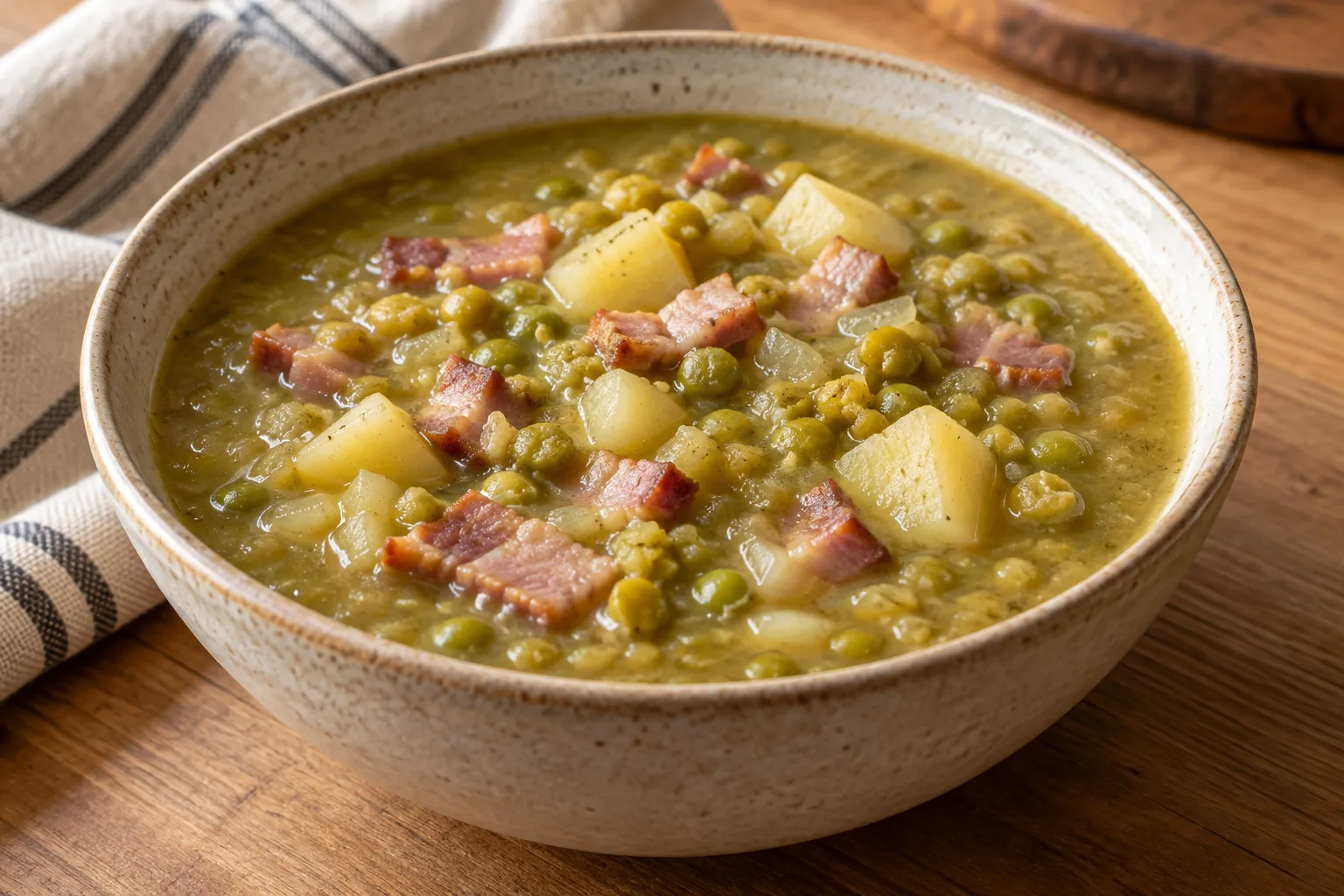
Other documented ingredients include dried peas in French-Canadian pea soup and blueberries in eastern Canadian desserts. In British Columbia, the provincial overview notes Pacific seafood alongside culinary influences connected to Japanese and Chinese immigration. These examples point to different local resources and histories; they should not be blended into a single nationwide pantry.

Contrasts of savoury, sweet, and texture

Regional Canadian preparations often make their character clear through contrast: crisp edges beside soft centres, savoury fillings within dough, or sweetness paired with a substantial base. Montreal bagels are smaller and denser than New York-style bagels in the cited comparison, with a mild sweetness and a chewy crumb. Sesame and poppy seeds are familiar toppings. Their flavour and texture follow from a specific baking tradition, not from a general Canadian preference for sweet bread.

Acadian dishes offer different contrasts. Crêpes râpées combine grated potato and onion with a batter that cooks to a crisp, savoury pancake. Poutine râpée is a boiled potato dumpling with seasoned pork inside, while fricot is a stew whose potatoes and vegetables soften in the cooking liquid. Ployes, buckwheat pancakes associated with the province’s northwestern Brayonne area, are eaten folded after being buttered and topped with maple syrup, brown sugar, or molasses.

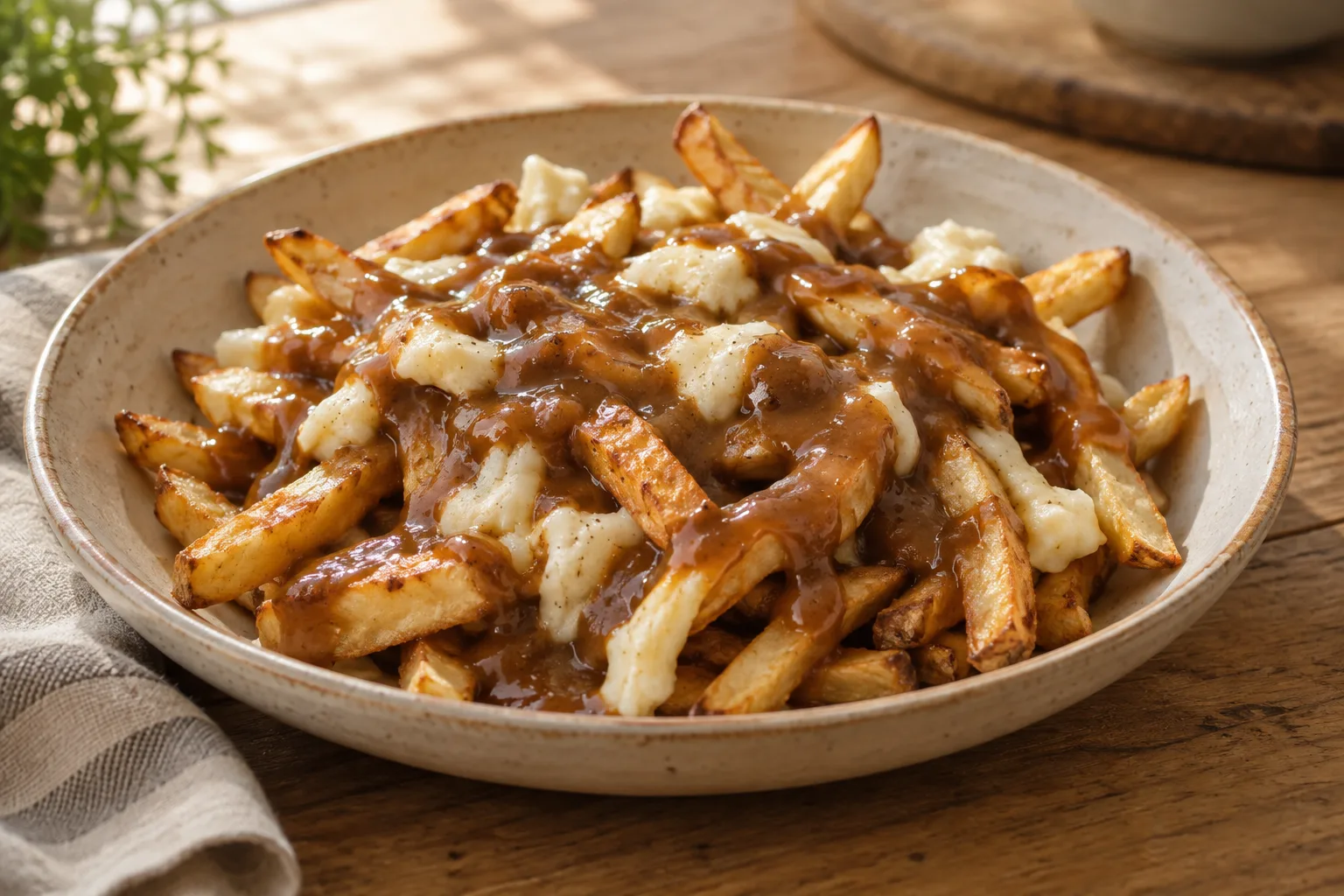
The classic Quebec-associated poutine combines fries, cheese curds, and gravy. It is distinct from the Acadian poutine râpée, despite the shared word. Maple sweets, meanwhile, can concentrate the flavour of syrup into a soft, chewy texture. Taken together, these foods show how names, ingredients, and cooking methods shape flavour more precisely than a broad label such as “Canadian comfort food.”

Seasonal gatherings and culinary transmission

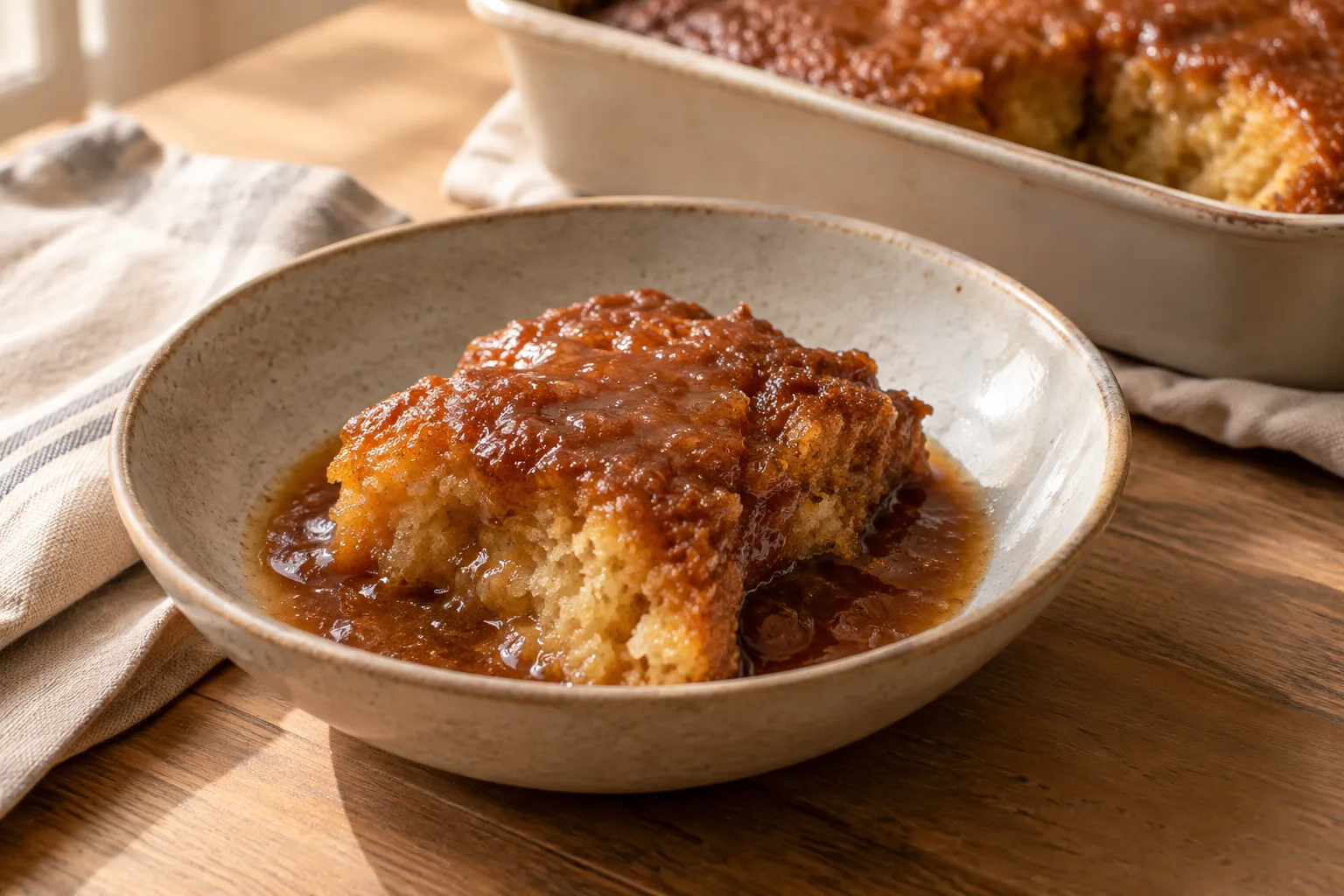
Food traditions are sustained through families, community kitchens, bakeries, restaurants, and seasonal gatherings. In Quebec, the sugar-shack season brings maple products into a setting of shared meals. Pouding chômeur, a Quebec dessert associated with the economic hardship of the 1929 crisis, is now prepared in homes, restaurants, and sugar shacks. Its history links an inexpensive dessert to changing circumstances and a continuing place in local food culture.

In New Brunswick, Acadian foods are found in homes as well as restaurants, food shacks, and grocery stores. Historic village experiences and cooking workshops provide settings in which visitors can encounter preparations such as fricot and poutine râpée. These forms of transmission sit alongside everyday cooking; they do not make every Acadian household practice the same menu or method.

The bagel tradition in Montreal also involves ongoing transmission through bakeries and skilled hand-shaping. Its history belongs to the city’s Jewish community and migration story, even as the bagel has become familiar to a wider public. Bannock, too, should be discussed with attention to the communities and versions being described. It is associated with diverse Indigenous peoples, and contemporary uses do not erase those different histories or make one preparation universal.

From hand-shaped bread to slow-cooked dumplings

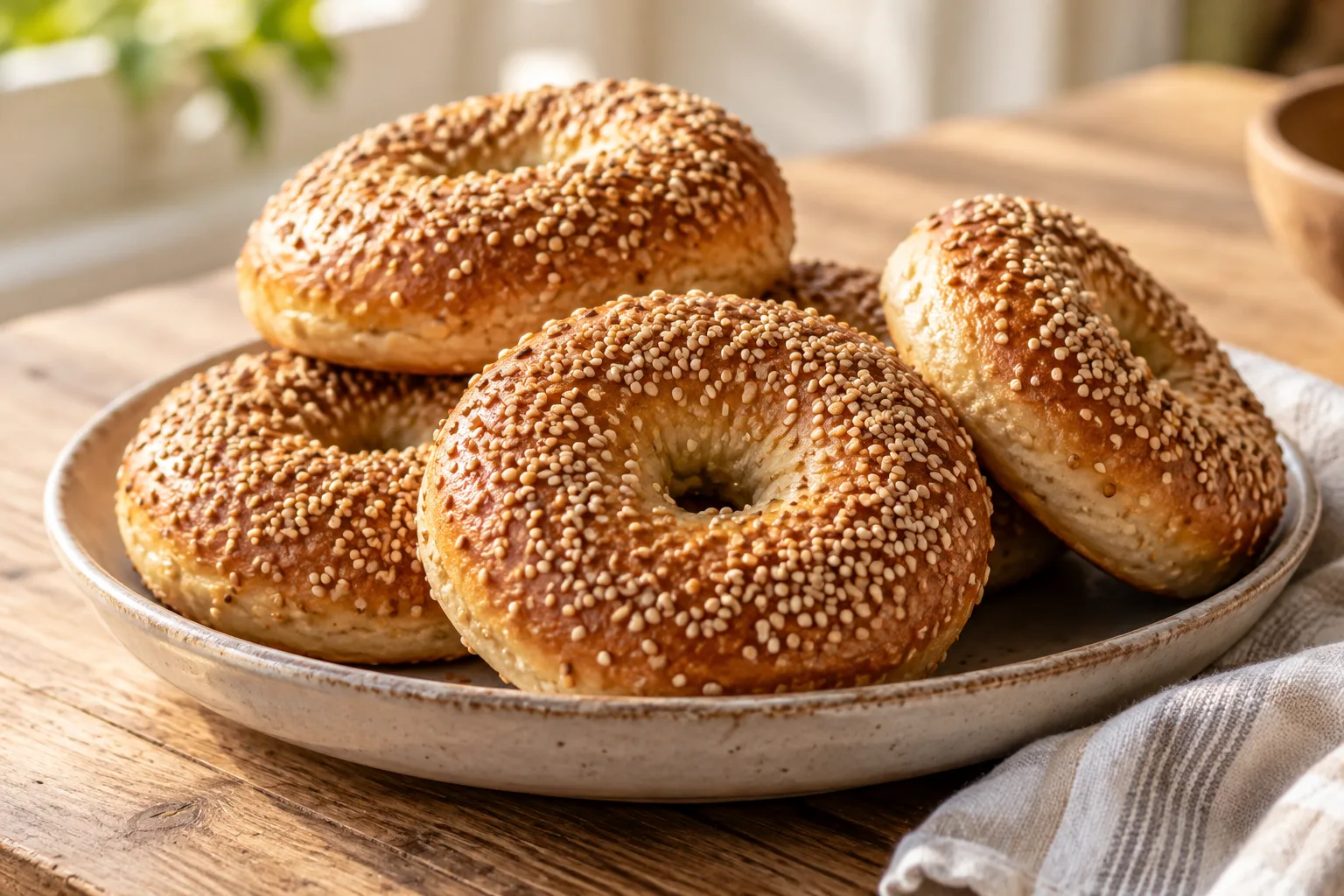
Techniques give each preparation its structure. Montreal bagels are formed by hand, boiled briefly in sweetened water, then baked; the documented local style is traditionally baked in a wood-fired oven. Seeds such as sesame or poppy mark familiar finishes. The sequence—shaping, boiling, and baking—helps distinguish this ring-shaped bread from a doughnut or from other bagel traditions.

Acadian cooking uses potato in several different ways. For poutine râpée, grated and mashed potato form a dumpling around seasoned pork, which is boiled. In crêpes râpées, grated potato joins onion, flour, and egg before the mixture is cooked as a savoury pancake. In chicken fricot, chicken and vegetables simmer together; dumplings may be added. These are separate techniques, not variations of one interchangeable potato dish.

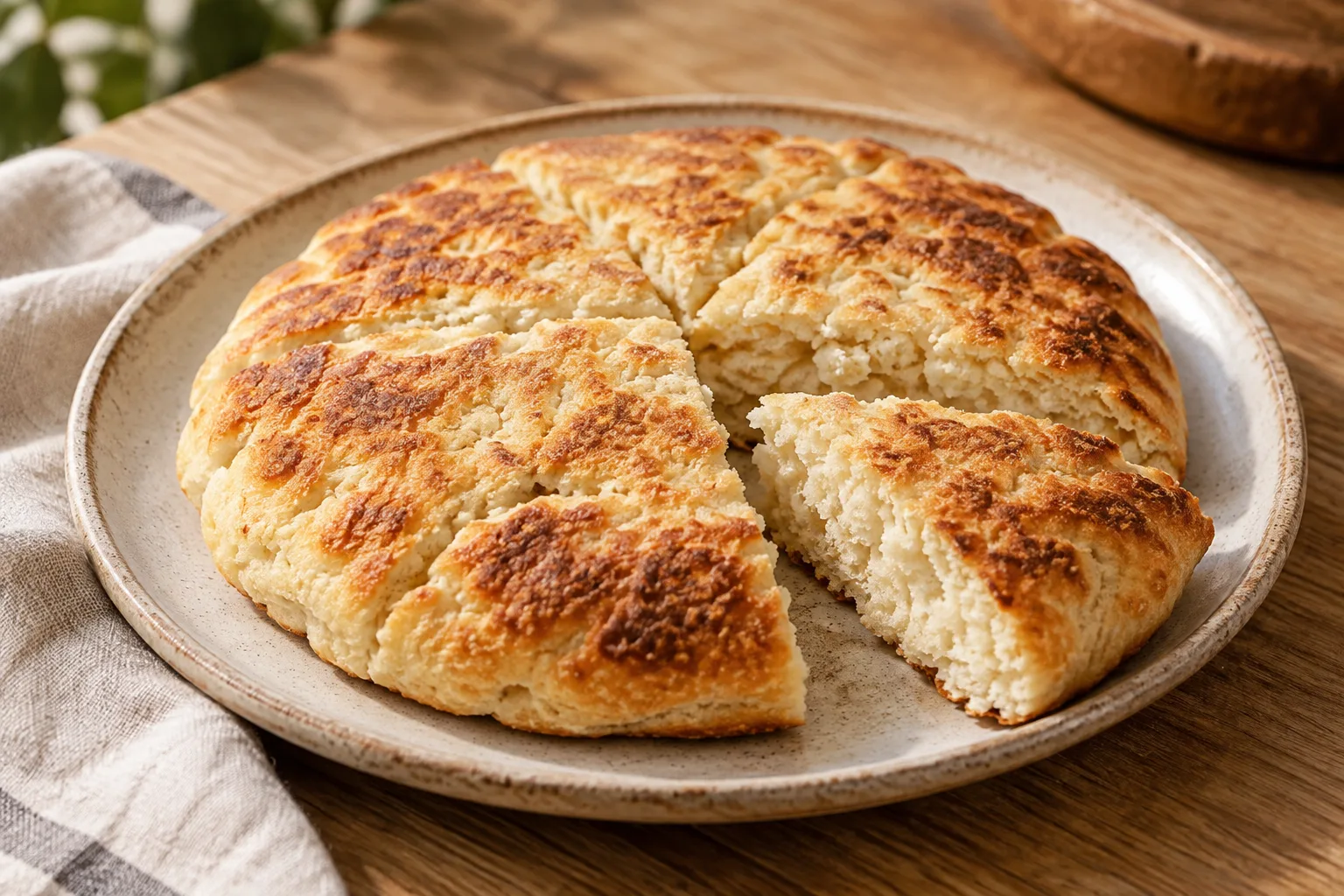
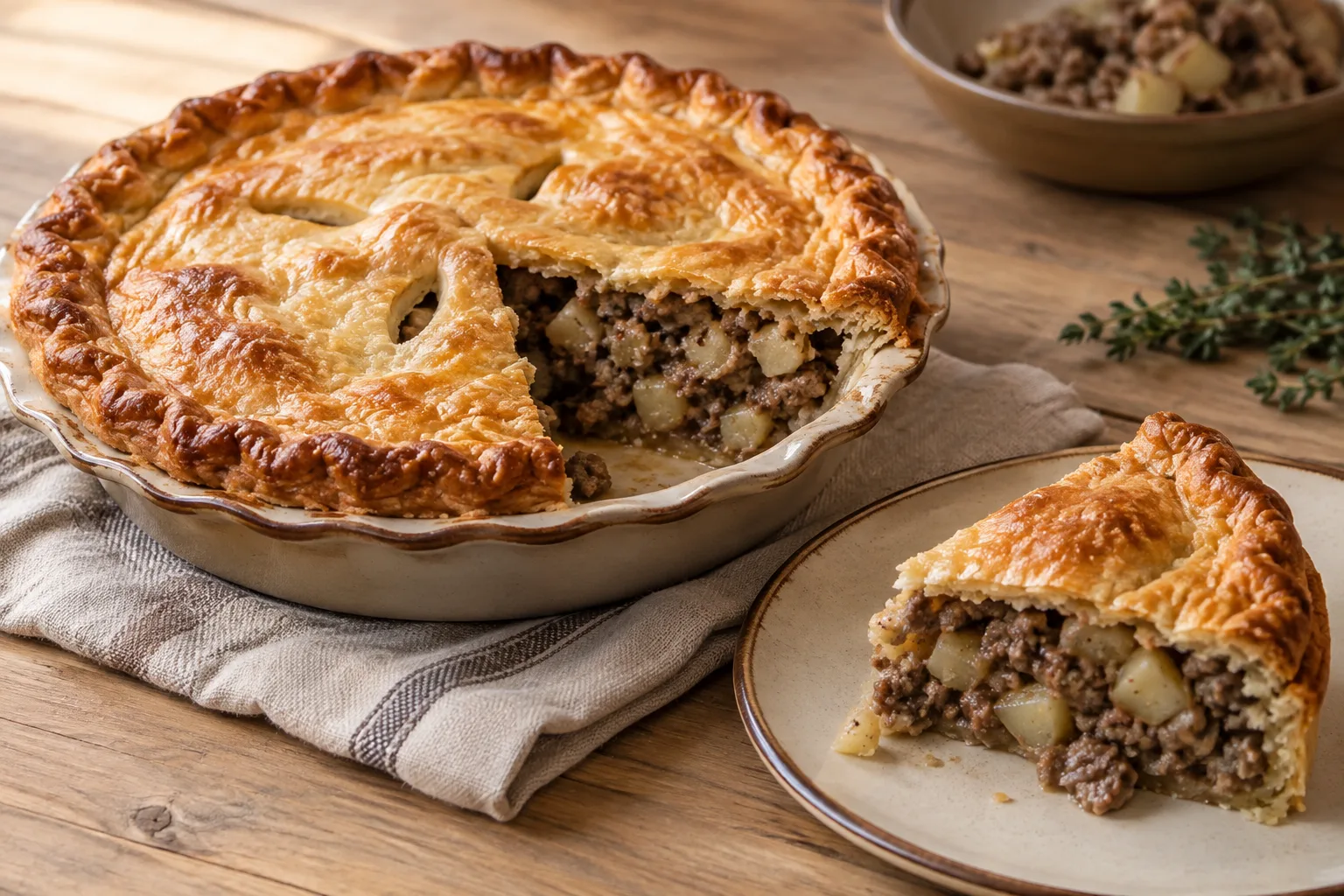
Bannock is also made by more than one method. The evidence describes versions that are baked or fried, with ingredients and methods varying among preparations. A skillet bannock recipe illustrates one contemporary cooking form, but it should not be treated as a universal Indigenous method. For a Quebec tourtière, pastry encloses a seasoned meat filling and is baked; the filling and seasonings vary. Across these examples, technique is tied to a particular food and context rather than a generic set of kitchen rules.

Meals, occasions, and ways of sharing

Canadian eating occasions vary with place and dish. Montreal bagels may be eaten plain or with accompaniments such as cream cheese or smoked salmon; their presence in city bakeries connects a quick everyday food with a longer migration and baking history. The point is not to prescribe one correct serving style, but to recognise the local bread and the community history attached to it.

In Quebec, tourtière is associated with winter meals and holiday gatherings, including Christmas Eve in accounts of the province’s food traditions. Its meat filling and pastry make it a substantial centrepiece, while family and regional versions differ. Pouding chômeur offers another kind of gathering food: a dessert with a history of inexpensive ingredients that remains present at home and in sugar-shack settings.

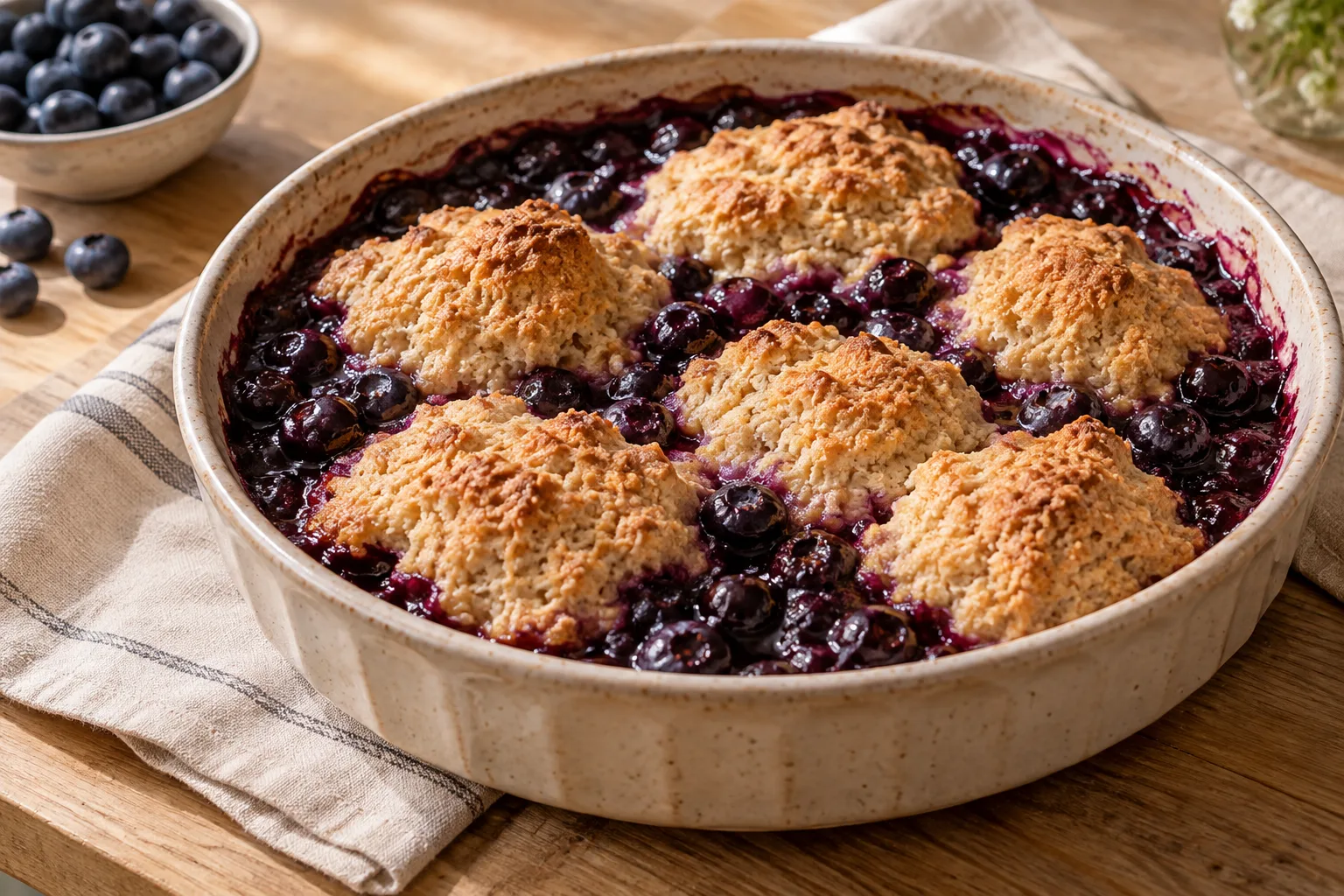
Acadian food is encountered in settings ranging from household kitchens to restaurants and food shacks. A bowl of chicken fricot or a serving of poutine râpée belongs to a specific Acadian repertoire; neither should be confused with Quebec poutine. Elsewhere, blueberry grunt brings cooked berries together with biscuit dough and is served warm as a dessert. These dishes show how a meal can share local ingredients and communal use while retaining distinctive names and forms.

A glossary of Canadian preparations

Names are part of the context: a familiar word may point to a very different dish depending on its region. The entries below identify particular preparations and avoid treating them as interchangeable or as complete representations of a community.

  • Montreal bagel: A hand-shaped, ring-shaped bread associated with Montreal’s Jewish migration history. The documented style is boiled briefly in sweetened water and traditionally baked in a wood-fired oven; sesame and poppy are familiar toppings.
  • Poutine: A Quebec-associated dish of fries, cheese curds, and gravy. It is different from Acadian poutine râpée.
  • Poutine râpée: An Acadian boiled dumpling made with grated and mashed potato around a seasoned pork centre.
  • Fricot: An Acadian chicken stew with potatoes, celery, and carrots; dumplings may be added.
  • Bannock: A broad term for varied breads associated with many Indigenous communities. Ingredients and cooking methods differ, so the word alone does not specify one community’s version.
  • Pouding chômeur: A Quebec dessert associated with the 1929 economic crisis and now served in homes, restaurants, and sugar shacks.
  • Blueberry grunt: An eastern Canadian dessert in which cooked blueberries are topped with biscuit dough, which cooks with the berries.

One country, many cuisines

British Columbia

British Columbia’s documented food landscape includes Pacific seafood and culinary influences associated with Japanese and Chinese immigration. These features describe part of the province’s food history, not a single regional menu. Bannock is associated with diverse Indigenous communities across Canada, so it should not be presented as exclusive to British Columbia or as one uniform Indigenous preparation.

New Brunswick: Acadian Coast

New Brunswick’s Acadian repertoire includes poutine râpée, a boiled potato dumpling with a seasoned pork centre, and chicken fricot, a stew of chicken, potatoes, celery, and carrots that may include dumplings. Other documented foods include crisp potato crêpes râpées and buckwheat ployes. These dishes are distinct from similarly named preparations elsewhere.

Quebec

Quebec’s foodways include French-language traditions and the Montreal bagel, whose history is linked to Jewish migration from Poland and eastern Europe. The bagel’s hand-shaped, boiled, wood-fired local style is one specific city tradition. Quebec is also associated with maple-syrup cooking, sugar-shack meals, tourtière, pea soup, and the dessert pouding chômeur.

Cook
Read as an article ↗
Places and communities

One country, many cuisines

An initial selection of regions to explore. Culinary boundaries may differ from administrative divisions.

Canada

British Columbia

British Columbia’s documented food landscape includes Pacific seafood and culinary influences associated with Japanese and Chinese immigration. These features describe part of the province’s food history, not a single regional menu. Bannock is associated with diverse Indigenous communities across Canada, so it should not be presented as exclusive to British Columbia or as one uniform Indigenous preparation.

Canada

New Brunswick: Acadian Coast

New Brunswick’s Acadian repertoire includes *poutine râpée*, a boiled potato dumpling with a seasoned pork centre, and chicken *fricot*, a stew of chicken, potatoes, celery, and carrots that may include dumplings. Other documented foods include crisp potato *crêpes râpées* and buckwheat *ployes*. These dishes are distinct from similarly named preparations elsewhere.

Canada

Quebec

Quebec’s foodways include French-language traditions and the Montreal bagel, whose history is linked to Jewish migration from Poland and eastern Europe. The bagel’s hand-shaped, boiled, wood-fired local style is one specific city tradition. Quebec is also associated with maple-syrup cooking, sugar-shack meals, tourtière, pea soup, and the dessert *pouding chômeur*.

Cook · 1
Cook

Recipes connected with Canada

Each recipe documents one version. Geographic associations do not imply an exclusive origin.

Canadian Tourtière
Image generated by the Kitchenpause team
200 minIntermediate

Canadian Tourtière

A savory Quebec meat pie with three meats, spiced potato, and homemade pastry. Serves 6; estimated hands-on preparation: 40 minutes.

View recipe
Canadian poutine
Image generated by the Kitchenpause team
100 minIntermediate

Canadian poutine

French fries topped with meat gravy, cheese and a thickened broth sauce. Serves 4; preparation and cooking times are practical estimates.

View recipe
Canadian Pea Soup
Image generated by the Kitchenpause team
890 minEasy

Canadian Pea Soup

A thick soup of dried peas, pork belly, onion and potato. Makes about 4 servings; hands-on preparation is estimated at 20 minutes.

View recipe
Pouding chômeur
Image generated by the Kitchenpause team
65 minEasy

Pouding chômeur

A Québécois dessert of simple cake batter baked beneath a brown-sugar syrup. Makes 6 servings; the hands-on preparation time is an estimate.

View recipe
Canadian blueberry grunt
Image generated by the Kitchenpause team
35 minEasy

Canadian blueberry grunt

A Canadian dessert of cooked blueberries in a lightly spiced sauce, topped with tender barley-flour dumplings. Makes 6 servings; estimated prep time: 10 minutes, cook time: 25 minutes.

View recipe
Canadian butter tarts
Image generated by the Kitchenpause team
70 minIntermediate

Canadian butter tarts

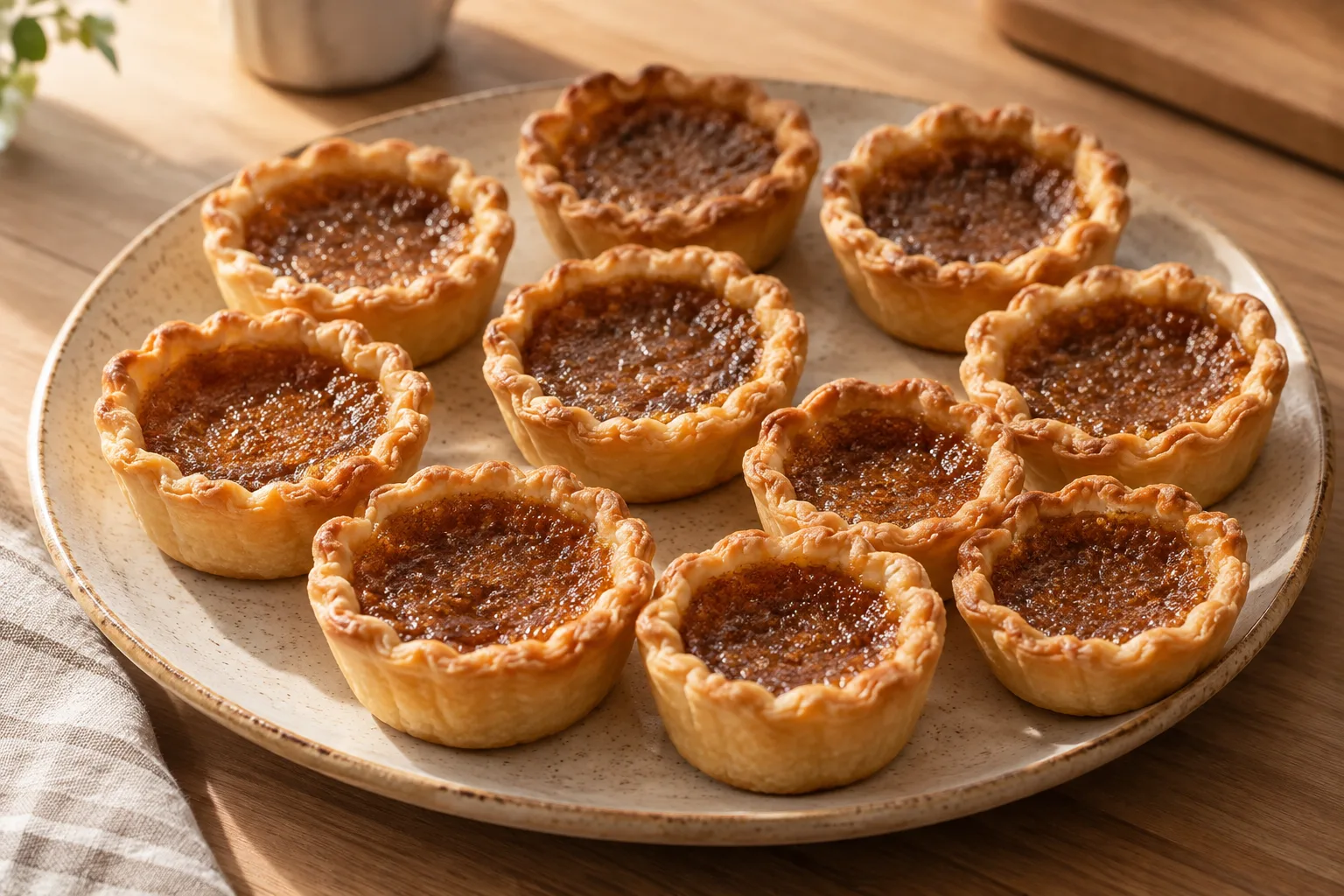
Ten tarts with a crisp pastry shell and a sweet filling of butter, brown sugar, and egg. Hands-on preparation is estimated at 20 minutes; the dough rests for 30 minutes and the tarts bake for 20 minutes.

View recipe
Montreal Bagels
Image generated by the Kitchenpause team
253 minAdvanced

Montreal Bagels

Canadian bagels with a dense, slightly sweet crumb: dough with egg and malt, poached in honey water and coated with sesame seeds.

View recipe
Canadian Skillet Bannock
Image generated by the Kitchenpause team
29 minEasy

Canadian Skillet Bannock

A quick Canadian bread made with a simple dough of flour, baking powder, salt, water, and oil, cooked in a skillet until golden.

View recipe

Sources consulted

Read the sources and each document’s scope. A heritage inscription concerns a particular practice, not all of a country’s cuisine.

  1. Bannock - Receta Tradicional Canadiense | 196 flavors www.196flavors.com/es/bannock/?srsltid=AU7gw4VI2CoM64n9zEA438uC3gY1PdNXtA2mlKNC0SCHp4BC7Hkxr… 196flavors.com Consulted: October 5, 2026
  2. Bannock (comida) - Wikipedia, la enciclopedia libre es.wikipedia.org/wiki/Bannock_(comida) es.wikipedia.org Consulted: October 5, 2026
  3. Bagel de Montreal - Receta Canadiense Tradicional | 196 flavors www.196flavors.com/es/canada-bagel-de-montreal/?srsltid=AU7gw4VV9buYRTkJMaHycesQrWlarziDQhjr… 196flavors.com Consulted: October 10, 2026
  4. Bagels de Montreal - Susan Veggie www.susanveggie.com/bagels-de-montreal/ susanveggie.com Consulted: October 10, 2026
  5. Bagels de Montreal vs Nueva York 2026 www.canada-spirit.com/es/guides/bagels-montreal-vs-nueva-york/ canada-spirit.com Consulted: October 10, 2026
  6. "Los bagels de Montreal, Canadá" es.linkedin.com/pulse/los-bagels-de-montreal-canad%C3%A1-estudiantes-embajadores es.linkedin.com Consulted: October 10, 2026
  7. Bannock - Receta Tradicional Canadiense | 196 flavors www.196flavors.com/es/bannock/?srsltid=AU7gw4U9334CdS42cqTc6YF8tg1ZKWrKDfQ4cAnjOhtXojgQd89yn… 196flavors.com Consulted: October 17, 2026
  8. Pan bannock tradicional | Sabor de Canadá es.tastecanadianfood.ca/pan-bannock-tradicional es.tastecanadianfood.ca Consulted: October 17, 2026
  9. Guía de comida canadiense: butter tarts, tourtière www.canada-spirit.com/es/guides/guia-cocina-canadiense/ canada-spirit.com Consulted: October 17, 2026
  10. 17 Traditional Canadian Foods You NEED To Try - Hostelworld www.hostelworld.com/blog/es/17-alimentos-tradicionales-canadienses-que-tiene-que-probar/ hostelworld.com Consulted: October 17, 2026
  11. Gastronomía de Canadá - Wikipedia, la enciclopedia libre es.wikipedia.org/wiki/Gastronom%C3%ADa_de_Canad%C3%A1 es.wikipedia.org Consulted: November 12, 2026
  12. Everything you should know about the Montréal bagel | Tourisme Montréal www.mtl.org/en/experience/the-famous-montreal-bagel Tourisme Montréal Consulted: October 31, 2026
  13. 9 Acadian foods you have to try in New Brunswick | Destination Canada travel.destinationcanada.com/en-us/things-to-do/9-acadian-foods-you-have-try-new-brunswick Destination Canada / Tourism New Brunswick Consulted: October 31, 2026
  14. Directorio de experiencias culinarias indígenas indigenoustourism.ca/wp-content/uploads/2021/09/ITAC_Culinary-Directory_EN_09.22-2.pdf Indigenous Tourism Association of Canada Consulted: October 20, 2026
  15. Salmón glaseado con sirope de arce (Maple Syrup) y soja - El portal de noticias de Torrevieja enjoytorrevieja.com/2017/03/09/salmon-glaseado-sirope-arce-maple-syrup-soja/ enjoytorrevieja.com Consulted: October 23, 2026
  16. Guía del Arce Canadiense: Productos, Recetas www.canada-spirit.com/es/guides/platos-arce-mas-alla-jarabe/ canada-spirit.com Consulted: October 23, 2026
  17. Quebec - Wikipedia, la enciclopedia libre es.wikipedia.org/wiki/Quebec es.wikipedia.org Consulted: November 8, 2026
  18. Tartaletas de mantequilla o 'butter tarts': receta del legendario dulce canadiense que nadie debería perderse www.directoalpaladar.com/postres/tartaletas-mantequilla-butter-tarts-receta-legendario-dulce… directoalpaladar.com Consulted: November 3, 2026
  19. Tarta de mantequillas - EcuRed www.ecured.cu/index.php?direction=next&oldid=3821343&title=Tarta_de_mantequillas ecured.cu Consulted: November 3, 2026
  20. Tarta de mantequilla - Wikipedia, la enciclopedia libre es.wikipedia.org/wiki/Tarta_de_mantequilla es.wikipedia.org Consulted: November 3, 2026
  21. Tarta de mantequilla para Niños ninos.kiddle.co/Tarta_de_mantequilla ninos.kiddle.co Consulted: November 3, 2026
  22. Parks Canada Heritage Gourmet Recipes parks.canada.ca/culture/gourmand-gourmet/recette-recipe71 parks.canada.ca Consulted: November 4, 2026
  23. Blueberry Grunt - Canadian Food Focus canadianfoodfocus.org/recipes/blueberry-grunt/ canadianfoodfocus.org Consulted: November 4, 2026
  24. Canadian Blueberry Cobbler - roamingtaste.com roamingtaste.com/blueberry-grunt/ roamingtaste.com Consulted: November 4, 2026
  25. Cape Breton Blueberry Grunt – Larch Wood Canada www.larchwoodcanada.com/blog/recipes/cape-breton-blueberry-grunt/ larchwoodcanada.com Consulted: November 4, 2026
  26. Nueva Escocia - Wikipedia, la enciclopedia libre es.wikipedia.org/wiki/Nueva_Escocia es.wikipedia.org Consulted: November 4, 2026
  27. Las recetas de Masero: Pouding chômeur www.lasrecetasdemasero.com/2017/08/pouding-chomeur.html lasrecetasdemasero.com Consulted: November 5, 2026
  28. Pouding du chômeur con ‪sirope de arce‬‬‬‬‬ – Sabores de Canadá saboresdecanada.es/receta/pouding-du-chomeur-con-%E2%80%AAsirope-de-arce%E2%80%AC%E2%80%AC%E… saboresdecanada.es Consulted: November 5, 2026
  29. Pouding Chômeur – El Puchero de Sofia elpucherodesofia.wordpress.com/2013/01/10/pouding-chomeur/ elpucherodesofia.wordpress.com Consulted: November 5, 2026
  30. Pouding-chômeur - Wikipedia, la enciclopedia libre es.wikipedia.org/wiki/Pouding-ch%C3%B4meur es.wikipedia.org Consulted: November 5, 2026
  31. Sopa de guisantes – Sabores de Canadá saboresdecanada.es/receta/sopa-de-guisantes/ saboresdecanada.es Consulted: November 6, 2026
  32. Sopa de guisantes - Wikipedia, la enciclopedia libre es.wikipedia.org/wiki/Sopa_de_guisantes es.wikipedia.org Consulted: November 6, 2026
  33. Sopa de guisantes_Baidu Enciclopedia baike.baidu.com/es/item/Sopa%20de%20guisantes/644565 baike.baidu.com Consulted: November 6, 2026
  34. Pea Soup (Sopa de guisantes) | COOK CAL AI cookcalai.com/es/pea-soup-sopa-de-guisantes/ cookcalai.com Consulted: November 6, 2026
  35. Poutine canadiense con gravy casero — diegodoal diegodoal.com/recetas/poutine diegodoal.com Consulted: November 7, 2026
  36. Poutine. La streetfood más típica de Canadá 🇨🇦 - El Caldero Viajero elcalderoviajero.com/2017/11/09/poutine-receta-canada/ elcalderoviajero.com Consulted: November 7, 2026
  37. Poutine canadiense: Hechos fascinantes www.remitly.com/blog/es/cultura-y-estilo-de-vida/platosnacional-datos-fascinantes-de-la-pout… remitly.com Consulted: November 7, 2026
  38. Pastel de carne especiada (French Canadian tourtiere) - Anna Olson - Receta - Canal Cocina canalcocina.es/receta/pastel-de-carne-especiada-french-canadian-tourtiere canalcocina.es Consulted: November 8, 2026
  39. Tourtiere - Receta Canadiense Tradicional | 196 flavors www.196flavors.com/es/canada-tourtiere/?srsltid=AYCX9vJpqi3xrKb8huJe2Kgmo-BHJqwjBTCJajue3iK7… 196flavors.com Consulted: November 8, 2026
  40. Tourtière - Cilantro and Citronella www.cilantroandcitronella.com/es/tourtiere/ cilantroandcitronella.com Consulted: November 8, 2026
  41. Recetas del mundo (Canadá): Tourtière www.expogourmetmagazine.com/es/receta/26460/recetas-del-mundo-canada-tourtiere expogourmetmagazine.com Consulted: November 8, 2026

We use session and security technologies to provide our features. Only with your permission do we load Google Analytics to measure visits and Google Maps on Contact. Choose separately, reject or accept both.

Withdraw either permission here. Withdrawing analytics reloads the page to unload the running tag.

Cookie policy