Documentary synthesis prepared with AI assistance. It does not replace specialist review or certify kitchen testing. · Updated 12 November 2026
A country’s foodways, read through particular places
South Korean food is best approached here through specific dishes, communities, and practices rather than a single national menu. The evidence brings together rice-based meals, fermented foods, griddle-cooked pancakes, street snacks, ceremonial sweets, and knowledge of coastal resources. Each reveals a different relationship between ingredients and everyday life: rice and vegetables arranged for mixing, kimchi made through collective work, dough cooked and filled on a street-side griddle, or shellfish gathered by divers who know local waters.
Place matters within that picture. Busan is associated with Dongnae pajeon, a local scallion pancake made with seafood and Gijang chives. Jeonju is linked with bibimbap, while Jeju’s haenyeo culture connects food gathering to expertise, cooperation, and transmission. These are grounded examples, not a map of every regional cuisine or a claim that any one dish represents the whole country.
Several dishes in the current KitchenPause collection can serve as starting points: bibimbap, haemul pajeon, and hotteok. Their recipes are practical entryways; the cultural context also includes foods and traditions beyond that catalogue. Reading them together makes room for variation, regional specificity, and the people whose skills extend from the table to the source of an ingredient.
Continuity, exchange, and the limits of origin stories
Food history is visible in both enduring practices and changing forms. Kimjang, the making and sharing of kimchi, is described as a collective practice through which knowledge is carried forward. Its importance lies not in one fixed formula but in cooperation, ingredients, and the continuation of family and community ways of preparing and distributing food. This offers a different kind of history from a dish’s first recorded appearance: it is history made through repeated work.
Hotteok illustrates why origin stories need care. Accounts in the available material differ: one associates the snack with Chinese migration to Korea in the late nineteenth century, while another gives a different historical explanation. The evidence here does not settle that disagreement, so it is safer to describe what is documented about the food itself: a filled, griddle-cooked snack that has developed varied forms and is associated with street vending and colder-season eating.
Bibimbap, meanwhile, is documented in forms that include named regional versions such as Jeonju bibimbap, as well as a hot stone-bowl version. These examples show how a dish can be recognizable while its ingredients, presentation, or local identity vary. They do not establish a single origin for every version. Taken together, these records point to a culinary history shaped by continuing practice, adaptation, and regional naming, while leaving disputed beginnings open rather than turning them into settled fact.
Rice, vegetables, fermentation, and the sea
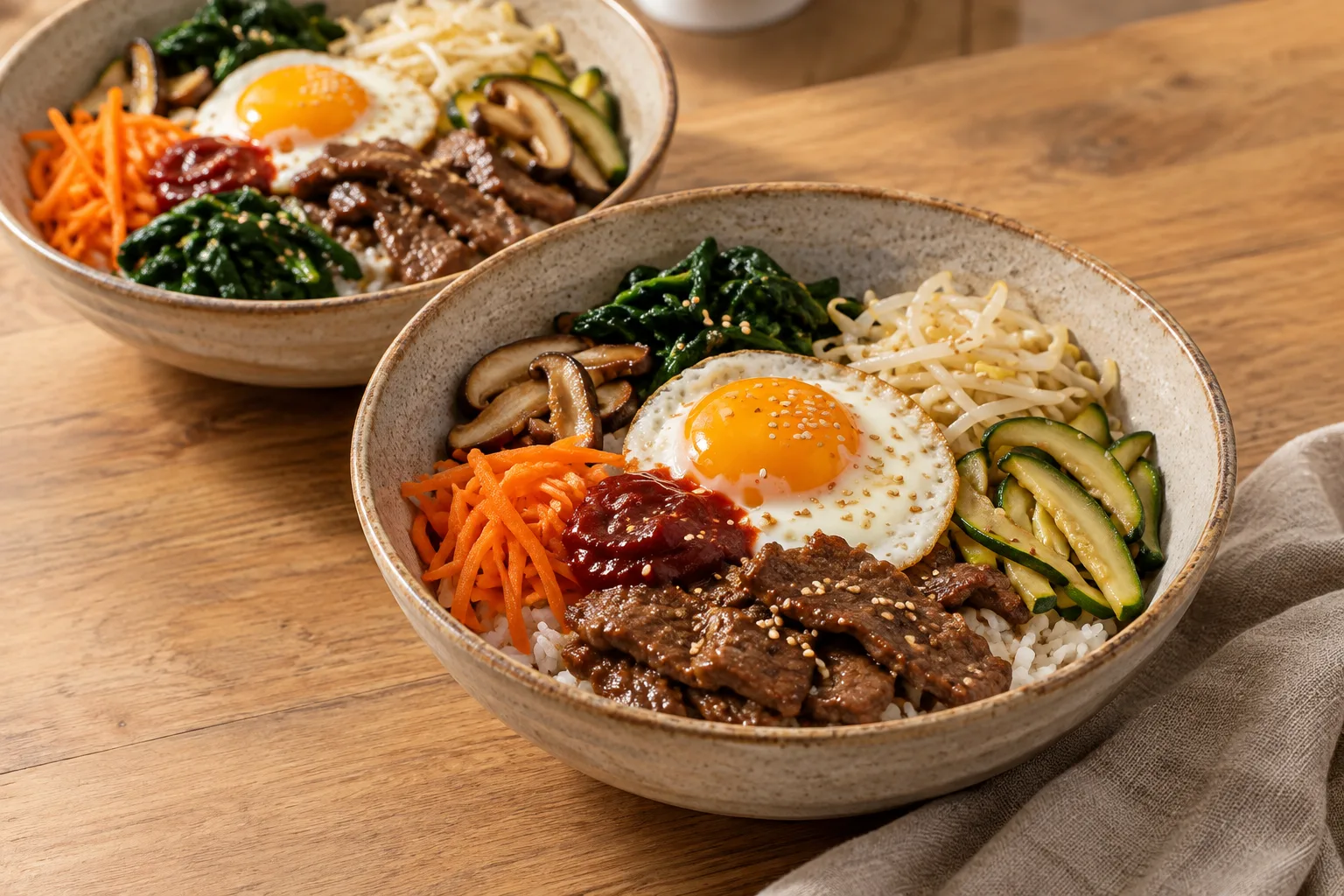
Rice is the foundation of bibimbap: cooked rice receives a range of components that may include vegetables, meat, egg, and seasoning. Accounts of the dish name vegetables such as spinach, bean sprouts, carrot, zucchini, and mushrooms, while regional descriptions connect Jeonju bibimbap with the rice-growing Honam plain. The components are not simply an undifferentiated topping; their preparation and arrangement make the finished bowl legible before it is mixed.
Fermentation belongs in this pantry as both a product and a practice. Kimchi is made and shared through kimjang, a collective tradition, and gochujang—a fermented soybean and red-chile paste—is identified as a seasoning for bibimbap. These foods show distinct uses of preserved and fermented ingredients; they should not be collapsed into a single category or treated as interchangeable.
The sea enters the documented foodways in more than one way. Seafood appears in haemul pajeon and Dongnae pajeon, while Jeju haenyeo gather shellfish such as abalone and sea urchin. This links ingredients to skilled harvesting without implying that every seafood dish shares the same source or preparation. Sweet preparations draw on another set of pantry ingredients: hotteok may contain brown sugar, cinnamon, and nuts or peanuts, while yakgwa is described as a honey-sweetened fried pastry. These specific combinations provide a useful view of variety without claiming to inventory the whole pantry.
Savory, sweet, crisp, and soft
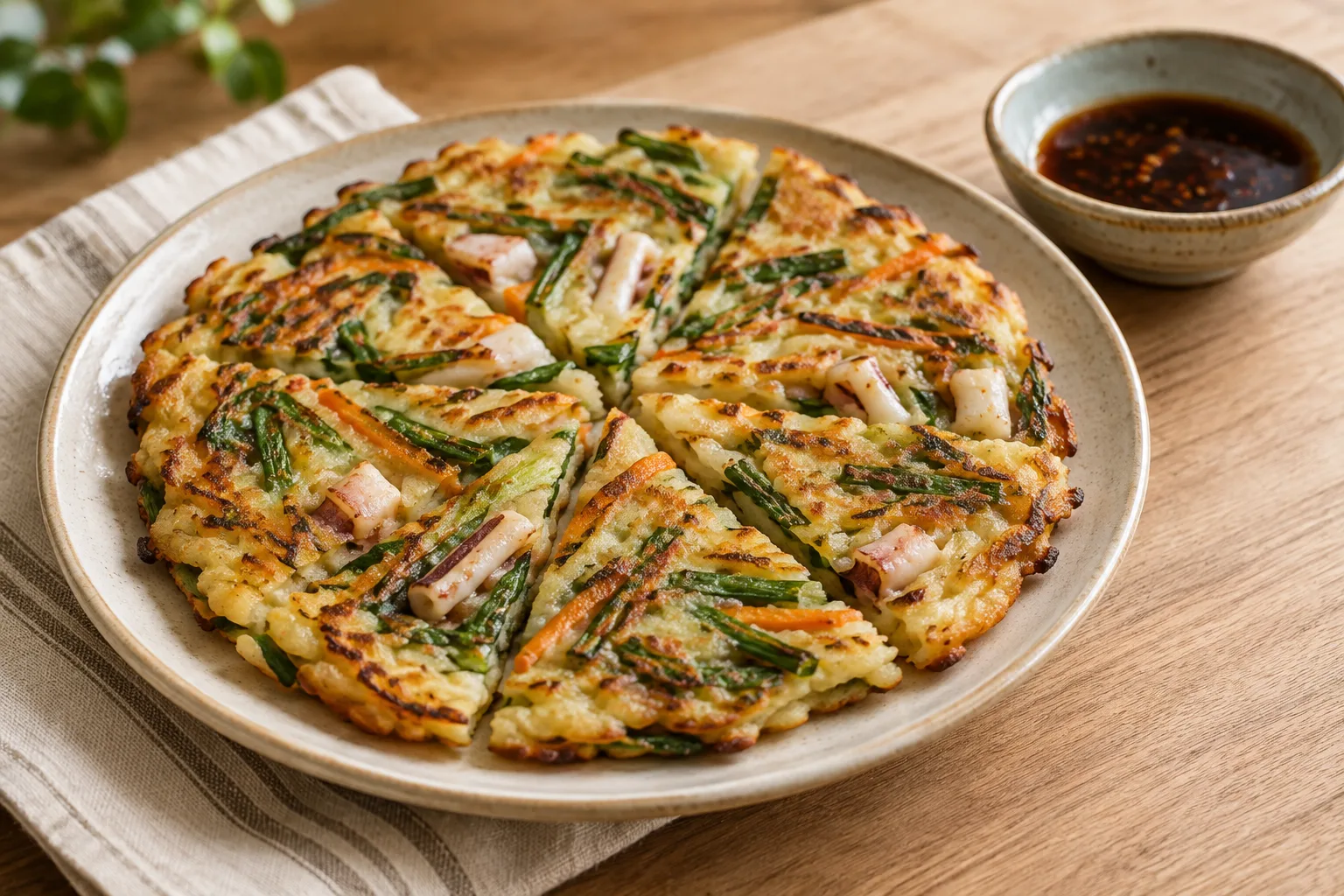
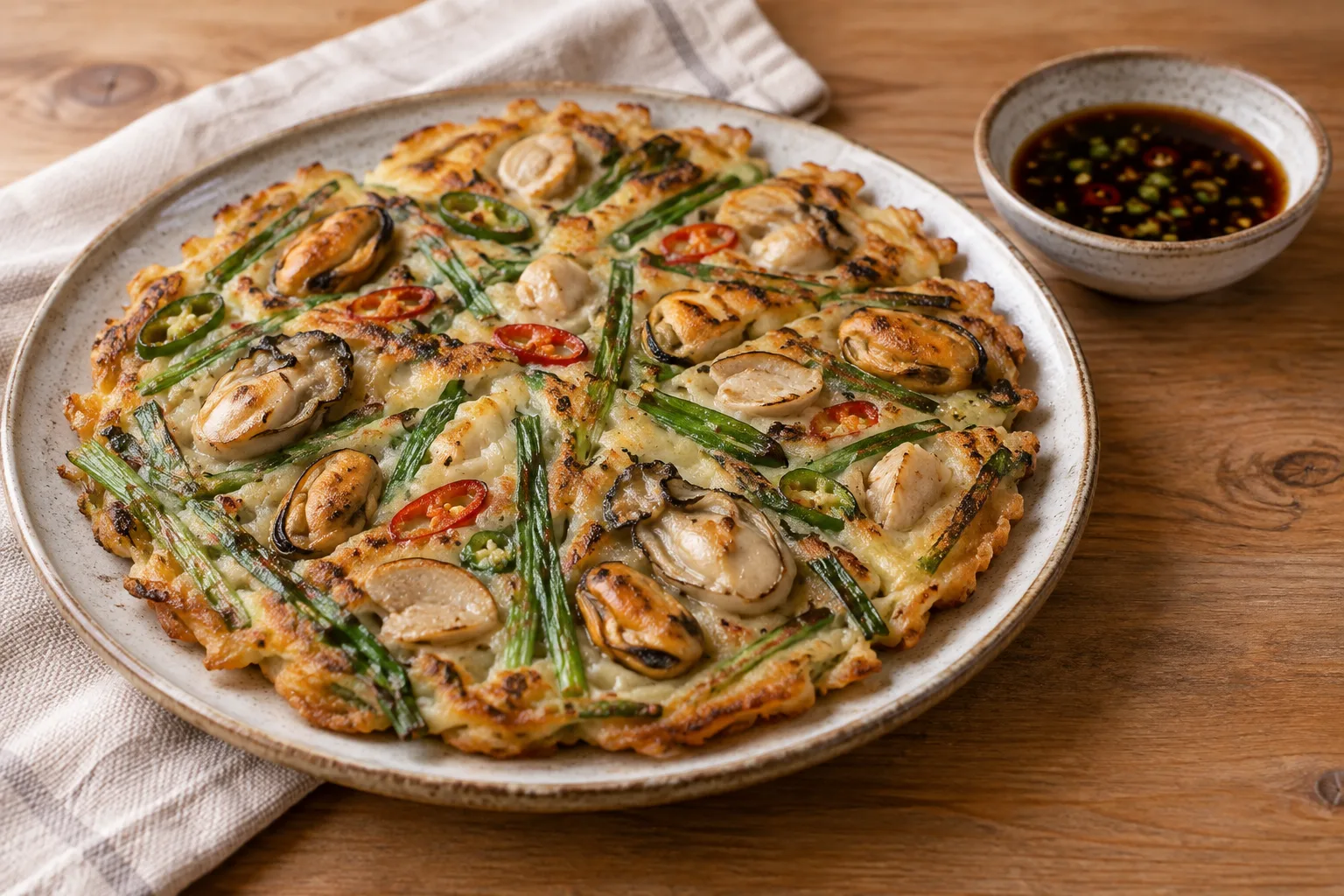
The examples gathered here range across contrasts of taste and texture. Haemul pajeon combines scallion with seafood in a savory pancake; one documented recipe includes squid and prawns, while the broader preparation allows different seafood choices. Dongnae pajeon is described as softer and wetter than a crisp-textured pajeon, an important reminder that dishes sharing a name may not share the same bite. Chives grown in Gijang are associated with the Dongnae version for their fragrance and sweetness.
Bibimbap brings several separately prepared components into one bowl. Rice, vegetables, and, in many versions, meat and egg are arranged before being mixed. Gochujang can add a spicy, savory note. A dolsot version uses a heated stone bowl, changing the serving temperature and allowing the rice at the base to cook against the hot vessel. The dish’s character therefore depends on both its ingredients and how they meet at the table.
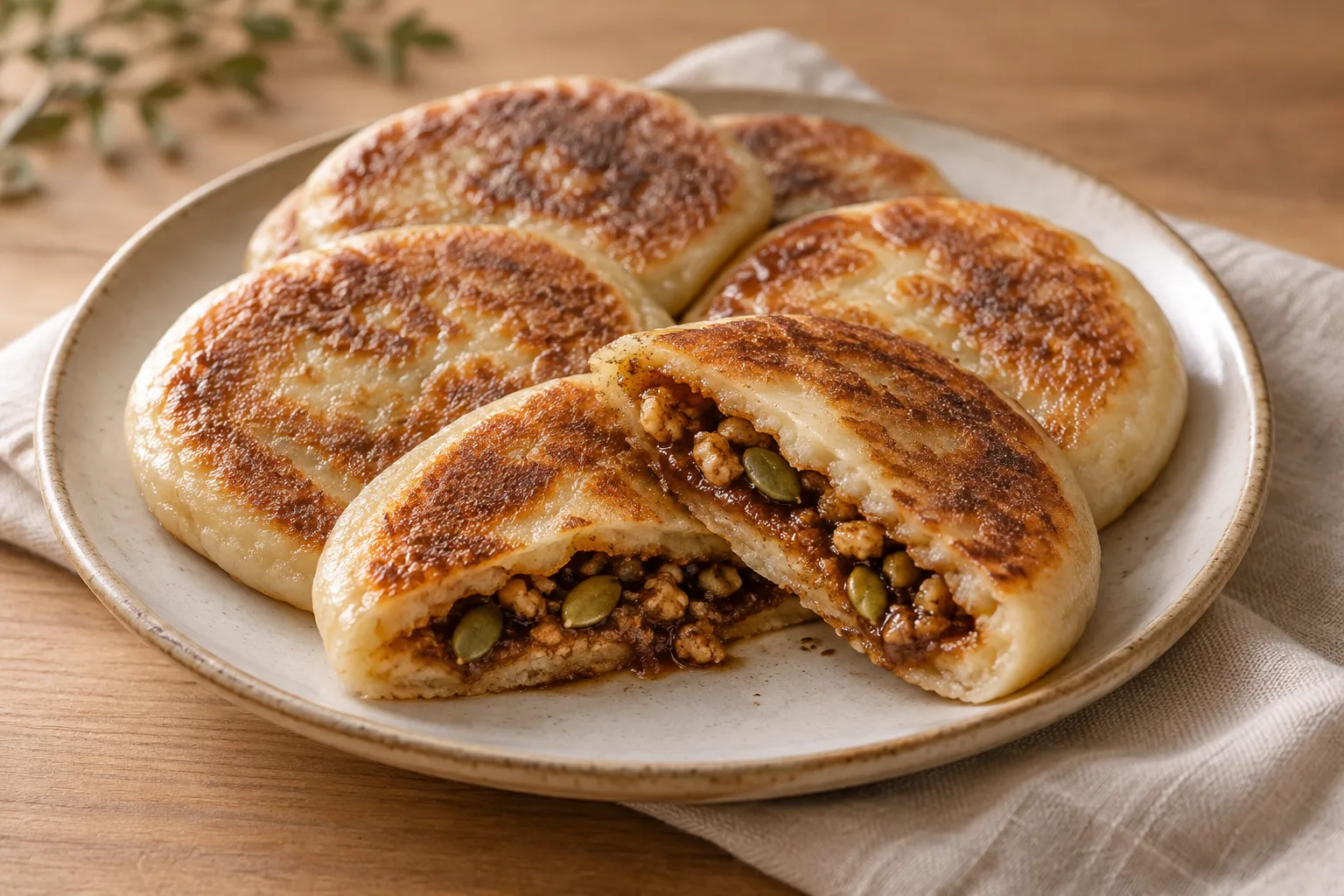
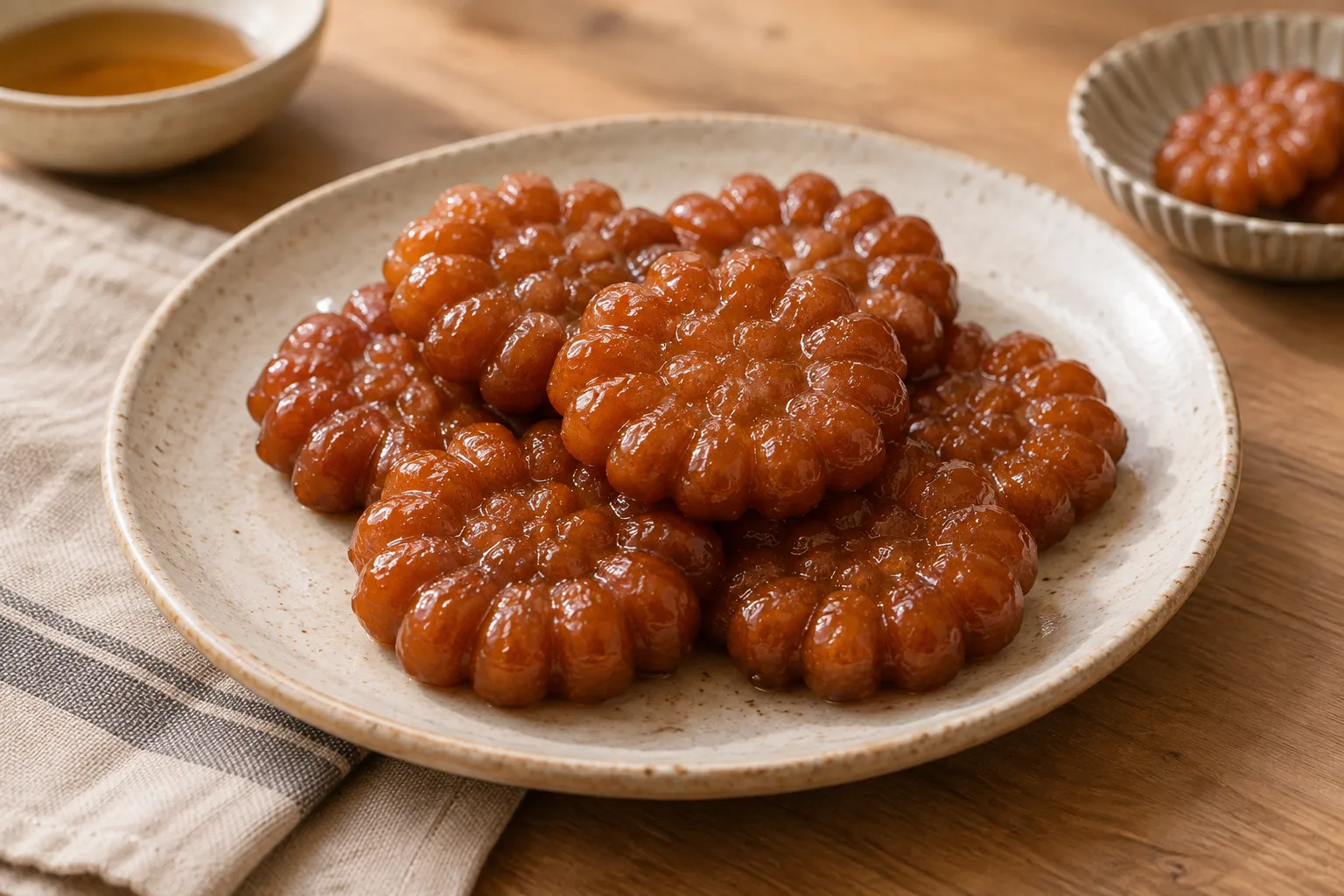
Hotteok offers another contrast: a browned exterior around a filled center, often sweet with brown sugar, cinnamon, and nuts. Yakgwa takes sweetness in a different direction through a fried pastry soaked or coated with honey syrup. These are not interchangeable “desserts”; their textures and preparation distinguish them. Across these foods, crispness, softness, warmth, and concentrated sweetness arise from particular methods and forms, not from one uniform national flavor profile.
Collective work, seasonal eating, and transmission
Kimjang is a documented practice of making and sharing kimchi through collective effort. It brings together knowledge about ingredients and preparation with cooperation and transmission, rather than describing a single recipe followed identically everywhere. Families and communities maintain their own versions, and the work of preparing and distributing kimchi is part of the tradition’s meaning. The cultural account supports this emphasis on practice; it does not establish a universal calendar or a uniform household method.
Jeju haenyeo culture makes visible another kind of knowledge. Women divers gather marine products such as abalone and sea urchin without oxygen-supply equipment. Their expertise includes knowledge of the sea and marine life, and the practice is organized through experience-based groups, guidance, associations, cooperatives, and educational settings. Skills are passed to younger generations through several channels. This is a living coastal foodway grounded in labor and ecological knowledge, not simply a list of seafood dishes.
Food traditions also appear in seasonal and celebratory contexts. Hotteok is associated in the material with winter eating and street-food settings. Yakgwa is described as a sweet served on special occasions including weddings, Lunar New Year, and Chuseok, where it may be presented with other sweets on decorative trays. These examples document particular occasions without suggesting that every household observes them in the same way. Across them, food is sustained through shared work, skilled teaching, public selling, and acts of hospitality.
Mixing, griddling, frying, and gathering
The techniques attached to these foods begin well before serving. For bibimbap, vegetables may be cooked or seasoned separately, then arranged with rice and other components. A dolsot version is served in a heated stone bowl; the vessel contributes continuing heat, so the bowl is part of the cooking and serving method, not merely a container. The final mixing brings the arranged ingredients together, while regional and household versions remain variable.
Pajeon is made by combining batter with scallion and, in seafood versions, marine ingredients, then cooking it in a pan. The composition and texture differ among versions: Dongnae pajeon is noted for a softer, wetter result, while other pajeon may emphasize a crisp exterior. The way the scallions and seafood are distributed across the pancake is therefore part of the preparation’s identity, not just decoration.
Hotteok uses a different dough process. A yeast-raised dough is portioned, filled, sealed, flattened on a greased griddle, and cooked until browned. A press or spatula helps flatten it as it cooks. Yakgwa, by contrast, is shaped pastry that is fried and then treated with honey syrup. Jeju haenyeo knowledge extends technique beyond the kitchen: breath-hold diving, harvesting, and cooperative management connect the food resource to practiced skill. These methods are distinct, and each calls for its own knowledge and equipment.
Arranging a bowl, sharing pancakes, serving sweets
The table arrangements documented here range from an individually composed bowl to foods suited to sharing. Bibimbap is assembled with rice and its components arranged in a bowl; in a dolsot version, it arrives in a heated stone vessel. The visible arrangement precedes the act of mixing, which changes the dish from separate portions into a combined meal. Jeonju bibimbap is one named regional form, while the broader dish has ingredient-based and regional variations.
Pajeon offers a more communal shape: a pancake can be cut into pieces and shared, with a dipping sauce served alongside in some accounts. Dongnae pajeon has a local identity and is paired in the cited material with cho-gochujang, a sweet, tangy, and spicy dipping sauce. That pairing belongs to the described Dongnae presentation; it should not be assumed for every scallion pancake.
Street snacks and ceremonial sweets occupy different occasions. Hotteok is commonly described as a warm street snack, particularly in winter, while yakgwa may be arranged with other sweets for celebrations and offered to guests. These examples show how a food’s setting can be part of its character: a hot filled snack eaten soon after griddling differs from a pastry presented on a festive tray. The evidence supports these concrete settings, not a single prescribed order for meals across South Korea.
A glossary of dishes and practices
The terms below name particular foods and practices documented in this guide. Some refer to broad dish families; others identify a local version or a community whose work is closely connected to food. Keeping those distinctions clear helps avoid treating a shared ingredient as proof that two preparations are identical.
- Bibimbap: A rice dish assembled with vegetables and other components, then mixed. Jeonju bibimbap is a named regional version; dolsot bibimbap is served in a heated stone bowl.
- Dolsot: A stone cooking and serving bowl. When heated for bibimbap, it keeps the dish hot and affects the rice in contact with its surface.
- Gochujang: A fermented soybean and red-chile paste used as a seasoning, including in some bibimbap preparations.
- Haemul pajeon: A scallion pancake with seafood; documented seafood choices include squid and prawns, with variation in the combination.
- Kimjang: The collective making and sharing of kimchi, involving cooperation and the transmission of knowledge.
- Haenyeo: Jeju women divers who harvest marine products and pass on knowledge of the sea, diving, and harvesting practices.
- Hotteok: A filled, yeast-raised griddle snack, often sweetened with brown sugar and cinnamon and containing nuts or peanuts.
- Yakgwa: A fried Korean sweet associated with special occasions and made with honey syrup.
These definitions distinguish a vessel, ingredient, dish, and living practice rather than presenting them as equivalent kinds of culinary heritage.
One country, many cuisines
Busan and Dongnae
Dongnae pajeon is a locally identified Busan scallion pancake made with seafood and Gijang chives, noted for their fragrance and sweet taste. It is related to the wider pajeon family, but a shared use of scallion or seafood alone does not make another pancake the Dongnae version. The distinction is useful when comparing local preparation with broader seafood-pancake recipes.
Jeju
Jeju’s haenyeo are women divers who gather marine products such as abalone and sea urchin without oxygen-supply equipment. Their food-related knowledge includes the sea and marine life, while experience-based guidance, associations, cooperatives, schools, and museums support transmission. This documented tradition connects harvesting and community practice; it does not imply that every seafood dish is specific to Jeju.
Jeonju and the Honam Plain
Jeonju is associated with a named regional form of bibimbap, a rice dish assembled with vegetables and other components. The available material also connects rice with the Honam plain and describes variation in ingredients and presentation, including hot stone-bowl service. These details establish a documented regional link without making Jeonju bibimbap representative of every local or household version.
Cook