Documentary synthesis prepared with AI assistance. It does not replace specialist review or certify kitchen testing. · Updated 11 November 2026
A cuisine shaped by place, ingredients and combination
Thailand’s culinary traditions are best approached as a set of connected, varied repertoires rather than a single national formula. The evidence here follows three documented settings: the river communities of the central plains, northern foodways, and Isan in the northeast. These settings appear through particular ingredients and preparations—freshwater prawns and herbs in tomyum kung, sticky rice and nam prik in northern materials, and papaya salad and fermented fish seasoning in Isan. Such examples illuminate regional associations, but none stands for every meal eaten in its area.
A useful thread linking these dishes is the deliberate combination of different qualities: bright sourness, salt, sweetness, chilli heat, fragrance, and contrasts between crisp, soft, chewy or brothy textures. The balance is achieved differently in a clear or creamy soup, a fast stir-fry, a pounded salad and a coconut-rich dessert. Rice, vegetables and sauces also matter as companions, not merely as background. The map therefore moves between communities, preparations and ways of composing a meal. It keeps named regional traditions in view while recognizing that a dish’s version and its setting can vary, and that national popularity does not prove a single origin or an exclusive claim.
Transmission, exchange and changing forms
The clearest documented account of a dish’s local history concerns tomyum kung. It is associated with Buddhist riverside communities in the central plains, where freshwater prawns and knowledge of local herbs contributed to its development. Skills in choosing ingredients, cooking and caring for the environment are described as knowledge transmitted orally within families and through social and cultural gatherings. The soup’s reach has since expanded: its knowledge is also passed on in restaurants, organizations, schools and universities. This history belongs to the named dish and its transmission; it should not be used to explain every part of Thai cuisine.
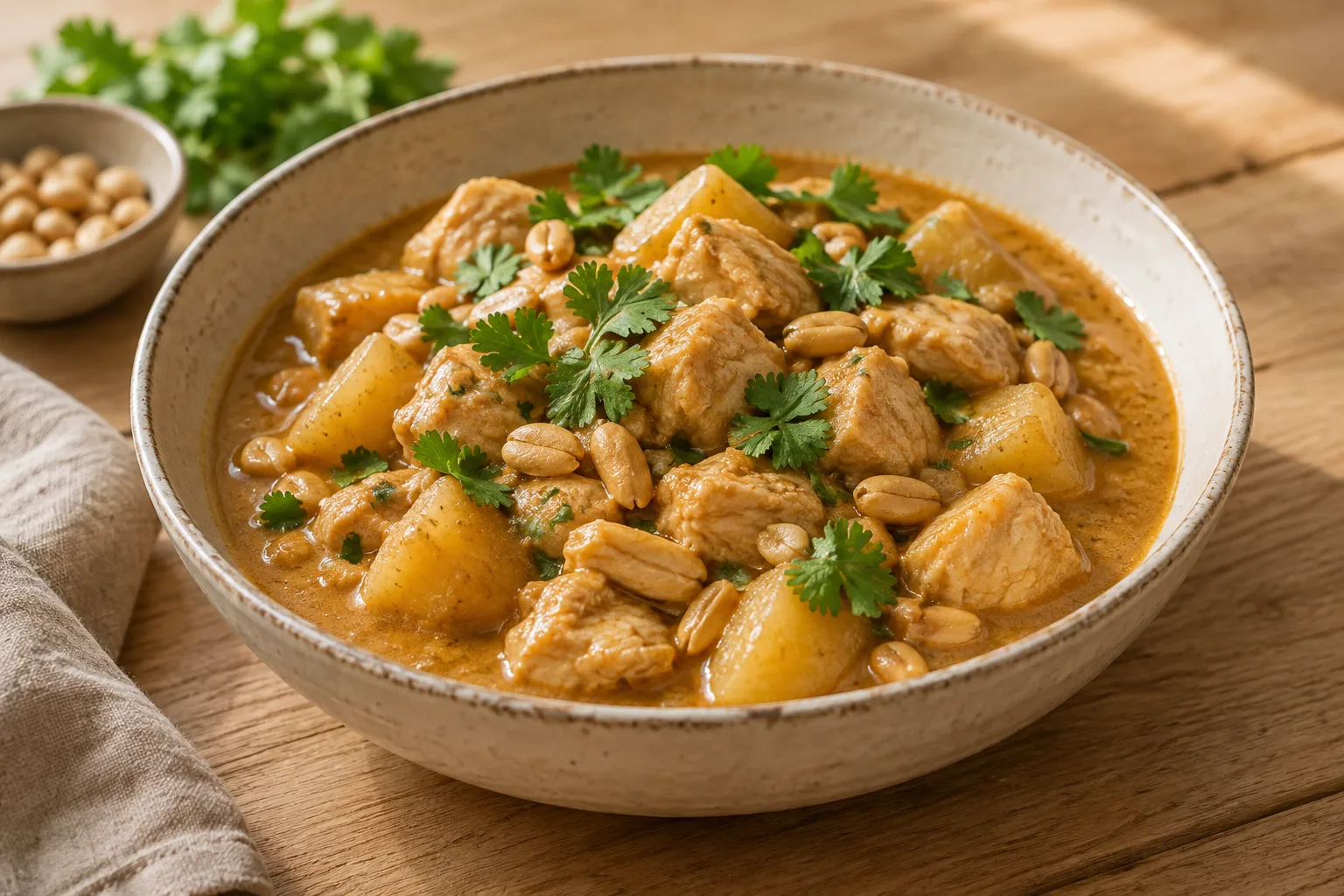
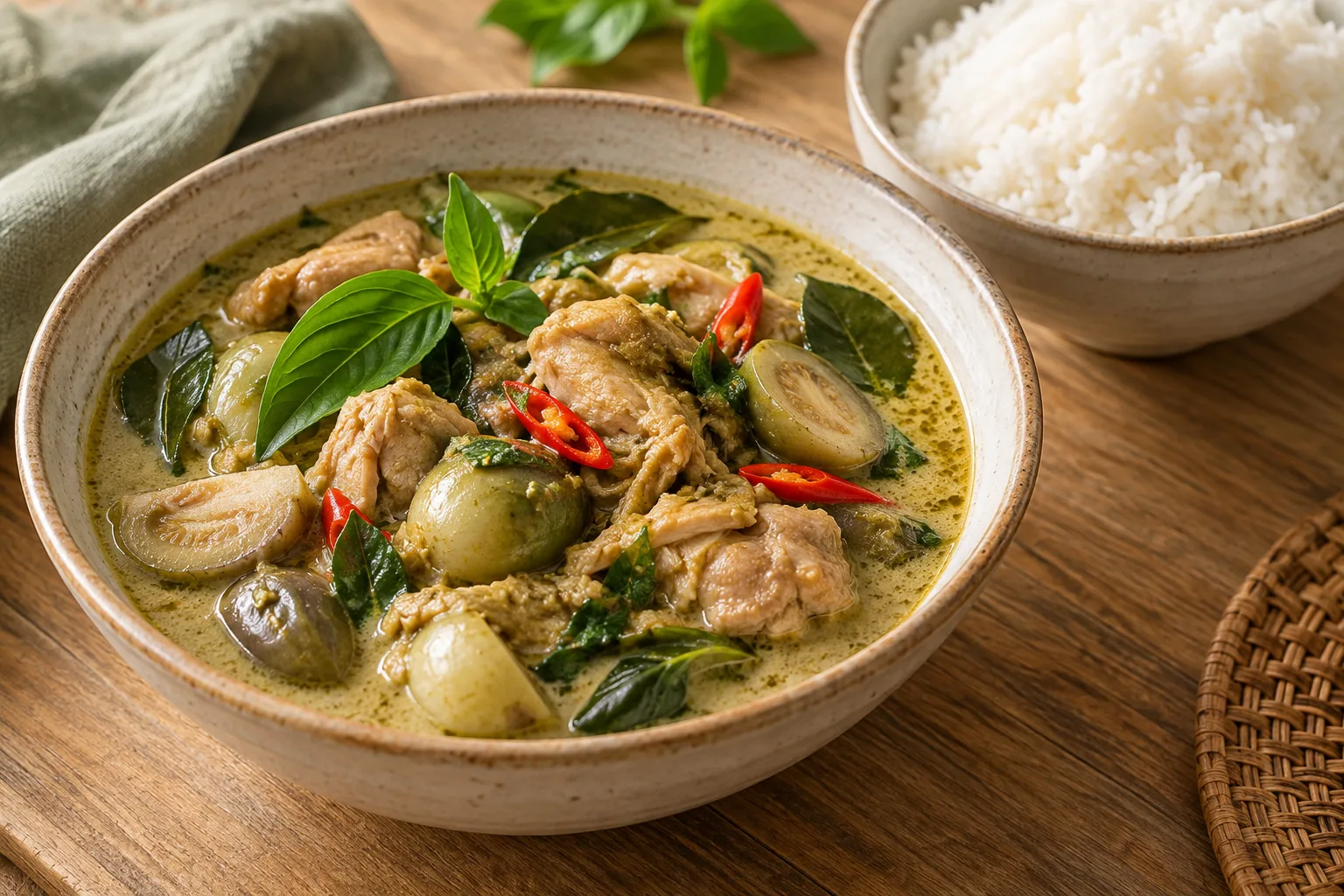
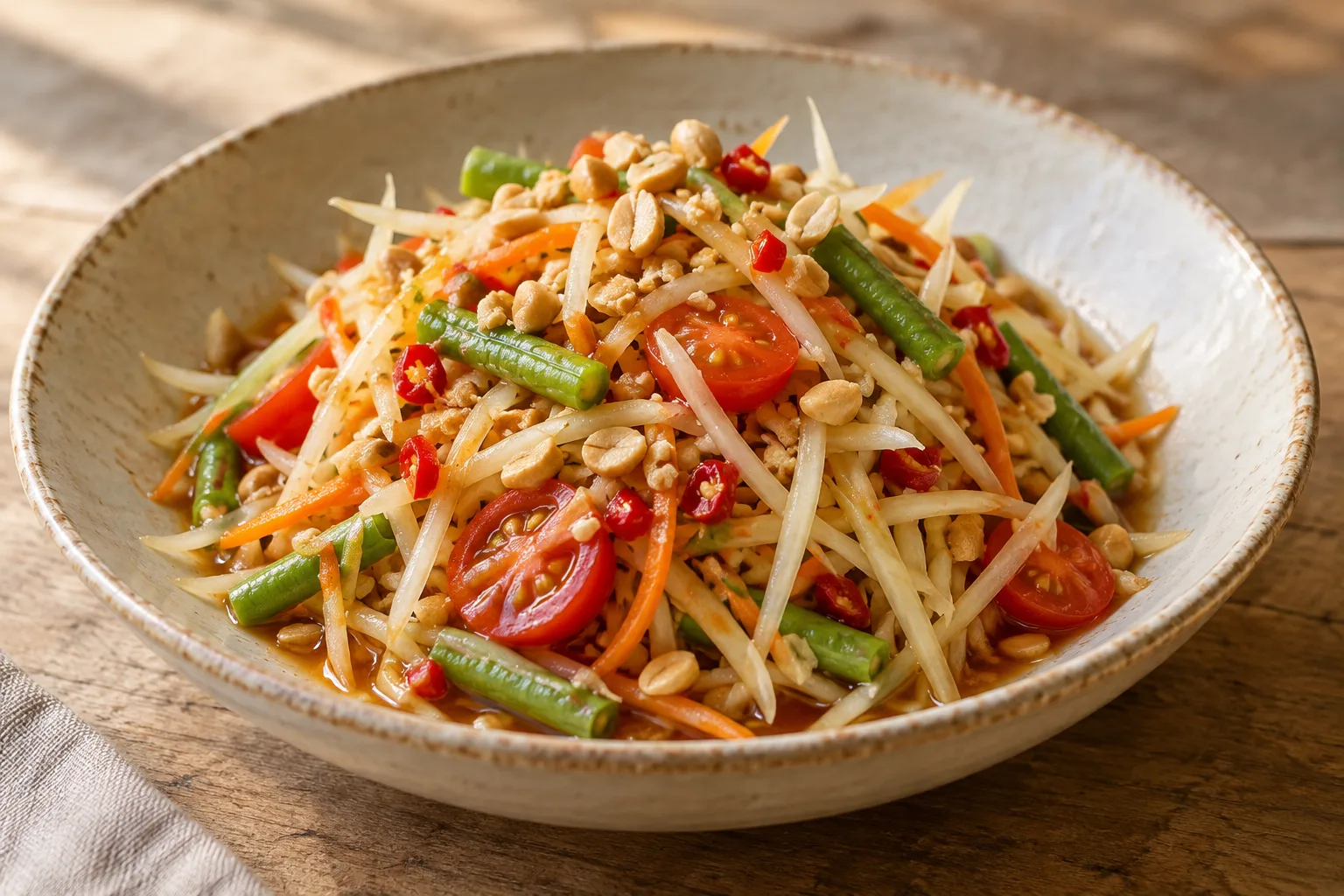
Other histories are less settled. Accounts of som tam connect its roots with Isan and Laos, and describe its spread to Bangkok alongside Isan migration, but they do not establish a single uncontested origin. The salad also exists in distinct versions, including preparations with fermented fish seasoning and sweeter, peanut-topped styles. Accounts of massaman likewise present its origins as unclear, with possible links to southern Thailand and wider Muslim, Malay or Persian connections. Green curry is a different case: one account places its first known printed mention in 1926, while broader claims about when it began remain uncertain. These examples show exchange and adaptation, but do not justify assigning a single outside influence to a whole national cuisine.
Rice, herbs, fruits and seasonings
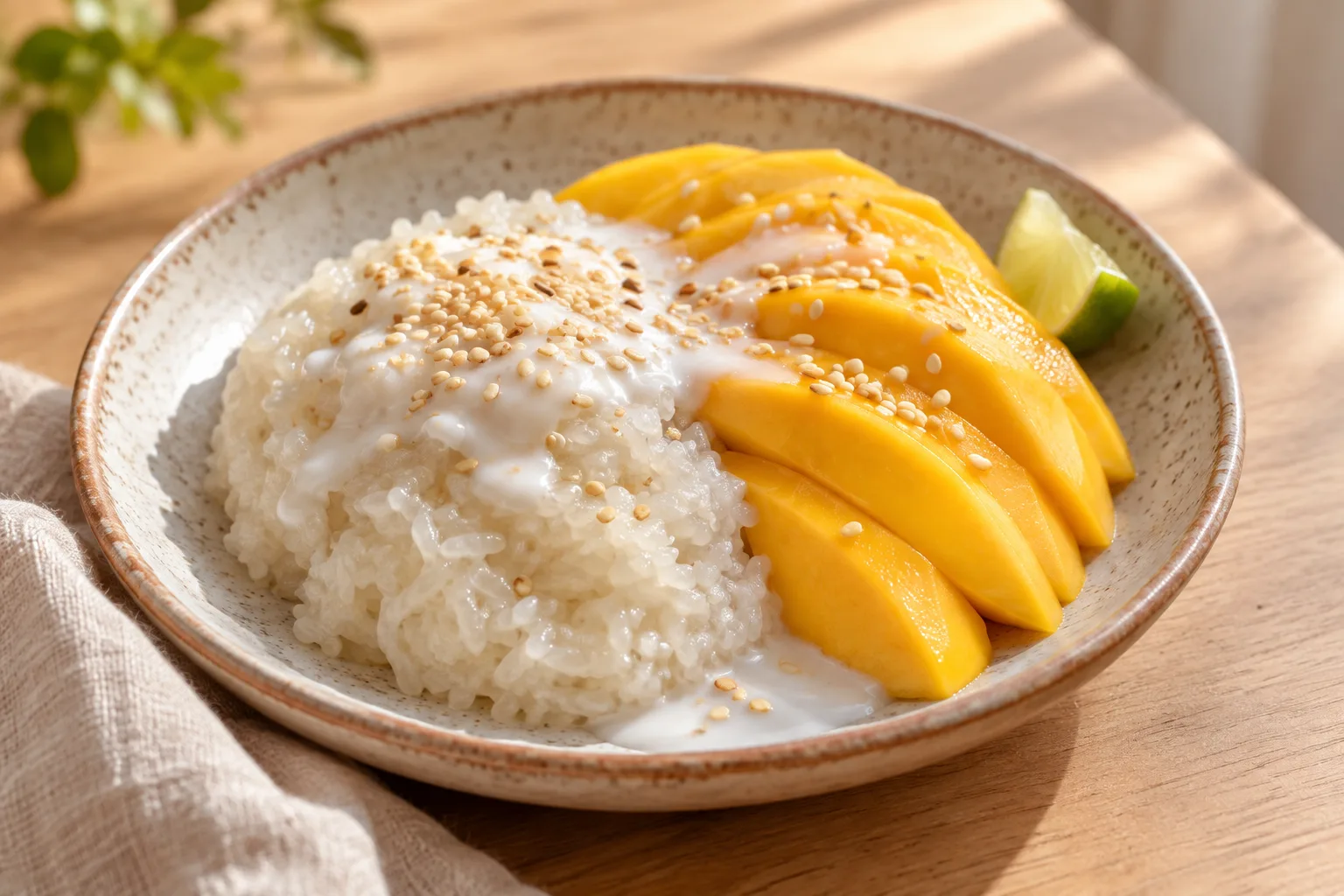
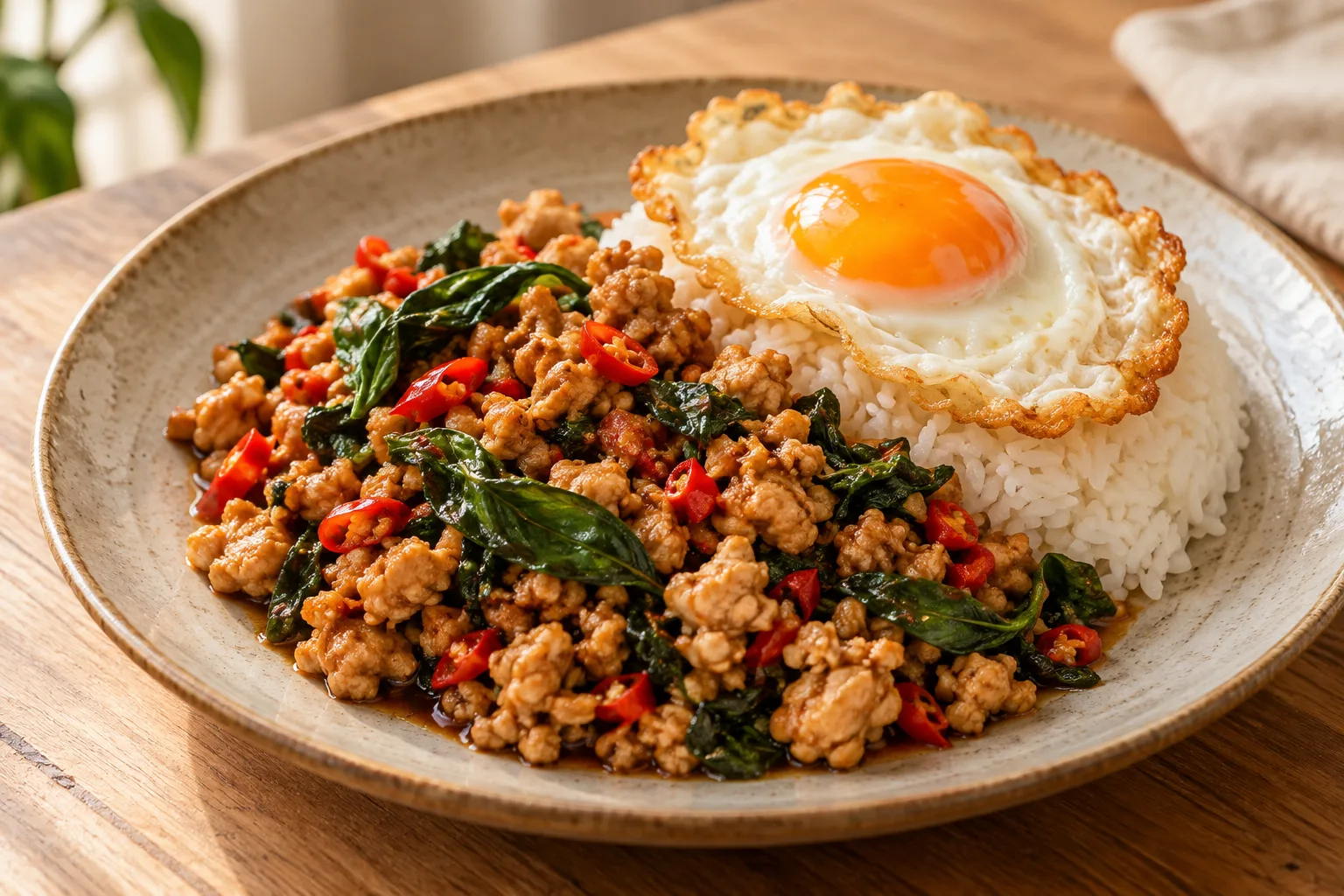
Rice is not one ingredient with one role. Jasmine rice accompanies dishes such as pad kra pao and some soups, while glutinous rice is associated in the evidence with northern and Isan meals and becomes the tender, cohesive base of mango sticky rice. Coconut milk appears in curries and soups, but its role varies: it is central to tom kha gai, gives some tom yum versions a creamy character, and seasons sweet rice in khao niao mamuang.
Aromatic ingredients recur in several preparations: lemongrass, galangal and makrut lime leaves build fragrant soup or curry bases. They are distinct ingredients, not interchangeable labels; the galangal called for in these dishes has its own character. Holy basil gives pad kra pao its identifying aroma, distinct from other basil varieties. For seasoning, fish sauce brings saltiness to some preparations, while pla ra is fermented fish seasoning associated with Isan-style papaya salad. Chilli, lime, palm sugar, dried shrimp and peanuts occur in particular versions of som tam, not every one. Green papaya is used while firm and unripe, providing a crisp base rather than the sweetness of ripe fruit. These ingredients make it possible to identify a version without assuming every household or vendor uses an identical pantry.
Sour, salty, sweet, hot and fragrant
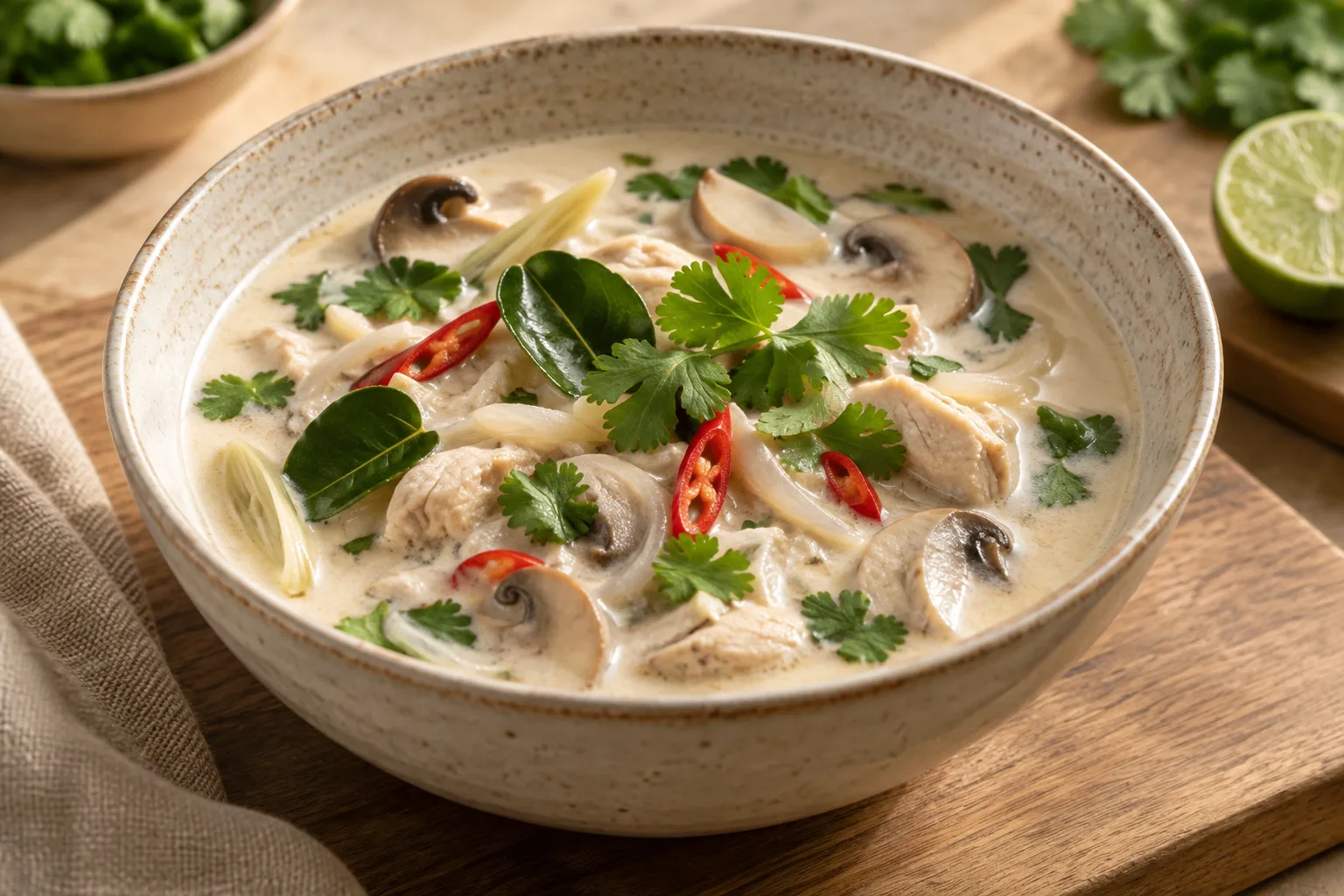
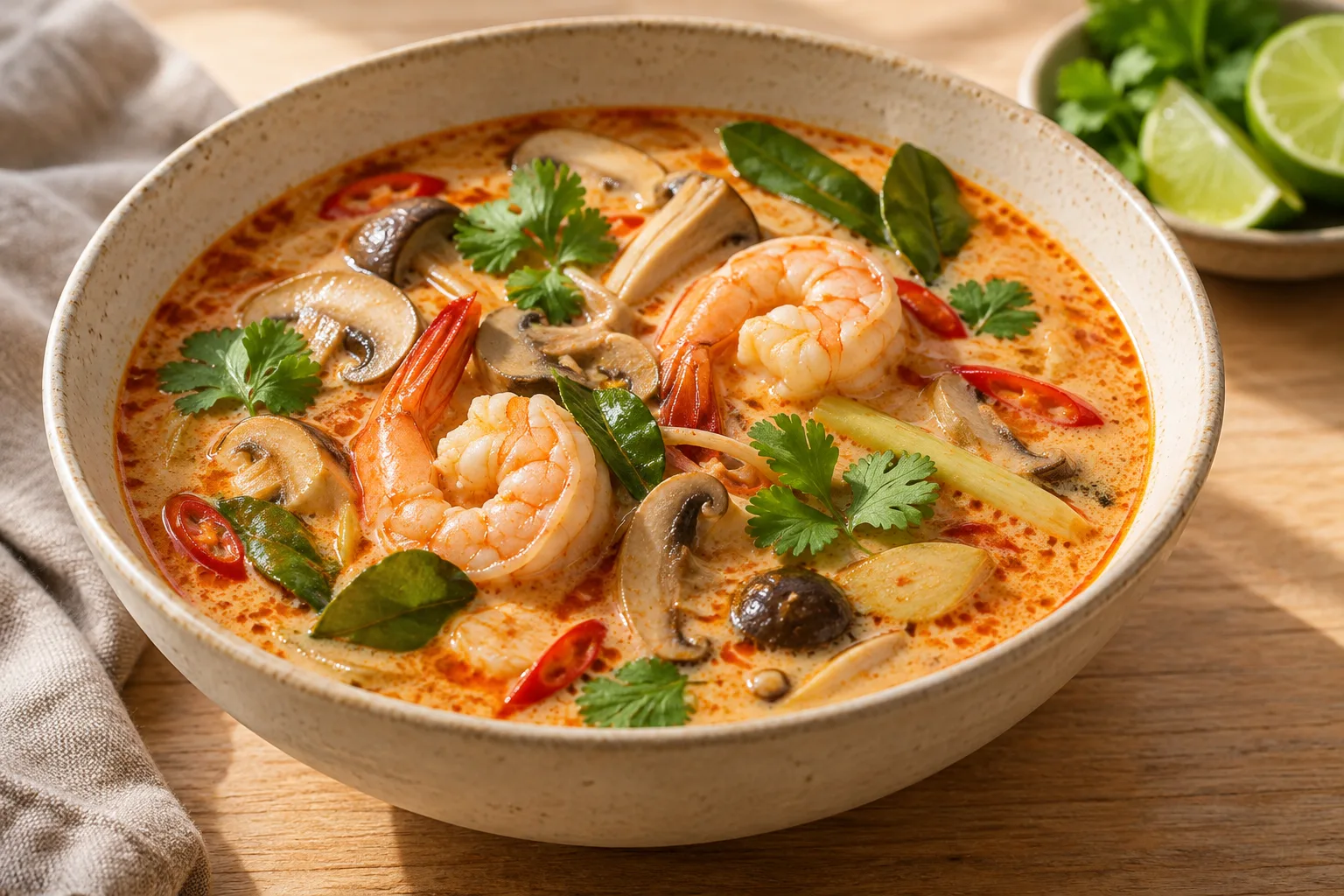
Thai flavor is not adequately described by saying that a dish is spicy. Tom yum brings together chilli heat and sourness with fragrant herbs and savory seasoning; versions differ in their broth, principal ingredient and whether a creamy element is included. Lime juice contributes a fresh acidity, while fish sauce adds salt and depth. In tom kha gai, coconut milk shapes the soup’s body and softens its overall impression, while galangal remains central to its identity. The two soups may share aromatics, but they are not the same preparation.
A different contrast appears in som tam: crisp green papaya meets a dressing built from sour, salty, sweet and hot elements. Versions can lean toward fermented fish seasoning or toward dried shrimp, peanuts and added sweetness. In pad kra pao, garlic and chilli season meat, and holy basil contributes a distinctive, quickly released fragrance; the result is different again from a soup’s layered broth. Coconut-based curries bring their own combination of creamy texture, aromatic paste and heat. Mango sticky rice shifts the frame to ripe fruit, coconut-seasoned sticky rice and, in some versions, a crisp topping. These are not interchangeable expressions of a single balance. Their differences are part of the culinary vocabulary: ingredients have particular functions, and the finished character depends on how a version combines them.
Learning and sharing across generations
Some food traditions are transmitted through repeated practice rather than through a fixed written formula. For tomyum kung, knowledge of ingredient selection, herbs, cooking and the local environment is described as passing orally within families and at social and cultural gatherings. Its wider circulation through schools, universities and restaurants adds other settings for learning, without erasing its community associations. This is a documented example, not evidence that every Thai dish is transmitted in exactly the same way.
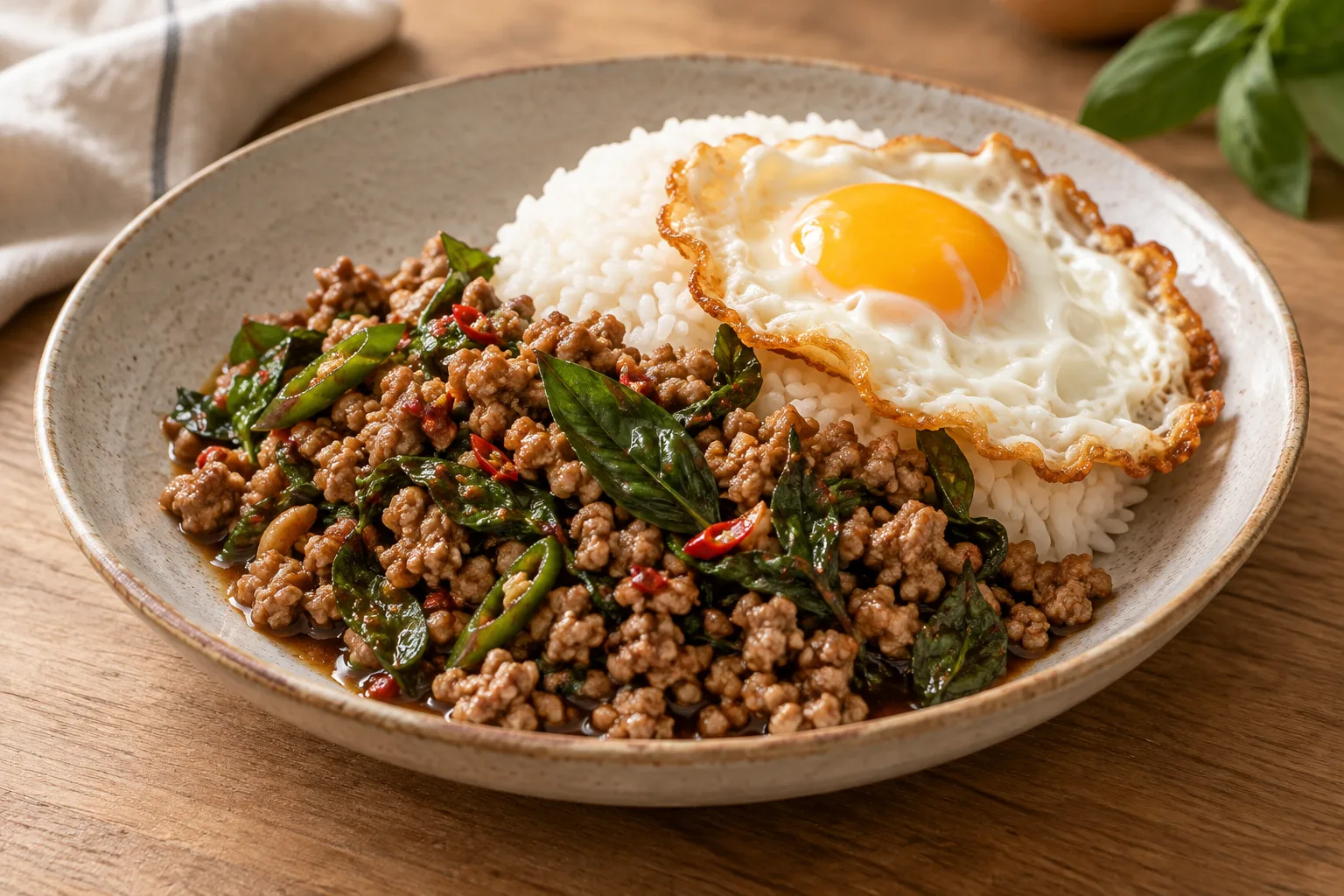
Everyday preparations also show how a dish can travel while retaining recognizable variants. Som tam is prepared and served across Thailand, while its Isan-associated forms and central-style versions can differ in seasoning and accompaniments. Sticky rice is linked in regional materials to northern and Isan foodways; it can be eaten with vegetables and seasoned preparations, and is also the foundation for a sweet with mango and coconut. Pad kra pao is described as a popular quick street-food dish, commonly served with rice and sometimes a fried egg. These examples point to both variation and practical sharing: dishes can be ordered in different forms, eaten with companions, or adapted to preference. No particular festival or compulsory ceremonial menu is needed to understand these documented practices.
Pounding, infusing, steaming and stir-frying
Different Thai preparations rely on distinct operations. In som tam, a mortar and pestle are used to pound garlic and chilli and work the dressing with vegetables; the aim is not necessarily to turn everything into a smooth paste. Green papaya is cut into thin strips and combined with the seasoned mixture so that the dressing coats the crisp pieces. The method explains the dish’s name and texture, while the ingredients and seasoning vary by version.
For tomyum kung and tom kha gai, firm aromatics such as lemongrass and galangal are infused in hot liquid. They contribute fragrance even when some pieces are too fibrous to eat. In many versions, lime is added near the finish to retain its bright character. Coconut milk changes the liquid and texture of tom kha and creamy tom yum; it should not be mistaken for a defining ingredient in every tom yum. Pad kra pao uses a rapid, hot stir-fry: garlic and chilli meet the pan, meat is cooked with seasoning, and holy basil is added near the end so its aroma remains vivid. Mango sticky rice relies on another technique: glutinous rice is commonly steamed, then dressed with sweetened coconut milk. These methods explain texture and timing rather than prescribing one universal recipe.
Rice, accompaniments and the shape of a meal
The dishes in this atlas are not necessarily a set menu. Rice is a useful point of comparison: jasmine rice accompanies pad kra pao, and some accounts serve soup with rice; sticky rice is named alongside northern and Isan preparations and is also paired with som tam. These accompaniments help explain a dish’s place in a meal. They do not mean every region or household serves food in one prescribed order.
Papaya salad illustrates how a main preparation can belong to a wider table. It may be eaten with sticky rice or rice noodles, and accounts of Isan-style meals describe it alongside grilled or fried dishes and fresh vegetables. Those pairings bring contrasts in texture and heat, and a version with fermented fish seasoning differs from one built with dried shrimp and peanuts. A bowl of soup may be served with its aromatic ingredients still present; some are there to scent the broth rather than to be eaten. Mango sticky rice offers a different kind of closing course: fruit beside coconut-seasoned glutinous rice, with additional coconut sauce in some versions. The documented evidence supports family and social gatherings as settings for food knowledge to be shared, especially for tomyum kung. It does not establish a required ritual, feast calendar or single formal structure for Thai meals.
A glossary of dishes and ingredients
These terms identify particular preparations, ingredients and textures. Spellings vary in English transliteration, and a shared name does not guarantee that every cook uses the same recipe.
- �Tom yum: A hot, aromatic soup family whose seasoning commonly combines sourness and chilli heat. Tom yum goong names the prawn version; creamy and clear versions both occur.
- �Tom kha gai: Chicken soup in which kha refers to galangal. Coconut milk and fragrant aromatics distinguish it from tom yum.
- �Pad kra pao: A quickly stir-fried dish named for holy basil, commonly made with meat and served with rice; versions vary in protein and seasoning.
- �Som tam: Pounded salad, often made with crisp green papaya. Isan-associated versions may include pla ra, fermented fish seasoning.
- �Khao niao: Glutinous, or sticky, rice. It is associated with northern and Isan foodways and also appears in sweet preparations.
- �Khao niao mamuang: Glutinous rice served with ripe mango and sweetened coconut milk.
- �Nam prik: A broad term for seasoned chilli preparations, encountered with accompaniments in northern food materials.
- �Galangal and makrut lime leaves: Aromatics used to scent soups and other preparations; galangal is a rhizome, while the leaves contribute a citrus fragrance.
- �Pla ra: Fermented fish seasoning associated with some Isan preparations, including versions of papaya salad.
One country, many cuisines
Central Plains and Bangkok
The central plains are documented as the setting of tomyum kung among Buddhist riverside communities. Freshwater prawns, herbs such as lemongrass, galangal and makrut lime leaves, and local seasoning are part of this account. Knowledge of ingredient selection, cooking and the environment is transmitted within families and at social and cultural gatherings. This regional association explains one documented food tradition; it does not make every version of the soup, or the region’s entire cuisine, identical.
Isan and the Northeast
Isan foodways are documented through glutinous rice, vegetables, and preparations such as papaya salad. Some Isan-associated som tam versions use pla ra, fermented fish seasoning, while other versions have different dressings and accompaniments. Accounts also connect Isan food with neighboring Laos, but the salad’s precise origin is not established as exclusive to one place. These references describe a varied repertoire, not a complete definition of northeastern cooking.
Northern Thailand and Lanna Repertoires
Northern food materials identify glutinous rice and nam prik preparations as useful entries into regional eating, often considered alongside vegetables and other accompaniments rather than as isolated dishes. Broader descriptions also point to northern connections with southern Chinese and Burmese cooking. These references support a distinct northern context, but do not show that all northern meals share one fixed composition or that every preparation called nam prik is the same.
Cook