- Category
- Herbs and spices
- State
- Dry
- Usual unit
- Variable
What it is
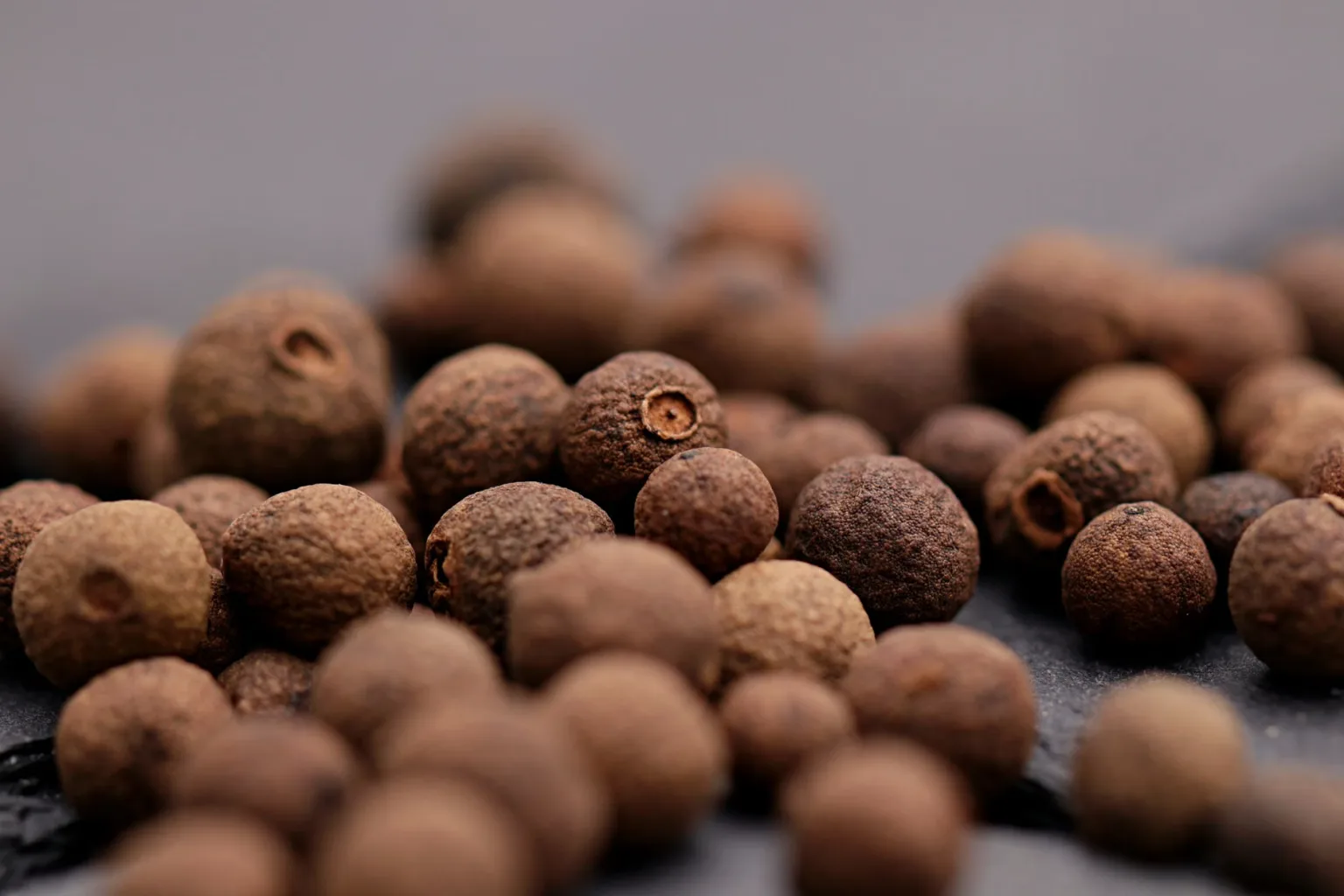
Allspice is a spice made from the dried fruits of Pimenta dioica. It is also known as Jamaica pepper or Mexican pepper, but it is not black pepper from Piper nigrum. The name can be misleading: allspice is not a blend of several seasonings. It is one dried fruit whose aroma brings to mind clove, cinnamon, nutmeg and pepper. It is sold whole or ground; whole berries can be crushed or ground to suit a recipe. Its warm, pronounced flavor can give a distinctive character to both savory and sweet dishes, so it is best added with care, especially when the other ingredients have delicate flavors.
When to use it
Choose allspice when you want a warm, complex aroma without adding several separate spices. It works particularly well in stews and meat dishes, as well as marinades and seasoning rubs. It can also add character to desserts and drinks when you want notes reminiscent of clove, cinnamon and nutmeg. When trying it in a new recipe, begin with a small amount and taste before adding more: its flavor is pronounced and may overwhelm delicate ingredients. Do not treat it as interchangeable with black, green or white pepper, which are different products with different flavor profiles.
How to use it
Add whole berries to cooking liquids, marinades or seasoning mixtures, or crush or grind them so they disperse more evenly through a sauce or blend. If you use whole berries, consider removing them before serving so that diners do not bite into a hard piece. Ground allspice can be stirred into sweet dishes and spiced drinks. Start with a pinch or other small amount, taste the preparation, and add more only if needed; this helps prevent its warm notes from masking the main ingredient. Check the label to confirm whether you have whole berries or ground spice, since the two forms are used differently.
Flavour and texture
Allspice has a warm, complex aroma with notes reminiscent of clove, cinnamon, nutmeg and pepper. It is not exactly the same as any one of those seasonings. The dried whole berry is firm and needs crushing or grinding to disperse easily; ground allspice can be stirred directly into a preparation. Its pronounced profile can be used in savory or sweet recipes, so add it gradually to keep the flavors balanced.
How to choose it
Look for a label that says allspice, Jamaica pepper or Pimenta dioica so you do not confuse it with black pepper or another product called pepper. Choose whole berries or ground spice according to how you plan to cook: whole berries can be crushed or ground, while ground allspice can be added directly. Check that the package is sealed and that it contains the form you need. The available information does not establish a quality grading system or a buying season.
Storage
Allspice is sold as a dried fruit rather than as a fresh ingredient. Keep the package closed in a dry place to avoid moisture, and follow any storage directions printed on the label. If you buy whole berries, keep them whole until you are ready to use them and grind only what you need. The available information does not establish a specific storage life, so do not assume a fixed duration; check the product before using it.
Substitutions
There is no exact substitute that reproduces all of allspice’s flavor. A combination of cinnamon and clove can approximate some of its aromatic notes; adding nutmeg can bring the mixture closer to its complex profile. Adjust cautiously and taste the blend before adding it to the full recipe. The result may resemble some aspects of allspice, but it will not be identical and may change the balance of the dish.
Common mistakes
Do not confuse allspice with black, green or white pepper: it is a different spice, with aromatic notes that also recall clove, cinnamon and nutmeg. Another common mistake is adding too much at once; its pronounced profile can cover other flavors. Whole berries do not dissolve like a powder and can be hard to bite into. For a more even texture, crush or grind them before mixing them into a preparation.
Safety and allergens
Use allspice as a seasoning and avoid accidentally biting into whole berries, which are hard. Check the product label and package directions, especially if you have a known food allergy. The available information does not identify a specific warning or establish that the product is free from allergens.
Culinary uses
- Especia aromática para guisos, marinadas y adobos
- Condimento para bebidas y preparaciones dulces
Recommended techniques
- Añadir los frutos enteros a líquidos de cocción o marinadas y retirarlos antes de servir si se desea una textura uniforme
- Moler o machacar los frutos secos para repartir su aroma en mezclas y salsas
Pairs well with
- Carnes y guisos
- Marinadas y adobos
- Postres y bebidas
Frequently asked questions
Is allspice a blend of spices?
No. It is the dried fruit of Pimenta dioica. Its aroma recalls several spices, including clove, cinnamon and nutmeg, but it is not a blend of them.
Is allspice the same as black pepper?
No. Allspice is a different spice with a warm, complex profile. It should not automatically be replaced with black pepper.
What dishes can I use allspice in?
It is used in stews, meat dishes, marinades and seasoning rubs, and can also flavor desserts and drinks. Start with a small amount and adjust to taste.
Ingredient allergens
Allergen listThere are no verified associations for these ingredients yet.
Estimated nutrition
- Fat
- 0 g
- Saturates
- 0 g
- Carbohydrate
- 0 g
- Sugars
- 0 g
- Protein
- 0 g
- Salt
- 5 g
Sources and review
Automatically researched, cross-checked and validated content. Sources consulted:
- ¿Por qué la muerte es origen de miedos y tabúes? doi.org/10.64628/aao.fccyk3qj3
- Client Challenge doi.org/10.2307/jj.27939689.16
- Pimienta- Gastronomía - Región de Murcia Digital www.regmurcia.com/servlet/s.Sl?r=ReP-20127-DETALLE_REPORTAJESPADRE&sit=c%2C543%2Cm%2C2719
- Curry - Wikipedia, la enciclopedia libre es.wikipedia.org/wiki/Curry
- USDA FoodData Central libguides.marist.edu/fdc
- - YouTube www.youtube.com/watch?v=KcW-Dip4O4I
- Especia - Wikipedia, la enciclopedia libre es.wikipedia.org/wiki/Especia
- El “lujo culinario”: elites, cocina y poder en el espacio Atlántico | OpenAlex openalex.org/W4408399161
- Tipos de pimienta: variedades, sabores y usos en cocina munozypujante.com/tipos-de-pimienta/
- 7 ways to reduce food waste - Mayo Clinic Health System sncs-prod-external.mayo.edu/hometown-health/speaking-of-health/7-ways-to-reduce-food-waste-i…
- NYC Cooking School | ICE Recreational Classes recreational.ice.edu/
- El cáñamo (Cannabis sativa L.): usos tradicionales e interés de sus semillas en alimentación y salud | OpenAlex openalex.org/W3170339604
- La pimienta - La Despensa de Cercedilla ladespensadecercedilla.com/la-pimienta/
- ¿Cómo usar la pimienta en la cocina? | Recetas Nestlé www.google.com/goto?url=CAEShQEB6zswFfgx6Bm2OU3IOuINeYiJgaSguxZu-qlLMleGHqmls0DsDsd2IYwksouZ…