- Category
- Vegetables
- State
- Fresh
- Usual unit
- g
What it is
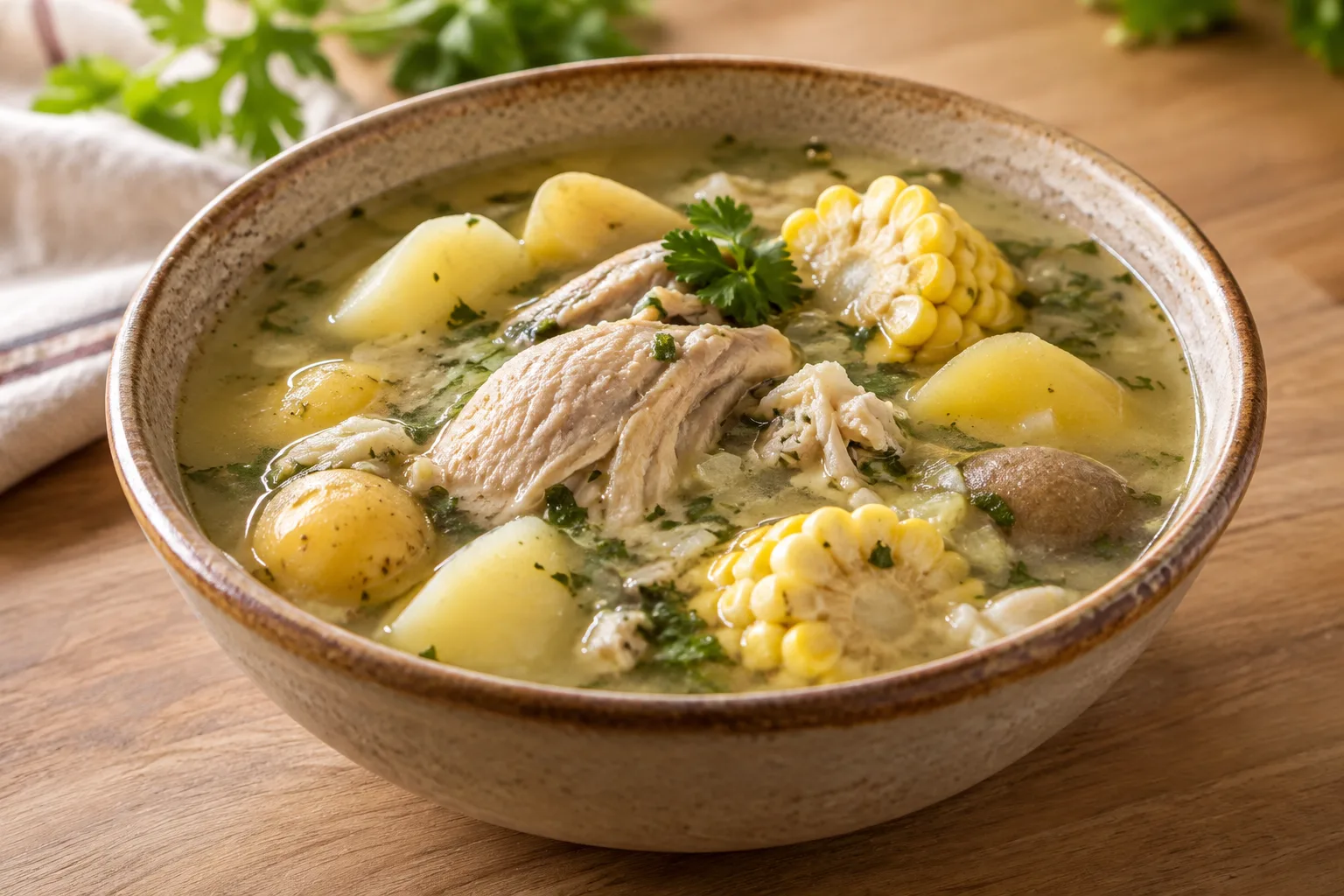
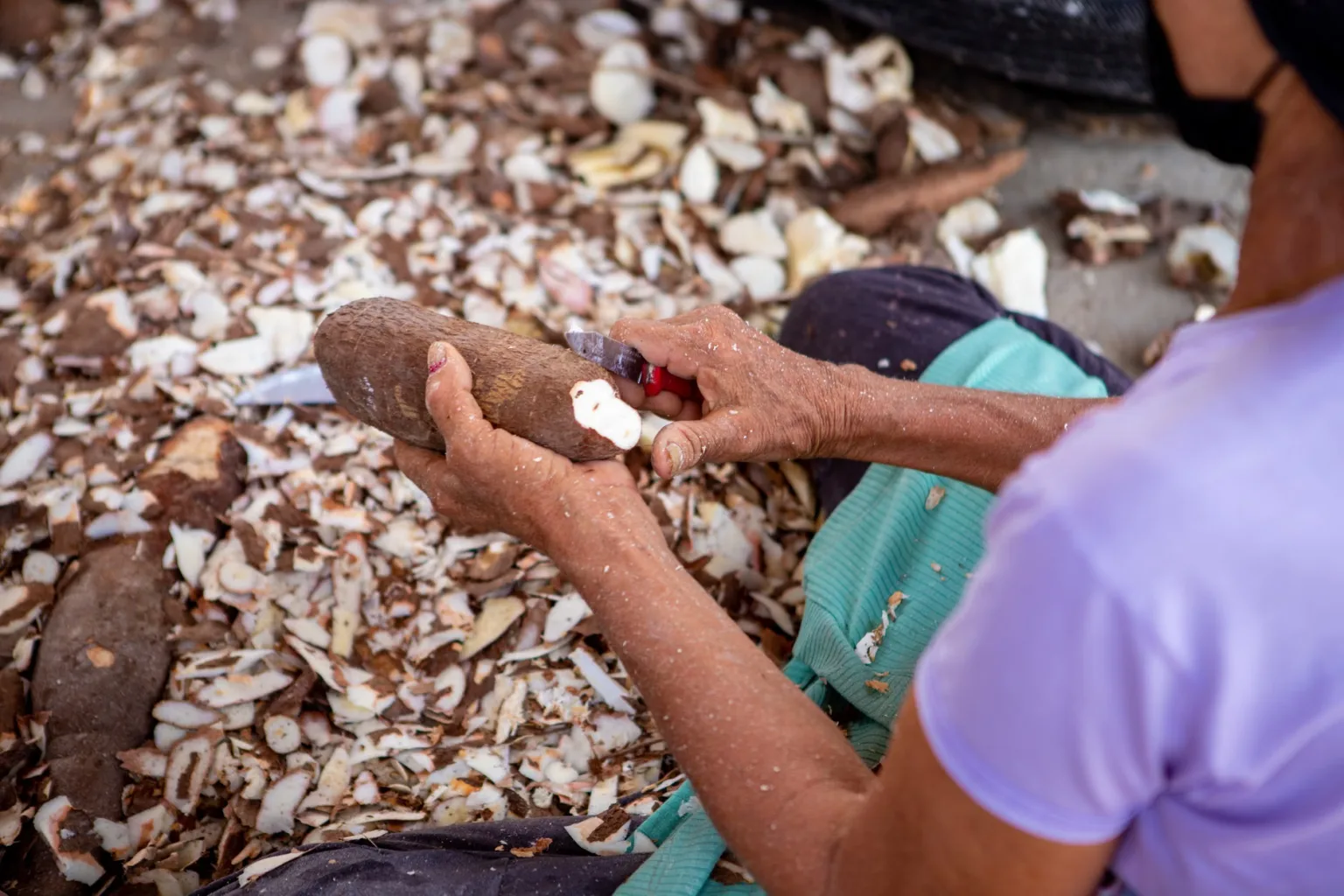
Arracacha is the edible root of a plant known botanically as Arracacia xanthorrhiza. Although it is sometimes casually called a tuber, the part used in cooking is a thickened, fleshy root. It resembles a thick carrot, and its flesh may be white, yellow or purple depending on the variety. Fresh arracacha is used in several Latin American cuisines, especially in soups and stews. It can also be made into purée, cakes, fried dishes and desserts. Once dried and ground, it is available as flour or powder for particular preparations.
When to use it
Choose arracacha when you want to add a mild, gently sweet root to a soup, stew or broth. It is also used for purées, cakes, fried dishes and desserts. In some regional cooking it is added to sancochos and other soups; elsewhere it is served as a side or made into flour. If you have arracacha flour rather than fresh root, use it for preparations suited to that form, such as thickening soup or making mazamorra. It is not interchangeable with fresh root in every recipe.
How to use it
Clean the root, peel it and cut it before adding it to soups, stews or broths. You can also cook it and mash it into a purée, or cut it for frying. Arracacha is used in cakes and desserts as well. If you have arracacha flour or powder, it can be used in soup as a thickener or in mazamorra. Dried, ground arracacha behaves differently from fresh root, so do not assume the same quantity will give the same result. Adjust the preparation to the form you have and the role you want it to play.
Flavour and texture
Arracacha is valued for its pleasant, mild and slightly sweet flavor. Its flesh may be white, yellow or purple depending on the variety, so its colour is not always the same. Cooked, it works in soups, stews and purées; frying gives it a different texture and presentation. Flour is a dried, ground form and is used differently from the fresh root.
How to choose it
Choose firm roots with a fresh smell. Fresh arracacha may be available in markets and supermarkets, although availability depends on location. Varieties can have white, yellow or purple flesh, so colour alone does not mean that a root is spoiled. If buying flour or powder, check that the package is intact and follow the storage directions on its label.
Storage
Keep fresh arracacha unpeeled in a bag in the refrigerator vegetable drawer. It is perishable; one culinary reference notes that it may keep for less than a week, with condition and storage affecting its life. Freezing peeled root cut into thick pieces is also described as an option for longer storage. Follow the package directions for arracacha flour.
Substitutions
Arracacha flour or powder can be used in soup as a thickener and in mazamorra, but these are dried forms, not identical replacements for fresh root. There is no established quantity that works as a universal substitute. If a recipe depends on pieces of cooked root or its texture, flour will not give the same result; use it only when thickening or the preparation itself allows.
Common mistakes
Do not assume every arracacha has the same colour: the flesh varies by variety. Do not treat flour as if it were fresh root; it is used differently, for example as a thickener or in mazamorra. When buying, avoid roots that are soft or lack a fresh smell. For the storage method described, keep the root unpeeled rather than storing it peeled in the refrigerator.
Safety and allergens
Fresh arracacha is perishable, so refrigerate it and discard pieces with clear signs of spoilage. Follow the label's storage directions for packaged products. If you have a food allergy, check labels on processed products and contact the manufacturer if the information is insufficient.
Culinary uses
- Root vegetable for soups and stews
- Base for purées, cakes and desserts
- Ingredient for fried preparations
- Thickener when dried and ground into flour
Recommended techniques
- Peel and cook in soups or stews
- Boil and mash into a purée
- Fry
- Use arracacha flour to thicken soups or prepare mazamorra
Pairs well with
- Soups and stews
- Meat, chicken or tripe broths
- Purées and cakes
- Sweet preparations and desserts
Frequently asked questions
Which part of arracacha is eaten?
The thickened root is the part commonly used in cooking. Its flesh may be white, yellow or purple, depending on the variety.
How can arracacha be cooked?
It is used in soups and stews and can also be made into purée, fried dishes, cakes or desserts.
How should fresh arracacha be stored?
Keep it unpeeled in a bag in the refrigerator vegetable drawer. It is perishable, so check its condition before use.
Ingredient allergens
Allergen listThere are no verified associations for these ingredients yet.
Sources and review
Automatically researched, cross-checked and validated content. Sources consulted:
- Alérgenos alimentarios | EFSA www.efsa.europa.eu/es/safe2eat/food-allergens
- Tipos de Maridaje: de afinidad o contraste | Bartalent Lab www.bartalentlab.com/academy/tecnicas-sala-barra/clases-maridaje-combinacion-comida-bebida
- Agencia Española de Seguridad Alimentaria y Nutrición www.aesan.gob.es/
- La guía práctica para un buen maridaje - Industrias Espadafor S.A. espadafor.es/guia-para-un-buen-maridaje/
- Maridaje en gastronomía: guía fácil para combinar sabores elcarbondevalentina.madrid/blog/maridaje-en-gastronomia/
- Técnicas de extracción de sabores y su armonía www.enciclopediadegastronomia.es/articulos/misterios-de-la-cocina/tecnicas-de-extraccion-de-…
- Food Allergies | FDA www.fda.gov/food/nutrition-food-labeling-and-critical-foods/food-allergies
- Food allergens | Food Safety and Quality | FAO www.fao.org/food-safety/scientific-advice/food-allergens/en
- Food allergen portal | Food Standards Australia New Zealand www.foodstandards.gov.au/consumer/foodallergies/food-allergen-portal
- Efecto del tiempo en cocción y en fritura en las características fisicoquímicas y aceptabilidad de la Arracacia xanthorhiza “arracacha”, de la variedad amarilla repositorio.untrm.edu.pe/handle/20.500.14077/1389
- Arracacia xanthorrhiza - Wikipedia, la enciclopedia libre es.wikipedia.org/wiki/Arracacia_xanthorrhiza
- Cerro Punta - De la Tierra a la Mesa: La Versatilidad de la Arracacha cerropunta.net/blogs/news/de-la-tierra-a-la-mesa-la-versatilidad-de-la-arracacha?srsltid=AYC…
- Recetas fáciles y prácticas - ensumesa www.ensumesa.com/ingrediente/arracacha
- - YouTube www.youtube.com/watch?v=oi83_h7NQ84
- ¿Para qué sirve la arracacha? El tubérculo andino que ha marcado a varias generaciones www.elespectador.com/la-huerta/para-que-sirve-la-arracacha-el-tuberculo-andino-que-ha-marcad…