- Category
- Herbs and spices
- State
- Fresh
- Usual unit
- Variable
What it is
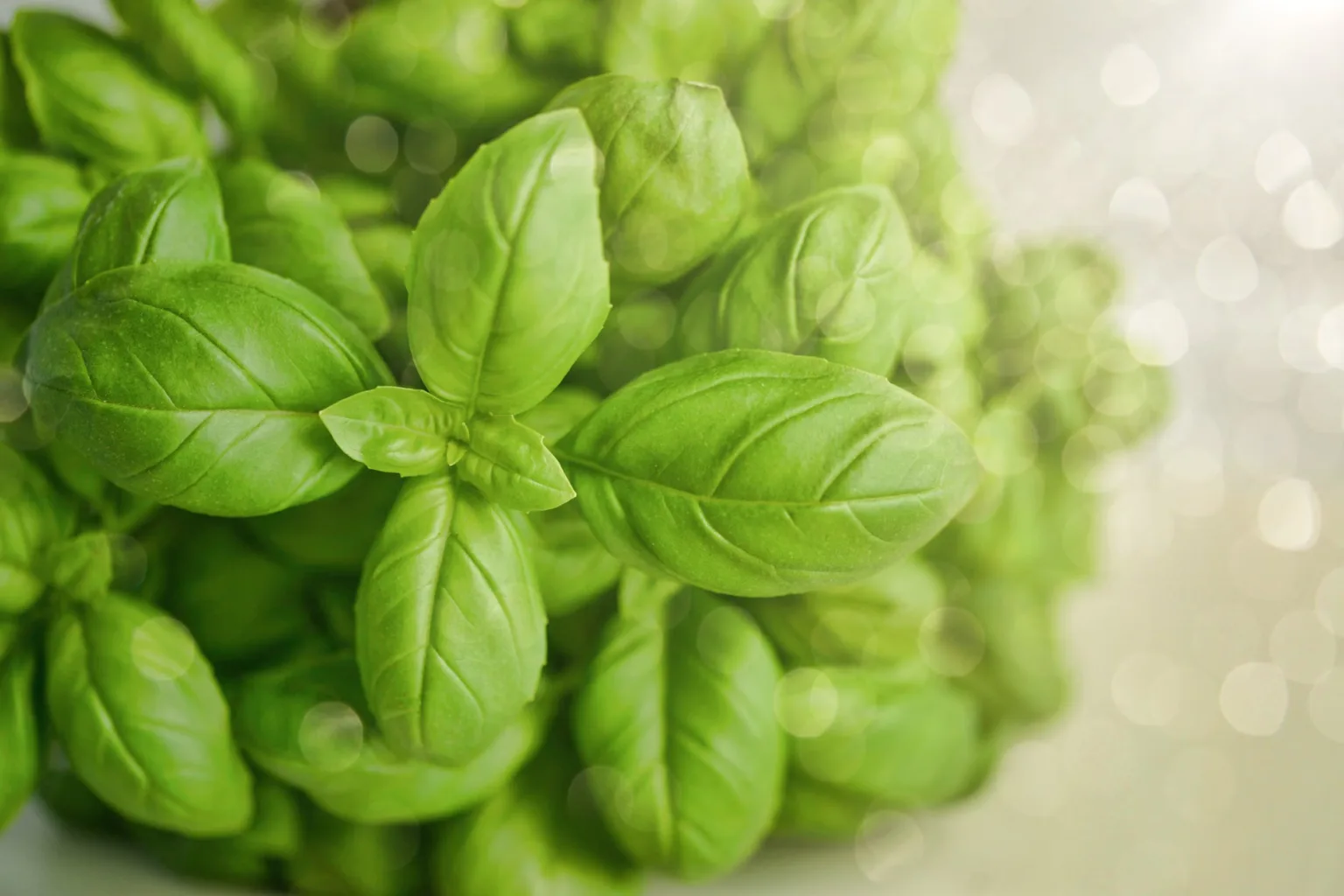
Basil is an aromatic herb whose leaves are used to season many kinds of food. Common or sweet basil, Ocimum basilicum, belongs to the mint family, Lamiaceae. Leaves may be green or purple depending on the variety, and different basils do not have identical aromas: some suggest anise, clove, or lemon. This profile is about fresh leaves, which can be used whole, torn, or chopped. Common basil should not be confused with holy basil, which is a different species.
When to use it
Choose fresh leaves when you want a lively aromatic note in salads, pesto, pasta, pizza, sauces, or tomato dishes. Basil also pairs well with eggplant, peppers, eggs, fish, and soft or creamy cheeses. To retain more of its fresh aroma, add it during the last few minutes of cooking or just before serving rather than leaving it in a long simmer. You can add it earlier to a soup or stew when you want the flavor to blend in more, while expecting a less pronounced fresh-herb character.
How to use it
Remove the leaves from the stems and use the tender leaves whole, torn, or chopped, depending on the texture you want. For salads, pizza, and garnishes, add whole or torn leaves shortly before serving. For pesto, blend the leaves with olive oil, garlic, and pine nuts; cheese can complete the sauce. Fresh basil can also go into pasta sauce, vegetable soup, scrambled eggs, or vegetable dishes. Add it near the end of cooking to preserve more aroma. To keep basil for later, it can be dried or frozen; dried basil has a different flavor profile and may taste more concentrated.
Flavour and texture
Fresh basil is fragrant, usually sweet in flavor, and refreshing. Its character depends on the variety: some types are more anise-like, citrusy, or spicy, while purple basil may have a more peppery note. The leaves are tender and delicate. Drying concentrates the flavor and can make it seem more minty or bitter. Appearance and taste vary among cultivars, so changing varieties can change the result of a dish.
How to choose it
Look for leaves that appear fresh, have the color typical of their variety, and show no obvious wilting, damage, or dirt. Common basil is often green, but purple varieties and basils with different aromas are also available. When buying a bunch, check that the leaves are not crushed and the stems do not look deteriorated. Aroma can help indicate a variety's character, but basils do not all smell alike; some have citrus, anise, or spice notes.
Storage
Handle fresh leaves gently because they are tender and can be damaged easily. Remove spoiled leaves and avoid storing them wet or crushed. Basil can be frozen or dried for longer keeping. Tender-leaved herbs such as basil contain more moisture, so drying requires low humidity and good air circulation to reduce the risk of mold. Store leaves once they are fully dry. Dried basil does not taste exactly like fresh basil.
Substitutions
Dried basil can replace fresh leaves when fresh basil is unavailable, but its flavor may be more concentrated, minty, or bitter. Another basil variety can also season a dish, although it may change the flavor profile: lemon or Thai basil, for instance, will not taste exactly like common basil. Add an alternative gradually and taste as you go.
Common mistakes
A common mistake is adding basil too early to a long-cooking dish, which can diminish its aroma. Do not assume every variety tastes the same: Thai, lemon, and common basil have different flavor profiles. When replacing fresh basil with dried, remember that the dried herb may taste more concentrated, minty, or bitter.
Safety and allergens
Handle fresh leaves with clean hands and utensils. Remove visibly dirty or spoiled leaves, and follow local food-safety guidance for fresh produce.
Culinary uses
- Fresh aromatic seasoning
- Herb for sauces, salads, soups, and garnishes
Recommended techniques
- Use leaves whole or chopped
- Add near the end of cooking or just before serving
- Dry leaves for later use
Pairs well with
- Tomatoes
- Olive oil, garlic, and pine nuts
- Pasta and vegetables such as eggplant
- Eggs, fish, and soft cheeses
Frequently asked questions
When should I add fresh basil to hot food?
Add it during the last few minutes of cooking or just before serving to preserve more of its aroma.
Can I use dried basil instead of fresh?
Yes. Dried basil may taste more concentrated, minty, or bitter, so adjust the amount and taste the dish.
Do all basil varieties taste the same?
No. Some varieties have citrus, anise, or spicy notes, so choosing a different one can change a recipe's flavor.
Ingredient allergens
Allergen listThere are no verified associations for these ingredients yet.
Sources and review
Automatically researched, cross-checked and validated content. Sources consulted:
- The Essential Glossary of Cooking Terms for the Culinary Arts - Escoffier www.escoffier.edu/blog/culinary-arts/the-essential-glossary-of-cooking-terms-for-the-culinar…
- Ocimum basilicum - Wikipedia, la enciclopedia libre es.wikipedia.org/wiki/Ocimum_basilicum
- Hojas de Albahaca Santa doi.org/10.31003/uspnf_m7444_02_02
- Washington State Food Access English-Spanish Glossary wpcdn.web.wsu.edu/wp-snaped/uploads/sites/2/2025/10/Food-Access-Spanish-Glossary.pdf
- Vamos a Conservar Alimentos: El secado de las plantas medicinales y aromáticas extension.psu.edu/vamos-a-conservar-alimentos-el-secado-de-las-plantas-medicinales-y-aromati…
- Para la ciudadanía www.aesan.gob.es/para-la-ciudadania
- Albahaca- Gastronomía - Región de Murcia Digital www.regmurcia.com/servlet/s.Sl?r=ReP-19968-DETALLE_REPORTAJESPADRE&sit=c%2C543%2Cm%2C2719
- Albahaca: qué es, para qué sirve y beneficios bonviveur.com/es/noticias/albahaca
- UTIA Real. Life. Solutions. solutions.tennessee.edu/publication/SP813C-ES/
- basil | UNL Food food.unl.edu/taxonomy/term/382/
- Cultivo de albahaca en huertos familiares | Extensión de la UMN es.extension.umn.edu/garden-and-home/yard-and-garden/yard-and-garden-problems/growing-basil
- Pizza Pita de Tomate y Albahaca - MyLLU myllu.llu.edu/utilities-fileManager/action:image/?item=%2Flivingwhole%2Frecipes%2FPizza%20Pi…
- ¿Cómo utilizar las distintas variedades de albahaca? – El Blog de Rocalba www.rocalba.es/blog/como-utilizar-las-distintas-variedades-de-albahaca/