- Category
- Meat
- State
- Fresh
- Usual unit
- g
What it is
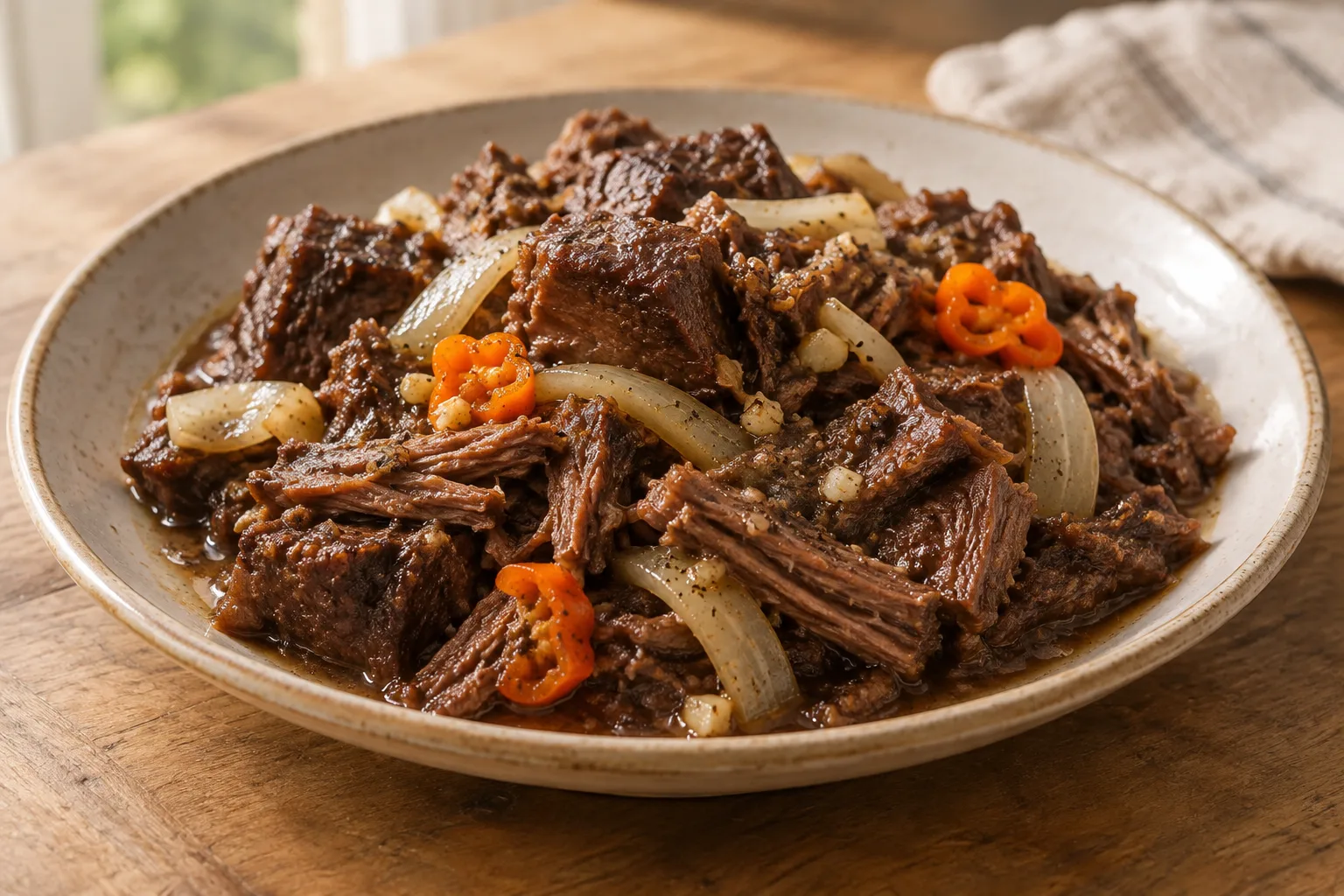
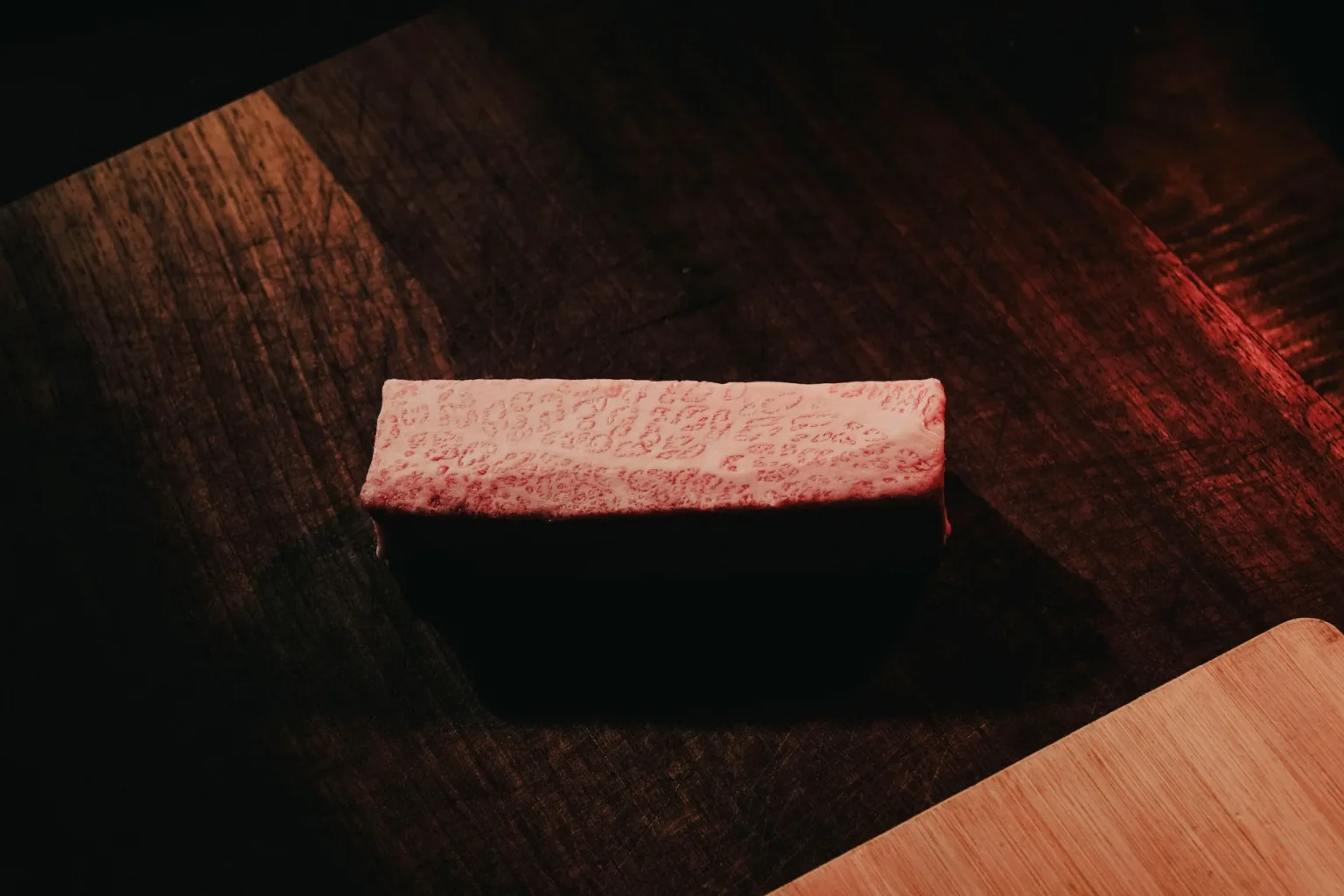
“Beef with fat” describes beef that retains visible or marbled fat; it does not identify a particular cut, a specific fat percentage, or the animal’s age. The amount and distribution of fat vary between cuts and products. The structure of the cut matters too: some pieces suit quick cooking, while others work better in moist or longer preparations. The broad label alone therefore cannot tell you the cooking time or final texture. Check the cut name and follow the package or recipe guidance. Fat can contribute to a juicier eating quality and add flavor, but it does not make every piece suitable for every cooking method.
When to use it
Use it when you want the meat’s own fat to contribute richness and juiciness. For pan cooking or grilling, choose a cut intended for quick cooking; for braising or stewing, choose a piece suited to moist cooking. Uses vary by cut, so do not select a method just because the meat contains fat. If a recipe calls for lean beef, a fattier product may make the dish richer or release more fat during cooking.
How to use it
Identify the cut before cooking and match the method to its recommended use. Cuts suited to quick cooking can be pan-seared or grilled; roasting cuts can be cooked as joints, while stew cuts can be cooked in liquid with vegetables or other ingredients. If the piece has an external fat layer, you may leave it on during cooking when the recipe allows and remove it afterward if desired. Intramuscular fat cannot be trimmed in the same way. Avoid relying on universal cooking times: cut, thickness, and size all affect the result. Follow the package instructions and current official local guidance for storage and cooking.
Flavour and texture
Fat can make beef seem juicier and contribute a fuller flavor, but the eating quality also depends on the cut, fat distribution, and preparation. External fat may render during cooking; marbling is distributed within the muscle. A fattier piece is not automatically more tender: tenderness also varies with the cut and cooking method.
How to choose it
Look for the cut name and its suggested use rather than relying only on the general label “with fat.” Check whether the fat is external or marbled and make sure the package is intact. For minced beef or a prepared product, read the ingredient and storage information: these are not necessarily interchangeable with a whole cut of beef.
Storage
Follow the date, storage conditions, and instructions on the package. For minced beef and prepared products, also check the product-specific information. If you will not use the beef, follow the package guidance for freezing and thawing; one storage period cannot be applied to every cut and package format.
Substitutions
You can substitute leaner beef when the recipe can accommodate a less rich result. If needed, add an appropriate amount of cooking fat as directed by the recipe, but do not expect an identical texture. Changing the cut may also mean changing the cooking method.
Common mistakes
Do not treat all fatty cuts as interchangeable or assume that fat guarantees tenderness. A cut meant for quick cooking may not suit stewing, and the reverse may also give a poor result. Do not judge freshness by color alone; check the package, date, and storage conditions.
Safety and allergens
Consult current official food-safety guidance for your area and follow the package instructions for storage and cooking. Do not apply one universal time or temperature to every beef cut and product format.
Culinary uses
- Main ingredient in meat dishes
- Adds richness and juiciness to recipes
Recommended techniques
- Pan-searing or grilling cuts suited to quick cooking
- Roasting cuts suited to oven cooking
- Slow cooking suitable cuts in stews or braises
Pairs well with
- Onion and other cooking vegetables
- Herbs, stock, wine, or water in braises
- Lemon or pan juices with cooked beef
Frequently asked questions
Can all beef with fat be grilled?
No. The suitable method depends on the cut and its structure. Check the recommended use for the piece you have.
Does fat always make beef more tender?
No. Fat can contribute juiciness and flavor, but tenderness also depends on the cut and how it is cooked.
Can I replace it with lean beef?
Yes, if a less rich result works in the recipe. You can adjust cooking fat, but the texture will not be exactly the same.
Ingredient allergens
Allergen listThere are no verified associations for these ingredients yet.
Estimated nutrition
- Fat
- 19.3 g
- Saturates
- 7.31 g
- Carbohydrate
- 2.6 g
- Sugars
- 0 g
- Fibre
- 0 g
- Protein
- 11.5 g
- Salt
- 2.78 g
Sources and review
Automatically researched, cross-checked and validated content. Sources consulted:
- Client Challenge doi.org/10.2307/jj.27939689.16
- The Essential Glossary of Cooking Terms for the Culinary Arts - Escoffier www.escoffier.edu/blog/culinary-arts/the-essential-glossary-of-cooking-terms-for-the-culinar…
- Nutrition After Your Transplant - Health Online healthonline.washington.edu/sites/default/files/record_pdfs/Nutrition-After-Your-Transplant-…
- Supervivencia Básica: Alimentos | Servicio de Extensión de OSU extension.oregonstate.edu/es/catalog/em-9331-s-supervivencia-basica-alimentos
- Evaluación de la calidad y composición química de la carne ... scholar.uprm.edu/bitstreams/0cdc5e7c-1df0-4957-a60e-c8d46c55f9d3/download
- Cortes De Ternera Y Usos Culinarios (I) • ISARO Gastronomía www.isarogastronomia.com/blog/cortes-de-ternera-y-usos-culinarios-i/
- Ternera Gallega - USOS CULINARIOS www.terneragallega.com/usos-culinarios.html
- Carne picada de ternera: cómo elegirla, cuánta grasa debe tener, conservarla y cocinarla - El Mercado de Origen www.elmercadodeorigen.com/carne-picada-ternera-que-es-como-elegir-cocinar/
- Para la ciudadanía www.aesan.gob.es/para-la-ciudadania
- Formas Sencillas de Reducir el Riesgo de Cáncer extension.psu.edu/formas-sencillas-de-reducir-el-riesgo-de-cancer/
- Carne de vaca vs carne de ternera: ¿En qué se diferencian? www.miguelvergara.com/actualidad/blog/carne-de-vaca-vs-carne-de-ternera-diferencias/
- Economía Agraria y Recursos Naturales. ISSN - AgEcon Search ageconsearch.umn.edu/record/28748/files/03010007.pdf
- Ruperto de Nola 1529 Italian part 1.pdf www.eg.bucknell.edu/~lwittie/sca/food/Ruperto%20de%20Nola%201529%20Italian%20part%201.pdf
- Partes de la ternera: características y usos en la cocina www.academianutricionydietetica.org/saber-comprar/partes-ternera-caracteristicas-usos-cocina…