- Category
- Fruit
- State
- Fresh
- Usual unit
- cup
What it is
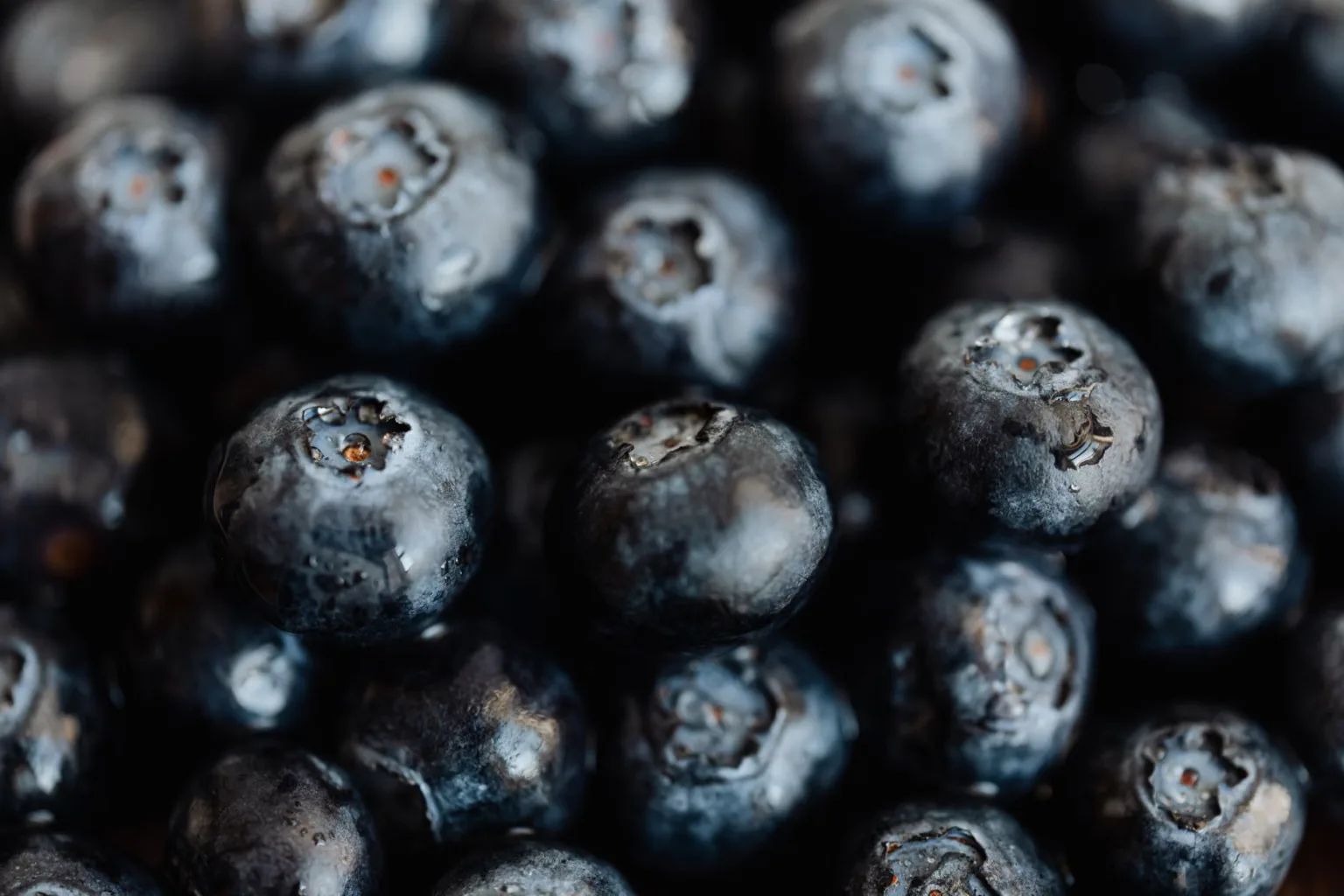
Blueberries are small berries from plants in the genus Vaccinium. The name can be confused with cranberries, which are a different fruit with a tarter flavor; this guide refers to blue blueberries. Both cultivated and wild types are available. Wild blueberries are usually smaller and more intensely flavored than cultivated ones. Fresh berries can be eaten as they are, or used in drinks, desserts and jelly-like preparations. Their texture and flavor change when cooked, so the result depends on how they are used in a recipe.
When to use it
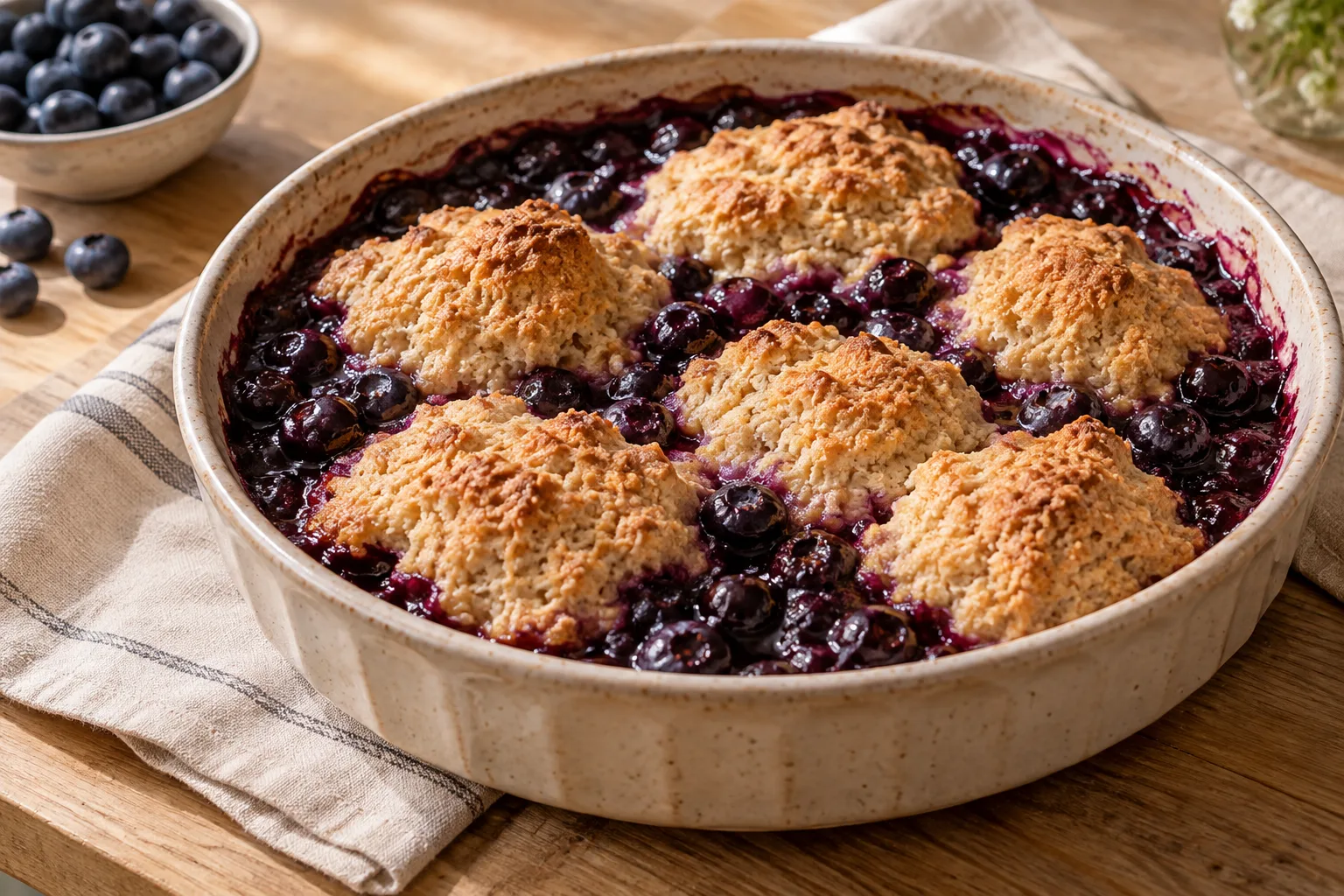
Use blueberries fresh when you want the berries to keep their shape and retain a mild, sweet flavor with a little tartness. They are convenient with yogurt or cereal, in desserts, or blended into a drink. In baked or cooked dishes, expect them to soften and their sweetness to become less pronounced, particularly in cultivated varieties. Smaller wild blueberries can suit recipes where a more intense berry flavor is welcome. Frozen blueberries are another option for drinks and cooked preparations.
How to use it
Serve fresh blueberries whole, stir them into yogurt, or add them to breakfast cereal. For a drink, blend them with other ingredients to taste; frozen blueberries can also be used in smoothies. Add them to dessert batters or baked dishes, or cook them into a jelly. Heat makes the berries softer and may reduce their sweet flavor, so consider the final texture when choosing a method. For a fresher taste and intact berries, serve them uncooked or add them just before serving. Check that a recipe calls for blueberries rather than cranberries: cranberries are tarter and do not taste the same.
Flavour and texture
Fresh blueberries usually taste mild, sweet and slightly tart. Wild types are smaller and can be more intensely flavored than cultivated berries. Cooking reduces their firmness and makes them softer; their sweetness may also become less pronounced. Depending on how they are used, the result can range from fresh, whole berries to soft fruit blended into a batter, drink or cooked preparation.
How to choose it
Choose blueberries when you want mild, sweet berries to eat fresh or add to a recipe. Do not confuse them with cranberries: the fruits differ in color and flavor, and cranberries are tarter. Wild blueberries are usually smaller and more intensely flavored than cultivated ones. For a packaged product, read the label to confirm what it is and follow any storage or use instructions provided.
Storage
Keep fresh blueberries chilled. If the package gives specific storage instructions, follow them and observe any date shown. Frozen blueberries are also sold and can be used in drinks and recipes. Do not assume that every form needs the same storage method: check the package when the product is frozen, processed or otherwise not fresh.
Substitutions
Frozen blueberries can stand in for fresh ones in smoothies and cooked preparations. Wild blueberries can replace cultivated ones when a smaller berry and more intense flavor suit the dish. Do not automatically swap blueberries for cranberries: cranberries are tarter and can noticeably change a recipe's flavor.
Common mistakes
A common mistake is treating blueberries and cranberries as interchangeable and expecting the same flavor. Another is assuming cooking will leave blueberries as firm and sweet as fresh ones: heat softens them and may reduce their sweetness. Choose the form and method to suit the texture you want.
Safety and allergens
Follow package storage and use instructions when provided, and observe the date shown. For products that are processed or presented differently from fresh fruit, check the label for product-specific directions.
Culinary uses
- Fresh fruit for eating as is
- Fruit for baking and desserts
- Fruit for smoothies and drinks
- Fruit for jellies and preserves
Recommended techniques
- Eat fresh
- Blend into smoothies
- Bake into desserts
- Cook into jellies or preserves
Pairs well with
- Yogurt
- Cereals and breakfast grains
- Desserts
Frequently asked questions
Are blueberries the same as cranberries?
No. They are different fruits. Blueberries are milder and sweeter, while cranberries are tarter and can change the flavor of a recipe.
Can I use frozen blueberries?
Yes. They can be used in smoothies and other culinary preparations. Follow the package directions for storage.
What happens when blueberries are cooked?
They soften and may taste less sweet. Keep this in mind if you want the berries to stay whole or the finished dish to retain a sweeter flavor.
Ingredient allergens
Allergen listThere are no verified associations for these ingredients yet.
Estimated nutrition
- Fat
- 0.71 g
- Saturates
- 0 g
- Carbohydrate
- 12.1 g
- Sugars
- 8.57 g
- Fibre
- 2.9 g
- Protein
- 0.71 g
- Salt
- 0 g
Sources and review
Automatically researched, cross-checked and validated content. Sources consulted:
- En el etiquetado alimentario hay algunas menciones que son obligatorias eletiquetadocuentamucho.aesan.gob.es/obligatoria.html
- ¿Por qué la muerte es origen de miedos y tabúes? doi.org/10.64628/aao.fccyk3qj3
- Client Challenge doi.org/10.2307/jj.27939689.16
- Gastronomía de Chile - Wikipedia, la enciclopedia libre es.wikipedia.org/wiki/Gastronom%C3%ADa_de_Chile
- Agencia Española de Seguridad Alimentaria y Nutrición www.aesan.gob.es/
- Obtención del ajo negro por reacción de Maillard para el desarrollo de productos culinarios y su aplicación en cocina innovadora | OpenAlex openalex.org/W2991569715
- Selection polk.extension.wisc.edu/files/2013/09/Blueberries-Veggie-Bite-Polk-County.pdf
- Highbush Blueberry - Vaccinium corymbosum ( Spanish; Castilian ) eol.org/pages/484405/articles?locale_code=show_all&resource_id=607
- Uso y aplicaciones del arándano (Vaccinum Corymbosum) en el desarrollo de productos gastronómicos | OpenAlex openalex.org/W4416054752
- Cómo usar los tipos de arándanos al cocinar | Recetas Nestlé www.recetasnestle.cl/la-cocina-nestle/tips/arandanos-mora-azul
- Pedro Venteo, chef, desvela 3 técnicas para cocinar con arándanos: "Si dejas enfriar la mezcla hasta que se convierta en gelatina y la trituras, tienes un gel comestible ideal para tus recetas" www.vanitatis.elconfidencial.com/gastronomia/2026-10-08/chef-trucos-tecnicas-cocinar-arandan…
- Ingredientes que maridan con arándano rojo ✓ basmatic.com/maridaje/arandano-rojo
- Comparativa de los Mejores Yogures de Arándanos: Análisis y Recomendaciones para Elegir el Ideal laovejaquebala.es/yogur-arandanos/
- Arándanos: propiedades y usos en la cocina | Fine Dining Lovers www.finedininglovers.es/explorar/noticias/todo-sobre-el-arandano