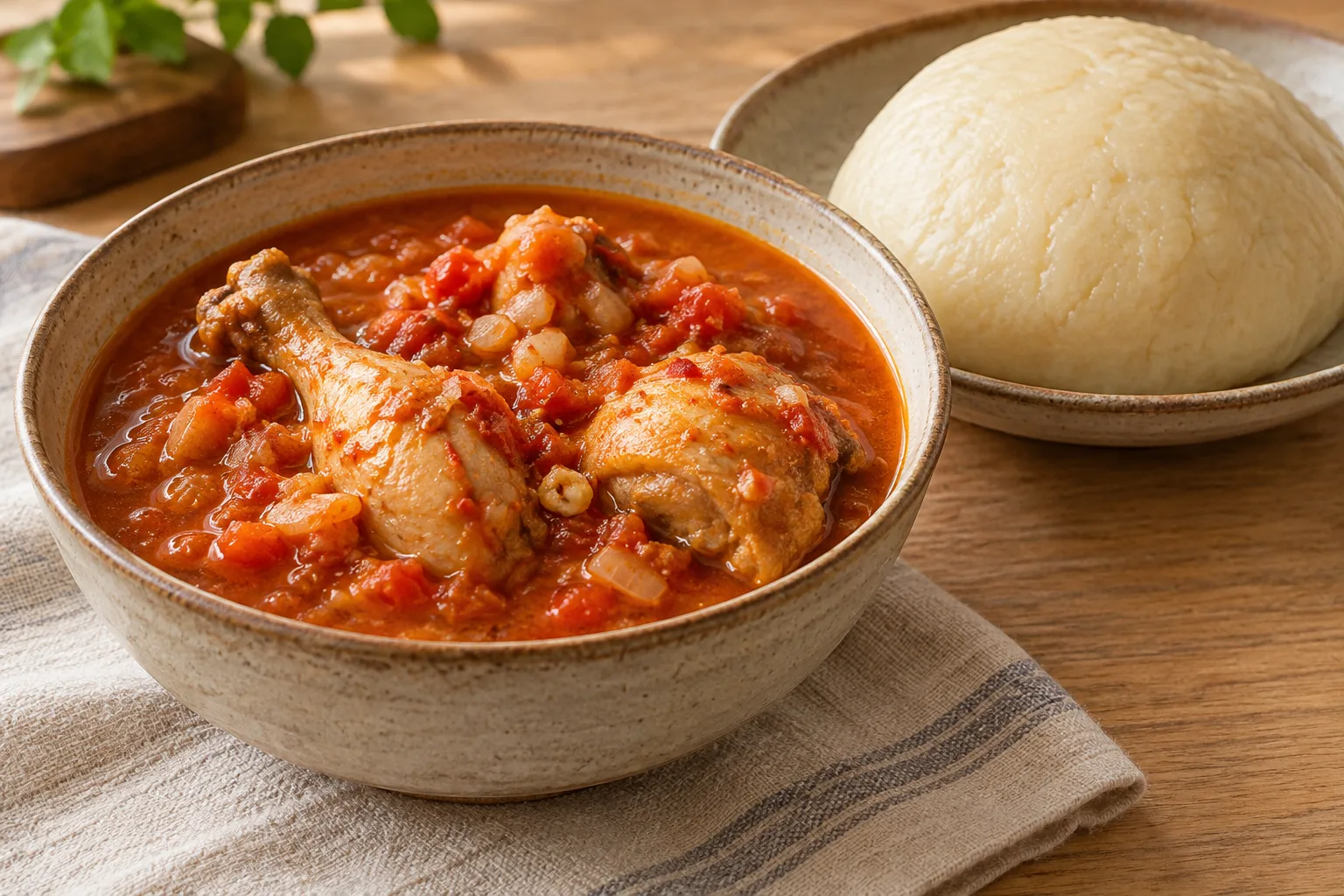
- Category
- Drinks
- State
- Liquid
- Usual unit
- tablespoon
What it is
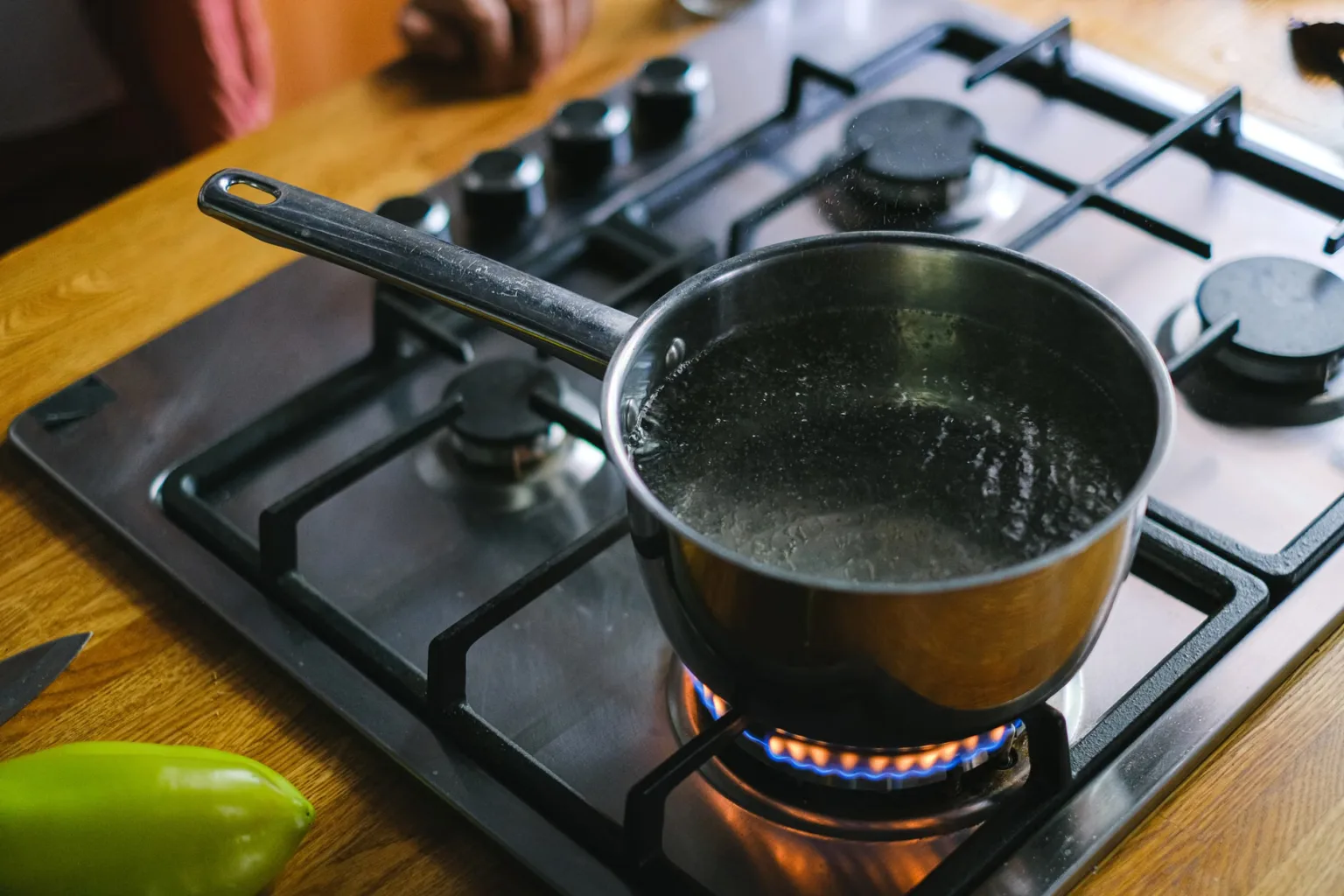
Boiled water for fufu is potable water brought to a boil separately and used to work cooked starchy ingredients into a dough. It is not fufu itself or an instant mix; it is a supporting liquid that helps cassava, plantain, or other cooked ingredients come together as they are pounded or mashed. In a preparation, it is added a little at a time, often by the tablespoon, until the mixture becomes smooth and elastic. The amount needed depends on the condition of the mixture. Adding too much at once can make the dough softer than intended.
When to use it
Use it after the starchy ingredients have been cooked and drained, when you begin mashing and find the mixture needs moisture to come together. It is useful for working the dough while it is hot and adjusting its consistency gradually. There is no need to add it all at once: add a tablespoon, work the mixture, and check whether it needs more. Water used to blend ingredients earlier in some recipes has a different role and should not be confused with the separately boiled water set aside for working the dough.
How to use it
Boil potable water separately and keep it aside for working the dough. Once the starchy ingredients are cooked, drain them and mash until they begin to come together. Add the boiled water one tablespoon at a time; after each addition, mash, fold, and mix before deciding whether to add more. Continue until the mixture is even, has no visible lumps, and reaches the elasticity you want. The amount varies with the condition of the ingredients and dough, so avoid pouring in a large amount at once. If the recipe also uses water to blend the ingredients before cooking, keep that water distinct from the water set aside for mashing.
Flavour and texture
Water adds moisture but is not intended to give fufu its flavor. Added gradually, it can help mashed ingredients come together into a smooth, elastic dough. Too much can make the mixture overly soft, so assess the texture after each tablespoon.
How to choose it
Choose potable water, whether tap water that is safe to drink or bottled water. For this use, boil it separately and keep it clean until you add it to the dough. No special or flavored water is needed: its purpose is to adjust moisture and help work the cooked ingredients.
Storage
Keep the reserved water in a clean, covered container until you are ready to use it. If it has cooled and you need it hot, reheat it carefully. Do not mix it with used cooking water when the recipe calls for separately boiled water; keep liquids for different stages distinct.
Substitutions
Freshly boiled potable water can replace boiled water that has cooled; add it gradually. Separately prepared hot potable water serves the same purpose, with the amount adjusted to how the dough comes together. Water used to blend ingredients earlier may be part of a recipe, but it serves a different step and is not automatically a direct substitute.
Common mistakes
Adding too much water at once can leave the dough overly soft and difficult to work. Add it by the tablespoon and mash or fold between additions. Another mistake is confusing the water reserved for bringing the dough together with water used earlier to blend the ingredients.
Safety and allergens
Use potable water and a clean container. Add the water carefully, and follow the product and recipe instructions for cooking starchy ingredients; softness alone does not replace the relevant preparation directions.
Culinary uses
- A liquid for adjusting the consistency of fufu
- A way to help bring cooked starchy ingredients together into a smooth, elastic dough
Recommended techniques
- Boil separately before adding to the fufu
- Add gradually by the tablespoon while mashing and folding
Pairs well with
- Cooked cassava fufu
- Cooked green-plantain fufu
Frequently asked questions
Why is boiled water added to fufu?
It helps cooked starchy ingredients come together and adjusts the dough’s moisture as it is mashed and folded.
How much boiled water should I add?
Add one tablespoon at a time and check the texture before adding more. The amount depends on the condition of the dough.
Can I use the cooking water instead?
The preparation described uses separately boiled water to work the dough. If your recipe calls for reserving water separately, do not automatically replace it with cooking water.
Ingredient allergens
Allergen listThere are no verified associations for these ingredients yet.
Sources and review
Automatically researched, cross-checked and validated content. Sources consulted:
- Client Challenge doi.org/10.2307/j.ctvndv9t9.22
- Fufu, la receta africana que ya se ha hecho internacional bonviveur.com/es/recetas/fufu
- Qué es el fufu africano, de dónde procede y cómo prepararlo | Gastronosfera www.gastronosfera.com/tendencias/que-es-el-fufu-africano-de-donde-procede-y-como-prepararlo
- - YouTube www.youtube.com/watch?v=gn_MMpQTQXI
- Fufu: cómo hacer y comer el alimento base de Ghana con light soup | Sekai Gohan sekaigohan.com/es/recipes/africa/ghana/fufu
- Diarrhea - Cancer Patient Guide | College of Medicine | Penn State med.psu.edu/departments-faculty/cancer-institute/oncology-nutrition-exercise-one-group/patie…
- Adaptation Tactics of Higher Education African International ... scholars.indianastate.edu/cgi/viewcontent.cgi?article=4135&context=etds
- Amjambo Africa! (March 2022) digitalcommons.usm.maine.edu/cgi/viewcontent.cgi?article=1046&context=samgen_amjambo
- Fufu - Wikipedia, la enciclopedia libre es.wikipedia.org/wiki/Fufu
- 3 formas de preparar fufú - wikiHow es.wikihow.com/preparar-fuf%C3%BA
- Fufú togolés: Datos fascinantes al descubierto | Remitly www.remitly.com/blog/es/cultura-y-estilo-de-vida/platosnacional-hechos-fufu-fascinantes-togo…