- Category
- Meat
- State
- Fresh
- Usual unit
- g
What it is
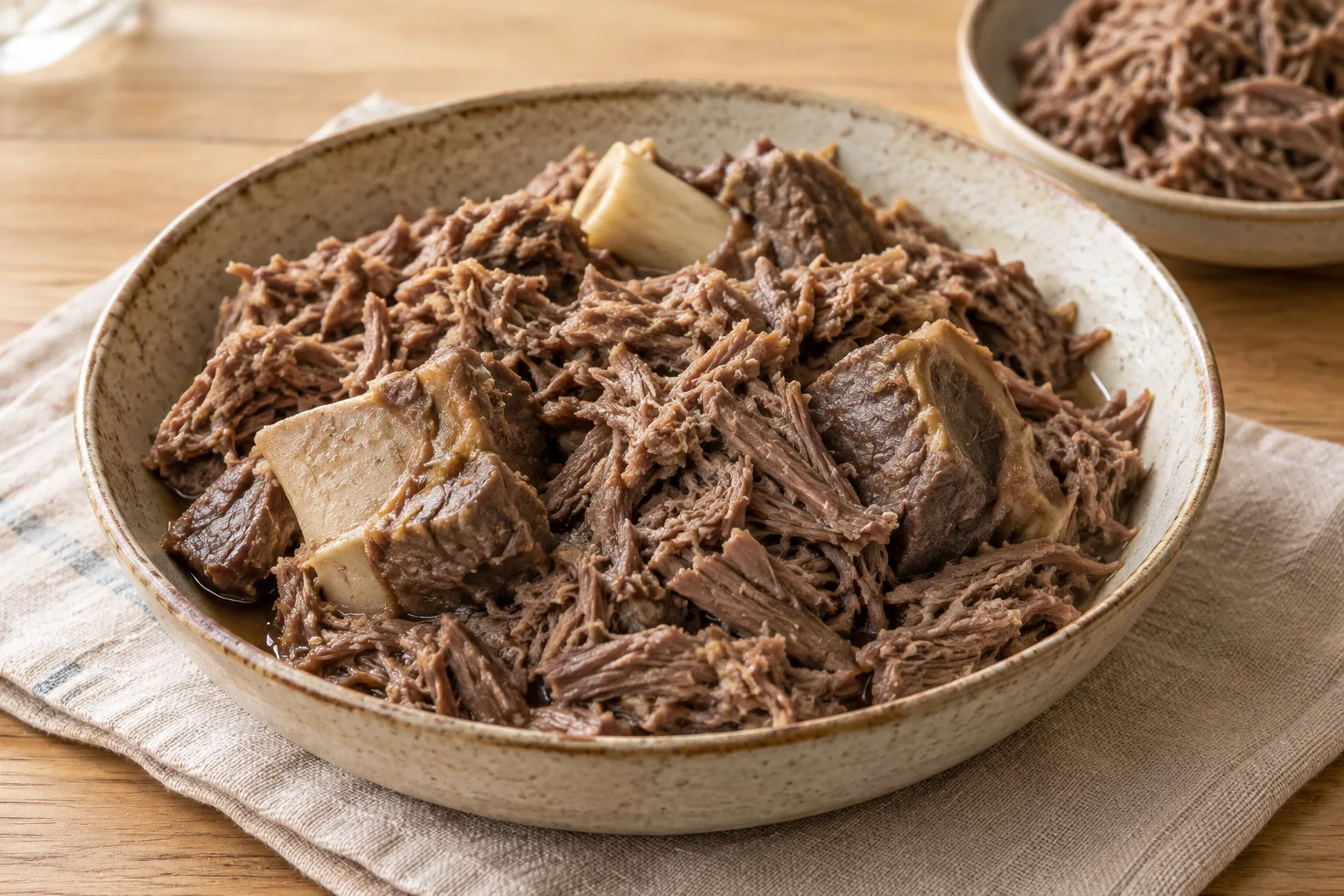
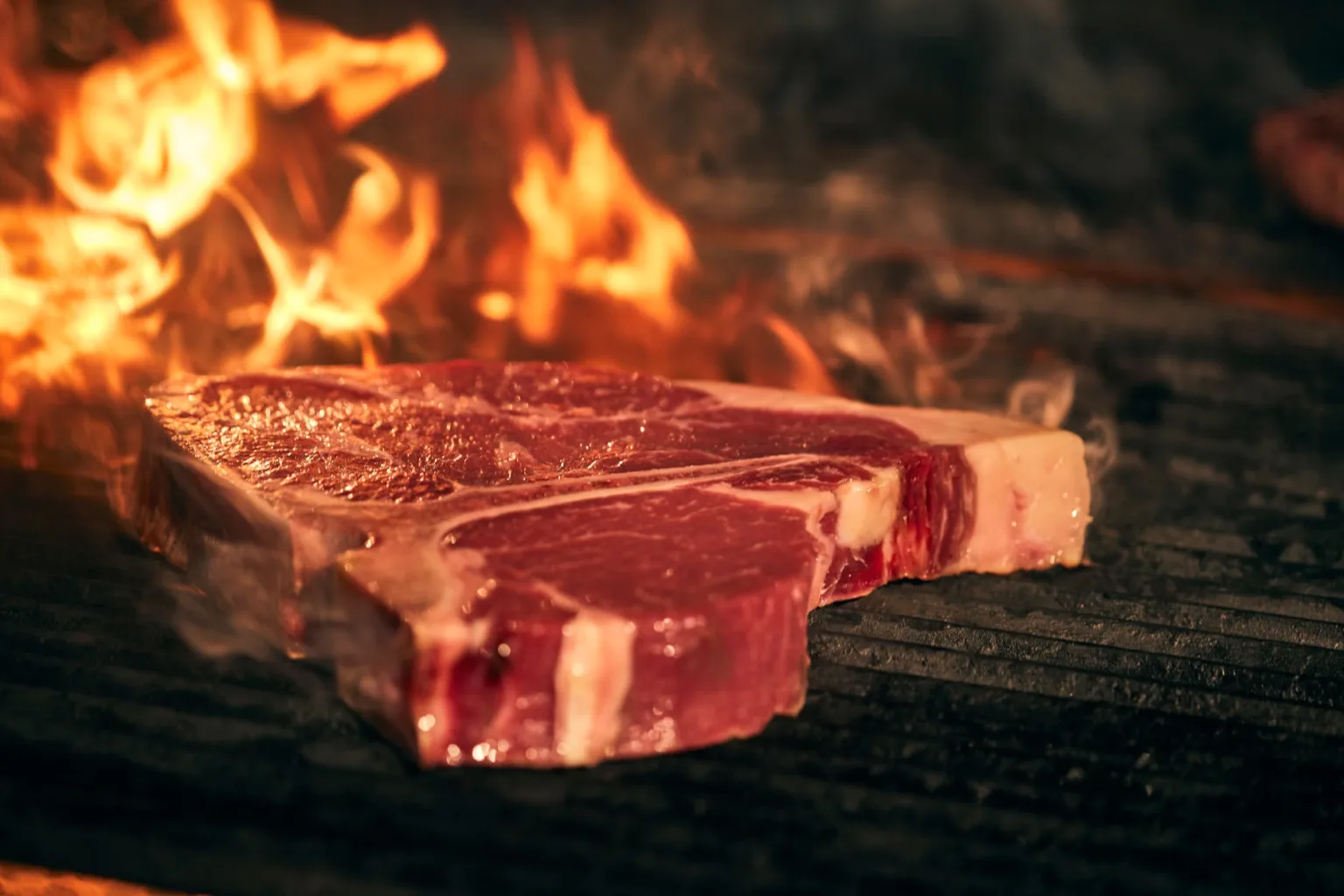
Bone-in beef is beef sold with one or more bones still attached. It is not a single cut: pieces can come from different parts of the animal and contain varying proportions of meat, connective tissue and marrow. As a result, bone-in pieces do not all cook in the same way. More tender cuts may suit roasting, while firmer cuts are often put to better use in slow cooking. Osso buco, for example, uses cross-cut shank sections that retain the bone and marrow. The cut, thickness and characteristics of the piece all matter when choosing a method. The phrase “bone-in” alone does not specify a cooking time or guarantee that one recipe will suit every piece.
When to use it
Choose bone-in beef when you want to serve a roast or make a slowly cooked dish. For an osso buco-style preparation, look for cross-cut shank sections with the bone and marrow in the middle. Other bone-in cuts may be more suitable for roasting, so check the identity of the cut and ask how it is best cooked. Do not assume that every bone-in piece needs the same method: its location on the animal and the amount of connective tissue affect the result.
How to use it
Start by identifying the cut and choosing a method suited to it. For a slow-cooked bone-in shank dish, you can brown the meat and then cook it gently with vegetables and white wine, as in osso buco-style preparations. A long, gentle braise suits firmer cuts; do not apply one fixed cooking time to pieces of different sizes or types. For a cut intended for roasting, follow a recipe developed for that piece rather than assuming the bone alone determines doneness. Handle raw meat hygienically and follow the package directions for storage and cooking.
Flavour and texture
Flavor and texture vary with the cut, the animal’s age and how the meat has been handled. Slowly cooked shank can become tender, while marrow in the bone adds a rich, soft texture to dishes that include it. A firmer piece is not automatically a poor choice; it may simply need a different cooking method. Bone-in meat also differs from boneless meat in the amount of edible meat it provides.
How to choose it
Ask which cut you are buying and what cooking method suits it. Check that the piece has the bone you want and is sized appropriately for your recipe. For an osso buco-style dish, ask for cross-cut shank with marrow in the centre; for roasting, ask for a cut intended for that use. Appearance and size alone do not provide a universal cooking time.
Storage
Store the beef according to the package or retailer’s directions. If you will not use it right away, check the product’s specific storage instructions rather than applying one shelf-life estimate to every cut. After opening the package, continue to follow its directions and handle the meat hygienically. No single storage duration or temperature is specified here for this broad category of cuts.
Substitutions
Boneless beef can replace bone-in beef, but the dish will have less contribution from the bone and will not include the original piece’s marrow. For slow cooking, another bone-in beef cut, such as shank, may work if its characteristics suit the recipe. Adapt the method to the replacement cut instead of assuming the same cooking time will apply.
Common mistakes
A common mistake is treating every bone-in cut as interchangeable. The cut determines whether roasting or slow cooking is more suitable, and its size also affects cooking. Another is replacing bone-in beef with boneless meat without accounting for the missing bone and marrow. Identify the cut first and use a recipe suited to it.
Safety and allergens
Handle raw beef hygienically and follow the package directions for storage and cooking. No universal time or temperature is given because “bone-in beef” includes different cuts.
Culinary uses
- Main ingredient in roasts and braised dishes
- Meaty, bone-in cut for slow-cooked preparations
Recommended techniques
- Braising
- Roasting
- Searing before slow cooking
Pairs well with
- Vegetables
- White wine
Frequently asked questions
Can every bone-in beef cut be braised?
No. The method depends on the cut: some pieces suit roasting, while cuts such as shank are often used for slow-cooked dishes.
Which cut is used for osso buco?
Osso buco uses cross-cut sections of shank, with the bone and marrow in the centre.
Can I substitute boneless beef?
Yes, but the dish will not contain the bone or its marrow. Choose a boneless cut suited to the same method and adapt the recipe.
Ingredient allergens
Allergen listThere are no verified associations for these ingredients yet.
Estimated nutrition
- Fat
- 7.27 g
- Saturates
- 2.78 g
- Carbohydrate
- 0 g
- Sugars
- 0 g
- Fibre
- 0 g
- Protein
- 22.1 g
- Salt
- 0.09 g
Sources and review
Automatically researched, cross-checked and validated content. Sources consulted:
- Tipos de carne de vacuno: categorías y cortes - Las Viandas de Julian lasviandasdejulian.es/recetas/tipos-de-carne-de-vacuno/
- Vamos a Conservar Alimentos: Rellenos de fruta para tartas, tortas y pasteles extension.psu.edu/vamos-a-conservar-alimentos-rellenos-de-fruta-para-tartas-tortas-y-pastele…
- Itinerary and diary of Francisco Atanasio Domínguez and Francisco Silvestre Vélez de Escalante | Early Americas Digital Archive (EADA) eada.lib.umd.edu/text-entries/itinerary-and-diary-of-francisco-atanasio-dominguez-and-franci…
- Evaluación de la calidad y composición química de la carne ... scholar.uprm.edu/bitstreams/0cdc5e7c-1df0-4957-a60e-c8d46c55f9d3/download
- Carne de vacuno: qué es, características y propiedades www.miguelvergara.com/actualidad/blog/carne-de-vacuno-claves-gourmet/
- Carne - Wikipedia, la enciclopedia libre es.wikipedia.org/wiki/Carne
- derechos reservados - media [5] documentos.uru.edu/pdf/4201-06-00630.pdf
- opinión científica www.aesan.gob.es/en/dam/jcr:711cce41-8de5-461c-b787-05c58ba1d61c/establecimientos_minoristas…
- The basic equipment for at-home meat processing | Servicio de Extensión de OSU extension.oregonstate.edu/es/animals-livestock/beef/basic-equipment-home-meat-processing
- Maduración de carne vacuna: beneficios, prácticas y retos ... bdigital.zamorano.edu/bitstreams/c7cf7511-9571-467c-b218-04f8da385fd3/download
- Agroalimentación - UNESCO Chair ESCI-UPF unescochair.esci.upf.edu/es/lineas-investigacion/agroalimentacion
- Tuétano, la Esencia del Vacuno www.worldgastronomy.org/post/tu%C3%A9tano-la-esencia-del-vacuno