- Category
- Bread and dough
- State
- Fresh
- Usual unit
- unit
What it is
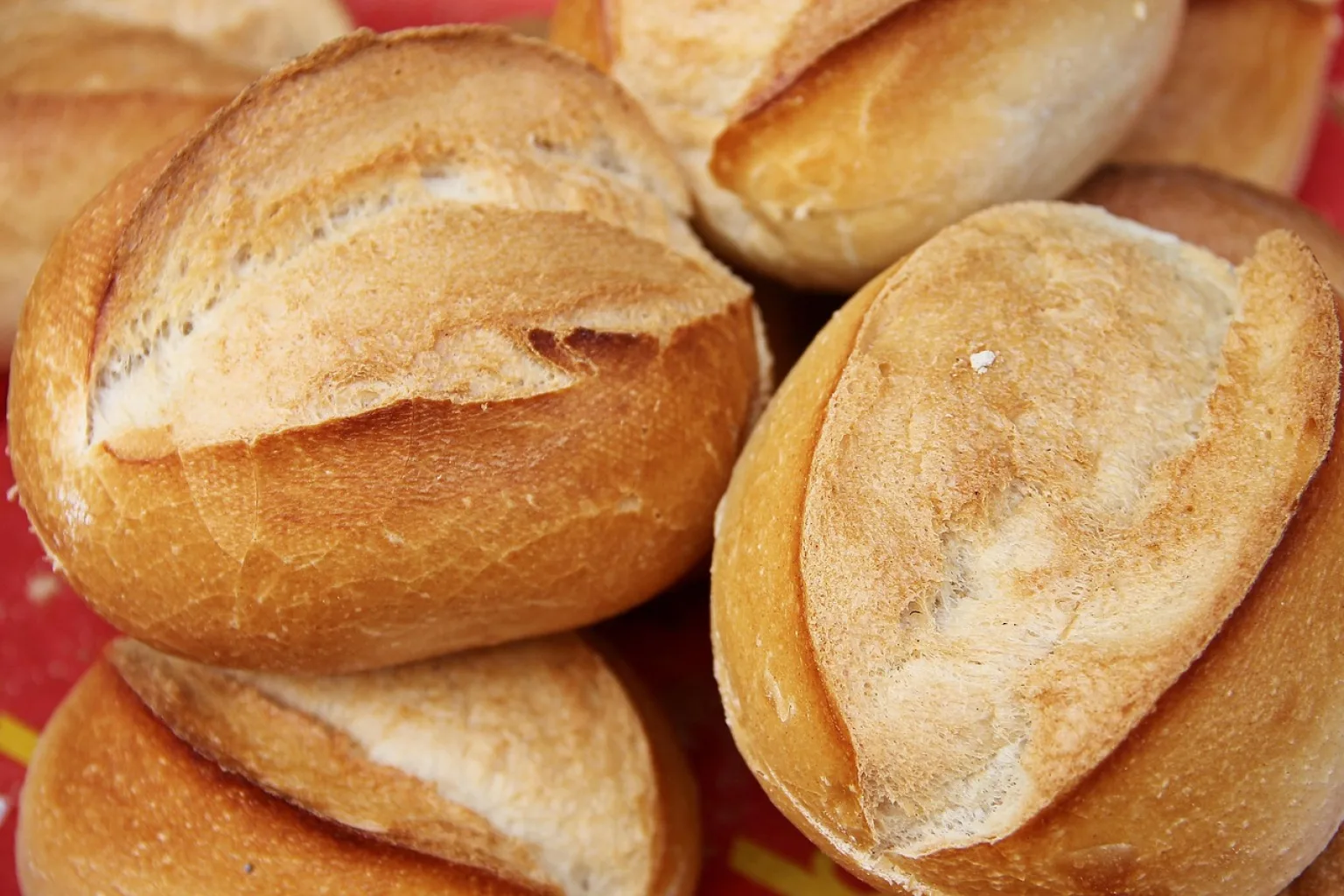
A bread roll is an individual piece of bread, generally sized to serve on its own or to split and fill. There is no single recipe or fixed texture: breads vary with the flour and other ingredients used, and a roll may have a soft or compact crumb and a crust that is more or less crisp. Basic bread recipes use ingredients such as flour, water, salt and yeast, but it is not safe to assume that every shop-bought roll contains exactly the same things. Some include additional ingredients or use different flours. The product name alone therefore does not confirm its composition. If you have an allergy or intolerance, check the ingredient list on packaged rolls or ask the seller for information about bread sold loose.
When to use it
Use bread rolls when you want individual portions of bread for a meal, snack or sandwich. Their shape makes them convenient to split and fill, or to serve whole alongside food. Choose a crumb and crust that suit the job: a softer roll may be easy to fill, while a firmer one may hold wet ingredients better. Rolls vary, so do not assume that every type will have the same flavour or strength. If you are choosing one to meet a dietary need, check its ingredients and ask the bakery for the product information.
How to use it
Serve rolls whole alongside a meal, or cut them in half to make sandwiches. To fill one, slice it open and add ingredients that will stay in place; avoid overfilling a roll whose crumb cannot support the filling. You can also toast a roll before serving for a crisper surface, or cut it into small pieces to add texture to soup or salad. If the bread has dried out or is no longer fresh, consider using it in a dish that suits day-old bread, such as migas. The best way to use it depends on the crumb and the recipe: softer bread may break down sooner in a wet preparation. If its composition matters to you, always check the label or ask about the ingredients.
Flavour and texture
Bread rolls do not all taste or feel the same: their qualities depend on the flour, recipe and method of making. The crumb may be soft or compact, the crust thin or crisp, and the cereal flavour mild or more pronounced. Check the particular roll before choosing it for a filling or meal.
How to choose it
Choose a roll with a size and texture suited to its intended use. For filling, it should be easy to open and have a crumb that can support the ingredients. Different varieties may use different flours and other ingredients. To find out what a packaged roll contains, read its label; for unpackaged bread, ask the seller for the available ingredient information.
Storage
The available information does not establish one storage method or shelf life for all bread rolls, since products vary. Follow the directions on the package or those given by the seller, and do not assume a universal storage period. If you do not have instructions for a particular roll, ask the seller or manufacturer rather than assuming all types keep in the same way.
Substitutions
For a sandwich, you can use sliced bread or another small bread in place of a roll. The size, texture and way the filling is held will change, so adjust the amount of filling and how you assemble it. Check the replacement's ingredients too if you need to avoid a particular ingredient.
Common mistakes
Do not assume all bread rolls share the same recipe, texture or ingredient list. Another common mistake is choosing a very soft crumb for a wet or generous filling; it may break apart or lose its shape. If you need to avoid an allergen, do not rely on the product name alone—check its ingredient information.
Safety and allergens
Packaged rolls and bread sold loose may provide ingredient information in different ways. If you have an allergy or intolerance, check the label or ask the seller for information before eating. Do not assume a variety is suitable based only on its name.
Culinary uses
- Sandwich or filled-roll base
- Bread served alongside a meal
Recommended techniques
- Slice horizontally and fill
- Toast or cut into pieces for a crunchy topping
Pairs well with
- Cured meats and other sandwich fillings
- Soups and spreads
Frequently asked questions
Do all bread rolls have the same ingredients?
No. Recipes and flours can vary. Read the label or ask the bakery if you need the ingredients for a particular roll.
How can I serve bread rolls?
Serve them whole alongside a meal, split them for fillings, or toast them. Bread that has lost some freshness can also be used in recipes that suit day-old bread.
How can I tell whether a bread roll contains an allergen?
Check the ingredient list on packaged bread or ask the seller for information about unpackaged food. The name “bread roll” does not identify every ingredient.
Ingredient allergens
Allergen listThere are no verified associations for these ingredients yet.
Estimated nutrition
- Fat
- 5.8 g
- Saturates
- 1.4 g
- Carbohydrate
- 55.8 g
- Sugars
- 3.55 g
- Fibre
- 2.2 g
- Protein
- 10.6 g
- Salt
- 1.26 g
Sources and review
Automatically researched, cross-checked and validated content. Sources consulted:
- Client Challenge doi.org/10.2307/jj.27939689.16
- Cultura del pan en España - Wikipedia, la enciclopedia libre es.wikipedia.org/wiki/Cultura_del_pan_en_Espa%C3%B1a
- Etiquetado de sustancias que causan alergias e intolerancias alimentarias www.aesan.gob.es/seguridad-alimentaria/informacion-alimentaria/etiquetado-sustancias
- Descubre el origen de diez tipos de panes tradicionales y las características que los hacen irresistibles www.abc.es/gastronomia/abci-descubre-origen-diez-tipos-panes-tradicionales-y-caracteristicas…
- Pan: beneficios y curiosidades del pan de panaderías Polvillo polvillo.es/pan-beneficios-y-curiosidades/
- - YouTube www.youtube.com/watch?v=XApepelpCNU
- Léxico culinario autorizado en el primer diccionario académico | OpenAlex openalex.org/W2285293455
- ✅ Maridaje de Pan y Comida: ¡El Arte de Acompañar Cada Bocado con la Miga Justa! - Bandejas de Panaderia www.bandejaspanaderia.es/maridaje-de-pan-y-comida-el-arte-de-acompanar-cada-bocado-con-la-mi…
- Tipos de panes, características, ingredientes y usos de cada uno fricopan.es/blog/cuantos-tipos-de-panes-hay-te-descubrimos-los-mas-consumidos/
- Historia del Pan - CEOPPAN www.ceoppan.es/historia.html
- Food Allergies | FDA www.fda.gov/food/nutrition-food-labeling-and-critical-foods/food-allergies
- Food allergens | Food Safety and Quality | FAO www.fao.org/food-safety/scientific-advice/food-allergens/en
- Food Allergy: Labelling and exposure risks - PMC pmc.ncbi.nlm.nih.gov/articles/PMC11250542/
- Allergen guidance for food businesses - GOV.UK www.gov.uk/government/publications/allergen-guidance-for-food-businesses/allergen-guidance-f…
- Panecillos Caseros - El Aderezo, blog de cocina y gastronomía desde 2006 www.eladerezo.com/recetas/panecillos-caseros.html
- PAN: HISTORIA Y CURIOSIDADES – ACADEMIA EXTREMEÑA DE GASTRONOMÍA aexgastronomia.es/2020/10/16/pan-historia-y-curiosidades/