- Category
- Sugar and sweeteners
- State
- Dry
- Usual unit
- cup
What it is
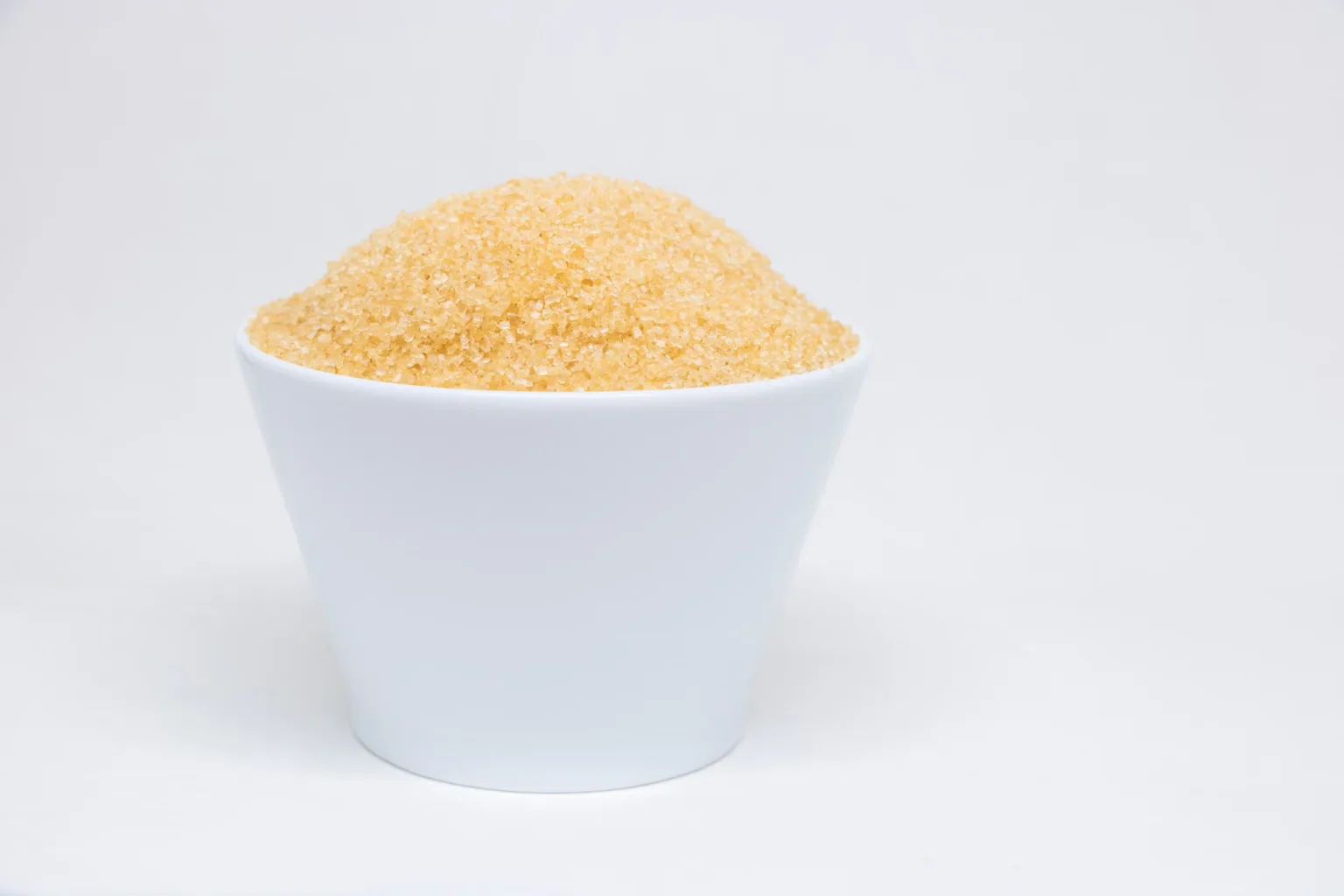
Brown sugar is a golden-to-brown sugar sold as granules or crystals and used as a sweetener. In some products, its color and aroma are associated with molasses; similarly colored sugars may be made or processed differently. The name therefore does not guarantee identical ingredients or texture across brands and regions. Brown sugar often has a caramel-like note and may feel moister or clumpier than white sugar. It should not automatically be treated as the same thing as panela or every unrefined sugar. Check the product name and description on the package when the distinction matters.
When to use it
Use brown sugar when you want to sweeten a drink or give a recipe a warm color and caramel-like flavor. It can be used in cakes, cookies, crumbles, and other sweet bakes, especially when you want a less neutral flavor than white sugar provides. It can also be stirred into hot drinks or sauces. Since products differ in moisture, crystal size, and flavor, brown sugar does not always behave exactly like white sugar in a delicate recipe.
How to use it
Measure the amount called for and break up any lumps with your fingers or a fork before adding it. For hot drinks, stir until the crystals dissolve; cold drinks may need more mixing. In batters and doughs, add it as directed and distribute it evenly. If replacing white sugar in a baking recipe, expect that the finished color, aroma, or texture may change. When precision matters, try the substitution in a simple recipe first and avoid changing several proportions at once.
Flavour and texture
Its flavor is sweet, often with caramel or molasses-like notes, and less neutral than white sugar. The color ranges from golden to brown. Depending on the product, the crystals may be fine or coarse, and the sugar may feel relatively dry, moist, or lumpy. These variations are normal and can affect how it mixes and the appearance of the finished dish.
How to choose it
Choose a product whose name and description match the ingredient you need. Read the label if you need to know whether it contains molasses or is described as unrefined sugar. Check that the package is intact and that the product’s color and texture match its description. If a recipe depends on a fine texture or mild flavor, do not assume that every brown sugar will give the same result.
Storage
Keep the sugar in a closed package and follow the storage directions on its label. To reduce moisture absorption or hardening, store it in a clean, dry place away from spills and steam. If it clumps, break it up before measuring; clumps alone are not a reason to change a recipe. A single shelf life cannot be specified for every variety.
Substitutions
Granulated white sugar can replace brown sugar in many preparations, but the result will be more neutral and may differ in color and texture. Another brown sugar or an unrefined cane sugar can bring a stronger flavor, but may not have the same moisture or crystal size. If the recipe is sensitive to these differences, use the specified type or test a small amount first.
Common mistakes
Do not assume that all brown sugars are identical or that the term brown sugar always means unrefined sugar. Do not ignore lumps when measuring, as they can make the amount uneven. When substituting, remember that flavor, color, and moisture may change, particularly in baking.
Safety and allergens
Use it as a sweet ingredient and moderate added sugar in the context of your needs and overall diet. Keep the product clean and dry, and follow the package directions.
Culinary uses
- Sweetener in drinks and baked goods
- Adds color and a caramel-like note to recipes
Recommended techniques
- Stir into warm drinks or sauces until dissolved
- Mix into batters and doughs for baking
Pairs well with
- Oats and porridge
- Fruit, warm spices, and baked goods
Frequently asked questions
Is brown sugar the same as panela?
Not necessarily. Names and production methods can vary; check the product name and description on the package.
Can I replace white sugar with brown sugar?
In many recipes, yes, although flavor, color, and texture may change. For delicate baking, test it in a simple recipe first.
Why does brown sugar clump?
Some varieties are moister and can clump together. Break up lumps before measuring and keep the product closed in a dry place.
Ingredient allergens
Allergen listThere are no verified associations for these ingredients yet.
Estimated nutrition
- Fat
- 0 g
- Saturates
- 0 g
- Carbohydrate
- 100 g
- Sugars
- 100 g
- Fibre
- 0 g
- Protein
- 0 g
- Salt
- 0 g
Sources and review
Automatically researched, cross-checked and validated content. Sources consulted:
- Client Challenge doi.org/10.2307/jj.27939689.16
- Del blanco a la panela: los 19 tipos de azúcar más comunes, en qué se diferencian y cómo usarlos en cocina www.directoalpaladar.com/ingredientes-y-alimentos/blanco-a-panela-19-tipos-azucar-comunes-qu…
- Sevin RTU Gallon Label v14 picol.cahnrs.wsu.edu/DownloadLabel/67239/WA
- Development of the Spanish Healthy Food Reference Budget for ... dau.url.edu/bitstream/handle/20.500.14342/795/2016_Carrillo%20et%20al_Development%20of%20the…
- Nutrición www.aesan.gob.es/nutricion
- Find a Market Near You | University of Maryland Extension extension.umd.edu/programs/family-consumer-sciences/nutrition-health-and-wellness/shop-local…
- The Pennsylvania State University etda.libraries.psu.edu/files/final_submissions/4227
- "[Click here and type the TITLE OF YOUR WORK in all Caps openscholar.uga.edu/record/11446/files/clay_lasonia_201405_phd.pdf
- Copyright by David Brian Roby 2007 repositories.lib.utexas.edu/bitstreams/9920587b-c7a7-4f41-8521-a008b827f0d9/download
- Service & Outreach | University of Toccoa Falls utf.edu/life-at-utf/service-and-outreach/
- Así es como deberías usar el azúcar rubio y el azúcar blanco | Delicioso | Univision www.univision.com/delicioso/asi-es-como-deberias-usar-el-azucar-rubio-y-el-azucar-blanco
- Azúcar rubia o blanca: diferencias, usos y cuál elegir · Hablemos de Azúcar hablemosdeazucar.com/blog/post/azucar-de-cana-rubia-o-blanca-conoces-las-diferencias
- ¿Sabías que existen distintos tipos de azúcar? | Frumen - Fabricantes de pan rallado www.frumen.com/blog/sabias-que-existen-distintos-tipos-de-azucar/