- Category
- Sugar and sweeteners
- State
- Dry
- Usual unit
- tablespoon
What it is
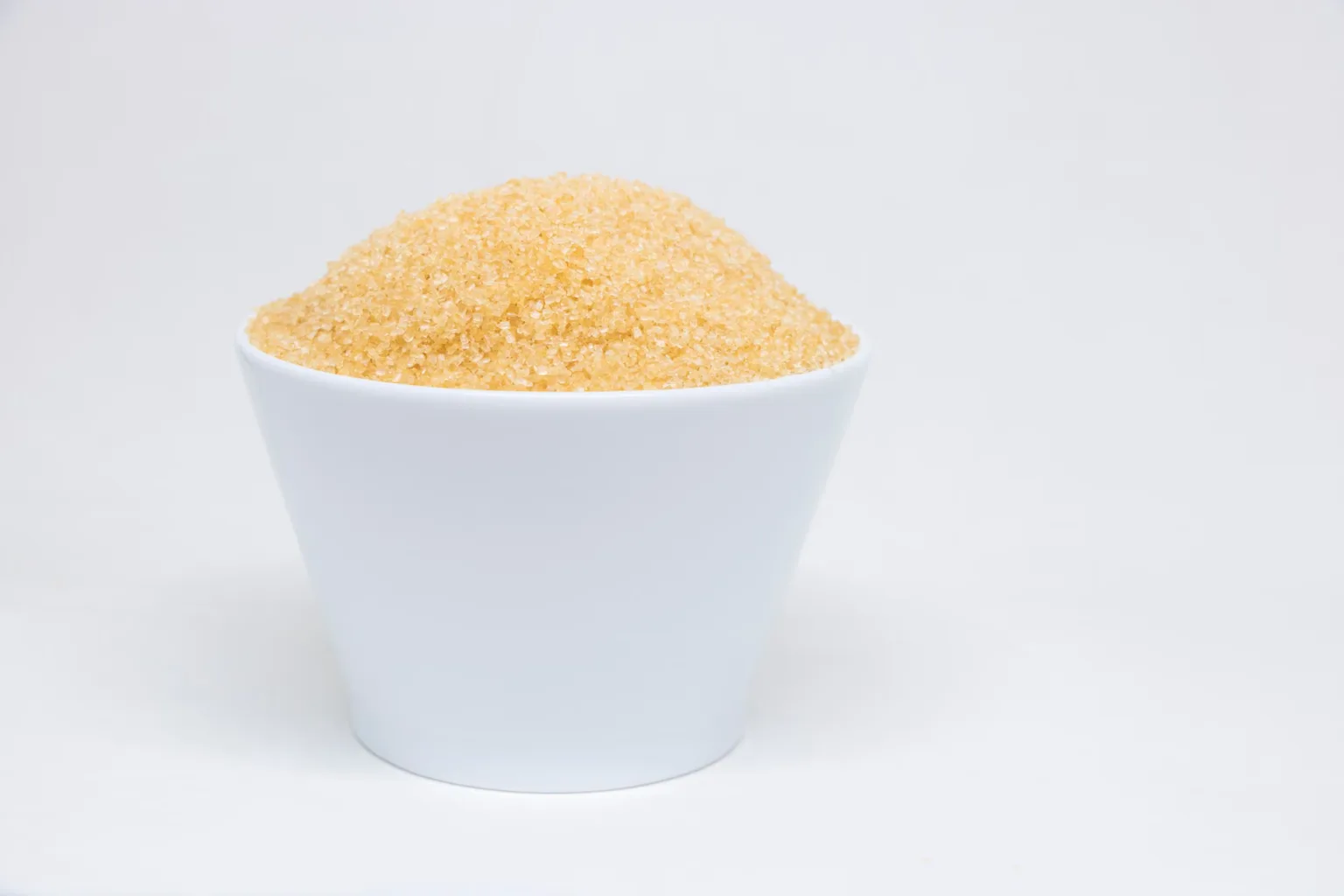
Brown sugar is sucrose with molasses present on or among its crystals, either retained during processing or added to refined sugar. The amount and kind of molasses affect the sugar’s color, moisture, and flavor, so products sold as brown sugar are not all identical. Light brown sugar tends to have a milder flavor, while dark brown sugar has more pronounced molasses notes. Products also vary in grain size and moisture. For dough, treat the name as a broad description rather than a guarantee that every variety will behave the same way. Check the product’s appearance and label, and follow the specific type called for in a recipe when possible.
When to use it
Use brown sugar when you want to sweeten dough and add a more caramel-like flavor than a neutral-tasting white sugar provides. Light brown sugar is suitable for baking, seasoning, and glazes; dark brown sugar is useful when a stronger molasses character is wanted, as in gingerbread-style preparations. If a recipe specifies a particular variety, use it when possible: color, moisture, crystal size, and flavor intensity can affect the result. Avoid large crystals when the sugar needs to dissolve readily into the dough.
How to use it
Measure the amount stated in the recipe and add it at the stage the recipe specifies. If the sugar has clumped, break up the lumps before measuring so it distributes evenly. Mix it into the dough until distributed, following the recipe’s instructions about whether it goes in with wet or dry ingredients; there is no single mixing sequence for every dough. Choose light brown sugar for a milder flavor or dark brown sugar for stronger molasses notes, if the recipe allows. Large crystals dissolve less readily in dough, so a finer or medium grain is preferable when an even mixture is important. Brown sugar can also be used in glazes and as a seasoning. Changing the type or amount may alter flavor, color, and texture.
Flavour and texture
Brown sugar is sweet with molasses and caramel notes, which are more pronounced in darker varieties. Its color can range from golden to deep brown, and its grain may be medium or large depending on the product. Molasses makes some brown sugars moist and prone to clumping. Lighter varieties tend to taste milder; darker ones are more intense. Do not assume that every variety or brand has the same moisture or texture.
How to choose it
Check the label to distinguish light, dark, or other brown-sugar varieties, and look at the grain size and moisture. Light brown sugar usually gives a gentler flavor; dark brown sugar brings a stronger molasses note. For dough where the sugar needs to blend easily, choose a fine or medium grain rather than large crystals. If the recipe names a specific variety, buying that type helps match the intended flavor, color, and texture.
Storage
Keep brown sugar in a tightly closed container in a dry place at room temperature, away from moisture. Molasses can make brown sugar clump, so check its texture before measuring and break up any lumps. Use clean, dry utensils to avoid introducing moisture. Follow any specific storage directions on the package, and do not use the product if it shows visible signs of spoilage.
Substitutions
Granulated white sugar can replace brown sugar if a less caramel-like, less molasses-forward flavor is acceptable. A brown-sugar-style ingredient can also be made by combining granulated sugar and molasses; the amount of molasses can be adjusted for a lighter or darker result. The swap may change the dough’s color, moisture, and texture, so it is not always identical. Demerara, with its large crystals, is not a good choice when a recipe needs sugar to dissolve readily.
Common mistakes
Do not treat every kind of brown sugar as interchangeable: varieties differ in flavor intensity, moisture, and crystal size. Avoid measuring large clumps, which can make the amount uneven. Do not use large crystals in dough that needs the sugar to dissolve easily. White sugar will not provide the same color or molasses notes.
Safety and allergens
Keep the sugar dry and protected from moisture, and use clean, dry utensils. Check the package and do not use the product if it shows visible signs of spoilage.
Culinary uses
- Sweetener for doughs and baked goods
- Adds molasses-like, caramel notes and brown color
- Ingredient for glazes and seasoning
Recommended techniques
- Mix into dough or batter
- Dissolve or cream into a mixture as the recipe directs
- Use in glazes
Pairs well with
- Gingerbread-style spice blends
- Baking doughs and batters
- Glazes
Frequently asked questions
Is brown sugar always unrefined?
No. It may retain molasses from processing or be made by adding molasses to refined white sugar.
What is the difference between light and dark brown sugar?
They generally differ in molasses content, color, and flavor intensity: light is milder, while dark has stronger molasses notes.
Can I replace brown sugar with white sugar in dough?
Yes, but the result will have less caramel-like flavor and may differ in color and texture.
Ingredient allergens
Allergen listThere are no verified associations for these ingredients yet.
Estimated nutrition
- Fat
- 0 g
- Saturates
- 0 g
- Carbohydrate
- 97.1 g
- Sugars
- 45.7 g
- Protein
- 0 g
- Salt
- 0.03 g
Sources and review
Automatically researched, cross-checked and validated content. Sources consulted:
- El azúcar: tipos y usos. Parte II - Blog de recetas de María Lunarillos www.marialunarillos.com/blog/el-azucar-tipos-y-usos-parte-ii.html
- Azúcar moreno - Wikipedia, la enciclopedia libre es.wikipedia.org/wiki/Az%C3%BAcar_moreno
- Duke University Dissertation Template dukespace.lib.duke.edu/bitstreams/e673585b-67b7-4e97-a14c-766083285457/download
- Vamos a Conservar Alimentos: Rellenos de fruta para tartas, tortas y pasteles extension.psu.edu/vamos-a-conservar-alimentos-rellenos-de-fruta-para-tartas-tortas-y-pastele…
- Comité Científico aesan.gob.es/dam/jcr:3c94ae83-1384-420c-96c1-0c2aa6f1544e/comite_cientifico_34.pdf
- Healthy Eating Plan for Weight Management med.uc.edu/docs/default-source/mobility-study/healthy-eating-and-physical-activity-plan-(spa…
- Por qué el azúcar de la fruta es bueno para la salud y el de los procesados no doi.org/10.64628/aao.6yfuugrhx
- Azúcar: El ingrediente mágico que -con moderación- transforma tus recetas www.hola.com/cocina/noticias/20240325251421/tipos-de-azucar-usos-en-la-cocina/
- The Effects of a 12 Week Nutrition and Physical Activity ... digitalscholarship.fiu.edu/record/11275/files/FIDC000710.pdf
- Jose R. Rodríguez Oral History Interview Audio | Hispanic Oral History Project Interviews www.lib.uidaho.edu/digital/hohp/items/hohp023.html
- Azúcar profesional: ¿blanco, moreno o alternativas naturales? mae-innovation.com/es/azucar-blanco-azucar-moreno-o-alternativas-naturales-como-elegir-como-…
- El azúcar: Origen, transformación y papel en la repostería | ecoledepatisserie-boutique® ecoledepatisserie-boutique.com/es/blogs/patisserie-conseil-professionnel/sucre-origine-trans…