- Category
- Sugar and sweeteners
- State
- Dry
- Usual unit
- g
What it is
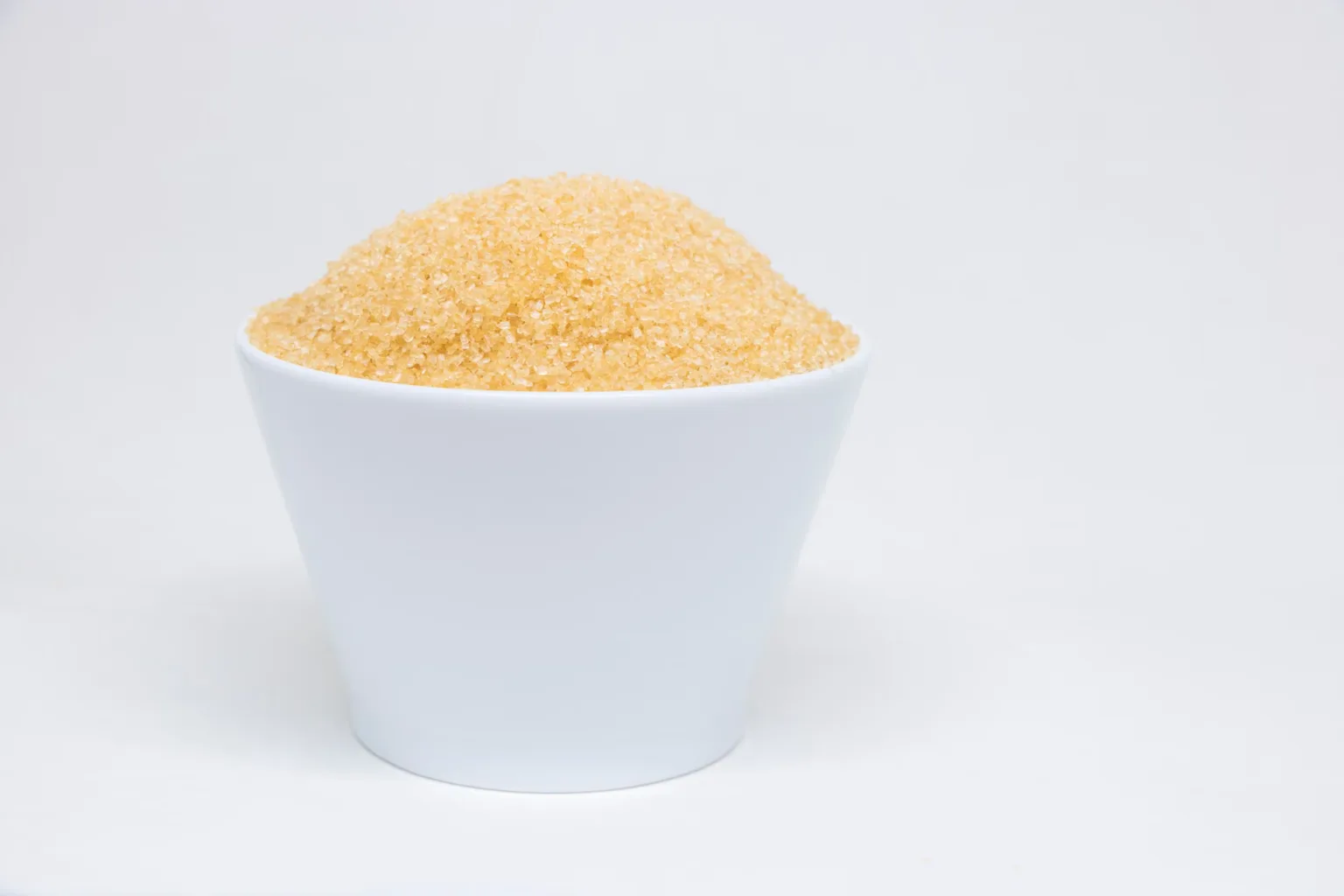
Brown sugar is a broad name for sugar with a brown or amber color. Its appearance and flavor depend on the product and on the molasses it contains or retains. It may have loose crystals, some moisture, or a softer texture, so the name does not describe one identical product everywhere. For syrup, it is used as a sweetener that dissolves in water when the mixture is gently heated. The finished syrup may be darker and taste more caramel-like than syrup made with white sugar. Brown sugar should not automatically be treated as the same thing as muscovado, panela, or other cane sugars: these can differ in texture and flavor intensity.
When to use it
Choose brown sugar for syrup when you want sweetness alongside caramel-like notes and a darker color. It can be used in syrups for desserts, cakes, or fruit, and its flavor can be complemented with vanilla, cocoa, mint, or fruit juice. White sugar may be a better fit when a recipe calls for a pale color or a more neutral sweetness. Brown sugars do not always have the same moisture, crystal size, or molasses intensity, so check the product rather than assuming that every variety will produce exactly the same syrup.
How to use it
To make syrup, combine brown sugar and water in a saucepan and heat gently, stirring until the crystals dissolve. Adjust the sugar-to-water proportion to the consistency required by the recipe: a higher proportion of sugar makes a more concentrated syrup. There is no single amount that suits every use. Flavor the mixture with vanilla, cocoa, mint, or fruit juice; a recipe may also include liqueur. Remove the pan from the heat once the desired concentration is reached, and handle it carefully because hot syrup can cause burns. If the syrup is part of a preserving recipe, follow that recipe's specified quantities.
Flavour and texture
Brown sugar generally tastes more caramel-like and complex than white sugar, though the intensity varies with the type and molasses content. Its color can range from amber to deep brown. Crystal size and moisture also vary: some varieties are loose and granular, while others are softer or more moist. Once dissolved in hot water, the crystals are no longer noticeable, but their flavor and color may remain in the syrup.
How to choose it
Read the package name and description because brown sugar can refer to products with different colors, moisture levels, crystal sizes, and amounts of molasses. For syrup, choose a sugar that is easy to measure and dissolve; if you want a milder flavor, avoid varieties described as very dark or strongly molasses-flavored. Do not assume muscovado, panela, and ordinary brown sugar are interchangeable terms: their textures and aromas can differ.
Storage
Keep brown sugar in a tightly closed container in a dry place at room temperature, away from moisture. Moisture can change its texture and cause clumping; lumps alone do not mean that all brown sugars are the same or have the same molasses content. Follow the product's package directions and avoid putting wet utensils into the container. Keeping the sugar dry helps it remain easy to measure and dissolve for syrup.
Substitutions
White sugar can replace brown sugar by weight in a simple syrup, but the result will be lighter in color and less caramel-like in flavor. Muscovado can also be an alternative, although it may give the syrup a stronger molasses flavor. Substitutions are not identical in flavor or necessarily in texture; choose according to the result you want and dissolve the sugar fully before assessing the syrup.
Common mistakes
Do not assume that every brown sugar has the same moisture, flavor, or crystal size. Nor should ordinary brown sugar automatically be treated as muscovado or panela. If you switch to white sugar, expect a paler, more neutral syrup. Avoid adding sugar to a mixture that is not heated enough to dissolve it fully, and take care when handling hot syrup.
Safety and allergens
Handle hot syrup carefully because it can cause burns. If the syrup is being made for a preserve, follow a tested recipe and do not change its quantities: altering ingredients or proportions can affect the result and the safety of the product.
Culinary uses
- Sweetener for syrups and desserts
- Adds caramel-like flavor and amber color
Recommended techniques
- Dissolve in water over gentle heat to make syrup
- Stir into hot or cold liquids until dissolved
Pairs well with
- Water for syrup
- Fruit juice, vanilla, cocoa, or mint for flavoring syrup
Frequently asked questions
Can brown sugar be used to make syrup?
Yes. It dissolves in water with gentle heat and gives syrup more caramel-like flavor and color than white sugar.
Can I substitute white sugar?
Yes. White sugar can replace it by weight in a simple syrup, though the result will generally be paler and less caramel-like.
Are brown sugar and muscovado the same?
Not necessarily. Brown sugar is a broad term; muscovado is often softer or moister and has a more pronounced molasses flavor. Product characteristics vary.
Ingredient allergens
Allergen listThere are no verified associations for these ingredients yet.
Estimated nutrition
- Fat
- 0 g
- Saturates
- 0 g
- Carbohydrate
- 97.1 g
- Sugars
- 45.7 g
- Protein
- 0 g
- Salt
- 0.03 g
Sources and review
Automatically researched, cross-checked and validated content. Sources consulted:
- Del blanco a la panela: los 19 tipos de azúcar más comunes, en qué se diferencian y cómo usarlos en cocina www.directoalpaladar.com/ingredientes-y-alimentos/blanco-a-panela-19-tipos-azucar-comunes-qu…
- Gastronomía de México - Wikipedia, la enciclopedia libre es.wikipedia.org/wiki/Gastronom%C3%ADa_de_M%C3%A9xico
- El azúcar: tipos y usos. Parte II - Blog de recetas de María Lunarillos www.marialunarillos.com/blog/el-azucar-tipos-y-usos-parte-ii.html
- Tipos y variedades de Azúcar que encontrarás en el mercado, apuntes. - Cocina y Aficiones www.cocinayaficiones.com/tipos-variedades-azucar-mercado-apuntes/
- Tipos de azúcar y endulzantes en repostería | Escuela de Tartas escueladetartas.com/blog/tipos-de-azucar-reposteria/
- Efecto de tratamiento térmico y uso de aditivos en las ... bdigital.zamorano.edu/server/api/core/bitstreams/2660891d-ffb3-4001-aab2-f3951eda7d79/conten…
- Vamos a Conservar Alimentos: Ingredientes Utilizados en las Conservas Preparadas en Casa extension.psu.edu/vamos-a-conservar-alimentos-ingredientes-utilizados-en-las-conservas-prepa…
- Healthy Eating Plan for Weight Management med.uc.edu/docs/default-source/mobility-study/healthy-eating-and-physical-activity-plan-(spa…
- Por qué el azúcar de la fruta es bueno para la salud y el de los procesados no doi.org/10.64628/aao.6yfuugrhx
- Receta de almíbar al gusto – La vida sabe mejor www.lavidasabemejor.es/recetas/recetas-dulces/receta-almibar-al-gusto/
- Neologismes documentats en textos escrits i orals en castellà ( ... repositori.upf.edu/server/api/core/bitstreams/6f3d04a4-7d61-4e58-bdc6-9da5a5a4de73/content
- Azúcar profesional: ¿blanco, moreno o alternativas naturales? mae-innovation.com/es/azucar-blanco-azucar-moreno-o-alternativas-naturales-como-elegir-como-…
- Azúcar moreno (azúcar sin refinar, azúcar integral de caña, azúcar integral, ¿orgánico?) | Fundación G+E www.diet-health.info/es/recetas/ingredientes/in/bc7376-azucar-moreno
- El azúcar: Origen, transformación y papel en la repostería | ecoledepatisserie-boutique® ecoledepatisserie-boutique.com/es/blogs/patisserie-conseil-professionnel/sucre-origine-trans…
- Sustituto de azúcar morena: mascabado, piloncillo y más | Fond fond.kitchen/es/blog/brown-sugar-substitute/