- Category
- Dairy and eggs
- State
- Other
- Usual unit
- g
What it is
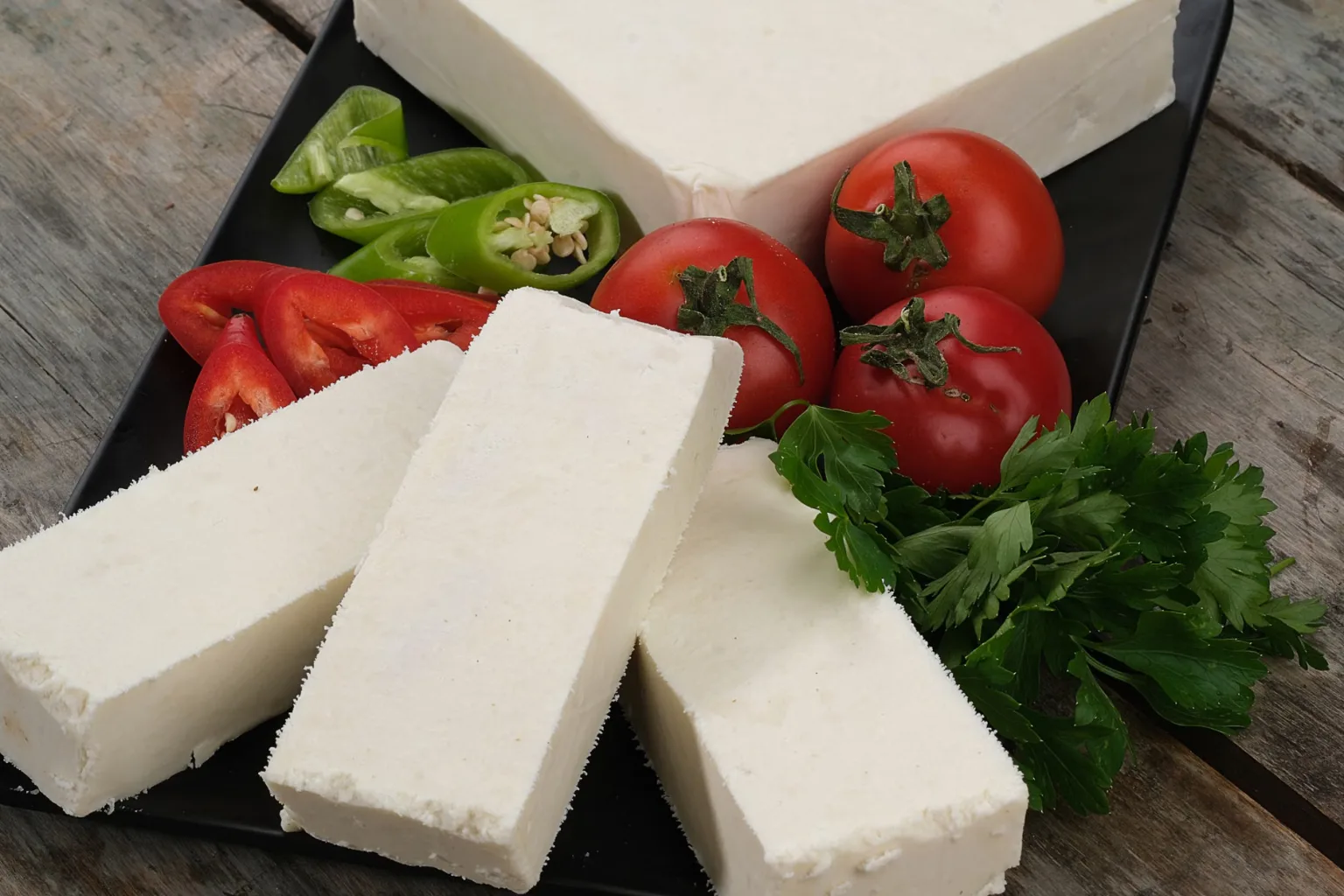
Bryndza is the name of a family of cheeses associated with Central and Eastern Europe, rather than one product with identical ingredients and texture everywhere. It is mainly associated with sheep’s milk, although Slovenská bryndza may be made from sheep’s and cow’s cheese; the description available says sheep’s cheese makes up more than half. One Slovak variety is described as a white, ripened, spreadable cheese with small grains. Its flavor may be salty, pleasantly bitter, or mildly sharp. Because versions differ, check the product name and ingredient list instead of assuming a single recipe, texture, or level of intensity applies to every cheese sold as bryndza.
When to use it
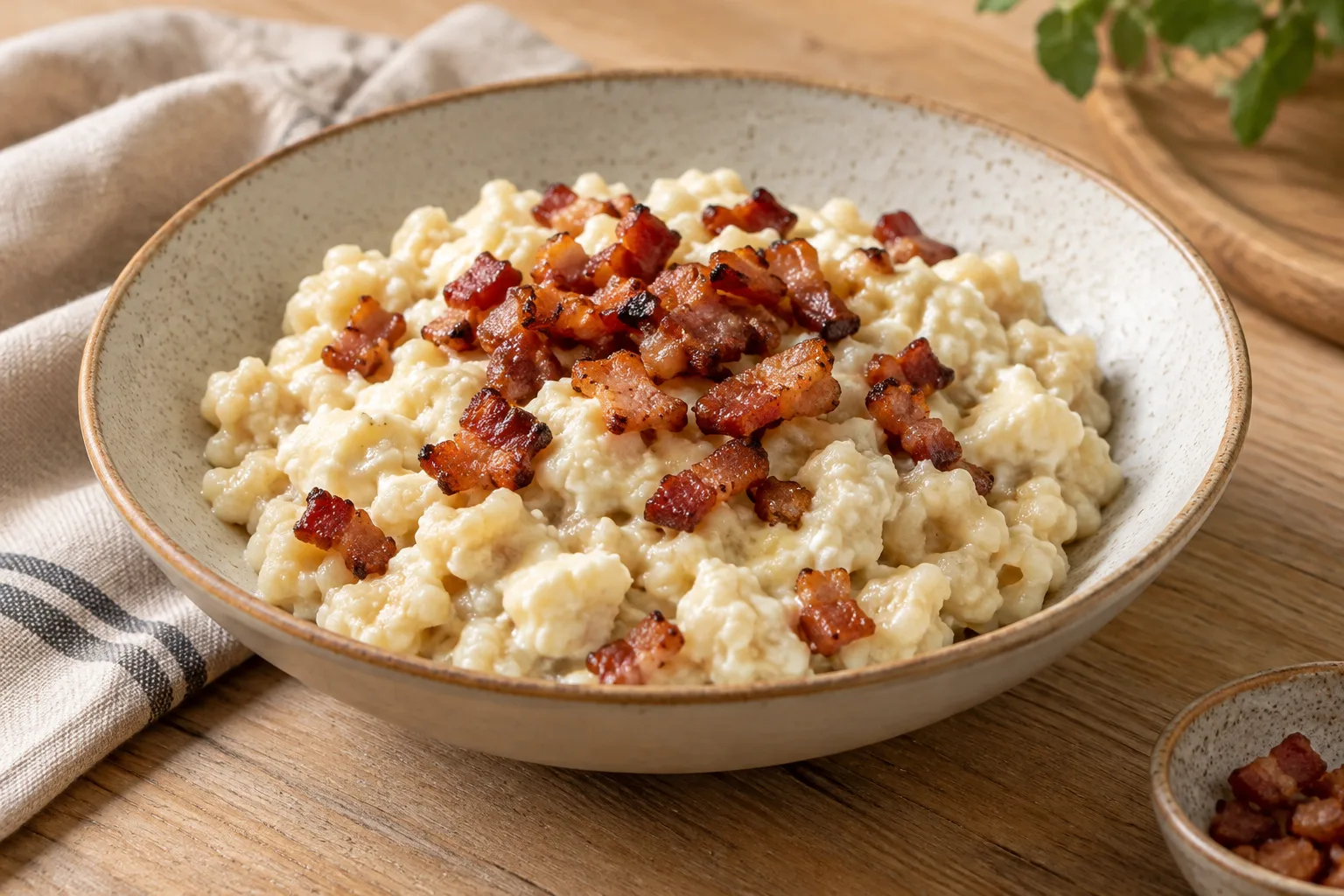
Use bryndza when you want a distinctive, salty dairy flavor in a dish. It is particularly suited to Central and Eastern European-inspired food, including Slovak bryndzové halušky, where it is mixed with hot potato dumplings, or simply spread on bread. It can also accompany cornmeal porridge or polenta. Since saltiness and consistency differ among versions, taste the cheese before seasoning the rest of the dish and adjust the amount to suit the product you have.
How to use it
For a spread, mash or stir the cheese until it is as smooth as you like, then spread it on bread; some versions retain small grains. To make bryndzové halušky, mix the cheese into the potato dumplings while they are still hot so it coats them. You can also crumble it over cornmeal porridge or polenta, or use it in pasta dishes inspired by regional cooking. Add it gradually and taste before adding salt: bryndza can be quite salty, and its intensity varies by version. If substituting another cheese, start with a smaller amount and adjust to taste.
Flavour and texture
Bryndza may be white or cream-colored, salty, mildly sour, and somewhat sharp. Slovenská bryndza is described as spreadable, slightly grainy, and pleasantly bitter; other versions can differ in texture and intensity.
How to choose it
Check the product name and ingredient list: cheeses sold as bryndza can differ in texture and milk composition. The Slovenská bryndza described is made mainly from sheep’s cheese and may also include cow’s cheese. Choose a consistency that suits spreading or mixing into a dish.
Storage
Follow the storage directions on the package, since the style and packaging of bryndza can vary. Keep it in its container and closed as directed by the maker, and follow any instructions for use after opening. If the package does not explain how to store it, ask the seller or manufacturer.
Substitutions
Feta can be a practical stand-in in dishes where the cheese is crumbled or mixed, but it will not exactly reproduce bryndza’s flavor or texture. Another mild, salty sheep’s-milk cheese may also work. Start with less, taste the dish, and adjust the salt.
Common mistakes
Do not assume every bryndza is identical or made solely from sheep’s milk: some versions include cow’s milk, and textures vary. Taste before salting, and do not expect feta to be an exact match.
Safety and allergens
This is a dairy product. Check the ingredients to identify the milk used and follow the package directions for storage and use. If the instructions are unclear, ask the seller or manufacturer.
Culinary uses
- Queso para untar o desmenuzar
- Ingrediente salado para platos calientes y masas
Recommended techniques
- Desmenuzar o aplastar para mezclar
- Incorporar a preparaciones calientes justo antes de servir
Pairs well with
- Pan
- Albóndigas de patata tipo halušky
- Gachas de maíz o polenta
- Tocino crujiente
Frequently asked questions
What milk is bryndza made from?
Bryndza is mainly associated with sheep’s milk. Some versions, including the Slovenská bryndza described, may combine sheep’s and cow’s cheese.
What does bryndza cheese taste like?
It can taste salty and mildly sharp or sour. Slovenská bryndza is also described as pleasantly bitter; the exact flavor depends on the variety.
How is bryndza commonly eaten?
It can be spread on bread or mixed with hot potato dumplings, as in bryndzové halušky. It also goes with cornmeal dishes and polenta.
Ingredient allergens
Allergen listThere are no verified associations for these ingredients yet.
Sources and review
Automatically researched, cross-checked and validated content. Sources consulted:
- Client Challenge doi.org/10.2307/jj.27939689.16
- Understanding Sheep’s Milk Cheese | The Institute of Culinary Education www.ice.edu/blog/what-is-sheeps-milk-cheese
- Variedades e ingredientes del queso | Consumer www.consumer.es/alimentacion/quesos-variados-solo-cuatro-ingredientes
- Food u.osu.edu/ukraine/west/westernfood/
- Dairy Pipeline minds.wisc.edu/bitstreams/937c4cc8-9d58-4208-a3ff-0cacb0285984/download
- : J. Dickinson – Language, Culture and Smak : University of Vermont blog.uvm.edu/jadickin/
- Bryndza - Wikipedia, la enciclopedia libre es.wikipedia.org/wiki/Bryndza
- Bryndza para Niños ninos.kiddle.co/Bryndza
- Slovenská Bryndza - Mundoquesos www.mundoquesos.com/slovenska-bryndza/
- Queso Bryndza - Quesos.es, todo sobre quesos quesos.es/queso-bryndza/
- Bryndzové Halušky: Guía y receta del plato nacional de Eslovaquia www.remitly.com/blog/es/cultura-y-estilo-de-vida/platosnacional-hechos-fascinantes-de-bryndz…
- Cocer Bígaros Frescos: Comparativa de Maridajes con los Mejores Quesos y Embutidos laovejaquebala.es/cocer-bigaros-frescos/
- Food allergen labelling and information requirements technical guidance - GOV.UK www.gov.uk/government/publications/food-allergen-labelling-and-information-requirements-tech…