- Category
- Dairy and eggs
- State
- Fresh
- Usual unit
- g
What it is
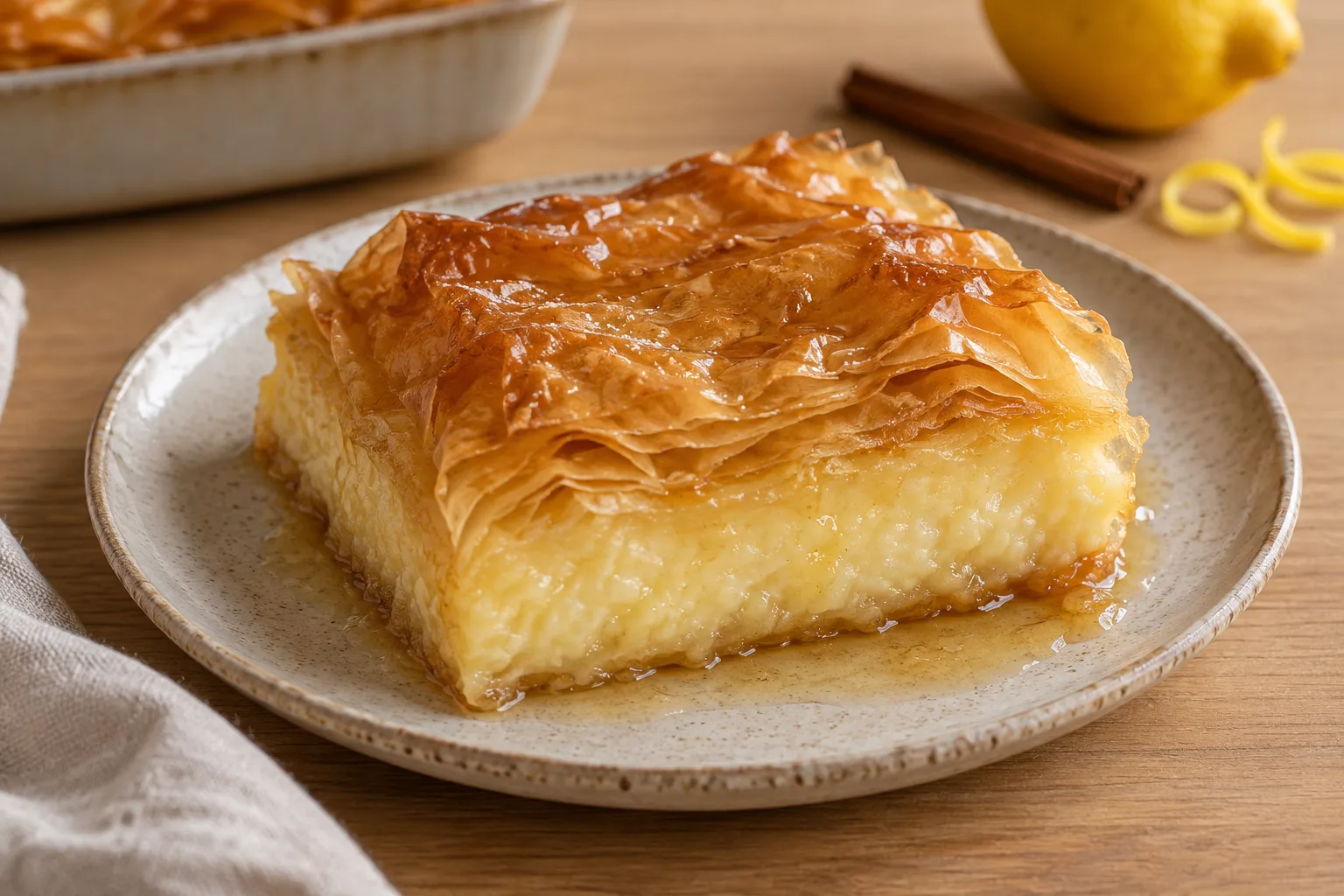
Butter for filo pastry is butter that is melted and brushed between the sheets when assembling a dish with this thin pastry. It is not a special kind of butter and does not have to be part of the pastry dough itself: it is used during assembly as the recipe directs. Oil can also be brushed between the sheets. Filo is commonly assembled in several layers and can be used in sweet or savory dishes. Its sheets are delicate and dry out easily if left exposed to air, so keep them covered while you work. Butter is applied to the sheets; it does not replace the pastry and does not need to be mixed into the filling.
When to use it
Use butter when a filo recipe says to brush the sheets or when its assembly method calls for fat between the layers. It suits sweet and savory preparations such as pies, rolls, filled parcels, and bases made with several sheets. Oil is also used to brush filo, so you can choose according to the recipe or what you have available. There is no need to add butter to the filling simply because you are using filo. For a pie, bear in mind that a very wet filling can soften the pastry; drier fillings are more suitable when you want to preserve the crisp layers.
How to use it
Prepare the filling and baking dish first to reduce the time the sheets are left exposed. Melt the butter and brush a thin coating over one filo sheet; place the next sheet on top and repeat as the recipe directs. Oil can also be used for brushing the sheets. Avoid soaking the pastry and spread the fat evenly without letting it collect at the edges. Keep unused sheets covered, since they dry out quickly and can tear when handled. For a savory pie, try not to use an excessively wet filling, as it can soften the pastry. Follow the recipe's method and specified number of layers.
Flavour and texture
Butter is used as a brushing fat between filo sheets; oil is another option for the same purpose. Filo is very thin and delicate, and it becomes crisp when cooked. The final texture also depends on how the dish is assembled and on the filling: an overly wet filling can soften the sheets. Butter does not turn filo into puff pastry; they are different types of pastry and are handled differently.
How to choose it
Choose the butter that matches the method in your recipe and estimate how much you need to brush the sheets. If the recipe allows a choice between butter and oil, consider which option you have available and follow the assembly instructions. Check the product label if you need information about its ingredients or characteristics. Prepare the filling and dish before opening the filo so the sheets are not left exposed while you organize the other ingredients.
Storage
Follow the package directions for storing butter. Melt only the amount you expect to use in the recipe. While assembling the dish, keep filo sheets you are not using covered and protected from air: they dry out quickly and may tear when handled. Store any remaining pastry according to the directions on its own package.
Substitutions
Oil can replace butter for brushing filo sheets; both are used during assembly. A mild-tasting oil is an option when you do not want its flavor to stand out, while olive oil has a more pronounced character. The substitution may change the result compared with the recipe's specified option, so follow its directions if it calls for a particular fat.
Common mistakes
Leaving filo sheets uncovered while preparing the filling can make them dry out and tear. Another mistake is applying too much fat or distributing it unevenly between the sheets. Work promptly, cover sheets you are not using, and apply melted butter or oil as directed by the recipe. Also avoid very wet fillings, which can soften the pastry.
Safety and allergens
Check the product label for ingredient information and storage directions. Keep filo pastry covered while handling it to help prevent it from drying out and tearing.
Culinary uses
- Grasa para pincelar entre las hojas de masa filo
- Ayuda a mantener unidas las capas durante el montaje
Recommended techniques
- Derretir antes de pincelar
- Extender una capa fina entre las hojas
Pairs well with
- Masa filo en pasteles dulces
- Masa filo en tartas saladas y paquetes rellenos
Frequently asked questions
Do I need to brush butter between every filo sheet?
That depends on the recipe. Butter can be brushed between the layers, but oil is also used. Follow the specified method and apply a thin coating.
Can I replace butter with oil?
Yes. Oil is also used to brush filo sheets. Choose a mild-tasting oil or follow the recipe's specific instructions.
Why does filo pastry tear when I handle it?
The sheets are very thin and dry out easily when exposed to air. Keep the ones you are not using covered and take out only what you need for each step.
Ingredient allergens
Allergen listThere are no verified associations for these ingredients yet.
Sources and review
Automatically researched, cross-checked and validated content. Sources consulted:
- Qué es eso llamado epistemología, para qué sirve, por qué es inexcusable para la universidad y para la paz | Reencuentro. Análisis de problemas universitarios doi.org/10.24275/uamxoc-dcsh/reencuentro/202386-14
- ¿Qué puedo hacer con la masa filo y la pasta brick? | El Comidista | Gastronomía | EL PAÍS elpais.com/gastronomia/el-comidista/2017/05/08/articulo/1494256593_089357.html
- Pasta Filo o philo, ideal para hacer dellciosas recetas www.eladerezo.com/recetas/pasta-filo-o-philo.html
- Pasta filo | Qué es, tipos, origen y beneficios codinafoods.com/pasta-filo/
- ▷ Origen en Grecia y Turquía【 Kitchen Academy 】 kitchenacademy.es/biblioteca/alimentos/masa-filo/
- Masa filo - Scoolinary www.scoolinary.com/es/forums/discussion/masa-filo
- Masa o pasta filo. ¿Qué es y que puedo hacer con ella? Trucos y consejos para cocinar con ella www.abc.es/recetasderechupete/masa-filo-que-es-y-que-puedo-hacer-con-ella-trucos-y-consejos-…
- Translating Eduardo del Campo's Capital Sur etd.ohiolink.edu/acprod/odb_etd/ws/send_file/send?accession=oberlin1435008097&disposition=in…
- Food allergen labelling and information requirements technical guidance - GOV.UK www.gov.uk/government/publications/food-allergen-labelling-and-information-requirements-tech…