- Category
- Vegetables
- State
- Fresh
- Usual unit
- leaves
What it is
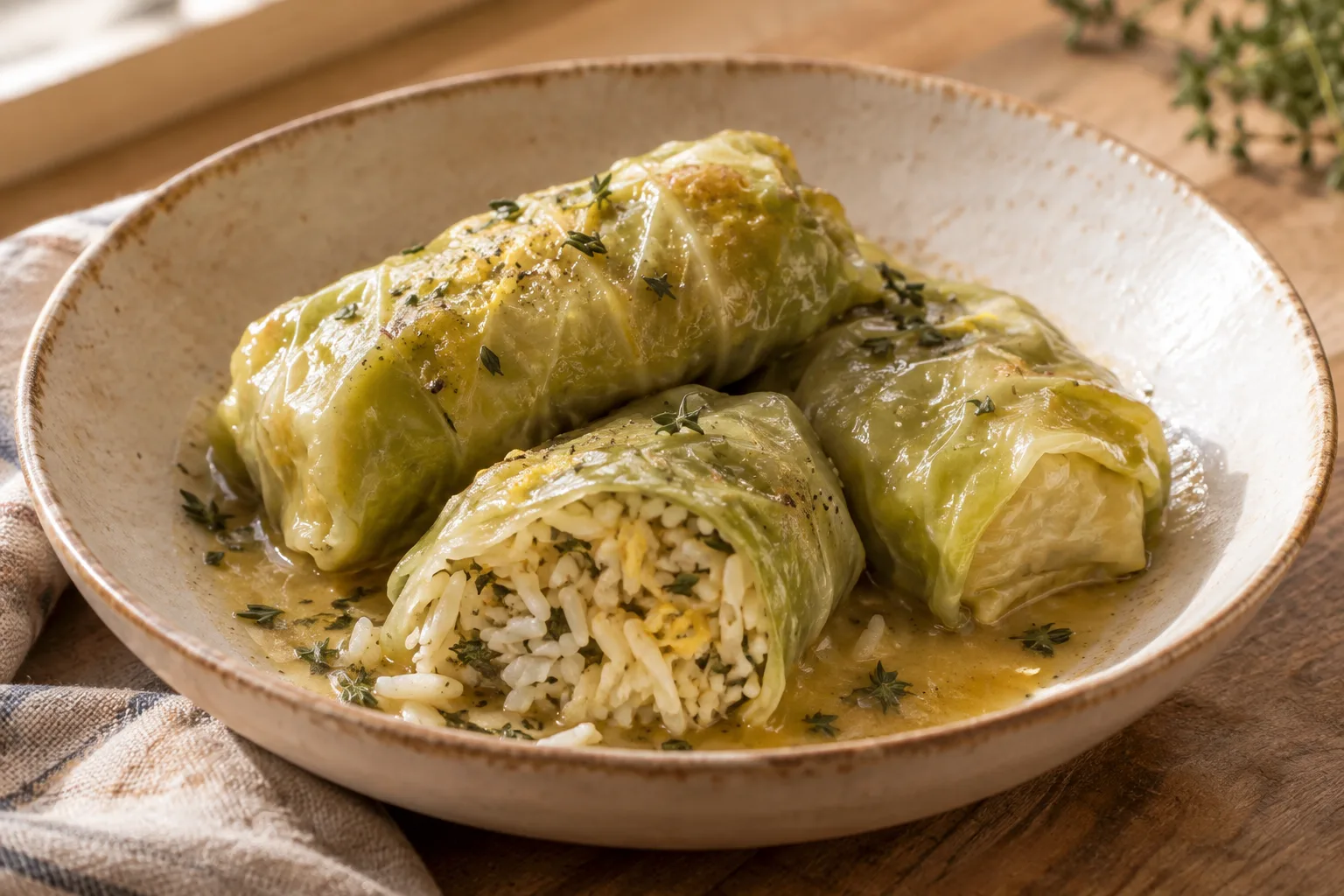
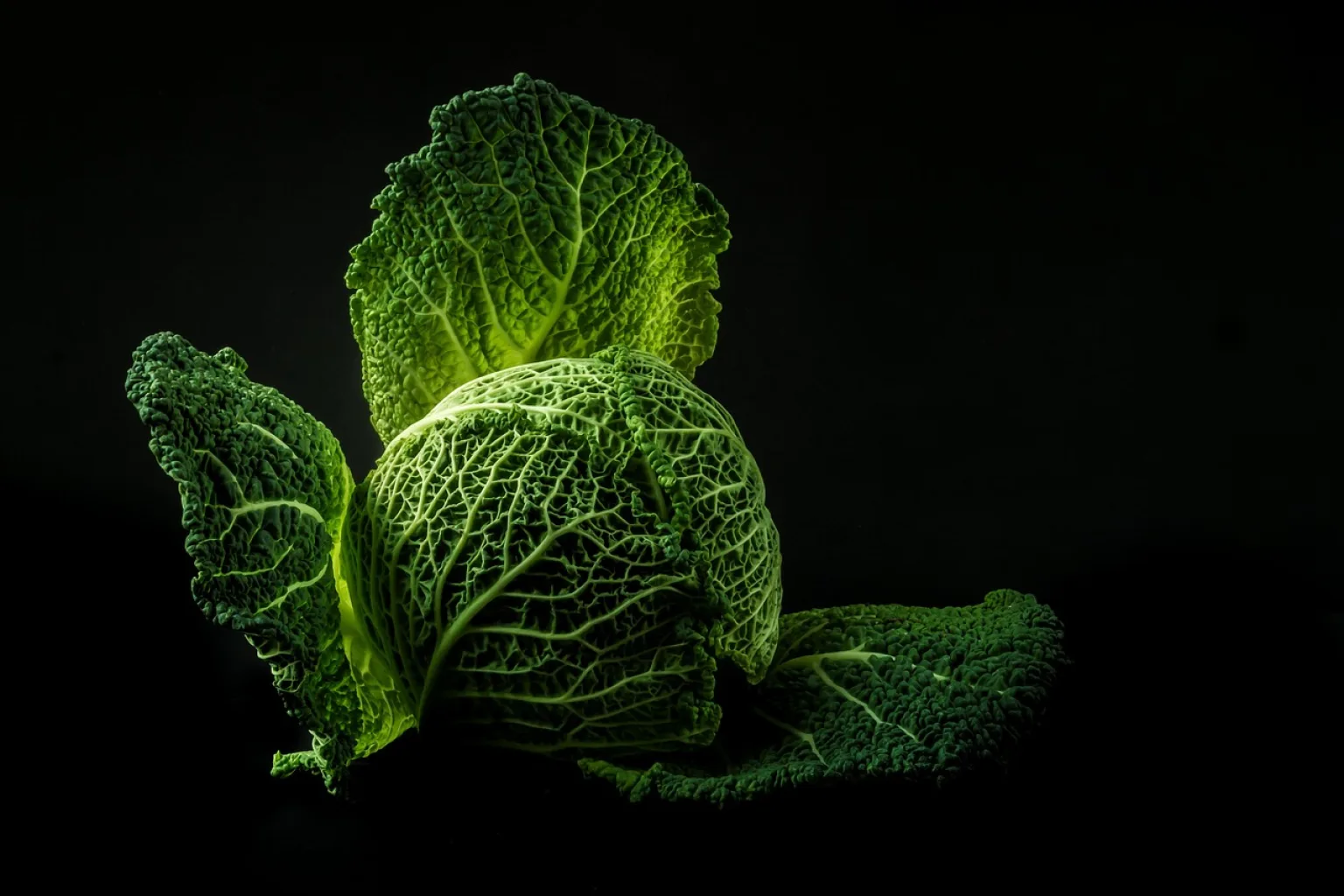
Cabbage leaves are the edible leaves of different cabbage varieties, a group of cruciferous vegetables. They can be used whole after separating them from the head, or cut into strips for cooked dishes. Their broad shape makes them useful as wrappers for fillings or as a lining for a filled mold. Leaf size and appearance vary with the variety. If you plan to fold a whole leaf, remove the stiff base of its central rib with a V-shaped cut; this makes shaping easier. Leaves can also be stacked, rolled, and thinly sliced for soup. Fresh cabbage leaves are not the same as sauerkraut, which is made by fermenting finely shredded fresh cabbage leaves.
When to use it
Choose whole leaves when you want to wrap a filling into individual parcels or line a mold for a filled dish. Finely sliced leaves are suited to soups and vegetable dishes. Cabbage leaves can be used with vegetable fillings, cooked or sautéed meat, fish, and seafood. If a recipe needs a leaf that folds readily, trim the stiff rib base and blanch the leaf first. For soup, you can instead cut the leaves into fine ribbons and add them to the vegetable mixture. Select leaves that are intact and large enough for the shape you want to make.
How to use it
Separate the leaves you need. If you plan to fold or wrap them, trim the tough base of the central rib with a V-shaped cut. Blanch the leaves to soften them, then cool them in cold water and drain them thoroughly before filling or using them to line a mold. To make ribbons for soup, stack several leaves, roll them together, and slice them finely. Cabbage can also be steamed, boiled, or stir-fried. When making filled parcels, have the filling cooked or partly cooked if the wrapped parcel will receive only a brief boil: that short boil may set the shape but does not ensure the filling cooks through. Check that the filling is ready before serving.
Flavour and texture
Cabbage has a distinctive vegetal flavor, and cooking it can produce a pronounced aroma. A whole leaf becomes more pliable when softened and can hold a filling, while thinly sliced leaves blend readily into soup. The central rib is firmer than the surrounding leaf, so trimming its base makes folding easier. Color depends on the variety: cabbage leaves may be green or red, among other variations.
How to choose it
If you are buying a cabbage head for its leaves, look for a firm head with glossy leaves and no visible damage. The stem end should look healthy and trimmed, rather than dry or split. For wrapping, choose broad, intact leaves; for soup, leaves that are easy to separate or slice may be convenient. Cabbage varieties include green, red, and napa types, so leaf shape and appearance can differ.
Storage
Store an unwashed cabbage head in a plastic bag in the refrigerator and use it within one week. Once the head has been cut, place the remainder in a plastic bag in the refrigerator and use it within two days. These timeframes apply to a cabbage head, not specifically to loose leaves. Before cooking, remove outer leaves that come away easily.
Substitutions
For wrapping, you can choose leaves from another cabbage variety, such as green, red, napa, or Savoy cabbage. Varieties differ in shape and appearance, so check that a leaf is suitable for wrapping your filling. For soup or sliced preparations, use the leaves you have and cut them to the size that suits the dish. Do not assume every variety will have the same shape or flexibility.
Common mistakes
Do not leave the stiff rib base untouched when you need to fold a leaf; trimming it in a V shape makes shaping easier. Avoid using poorly drained leaves to line a mold, as they can add water to the dish. Do not rely on a brief boil to cook a raw filling: prepare the filling beforehand or cook the assembled dish until the filling is ready.
Safety and allergens
Discard leaves with visible insects. Handle vegetables hygienically and follow applicable local food-safety guidance. If you make filled cabbage parcels, ensure the filling is cooked before serving; a brief boil of the leaf does not guarantee that the center is cooked.
Culinary uses
- Wrappers for filled parcels
- Sliced vegetable for soups
- Lining for filled molds or terrines
Recommended techniques
- Remove the tough base of the central rib with a V-shaped cut
- Blanch whole leaves, then cool them in cold water
- Stack, roll, and finely slice leaves into ribbons
- Boil, steam, or stir-fry
Pairs well with
- Vegetable fillings
- Cooked or sautéed meat
- Fish and seafood
- Soup vegetables
Frequently asked questions
Should I remove the central rib?
If you need to fold or fill the leaf, trim the stiff rib base with a V-shaped cut to make shaping easier. For leaves sliced into soup, adjust the cut to suit the result you want.
How do I soften cabbage leaves for wrapping?
Blanch the leaves, then cool them in cold water. Drain them thoroughly before filling them or lining a mold.
Can cabbage leaves go in soup?
Yes. Stack and roll the leaves, then slice them finely into ribbons to add to vegetable soup.
Will a brief boil cook the filling too?
Not necessarily. If a parcel will be boiled only briefly, the filling should already be cooked or partly cooked. Check that it is ready before serving.
Ingredient allergens
Allergen listThere are no verified associations for these ingredients yet.
Sources and review
Automatically researched, cross-checked and validated content. Sources consulted:
- ¿Por qué la muerte es origen de miedos y tabúes? doi.org/10.64628/aao.fccyk3qj3
- The Essential Glossary of Cooking Terms for the Culinary Arts - Escoffier www.escoffier.edu/blog/culinary-arts/the-essential-glossary-of-cooking-terms-for-the-culinar…
- Chucrut - Wikipedia, la enciclopedia libre es.wikipedia.org/wiki/Chucrut
- Nutrition After Your Transplant - Health Online healthonline.washington.edu/sites/default/files/record_pdfs/Nutrition-After-Your-Transplant-…
- Vamos a Conservar Alimentos - Home Food Preservation and Safety - Food Safety and Quality extension.psu.edu/food-safety-and-quality/home-food-preservation-and-safety/vamos-a-conserva…
- filling gender gaps: determining how traditional knowledge of experts.esf.edu/view/pdfCoverPage?download=true&filePid=1356518480004826&instCode=01SUNY_ESF
- Para la ciudadanía www.aesan.gob.es/para-la-ciudadania
- Cabbage | UNL Food | Nebraska food.unl.edu/article/cabbage/
- Cocinar las hojas de la col | Consumer www.consumer.es/alimentacion/cocinar-las-hojas-de-la-col.html
- Evolución del léxico culinario desde 1932 a 1972 | OpenAlex openalex.org/W2291578502