- Category
- Vegetables
- State
- Canned
- Usual unit
- Variable
What it is
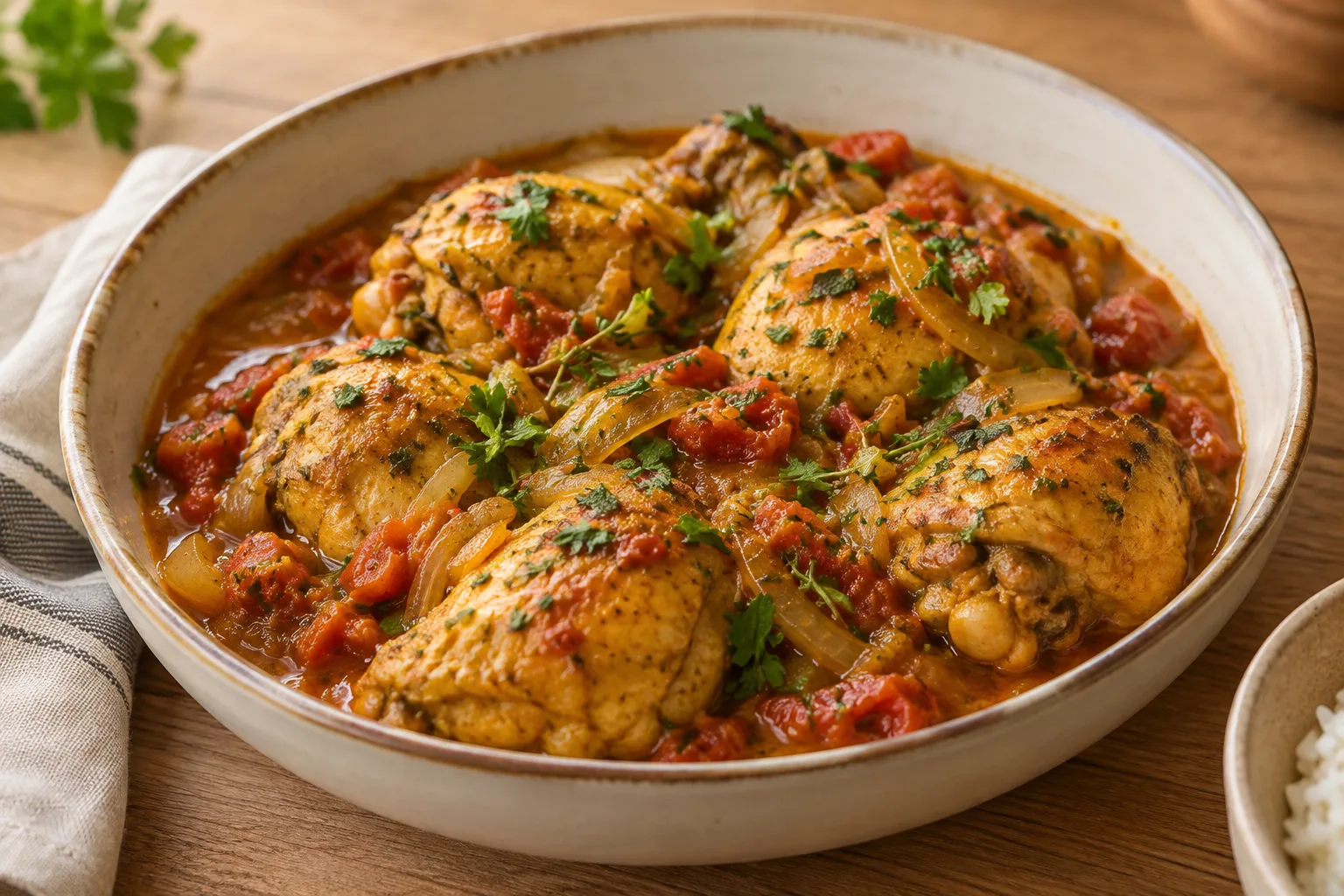
Canned whole tomatoes are tomato pieces packed in a can, often peeled and accompanied by tomato juice or another packing liquid. Unlike crushed tomatoes, they keep their shape until you break them up or cook them. The exact contents vary by product: some include added ingredients, so check the label. This format lets you choose between visible pieces, a rustic texture, or a more uniform sauce. It is different from passata, which is smooth, and from crushed tomatoes, which are already broken down. That flexibility makes whole tomatoes useful when you want to adapt the preparation to the dish rather than start with a fixed texture.
When to use it
Choose them when you want to control the size of the tomato pieces and how much liquid goes into a dish. They work well as a base for tomato sauce and in stews or other dishes where the tomatoes soften during cooking. Crush them for a rustic sauce, or leave them more intact if the recipe suits larger pieces. Crushed tomatoes or passata may be more convenient when you want a smoother result or less preparation. Cooking time depends on the recipe and the consistency you want, so use the dish’s directions rather than assuming a fixed time.
How to use it
Open the container and check its label for ingredients and any use or storage directions. Drain some liquid only if the recipe needs less moisture; keep it available to add gradually if the sauce becomes too thick. For a rustic sauce, crush the tomatoes with clean hands or a spoon before adding them. Alternatively, add them whole and break them up as they warm. Simmer according to the recipe until the tomatoes soften and the liquid reduces to the consistency you want. For a smooth result, blend the finished preparation. If the product includes salt, herbs, or other additions, taste the dish before adjusting its seasoning. Use the packing liquid only as far as it suits the consistency you are aiming for.
Flavour and texture
Their flavor is typically that of cooked or preserved tomato, with acidity and sweetness that vary by product and preparation. Whole pieces can remain distinct, or soften and blend into a sauce as they cook. The packing liquid contributes moisture and may add tomato flavor, but its consistency and ingredients differ between products. Cooking and reduction also affect the final texture.
How to choose it
Check that the package is in good condition and that its label clearly identifies the product. Read the ingredient list to see whether it contains only tomatoes or also salt, herbs, or other additions; these can affect the flavor and seasoning of a dish. Choose whole tomatoes, crushed tomatoes, or passata according to the texture you want. If you need to avoid an ingredient because of an allergy or intolerance, check the specific product label rather than relying on the product name alone.
Storage
Store unopened product according to the directions and date on its label. Storage information can vary with the product and packaging. After opening, follow the manufacturer’s instructions for storage and use rather than assuming every container has the same requirements. Check the label for any product-specific conditions. Do not replace those directions with a general storage rule that is not stated for that product.
Substitutions
Crushed tomatoes can replace whole tomatoes when distinct pieces are not important, but they give a more uniform texture from the start. Passata is suitable for a smooth sauce but does not provide chunks. Adjust the recipe’s liquid as needed for the substitute’s consistency, and check whether it contains salt or other added ingredients. Choose the substitute according to the texture you want, not just because both products are made from tomatoes.
Common mistakes
Adding all the packing liquid at once can make a sauce thinner than intended. Crush the tomatoes or keep them whole according to the texture the dish needs, and adjust the reduction as it cooks. Another common oversight is seasoning without checking the label, since some products include salt or other ingredients. Passata may be the wrong choice when you want visible pieces, while whole tomatoes may require extra preparation for a smooth base.
Safety and allergens
Check the label for ingredients, declared allergens, and storage and use directions. Handle food hygienically and follow the manufacturer’s instructions, especially after opening the container. The product’s own directions are the reference for its storage and use.
Culinary uses
- Base for tomato sauces
- Tomato component in stews and braises
- Flexible tomato ingredient when a chunky texture is wanted
Recommended techniques
- Crush by hand or with a spoon
- Simmer to soften and reduce
- Add the preserving liquid gradually when adjusting a sauce
Pairs well with
- Pasta
- Onion and garlic
- Basil
Frequently asked questions
Do I need to crush the tomatoes before cooking?
No. You can crush them before adding them or break them up as they warm. Choose based on whether you want a rustic sauce or more visible pieces.
Can I use the packing liquid?
Yes, if it suits the recipe. Add it gradually so you can control the dish’s moisture and consistency.
How are whole canned tomatoes different from crushed tomatoes?
Whole tomatoes retain their pieces, so you decide when and how much to break them up. Crushed tomatoes already have a more uniform texture.
Ingredient allergens
Allergen listThere are no verified associations for these ingredients yet.
Sources and review
Automatically researched, cross-checked and validated content. Sources consulted:
- En el etiquetado alimentario hay algunas menciones que son obligatorias eletiquetadocuentamucho.aesan.gob.es/obligatoria.html
- Romanica Olomucensia : «¿Qué pinga es esto?». Usos disfemísticos en el español de Cuba doi.org/10.5507/ro.2021.007
- Duke University Dissertation Template dukespace.lib.duke.edu/bitstreams/e673585b-67b7-4e97-a14c-766083285457/download
- Vamos a Conservar Alimentos: Tomates extension.psu.edu/vamos-a-conservar-alimentos-tomates/
- Conserva de Tomates Enteros: Comparativa y Recomendaciones para Maridaje con los Mejores Quesos y Embutidos laovejaquebala.es/conserva-tomates-enteros/
- El tomate en conserva: del tomate pelado al concentrado de tomate - Panepanna panepanna.es/el-tomate-en-conserva-del-tomate-pelado-al-concentrado-de-tomate/
- Para la ciudadanía www.aesan.gob.es/para-la-ciudadania
- Translating Eduardo del Campo's Capital Sur etd.ohiolink.edu/acprod/odb_etd/ws/send_file/send?accession=oberlin1435008097&disposition=in…
- Conservas de tomate entero y tomate triturado: ¿en qué se diferencian? - Garpa Alimentación - Almacenamiento y Distribución para las Islas Canarias garpa-alimentacion.com/conservas-de-tomate-entero-y-tomate-triturado-en-que-se-diferencian/
- Salsa de Arándanos Picante (Spanish) - National Center for Home Food Preservation nchfp.uga.edu/how/can/canning-salsa/spicy-cranberry-salsa-spanish/
- landscapes of extraction: capital and nature in 21st century repository.upenn.edu/bitstreams/786ee4fe-a4ad-4efc-99cc-c0cff163328a/download