- Category
- Herbs and spices
- State
- Dry
- Usual unit
- teaspoon
What it is
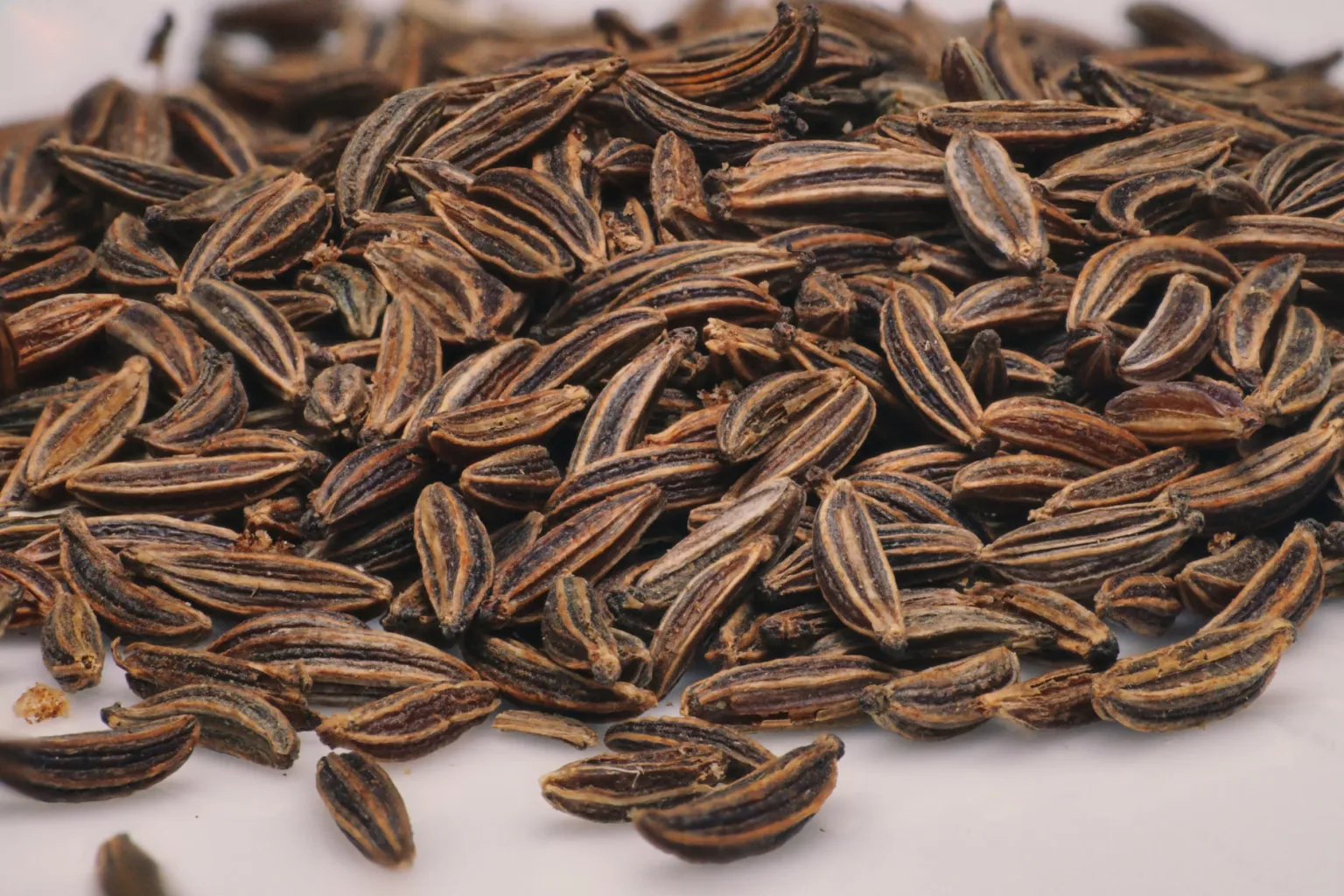
Caraway, Carum carvi, is a member of the Apiaceae family, alongside plants such as parsley and carrot. What is commonly sold as caraway seeds is botanically the plant’s dried fruit. The small, curved, ridged pieces can resemble cumin, but their aroma is more reminiscent of anise and licorice. Caraway is sold whole or ground. Its distinctive fragrance makes it useful in small amounts in bread, vegetables, stews and seasoning mixtures. Whole seeds provide concentrated bursts of flavor, while ground caraway spreads more evenly through a dish.
When to use it
Use caraway when you want a warm, anise-like, gently earthy note, particularly in rye bread, cabbage, sauerkraut, potatoes, legumes and stews. It can also season cheese and spice blends. Whole seeds give occasional bursts of aroma when bitten; ground seeds distribute their flavor more evenly. Because caraway can be assertive, begin with a small amount, taste the dish and add more if needed. It brings a distinctive character rather than a neutral background seasoning.
How to use it
Add whole seeds to bread dough, cabbage, fermented cabbage dishes, vegetables or stews, or grind them for a more even flavor in sauces and spice blends. To bring out their aroma, warm the seeds briefly in a dry pan until fragrant; do not let them burn, as scorching can produce an unpleasant taste. Cool them before grinding. You can also sprinkle them over bread or vegetables or combine them with other seasonings. Start with a modest amount and adjust after tasting: caraway’s pronounced aroma can overwhelm a dish if used too freely.
Flavour and texture
Caraway has a warm, aromatic flavor with anise-like and licorice notes, plus an earthy, spicy background. The whole seeds are dry, firm and ridged, releasing a concentrated flavor when chewed. Brief toasting can make their aroma more pronounced, while grinding helps distribute the flavor through a dish. Caraway is not the same as cumin: the two may look alike, but caraway generally tastes more anise-like.
How to choose it
Choose whole seeds if you want to control the grind or keep them intact in bread and stews; ground caraway is convenient for sauces and spice blends. Check the label carefully because caraway can be mistaken for cumin. Look for a sealed package and seeds that appear clean and dry. If you can assess the aroma, it should be pleasantly aromatic and anise-like rather than stale or unusual.
Storage
Keep caraway in a tightly closed container and follow the package directions. Protect it from moisture and avoid leaving it exposed to air for long periods. Whole seeds let you grind only what you need for a dish, making freshly ground caraway an option when you want a more pronounced aroma. Do not use the product if it has become damp, shows mold or smells abnormal.
Substitutions
Cumin can work as an alternative in some recipes, but its flavor is different and it will not reproduce caraway’s anise-like notes; start with less and adjust to taste. If you only need a different form, ground caraway can replace whole seeds and whole seeds can replace ground caraway, though the flavor will distribute less evenly. Taste and adjust the amount for the dish.
Common mistakes
Do not mistake caraway for cumin: they look similar but do not taste the same. Adding too much at once is another common misstep, because caraway’s anise-like aroma can crowd out other ingredients. Avoid scorching the seeds while toasting them, and do not store them in a damp or open container. Remember that whole seeds and ground caraway distribute flavor differently.
Safety and allergens
Use caraway that is labeled for food use and follow the package directions. If you have a known allergy to caraway or a product containing it, avoid it and check the label. Do not use the spice as a substitute for medical treatment.
Culinary uses
- Aromatic spice for breads, stews and vegetables
- Flavoring for spice blends, cheeses and infusions
Recommended techniques
- Use whole or grind just before adding
- Toast briefly in a pan to intensify the aroma
Pairs well with
- Cabbage, sauerkraut and other legumes
- Rye bread, potatoes and cheese
- Stews and meat dishes
Frequently asked questions
Are caraway and cumin the same spice?
No. They are different spices, although their seeds can look similar. Caraway is more anise-like in aroma, while cumin has a different flavor, so swapping them changes the dish.
Should I use caraway whole or ground?
Either form works. Whole seeds give distinct flavor bursts in bread and stews; ground caraway blends more evenly into sauces and seasoning mixtures.
Can I toast caraway seeds before using them?
Yes. Brief toasting can intensify their aroma. Warm them carefully, remove them as soon as they smell fragrant and let them cool before grinding.
Ingredient allergens
Allergen listThere are no verified associations for these ingredients yet.
Estimated nutrition
- Fat
- 0 g
- Saturates
- 0 g
- Carbohydrate
- 0 g
- Sugars
- 0 g
- Protein
- 0 g
- Salt
- 0 g
Sources and review
Automatically researched, cross-checked and validated content. Sources consulted:
- ¿Por qué la muerte es origen de miedos y tabúes? doi.org/10.64628/aao.fccyk3qj3
- Mezcla de Especias Harissa extension.oregonstate.edu/es/node/192056/printable/print
- Recipes from Our Chefs: St. Patrick's Day | News and Stories | Notre Dame Hospitality | University of Notre Dame hospitality.nd.edu/es/news/recipes-from-our-chefs/
- Alcaravea: qué es, propiedades y usos en la cocina de la especia bonviveur.com/es/noticias/alcaravea
- Alcaravea | PAPRIMUR paprimur.es/productos/alcaravea/
- La especia olvidada en la gastronomía española que ayuda a la salud digestiva y puedes aplicar en recetas de guisos y carnes asadas - Revista Mia miarevista.okdiario.com/recetas/alcaravea-especia-olvidada-guisos.html
- De compras para la salud: Las hierbas y las especias1 ask.ifas.ufl.edu/publication/FS264/pdf
- Col reconfortante health.extension.wisc.edu/files/2026/02/B4180S_Senior_Recipes_Spanish_Part2.pdf
- CALENDARIO DE ADVIENTO DÍA 12 PAELLA CON LANGOSTINOS www.cordonbleu.edu/news/d%C3%ADa12paellaconlangiostinos/mx
- Alcaravea, una semilla digestiva: beneficios - canalSALUD www.salud.mapfre.es/cuerpo-y-mente/naturopatia/semillas-alcaravea-beneficios-salud/
- Alcaravea, una desconocida entre tus especias | Blog EntreSemillas entresemillas.com/blog/alcaravea-una-desconocida-entre-tus-especias/?srsltid=AYCX9vK-NRMVegB…