- Category
- Vegetables
- State
- Fresh
- Usual unit
- unit
What it is
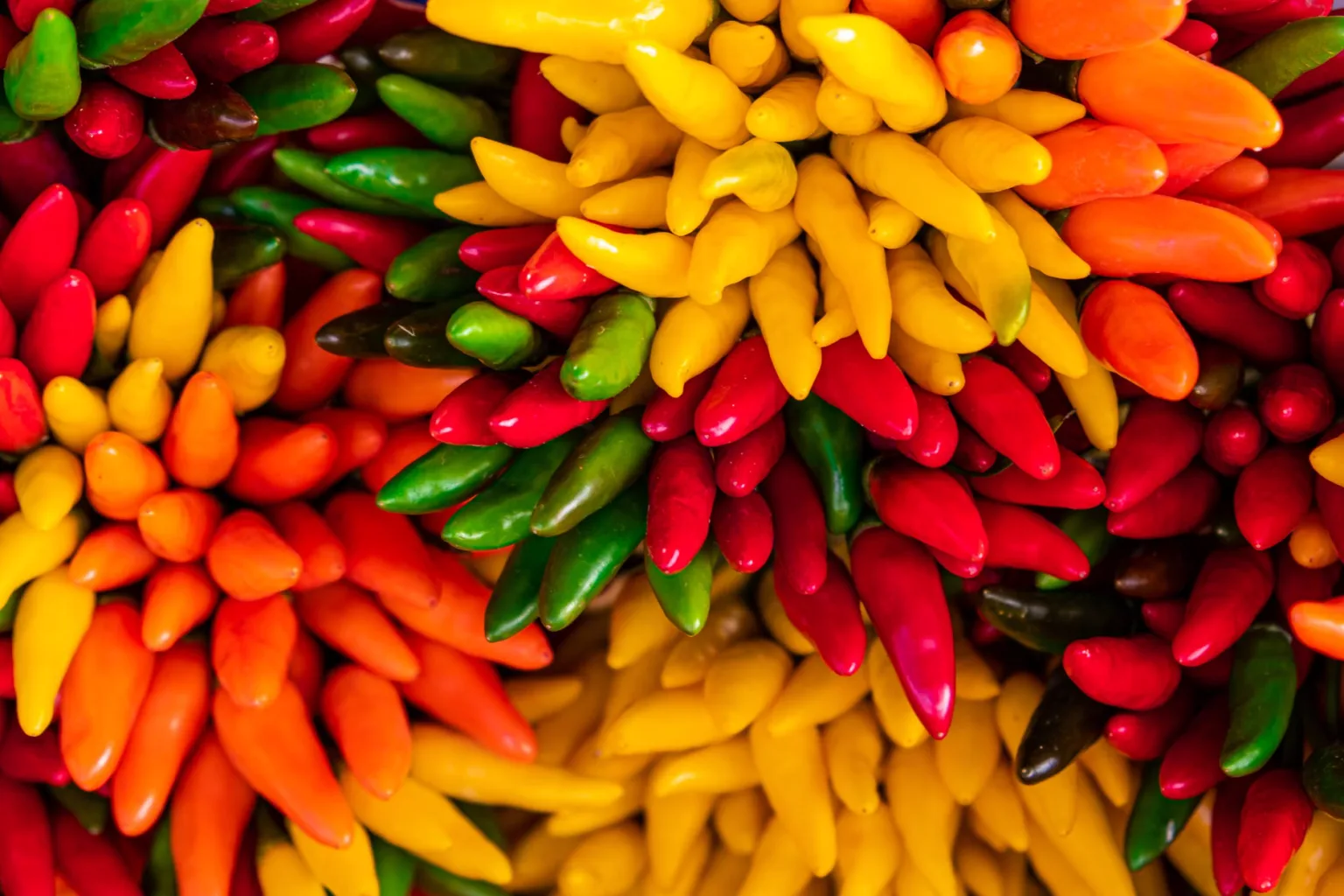
Caribbean chilli, also known regionally as chile caribe, is a fresh chilli associated with northwestern Mexico. It is described as a type of güero chilli with an elongated fruit, smooth skin and colors ranging from pale yellow or light green to orange-red as it ripens. Its flavor is characterized as vegetal and juicy, with a slight fruitiness, and its heat can be noticeable. Size, color and intensity can vary from one fruit to another, so appearance or name alone cannot guarantee a precise heat level. It is used fresh in salsas and stews, and can also be roasted or pickled. It should not automatically be treated as interchangeable with every güero chilli: regional names and available varieties may differ.
When to use it
Use it when you want fresh heat and a vegetal flavor in salsa, a meat accompaniment or a stew. Raw, it gives a chopped or blended preparation a more direct chilli character; roasting adds cooked notes and works well in a salsa with tomato and garlic. It can also be pickled and served as a side. Since individual chillies may vary in heat, begin with a small amount and adjust after tasting. Use it in a salsa when you want the chilli to stand out, or add it gradually to a dish when you only want a little heat.
How to use it
Rinse the chilli with potable water and handle it carefully. For fresh salsa, chop it and combine it with tomato, garlic and salt, adding cilantro or lime if desired; you can also blend it with the other ingredients. For a roasted flavor, cook it on a griddle or grill, then add it to salsa or a stew. Another option is to pickle it in vinegar with onion and carrot. Remove the stem and cut the chilli to the texture you want. If you are unsure how hot it is, add only part of it at first and taste before adding more. It pairs well with beef dishes and with sauces served on the side. There is no universal amount: adjust to the chilli’s heat and the preferences of the people eating.
Flavour and texture
Its described profile is vegetal and juicy, with slight fruity and herbal notes. The flesh can feel meaty and fresh, and the heat can be noticeable; do not assume that every Caribbean chilli has the same intensity. Color changes as the fruit ripens and does not by itself reveal how hot it is. Raw, it tastes fresher and more direct; roasting adds toasted notes, while pickling brings acidity.
How to choose it
Choose chillies with smooth-looking, firm skin and no obvious damaged or soft areas. Caribbean chilli is commonly described as elongated and pale-skinned, with yellow or green tones when less ripe and orange or reddish tones as it ripens. Color cannot accurately predict heat. If you are looking for this regional variety, ask for chile caribe; names can be confused with other güero chillies. Buy an amount you can use while the produce remains in good condition.
Storage
Treat it as fresh produce and check its condition before use. General fruit-and-vegetable storage guidance notes that needs differ between individual produce items, so an exact storage life for Caribbean chilli should not be assumed without specific information. Avoid bruising it and discard fruit with clear signs of spoilage. If you wash it, use potable water and dry it carefully; washing just before use can help avoid unnecessary moisture during storage.
Substitutions
If Caribbean chilli is unavailable, fresh güero chilli is a related option, but it is generally smaller and less hot. Fresh jalapeño can also add heat to salsa, though it will not necessarily reproduce the flavor or appearance of chile caribe. Start with a small amount and adjust after tasting. No substitute guarantees the same result; flavor and heat depend on the chilli available and the preparation.
Common mistakes
Do not assume that every Caribbean chilli has the same heat or that its color precisely indicates how hot it is. Avoid adding a large amount before tasting; add it gradually. Also, do not treat chile caribe as identical to every güero chilli: regional names, size and heat can vary. Roasting or pickling changes the flavor profile compared with using the chilli raw.
Safety and allergens
Rinse chillies with potable water before preparing them and handle them carefully. Since heat can vary, add a small amount first and taste before adding more. Do not use chillies with clear signs of spoilage.
Culinary uses
- Fresh chile for salsas and sauces
- Spicy ingredient for grilled-meat dishes and stews
Recommended techniques
- Use raw, finely chopped or blended
- Roast on a griddle or grill
- Pickle in vinegar
- Cook in sauces
Pairs well with
- Tomato
- Garlic
- Cilantro
- Lime
- Beef
Frequently asked questions
What does Caribbean chilli taste like?
It is described as vegetal and juicy, with slight fruitiness and potentially noticeable heat. Intensity can vary between chillies.
How can I cook with it?
Use it raw, chopped or blended; roast it on a griddle or grill; cook it into a salsa; or pickle it.
What can I use if I cannot find Caribbean chilli?
Fresh güero chilli is a related option and is generally smaller and less hot. Jalapeño can add heat, but the result will be different.
Ingredient allergens
Allergen listThere are no verified associations for these ingredients yet.
Sources and review
Automatically researched, cross-checked and validated content. Sources consulted:
- Client Challenge doi.org/10.2307/jj.27939689.16
- The Essential Glossary of Cooking Terms for the Culinary Arts - Escoffier www.escoffier.edu/blog/culinary-arts/the-essential-glossary-of-cooking-terms-for-the-culinar…
- Storing Fresh Fruits and Vegetables (G1264) extensionpubs.unl.edu/publication/g1264/na/html/view
- El chile, ingrediente esencial en la cocina de México - Formacion en Gastronomia www.formacionengastronomia.com/cocina-latina/chile/
- Location www.coloradomesa.edu/library/special-collections/documents/cookbook-donation_aid-for-sca-web…
- Search or Print: Andrew F. Smith Collection of Cookery Ephemera: NYU Special Collections Finding Aids findingaids.library.nyu.edu/fales/mss_295/all/
- Cookbooks and Reading Suggestions - UNT Food Pantry - Guides at University of North Texas guides.library.unt.edu/food-pantry/cook-books
- Assessing Food Access in Oregon's Willamette Valley pdxscholar.library.pdx.edu/cgi/viewcontent.cgi?article=1031&context=geog_fac
- Los secretos de la cocina caribeña: ingredientes y sabores northbridge.edu/es-pr/publicaciones/cocina-caribena/
- Chile caribe: qué es, picor, usos | Recetas Mexas recetasmexas.com/guia/chile-caribe
- Cocina tropical los sabores del Caribe - Estudia Hostelería estudiahosteleria.com/blog/gastronomia/cocina-caribe/
- - YouTube www.youtube.com/watch?v=jYtC5bnPBfQ
- Cocina Caribeña: Sabores Tropicales que Enamoran | Remitly www.remitly.com/blog/es/comida/cocina-caribena/