- Category
- Vegetables
- State
- Fresh
- Usual unit
- bunch
What it is
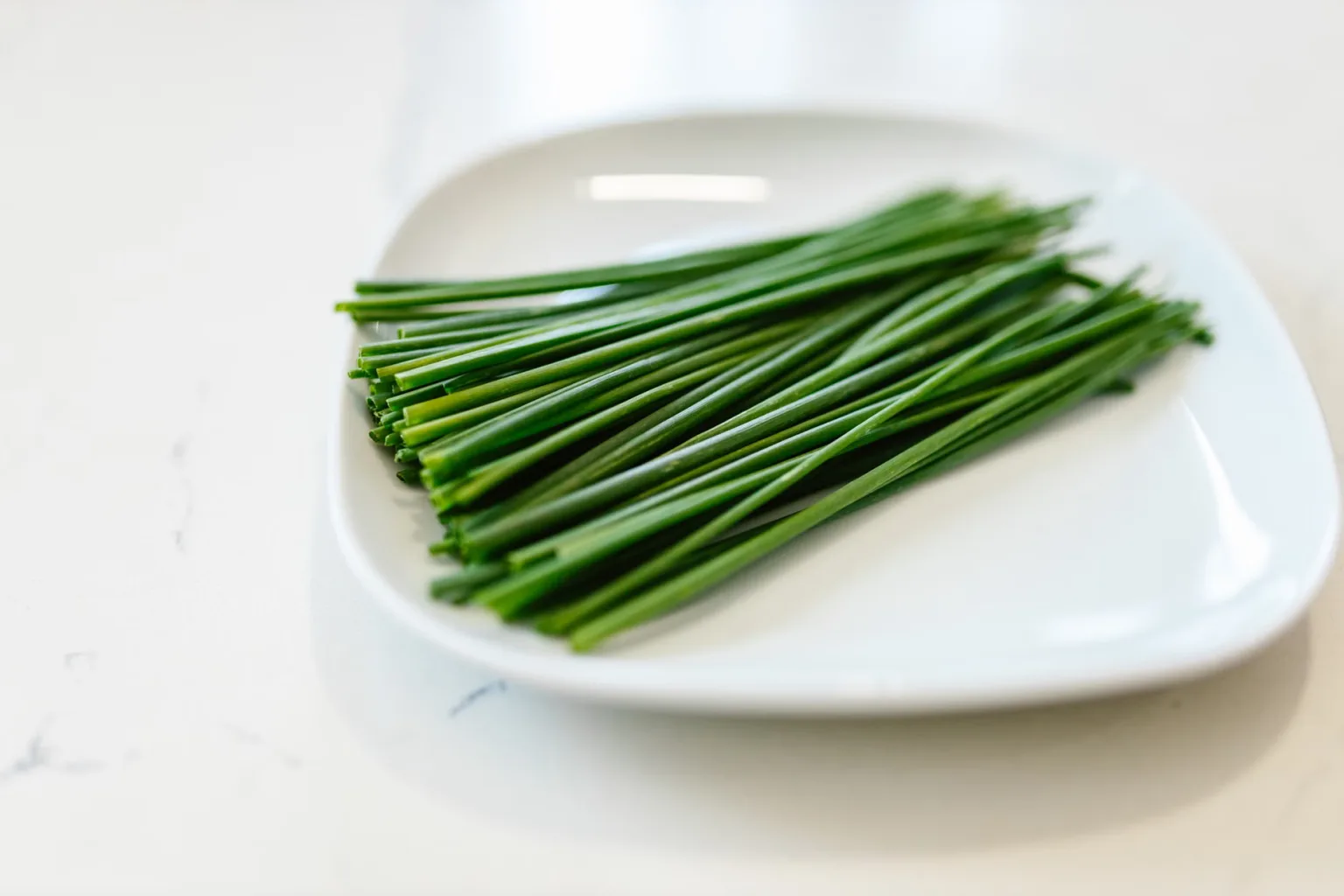
“Caribbean chives” is the supplied name for this ingredient, but the name alone does not establish which species is sold under it. The available information describes common chives and related alliums, not a reliable botanical identification for this regional name. Common chives, Allium schoenoprasum, typically have slender, hollow green leaves and are used mainly as an aromatic herb rather than as a bulb onion. Chinese or garlic chives are different and may have broader leaves and a stronger flavor. This profile therefore gives conditional culinary guidance: apply the advice about common chives only if the bunch matches those features. If the species matters to your recipe, check the label or the botanical name.
When to use it
Use the leaves to bring a fresh aroma and an onion-like note to a dish, rather than as a cooked base in the way you might use a bulb onion. If the ingredient is common chives, it can add color and flavor to eggs, salads, soups, sauces, and creamy dishes. Add it near the end of cooking or just before serving to preserve more of its fresh character. Since the name “Caribbean chives” does not confirm the species, inspect the bunch: the fine, hollow leaves described here are characteristic of common chives; if the leaves are broader or the aroma is stronger, begin with a small amount and adjust to taste.
How to use it
Remove wilted leaves and finely slice the sound ones with a sharp knife or scissors. If you have confirmed that the ingredient is common chives, scatter it raw over eggs, salads, soups, or cooked vegetables, or mix it into a sauce, dressing, or softened butter. It can also be added to a hot dish near the end of cooking. Avoid prolonged cooking if you want to retain its fresh aroma. If you do not know the variety, taste a small amount first: related alliums may have a stronger flavor. Do not replace bulb onion with the same quantity of leaves without tasting and adjusting, since they play different culinary roles.
Flavour and texture
Common chives have a delicate flavor reminiscent of fresh onion and a mild aroma; their slender, hollow leaves add a light texture when chopped. Do not assume that every bunch sold under a regional name has this same profile: Chinese or garlic chives can be stronger and may have broader leaves. Check the appearance and aroma before deciding how much to use. The leaves are generally used to add freshness and color, not to provide the same sweet, cooked base as a bulb onion.
How to choose it
Choose a bunch with firm, lively-colored leaves and no wilted or slimy patches. A clean, vegetal aroma is preferable to an unpleasant one. Since “Caribbean chives” does not confirm the species, check the label or ask for the botanical name if you specifically need common chives rather than another allium. Look at the leaves too: the common chives described here are slender and hollow, while some garlic types have broader leaves. An intact bunch is usually easier to inspect than a pre-chopped pack.
Storage
Keep the fresh bunch refrigerated and protect it from drying out. A clean, lightly damp wrap can help retain moisture, but avoid leaving the leaves soaking wet or tightly packed in an unventilated container. Fresh leaves are delicate and lose quality over time, so use them soon and check their condition before cooking. You can also chop and freeze them in small portions for later use; after thawing, their texture is less suitable for garnishing. No single storage life is established here for every bunch and set of conditions.
Substitutions
If you have confirmed that the ingredient has the mild flavor and fine leaves of common chives, common chives can replace it. Green onion tops can also work, but taste stronger: start with less and adjust after tasting. If the original ingredient is a garlic type, common chives will be milder and may not reproduce its intensity. Choose a substitute for the flavor and texture you want, not just because the names sound alike.
Common mistakes
Do not assume that “Caribbean chives” identifies one particular species; the name alone does not confirm it. Another mistake is treating the leaves like bulb onion or using them to build the base of a stew. Common chives are usually used raw or added near the end, and prolonged cooking diminishes their fresh character. If you do not know the variety, avoid adding a large amount before tasting, especially when the leaves are broad or the aroma is strong.
Safety and allergens
Use leaves in good condition, remove spoiled parts, and handle the ingredient with clean utensils and surfaces. Keep the fresh bunch refrigerated when not in use.
Culinary uses
- Fresh aromatic garnish
- Mild allium seasoning
Recommended techniques
- Finely slice or snip and add near the end of cooking
- Fold into sauces, dressings, or softened butter
Pairs well with
- Eggs and omelettes
- Soups, salads, and creamy sauces
Frequently asked questions
Are “Caribbean chives” the same as common chives?
The name alone does not confirm that. Common chives typically have slender, hollow leaves; check the appearance or botanical name if identifying the species matters.
Can they be eaten raw?
Common chives are often used raw, chopped over salads, eggs, soups, or sauces. If you do not know the variety in the bunch, begin with a small amount.
When should I add them to a hot dish?
If they are common chives, add them near the end of cooking or just before serving to preserve more of their fresh aroma.
Ingredient allergens
Allergen listThere are no verified associations for these ingredients yet.
Sources and review
Automatically researched, cross-checked and validated content. Sources consulted:
- Client Challenge doi.org/10.2307/jj.27939689.16
- Conoce 15 tipos de cebolla y sus usos en la cocina - Mejor con Salud mejorconsalud.as.com/dieta/organicos-transgenicos/tipos-de-cebolla-y-usos-en-cocina/
- Cebollino o cebollín, la elegante hierba aromática con un suave sabor entre el ajo y la cebolla: qué es y cómo usarlo en la cocina www.directoalpaladar.com/ingredientes-y-alimentos/cebollino-cebollin-elegante-hierba-aromati…
- Cebollín: qué es, recetas con cebolla china y beneficios www.finedininglovers.es/explorar/noticias/que-es-el-cebollin-sus-propiedades-y-usos-en-la-co…
- Dieta prehispánica de Mesoamérica - Wikipedia, la enciclopedia libre es.wikipedia.org/wiki/Dieta_prehisp%C3%A1nica_de_Mesoam%C3%A9rica
- La cebolla, la base de la gastronomía española - Enrique Romay eromay.com/la-cebolla-la-base-de-la-gastronomia-espanola/
- Diferencias entre cebolla, cebolleta, cebollino y chalota bonviveur.com/es/noticias/diferencias-entre-cebolla-cebolleta-y-cebollino
- Cebollino | Gastronomía & Cía www.gastronomiaycia.com/cebollino/
- Cebollino: el ingrediente desconocido por culpa del ajo y la cebolla | El Correo www.elcorreo.com/jantour/despensa/cebollino-ingrediente-desconocido-por-culpa-del-ajo-y-la-c…
- El ingrediente del mes: el cebollino – Kitchen Community kitchencommunity.wordpress.com/2015/05/08/el-ingrediente-del-mes-el-cebollino/
- Identity and Language Use in Adolescent Latina/o Literature vtechworks.lib.vt.edu/bitstreams/834a3f99-f187-4107-b83f-1e45abf41102/download
- discourses of power and violence in guatemala, 1982-1983 repositories.lib.utexas.edu/bitstreams/0e45dfa4-1538-4aa2-af99-c65ff1c53b59/download